
In the modern industrial system, "load cells" are a crucial component that helps improve the accuracy of quality control and production processes. SCMA, as a leader in supply chain and industrial technology, places great importance on providing accurate information about load cells and related services comprehensively. This article will explain what load cells are, their functions, how they work, and the different types to help readers understand their application clearly, along with introducing services available from SCMA.
What is a Load Cell?
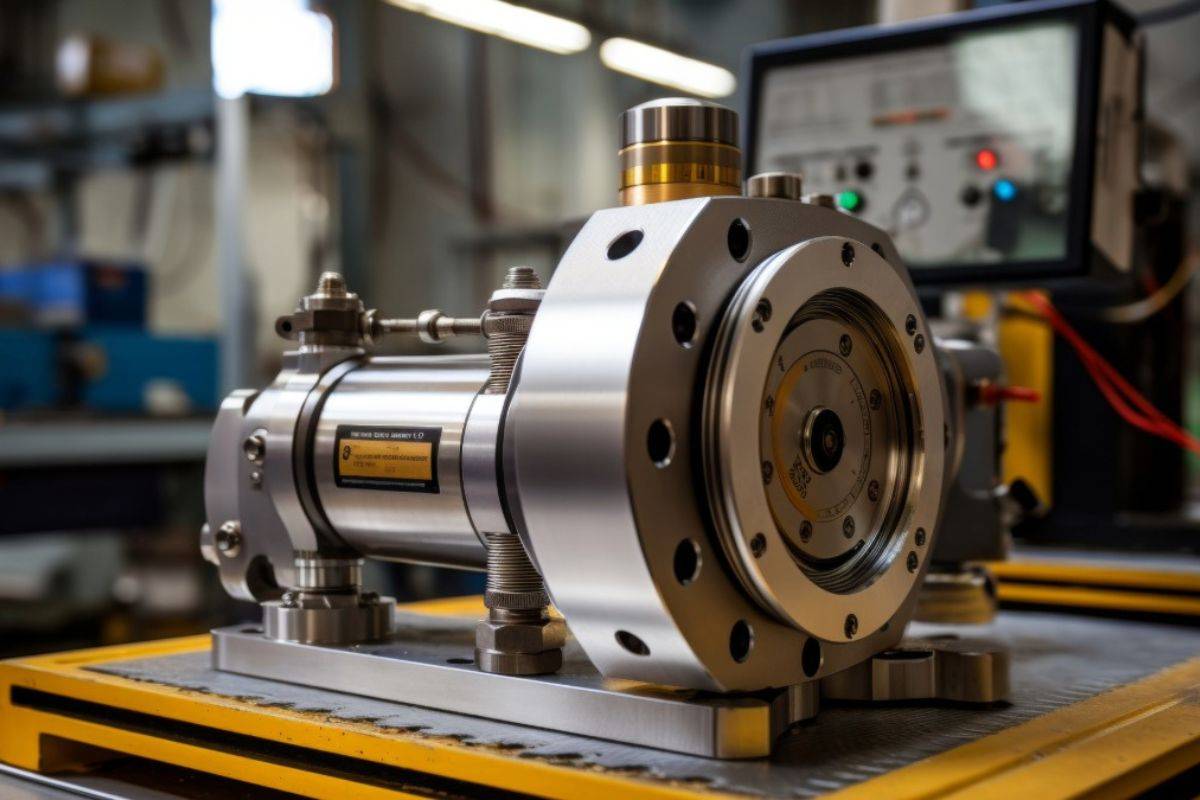
A load cell (Load Cell) is an electronic device that converts mechanical force into electrical signals, designed to measure compression, tension, or other types of forces within industrial processes. This type of weight sensor is often installed in weighing systems, tensile testers, or control devices on production lines. Currently, there are various models of load cell sensors based on their usage requirements, ranging from small to large sizes. The Load Cell Sensor sends electrical signals that vary according to the force received, allowing for precise readings through processing circuits.
How Does a Load Cell Work?
The principle of operation relies heavily on Strain Gauge, which measures changes in pressure caused by stretching or contracting materials under force. When force acts upon the load cell, there is a slight change in its internal structure, and the Strain Gauge detects this change and converts it into proportional electrical signals. These signals are then transmitted to display devices or control circuits. This process requires high precision in manufacturing and calibration for the Load Cell Sensor to operate stably over long periods.
What is the function of a Load Cell?
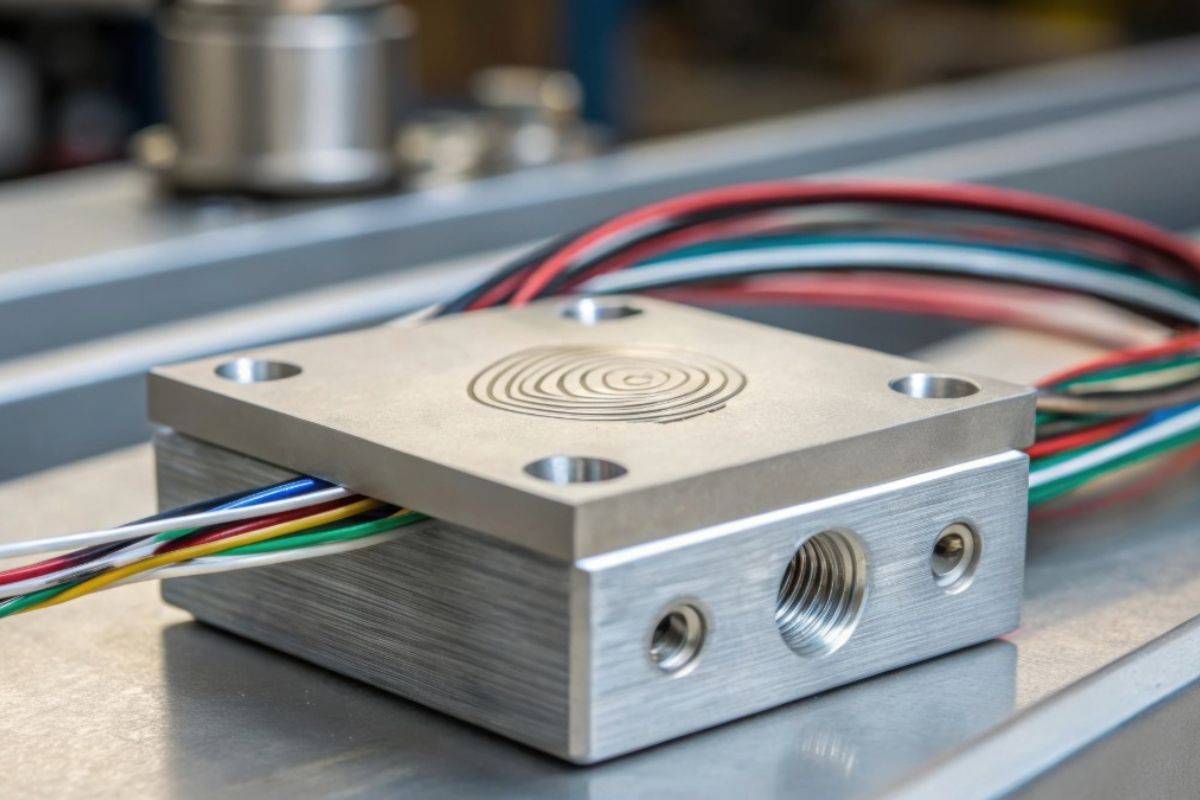
A load cell sensor is the core component in systems that require force measurement, with its primary function being to convert mechanical force into an accurate signal that can be processed by equipment. The important functions of a load cell include:
-
Measuring compression, tension, or shear forces during manufacturing processes
-
Used in weighing systems such as platform scales and truck scales
-
Monitoring and controlling quality in real-time production lines
-
Applied in the design and testing of components in engineering work
-
Connecting to an automatic control system to operate based on measured weight values
What are load cells made of?
Materials used in the production of load cells must have appropriate mechanical properties, such as strength, flexibility, and stability against temperature changes. Generally, Load Cells are commonly produced from main materials like stainless steel, aluminum, or specialized alloys, which have the ability to resist corrosion and deformation over long periods. Inside a load cell, strain gauges are attached to the surface of the material to measure changes caused by applied forces. The structure must be designed to support symmetrical force application and prevent external interference signals to ensure high accuracy in weight measurement.
Applications of Load Cell

Load cells are applied in various industries, each type having specific characteristics suitable for the task at hand. Selecting an appropriate Load Cell Sensor can enhance production process efficiency and accurately control quality. Key applications include:
-
Food and pharmaceutical industry: Used to control weight in manufacturing lines
-
Logistics industry: Used in parcel weighing systems
-
Engineering work: Used to test tensile and compressive forces of materials or components
-
Construction work: Used to measure forces in structures for stability assessment
-
Automated control systems in manufacturing lines
How many types of load cells are there?
Types of load cells are categorized based on the type of force being measured, which includes compression and tension forces. Each type has a unique design and shape tailored to its specific application. A good load cell should be able to withstand environmental conditions such as humidity, temperature, and impact. SCMA has compiled popular types of load cells suitable for Thai industries for appropriate use.
Load cells that measure compression force
Compression Load Cells are used to measure downward forces acting on the sensor from above. They are designed to support heavy weights and have a robust structure, making them ideal for high-precision applications such as platform scales, warehouse scales, or truck scales. They can operate efficiently in challenging environments.
Single Point Load cell
The Single Point Load Cell is a compression type load cell commonly used in bench scales or small scales. Its advantage lies in its ability to accurately measure weight from the center point or even off-center points, making it suitable for platform scales with limited space. Materials typically used are aluminum or high-strength alloys.
Shear Beam Load Cell
The Shear Beam Load Cell is ideal for applications requiring floor-level installation such as drum scales or conveyor systems. The sensor is designed to withstand shear forces caused by compression, offering high accuracy and stability in various environmental conditions, thus widely used in general industrial settings.
Bending Beam Load cell
The Bending Beam Load Cell uses bending principles for force measurement. It is commonly used in systems with moderate forces such as packaging machines or automatic weight checking devices. It offers flexible installation and takes up little space, often made from stainless steel to prevent corrosion.
Truck Scale Load cell
The Truck Scale Load Cell is specifically designed to support heavy truck loads with a robust structure capable of handling impacts well. Typically used in weighbridges or cargo stations for accurately measuring the weight of trucks and their cargo.
Canister Load cell
The Canister Load Cell has a strong cylindrical shape, suitable for high compression force measurement especially in heavy industries such as metal weighing or large material handling. Its external structure can protect against dust and water.
Pancake Load cell
The Pancake Load Cell is flat with even force distribution, ideal for measuring single-axis compression forces requiring high accuracy. Often used in engineering tests such as engine or structural testing.
Load cells that measure tension force
Tension Load Cells are designed to measure pulling or stretching forces. They are commonly used in applications where tensile control is required, such as conveyor systems, tensile testers, or hanging scales, accurately converting tensile force into electrical signals.
S Beam Load cell S Beam Load Cell
It has an S-shaped design capable of handling both pulling and compressive forces simultaneously. Suitable for applications requiring dual-directional force measurement, it offers high accuracy and is commonly used in hanging systems or laboratory testing setups, typically made from alloy or stainless steel.
If you want to buy load cells, you can now purchase them from SCMA!
SCMA provides services for sourcing and recommending load cells that are suitable for each industry's specific needs. They select from leading manufacturers who have been certified to international standards, and provide technical consultations to help you choose the most appropriate Load Cell Sensor, whether it is a compression or tension load cell. SCMA offers comprehensive services including installation, calibration, and continuous maintenance to reduce errors in production processes and enhance the efficiency of weight measurement systems truly.
Summary
Load cells are essential components in automation and weight control systems that cannot be overlooked. As experts in supply chain and weight measurement sensors, SCMA is dedicated to offering high-quality load cells carefully selected from reputable manufacturers, along with full-service support to ensure accuracy throughout every industrial process. If you need confidence in your Load Cell, the answer lies at SCMA.
Frequently Asked Questions
What is the function of a load cell?
Load cells are primarily used to measure force and convert it into an accurate electrical signal. Their main functions include:
-
Detecting compression or tension forces in various processes.
-
Weighing products or raw materials on production lines.
-
Being part of an automatic control system that requires accurate weight measurement values.
-
Assessing safety in various structures such as scales, steel frames, or machinery.
How does a load cell work?
The working principle of a load cell relies on Strain Gauge to measure force changes. When force is applied, it causes the load cell structure to deform, resulting in resistance value changes from the Strain Gauge which are then converted into electrical signals that can be processed accurately as weight values.
How many types of load cells are there?
Load cells can be categorized into several types based on the nature of the force being measured. The main types include:
-
Compression load cells, such as Single Point, Pancake, and Canister.
-
Shear beam load cells and bending beam load cells for shear forces.
-
Tension load cells, such as S Beam. Each type has specific properties suitable for different types of work.
What is a load cell circuit like?
A load cell circuit primarily consists of Strain Gauge connected to a bridge circuit (Bridge Circuit) to measure changes in resistance caused by applied force. These changes are converted into analog electrical signals and transmitted to signal amplifiers for accurate reading.