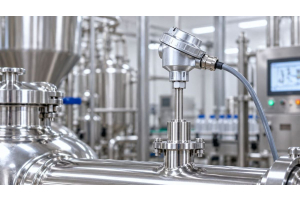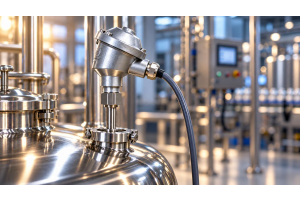

A car engine operates efficiently with a balanced mixture of air and fuel, but how do you know if the engine is receiving the right amount of air? This is why we need an Air Flow Sensor, also known as an "air flow sensor," which acts like a guard at the gate, monitoring the volume of air entering the engine. Let's learn more about this small yet important component.
What is an Air Flow Sensor?

An Air Flow Sensor, also commonly referred to as a Mass Air Flow Sensor (MAF) or an Air Flow Meter, is an air flow sensor that measures the volume and temperature of air entering the engine. It is typically installed in the intake air system, near the air filter or butterfly valve flap.
This type of air sensor measures the amount of air flowing through it and sends this data to the Engine Control Module (ECM or ECU) for calculating the appropriate amount of fuel to inject into the engine. Maintaining the correct air-to-fuel ratio is crucial for the efficiency of the engine and controlling exhaust emissions.
How does an Airflow Meter work?
An Airflow Meter is a device that operates on the principle of measuring air flow. The type commonly used in modern cars is the hot wire (Hot Wire) model, which works as follows:
-
Inside an Air Flow Sensor, there are small heating wires (hot wires) and temperature sensors installed close to each other.
-
When the engine is idling, only a little air flows through the hot wire, requiring minimal electrical current to keep it heated.
-
When you press the accelerator pedal, the butterfly valve opens wider, allowing more air to flow through the hot wire, which causes the wire to cool down.
-
The system increases electrical current to maintain a constant temperature of the wire; the more air that flows through it, the more electricity is required.
-
An electronic chip in the Airflow sensor converts this electrical current value into digital signals and sends them to the ECU (Engine Control Unit).
-
The ECU uses this information to calculate the appropriate amount of fuel, as well as to determine ignition timing and automatic gear shifting.
Warning Signs When the Air Flow Sensor is Malfunctioning
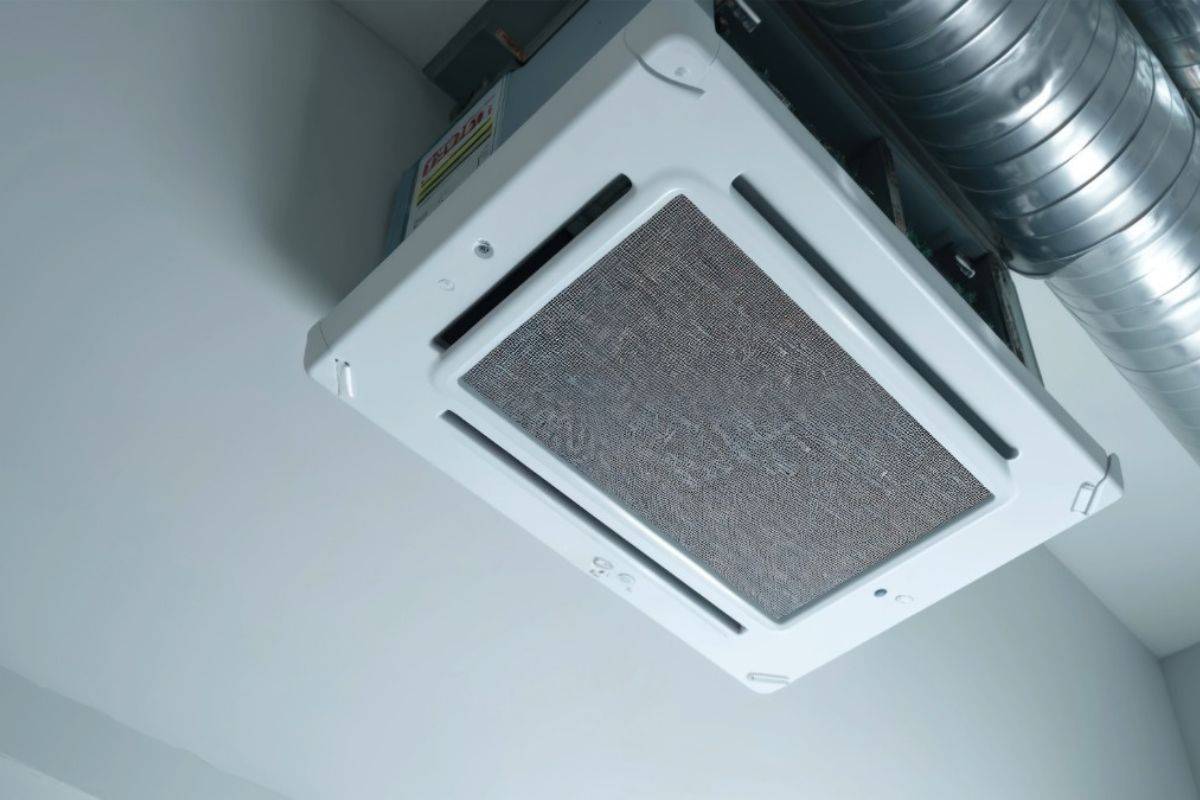
Although an air flow sensor isn't prone to damage, when it gets dirty from dust, oil residue, or excessive moisture buildup, problems can arise. When the air flow sensor starts malfunctioning, you may notice the following symptoms:
-
Car stalls at idle - The most obvious symptom is that the car tends to stall itself when idling, such as while waiting for a traffic light or when slowing down to idle speed.
-
Loses power and consumes more fuel - You may feel that pressing the accelerator doesn't yield the same response as before. The maximum speed you can achieve might decrease, and fuel consumption may become unusually high.
-
Limited engine RPMs - In severe cases, the car may only run at low RPMs, such as below 2,000 RPM. If you try to accelerate beyond that, the engine might stall immediately.
-
Engine runs rough - The engine's RPM may not be steady and could exhibit jerking or stalling.
-
Black smoke from exhaust pipe - This might occur due to incomplete combustion caused by an improper air-to-fuel ratio.
-
Check Engine light illuminated - The vehicle's diagnostic system may detect a fault and display the Check Engine warning light.
Error Codes Related to Air Flow Sensor
When the Air Flow Meter has issues, the car's diagnostic system will record error codes (Error Code) that a mechanic can read with a scanner. Common error codes when the Air Flow Sensor is problematic include:
-
P0100: Mass air flow circuit malfunction
-
P0101: Range/performance mass air flow circuit malfunction
-
P0102: Mass air flow circuit voltage low input
-
P0103: Mass air flow circuit voltage high input
-
P0104: Intermittent mass air flow circuit malfunction
-
P0171: System too lean (Bank 1)
-
P0174: System too lean (Bank 2)
When Should You Clean the Air Flow Sensor?

Cleaning the Air Flow Sensor should be part of regular car maintenance. Generally, it is recommended to do this every 30,000 kilometers or when encountering any of the abnormal symptoms mentioned above. Dirty air flow sensors can significantly impact engine performance.
Additionally, check the air filter as well since a dirty or clogged air filter may cause the Air Sensor to malfunction. If you find that the air filter is dirty, clean or replace it before it affects the air flow sensor.
Why Clean the Air Flow Meter?
Cleaning an Airflow Meter is a crucial maintenance task because over time, dirt, dust, and other residues can accumulate on the sensor, which may lead to issues such as:
-
Decreased engine performance, such as low acceleration, stalling, and poor idle.
-
Increased fuel consumption due to the engine not receiving the appropriate amount of fuel.
-
Difficulty in starting the engine.
-
The engine warning light may come on.
Cleaning an Air Flow Sensor is a simple and cost-effective way to ensure your vehicle runs smoothly and efficiently. Additionally, you can learn more about the Flow Meter to better understand how this device works.
How to Clean an Air Flow Meter Yourself
Cleaning an Air Flow Meter can be done by yourself, following these steps:
-
Turn off the engine and let it cool down - For safety reasons, wait for the engine to cool down before starting work
-
Locate the Air Flow Sensor - It is usually located in the air intake system, near the air filter
-
Carefully remove the sensor - Disconnect the electrical socket and unscrew the mounting bolts. Be careful not to damage the sensor or wiring.
-
Clean with a specific cleaning agent - Use a special air flow sensor cleaner, spray it on the temperature sensor area. Do not touch the wires of the air flow sensor with any material as they are very delicate.
-
Reinstall in its original position - Once cleaned and dry, carefully reinstall the sensor back to its original location.
-
Test operation - Start the engine to check if any abnormal symptoms have disappeared.
Tools and Equipment Needed:
-
Socket wrench size 10
-
Phillips screwdriver
-
Long-nose pliers
-
Brush
-
Container for oil
-
Special air flow sensor cleaner
If you are not familiar with working on cars or do not have the appropriate tools, it is recommended to take your car to a professional mechanic.
How to Test an Air Flow Sensor
In modern cars, the most reliable way to test an air flow sensor is by using a scanning tool. Mechanics will measure the airflow at various RPMs (such as idle, 1,000 RPM, 2,000 RPM, and 3,000 RPM) and compare them with standard values.
Faulty air flow sensors often show lower than normal airflow readings, but in some cases they may also display higher than normal readings.
For general users, a smartphone app combined with a Bluetooth OBD device can be used to check the initial readings of an Air Flow Sensor.
Replacing an Air Flow Sensor
If cleaning does not solve the problem of a dirty air flow sensor, it may be necessary to replace the Air Flow Sensor. Replacement is generally quite easy but can cost around 3,000 to 12,000 THB depending on the car model and brand.
The steps for replacing an Air Flow Meter are similar to those for disassembly for cleaning. After replacement, it's important to ensure that the air filter is installed correctly as well, to prevent future issues.
Flow Sensors in Industry
In addition to their use in automobiles, air sensors and flow measurement sensors also play a crucial role in the industrial sector. These sensors are responsible for measuring or controlling the rate of fluid and gas flow within pipes. They are commonly used in HVAC systems, medical equipment, chemical plants, and wastewater treatment systems.
Industrial flow sensors can be divided into two main types:
-
Contact-type flow sensors - have moving parts that come into direct contact with the fluid. Suitable for applications where liquids or gases are not at risk of clogging when in contact with moving parts.
-
Non-contact flow sensors - do not have any moving parts that come into direct contact with the fluid. Suitable for applications involving liquids or gases that may become contaminated if they come into contact with moving parts, such as in the food industry.
Common types of flow measurement sensors used in industries include:
-
Differential Pressure Sensors - rely on the principle that fluid velocity is directly proportional to pressure, according to Bernoulli's equation.
-
Thermal Mass Flow Sensors - measure heat transfer from a heated element to the flowing fluid.
Comprehensive Sensor Services from SCMA
SCMA Company Limited is ready to provide services for all types of sensors, including Air Flow Sensors for both industrial and automotive applications. With over four decades of experience in the automation industry, our company is prepared to meet customer needs from consultation, equipment procurement, installation, to after-sales service.
Services SCMA offers to customers:
-
Expert advice - Our team of engineers and experts is ready to advise on selecting the appropriate Air Flow Meter for your application
-
High-quality equipment procurement - We are an authorized distributor of products from leading global brands such as ifm electronic, German industrial sensors. SCMA is the sole official representative in Thailand.
-
Installation and testing services - Our technical team is ready to install and test systems for maximum efficiency.
-
Maintenance and calibration services - We provide maintenance and calibration of sensors to ensure that equipment operates accurately at all times.
-
Training - Provide training on the use and maintenance of Air Sensors for your team, both group and individual sessions.
For more details about SCMA services, please visit our company's main website.
With a new modern office on Si Samran Road, Pak Kret District, Nonthaburi Province, SCMA is ready to support business growth and provide more efficient service to customers.
Summary
The Air Flow Sensor is a crucial device that measures the volume of air entering the engine, helping the ECU calculate the appropriate fuel-to-air ratio. When the sensor malfunctions, it can cause abnormal symptoms such as stalling, poor acceleration, and increased fuel consumption. Maintenance by cleaning every 30,000 kilometers will help maintain the performance of SCMA engines. SCMA has been providing services for all types of sensors for over 40 years to meet your needs.
Frequently Asked Questions
How many types of Flow Sensors are there?
Flow sensors can be divided into several types, with the most popular being two: Differential Pressure sensors which work on the principle that flow velocity is directly proportional to pressure according to Bernoulli's equation, and Thermal Mass Flow sensors which measure heat transfer from a heated element to the flowing fluid. Both types have different applications suitable for various industries.
What does an Air Flow Sensor do?
The Air Flow Sensor or Mass Airflow Sensor (MAF), also known as air mass meter, is typically installed near the car's air filter. Its main function is to measure the volume and speed of air flowing through the intake manifold into the engine. The sensor sends this information to the Engine Control Unit (ECU) for calculating the appropriate fuel quantity, ensuring efficient and fuel-saving engine operation.
What does an AF Sensor do?
The AF Sensor or Mass Airflow Sensor is installed near the car's air filter. It measures the volume and speed of air flowing through the intake system and sends electrical signals to the ECU for calculating fuel injection timing appropriate to the amount of air entering the engine, directly affecting vehicle performance, fuel efficiency, and emissions control.