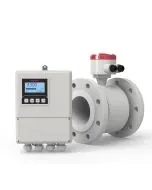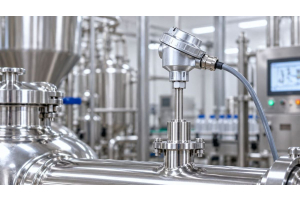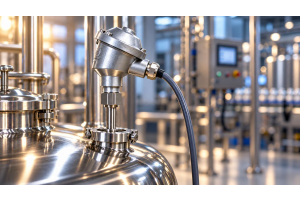
A Flow Meter, or flow measurement device, is a crucial piece of equipment in the industrial and engineering worlds used to measure the volume flow rate of liquids and gases. This includes measuring water, oil, chemicals, air, etc.
In this article, we will introduce you to Flow Meters in detail, from basic operating principles, various types, their importance in industries, to factors to consider when selecting them. This will help you choose the right flow meter that suits your needs and application.
What is a Flow Meter?
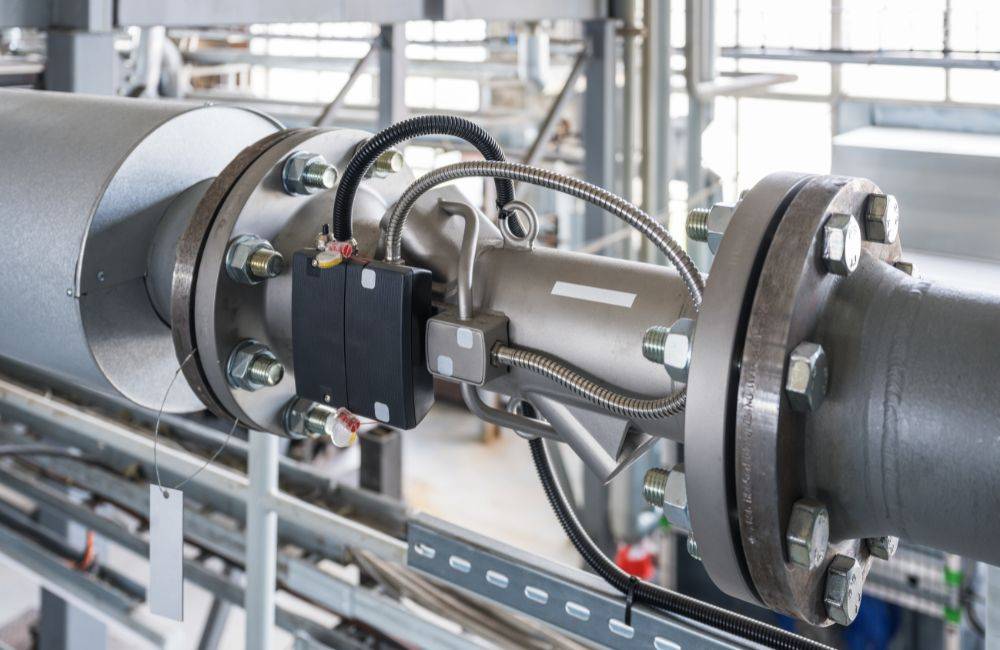
A Flow Meter, or flow sensor, is a device used to measure the volume of liquids, gases, or vapor moving through pipes. It measures linear, non-linear, mass, or volumetric flow rates. Measuring flow rate is crucial in many types of industrial work and there are various types of flow meters available for different applications. When selecting a Flow Meter, factors such as staff familiarity, calibration and maintenance experience, spare parts availability, and history of damage should be considered. Do not choose solely based on price, as it may lead to higher costs over the long term.
How does a Flow Meter work?
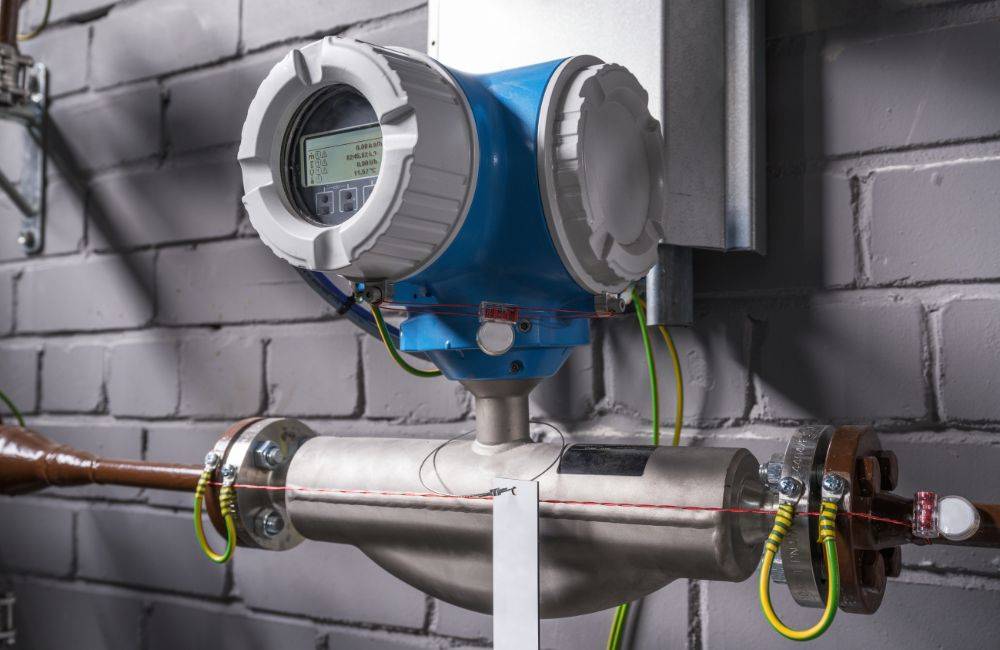
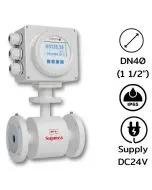
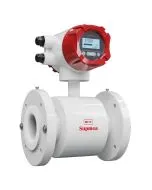
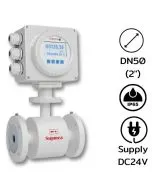
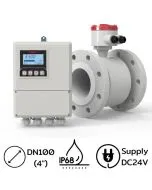
The working principle of a Flow Meter varies depending on the type of equipment. A Magnetic Flow Meter operates based on Faraday's law of electromagnetic induction, where when an electrically conductive fluid flows through a magnetic field, it generates an electrical voltage that is directly proportional to the velocity of the fluid. On the other hand, a Thermal Flow Meter measures gas volume by utilizing heat dispersion principles, using RTD Sensors to measure temperatures at two points. As gas flows past, it creates a temperature difference between the two probes, which is directly related to the amount of gas flowing through the pipe.
Types of Flow Meters (Flow Measurement Instruments)
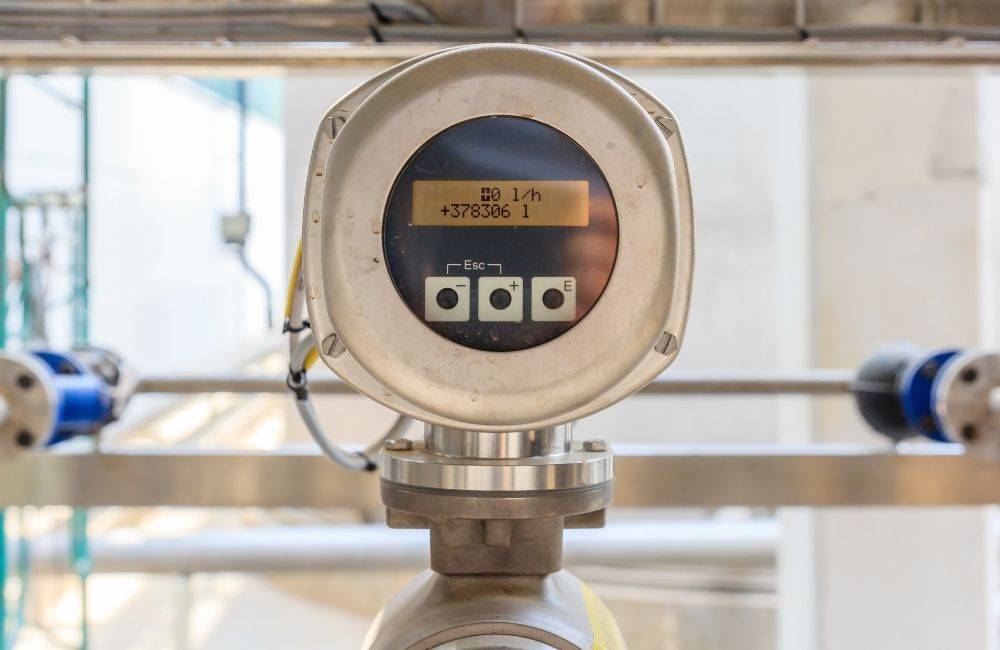
A flow meter is a crucial tool for measuring the rate of fluid and gas flow in industrial systems. With various technologies, there are many types of flow meters suitable for different applications. Let's take a look at how many types of flow meters exist.
|
Various Types of Flow Meters |
Characteristics and Operating Principles |
|
Positive Displacement Meters |
Measures flow in fixed increments, suitable for high viscosity fluids. |
|
Oscillatory Flow Meters |
Uses the oscillation or vibration of internal components in response to flow, durable for heavy use. |
|
Ultrasonic Flow Meters |
Sends high-frequency sound waves through the fluid and measures travel time, does not directly contact the fluid. |
|
Inferential Meters |
Air flow meters use a propeller or turbine that rotates according to flow speed, providing high accuracy over a wide range of flows. |
|
Vortex Flow Meters |
Detects the frequency of vortex shedding when fluid passes an obstruction, suitable for both liquids and gases. |
|
Differential Pressure Meters |
Measures the difference in pressure caused by pipe constriction, easy to install and low cost. |
|
Mass Flow Measurement |
Directly measures mass flow rate, unaffected by temperature or pressure, provides extremely high accuracy. |
|
Electromagnetic Flow Meters |
Uses electromagnetic induction principles, no moving parts, suitable for electrically conductive fluids. |
The Importance of Flow Meters
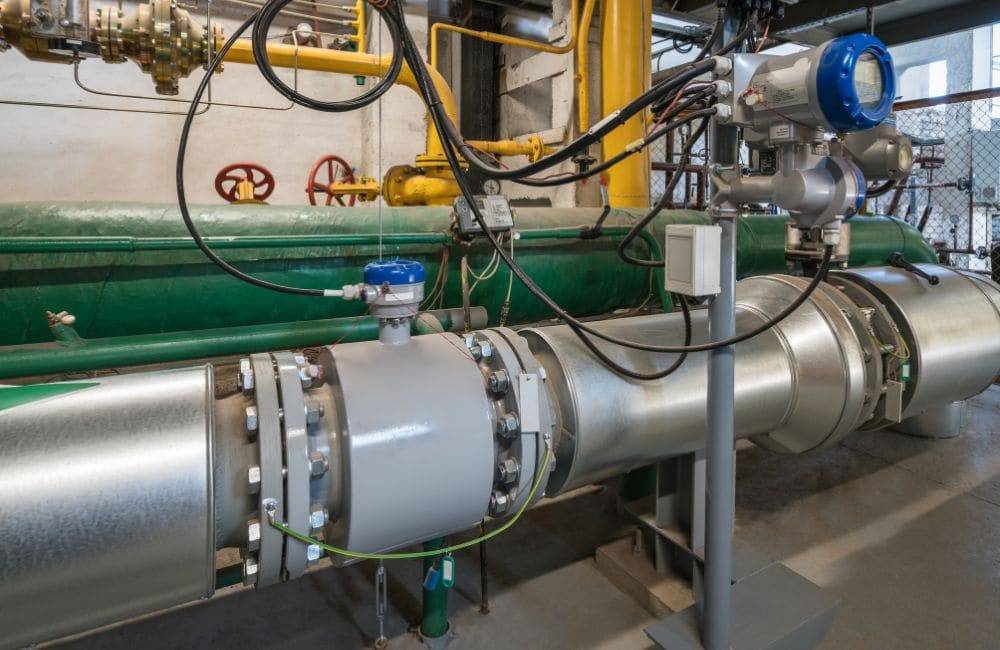
Flow meters are crucial for industrial plants and various systems as they enable users to track and control resource usage efficiently. Accurate measurement devices help organizations save costs by reducing material and energy losses, while also promptly detecting anomalies or leaks in the system, which not only mitigates damage but enhances workplace safety.
Moreover, data from flow meters is highly beneficial for production planning, product quality control, and environmental compliance. Installing appropriate flow meters is thus not just an investment in measurement tools but a long-term investment in efficient management systems that yield returns to the business.
What Should Be Considered When Selecting a Flow Meter?
You should choose a flow meter with a measurement range that is about 20-50% wider than the highest anticipated flow rate to accommodate future changes. For example, if you expect the flow rate to be in the range of 0-100 liters per minute, it's advisable to select a flow meter capable of measuring up to 0-150 liters per minute.
At the same time, consider the lowest measurable flow rate (turn-down ratio) that the flow meter can accurately measure to ensure it can handle low-flow conditions as well.
Example of Selecting a Flow Meter
Assuming there is a 2-inch diameter water pipe with a flow rate range of 20-80 liters per minute, the following flow meters can be considered:
- Volume Flow Meter
- Turbine Flow Meter with a measurement range of 0-120 liters per minute
- Vortex Flow Meter with a measurement range of 10-150 liters per minute
- Mass Flow Meter
- Coriolis Flow Meter with a measurement range of 0-200 liters per minute
- Thermal Mass Flow Meter with a measurement range of 5-120 liters per minute
- Pressure-based Flow Meter
- Differential Pressure Flow Meter with a measurement range of 15-150 liters per minute
Additional Tips for Selecting a Flow Meter
In addition to the flow range, other factors should be considered as well:
- Properties of the fluid - For corrosive or high-temperature liquids, Magnetic Flow Meter or Ultrasonic Flow Meter without moving parts that come into direct contact with the liquid should be selected.
- Viscosity - For high-viscosity liquids, Positive Displacement Flow Meter or Coriolis Flow Meter specifically designed for such conditions should be considered.
- Pressure - High-pressure systems require Flow Meters that meet the specified pressure standards, such as Turbine Flow Meter with a robust structure.
- Special flow range - For systems with highly variable flow rates, Flow Meters with high Turn-down ratio should be chosen, such as Ultrasonic Flow Meter or Magnetic Flow Meter.
- Flow Meter installation environment - Consider the installation space, humidity, ambient temperature, and spatial limitations.
Contact SCMA Today Before Installing a Flow Meter!
If you are looking for high-quality flow meters that fit your needs, SCMA is ready to provide services and consultations. With extensive experience in the industry and a team of experts, we are here to help you choose the right Flow Meter that meets your requirements and budget.
SCMA sells high-quality flow meters from leading global brands, covering all types and applications. Additionally, we offer comprehensive after-sales services to ensure your equipment operates efficiently throughout its lifespan.
Contact SCMA today to receive free consultation and quotation services! We are happy to provide advice on selecting the right Flow Meter for your needs at no cost.
Summary
A Flow Meter, or flow measuring device, is a crucial tool for controlling and monitoring the volume of fluid flow in various systems, whether liquid or gas. There are many types based on different operating principles such as Differential Pressure, Velocity, Positive Displacement, Mass Flow, etc.
Selecting an appropriate Flow Meter requires considering several factors including the type of fluid, working conditions, required accuracy, pressure loss, measurement range, installation, maintenance, and cost. Choosing a suitable Flow Meter will ensure accurate measurements, leading to more efficient production processes, reduced production costs, and also helps in detecting system leaks.
If you need further advice on selecting and using the right Flow Meter for your work, SCMA is ready to provide servicesand consultations with a team of experts and high-quality products from leading global brands.
Frequently Asked Questions
In this section, we have compiled the most frequently asked questions about flow meters that users often inquire about, along with explanations to help better understand their operation and working principles.
What is a Flow Meter used for?
A Flow Meter is used to measure the rate or volume of flow of liquids and gases moving through pipes or specific channels. It is utilized in process control, cost calculation, leak detection, and product quality maintenance across various industries such as chemical, oil and gas, food and beverage, wastewater treatment, and heating and cooling systems.
How many types of Flow Sensors are there?
Flow Sensors or Flow Meters come in several types which can be broadly categorized as follows:
- Differential Pressure Sensor
- Velocity Sensor
- Positive Displacement Sensor
- Mass Flow Sensor
- Open Channel Sensor
What is the function of an Air Flow Meter?
An Air Flow Meter or air flow measuring device measures the volume or rate of airflow in a system. It is used for various applications such as HVAC systems, industrial process control, internal combustion engines, clean rooms, and compressed air systems in manufacturing plants.
What principle does velocity measurement work on? What are its working principles?
Flow speed measurement can be based on several operating principles, including:
- Turbine Principle: The turbine blades rotate according to the flow velocity. The rotation speed is converted into an electrical signal for calculating the flow rate.
- Vortex Principle: When fluid passes through an obstructing object, a vortex (vortices) is formed. The frequency of the vortices is proportional to the flow velocity.
- Ultrasonic Principle: High-frequency sound waves are sent through the fluid, and the travel time of the wave is measured. If the flow moves faster, the travel time changes.
- Electromagnetic Principle: Faraday's law is applied; when electrically conductive fluid moves through a magnetic field, an induced electrical force proportional to the flow velocity is generated.
- Hot-Wire Principle: A heated wire is used; when fluid passes through it, cooling occurs. The rate of cooling is proportional to the flow velocity.
- Laser Doppler Principle: Uses the Doppler effect from laser light scattered by particles in the fluid.