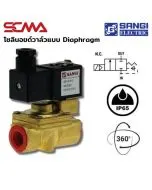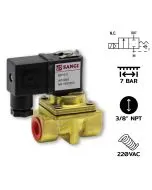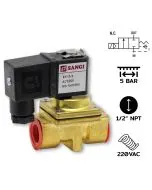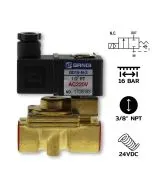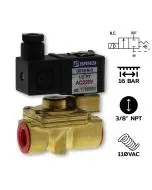
A Solenoid Valve, or solenoid, is an electrically operated device that controls the flow of fluids. It is one of the important components widely used in modern industrial systems, functioning to control the flow of liquids or gases through pipes by using electromagnetic force to open and close valves, thus enabling precise and efficient operation.
What is a Solenoid Valve?
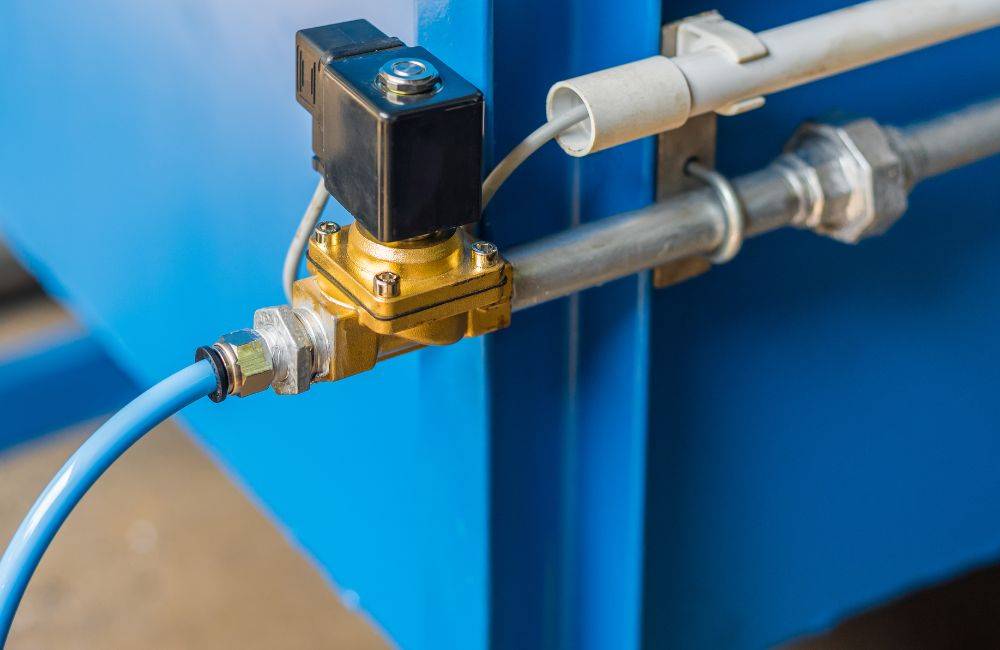
A solenoid valve (Solenoid Valves) is a device that controls the flow of fluids such as water, air, or various gases using an electromagnetic system. The core component for controlling opening and closing operations is the wound electromagnet.
When electric current flows through the coil, it generates an electromagnetic field that attracts a metal rod inside, causing the valve to open or close as required. There are two sets of metal rods, upper and lower, working together to control the flow. When the power is cut off, the valve returns to its original position by its own weight.
Selecting a solenoid valve requires consideration appropriate for the type of fluid involved:
- Plastic valves for water-related work
- Brass valves for chemical-related work
How many types of solenoid valves are there?
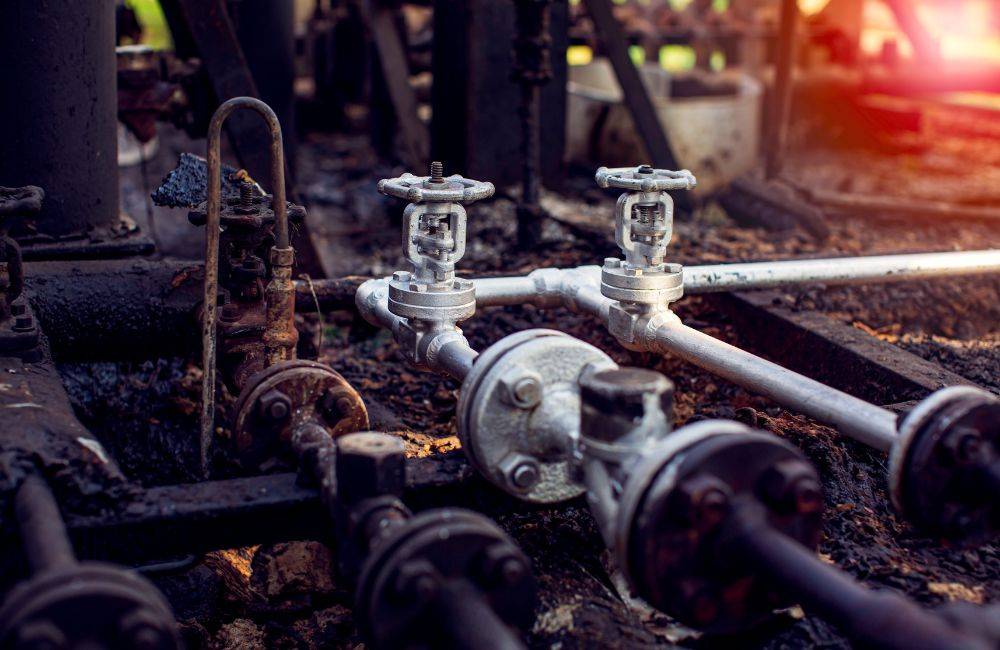
There are several types of solenoid valves designed to meet different usage requirements. Each type has specific features suitable for various industrial applications.
Solenoid Valve (Electric Solenoid Valve)
Basic solenoid valves work with an electric coil and can control flow direction in multiple configurations, from simple 2/2 types to more complex Directional Control Valves controlled by air or electricity in formats such as 3/2, 4/2, 5/2, and 5/3. They are available in Normally Open (NO) and Normally Closed (NC) models with sizes ranging from 1/4 inch to 2 inches.
Air Solenoid Valve
Air solenoids are valves that use an electric coil to control air direction. They offer high flexibility in usage and can be selected in formats such as 2/2, 3/2, and 5/2 ways. Their operation relies on the principle of electromagnetism combined with springs or electrical coils, making them suitable for pneumatic systems and automatic controls.
Water Solenoid Valve
Designed specifically for water valve systems, electric water valves, and water filtration systems. They operate using an electromagnetic system that controls opening and closing through electrical current supply. Commonly used in irrigation systems, greenhouses, and smart farms, they can work with automatic control systems such as Timers or Pressure Switches.
H4: Types of Electric Valves
Valve types are specified using the X/Y system:
X: Number of ports (inlets/exits)
Y: Number of working positions
Examples:
2/2: Two ports, two positions
3/2: Three ports, two positions
5/2: Five ports, two positions
5/3: Five ports, three positions
How a Solenoid Valve Works
A solenoid valve has three main types of control mechanisms:
1. Direct Acting System
It operates with a straightforward mechanism using a seal at the bottom to control fluid flow opening and closing. When power is applied to the coil, the seal lifts up to allow fluid passage and closes when power is cut off. However, this system has limitations regarding pressure - if the fluid pressure exceeds the coil's strength, the valve will not open even with power applied.
2. Pilot Control System
It uses a differential pressure principle to operate. When powered, the Plunger lifts the Pilot Seal, causing the upper side of the diaphragm's pressure to drop below the inlet pressure, resulting in the diaphragm lifting and opening the valve. This system is suitable for controlling high-pressure fluid flow.
3. Combined Operation System
It combines the advantages of both systems by using both differential pressure principles and direct lifting force from the Plunger, allowing the valve to operate even in very low-pressure conditions, which is an advantage over a typical pilot control system.
8 Major External Components of a Solenoid Valve
Solenoid valves are complex devices with several important components. Let's take a closer look at each part:
- Port: The port is a precisely designed rectangular opening that accommodates connections to pipes or fittings perfectly. This is where the fluid enters or exits the valve. Proper design prevents leaks and makes installation easier. These ports usually come in standard sizes compatible with common industrial equipment.
- Mounting holes: Mounting holes are carefully designed to securely attach the solenoid valve to a structure or control panel. These holes have standard sizes and spacing, making installation easy and secure. This is crucial as solenoid valves may operate in environments with high vibration or pressure.
- Valve portion: The valve portion is the heart of the device, containing intricate internal mechanisms that control fluid flow. This section includes seals, diaphragms, and precisely designed flow paths to ensure efficient and accurate flow control. Materials used here are typically selected based on the type of fluid being controlled.
- Label: Although labels may seem like minor components, they are crucial as they contain important information about the solenoid valve such as serial number, voltage rating, frequency, power consumption, type of valve, and production data. This information is vital for maintenance, replacement, or troubleshooting.
- Solenoid portion: The solenoid portion is the electromagnetic device at the heart of operation. It consists of a coil wound around an iron core that generates an electromagnetic field when electric current flows through it. This magnetic field creates mechanical force or movement, opening or closing the valve. The efficiency of this part directly affects the speed and accuracy of the valve's response.
- LED status indicator: LED indicators serve as a working status indicator for solenoid valves, lighting up when current flows through the coil. This is a very useful feature for monitoring operation and diagnosing issues, allowing operators to immediately determine if the valve is receiving power without needing electrical measuring tools.
- Manual override control button: A manual override feature allows for controlling the valve's operation without electricity, which is extremely useful in emergencies such as power outages or when testing systems. In models with a manual override feature, there is a mechanism that automatically returns the button to its original position once power is restored to the coil, ensuring smooth system control.
- Valve symbols: Valve symbols on the valve are diagrams showing fluid flow direction in each operational state. These international standards help engineers and technicians understand valve operation without consulting manuals, reducing installation and usage errors. The symbols show which way the fluid will flow when the valve is open or closed.
What precautions should be taken when installing a solenoid?
Proper installation of solenoid valves is crucial to extend their lifespan and prevent potential damage. The following points should be noted:
- Check compatibility with the application
- Fluid compatibility: Each valve is designed for specific types of fluids. Using it incorrectly can lead to corrosion or damage.
- Temperature rating: Ensure the valve can withstand the temperature of the fluid passing through it.
- Voltage rating: Use voltage as specified. Incorrect voltage usage may cause malfunction or damage to the valve.
- Material construction: The material must be suitable for the operating environment, such as corrosion resistance or pressure tolerance.
- Clean the pipe system before installation
- Dust, rust, and welding residues can clog internal mechanisms of the valve. Clean the pipe system thoroughly with chemical cleaners or high-pressure flushing before installation.
- Install accessories to extend service life
- Install a Y-Strainer filter before the valve to capture debris.
- Install a bypass valve to allow maintenance without shutting down the entire system.
- Control voltage appropriately
- If the system has fluctuating voltage, install a power control device to prevent damage to solenoid coils.
- Be mindful of temperature and fluid condition
- Avoid using with fluids exceeding the temperature rating.
- Do not use with fluids that may solidify or contain insoluble substances.
- Avoid high-frequency continuous operation
- Continuous frequent opening and closing over time can cause heat accumulation and premature wear. Choose a valve specifically designed for high-frequency use if necessary.
- By usage type: water solenoid valve, air solenoid valve, gas solenoid valve, steam solenoid valve
- By operating principle: direct-acting, pilot-operated, hybrid
- By number of ports: 2-way valve, 3-way valve, 4-way valve, 5-way valve
Before installing Solenoid Valve, consult SCMA today!
Need a solenoid valve that fits your system? SCMA is the expert in solenoid valves ready to advise! We offer high-quality products covering all types of applications, whether it's water, air, gas, or chemicals.
"SCMA - The trusted expert in solenoid valves."
Summary
A solenoid valve is a control device for fluid flow that operates on the principle of electromagnetic action, using wound coils around magnets to create an electromagnetic field when electricity flows through them, causing the movement of an iron core to control the opening and closing of fluid flow.
Solenoid valves have three main operating systems: direct open-close system, indirect open-close system, and hybrid system. Each system is suitable for different applications based on pressure and characteristics of the fluid. Proper selection and installation according to properties and specifications will help ensure efficient operation and extend the lifespan of equipment.
Don't risk choosing an unsuitable solenoid valve, which may lead to damage and high costs in the future. Let SCMA help you choose the right solenoid valve for your job!
Frequently Asked Questions
Users often have questions about solenoid valves on various points, especially those who are just beginning to study or use this equipment. Below are common questions with answers that help better understand the basics of solenoid valves:
What is the function of a Solenoid?
A solenoid converts electrical energy into mechanical movement by using an electromagnetic field to control the opening and closing of a valve that regulates the flow of fluids such as water, air, or gas.
How does a Solenoid work?
A solenoid works by generating an electromagnetic field when electric current flows through a coil, which attracts or repels the internal iron core causing mechanical movement to open and close the valve. When the electrical current is cut off, a spring pushes the valve back to its original position.
How many types of Solenoid Valves are there?
Solenoid valves can be categorized into several types such as:
What is a Serlinoid?
"Serlinoid" is an incorrect spelling. The correct term is "solenoid," which refers to an electromagnetic device consisting of a coil wound around an iron core used to convert electrical energy into linear motion for controlling valve operation.