
Flow Meter or flow meter is an important device in industries that require measuring the volume of liquid or gas flow. One popular type is the Float Flow Meter, also known as a float-type flow meter, which is widely used across various industries due to its high accuracy and ease of use.
What is a Float Flow Meter?
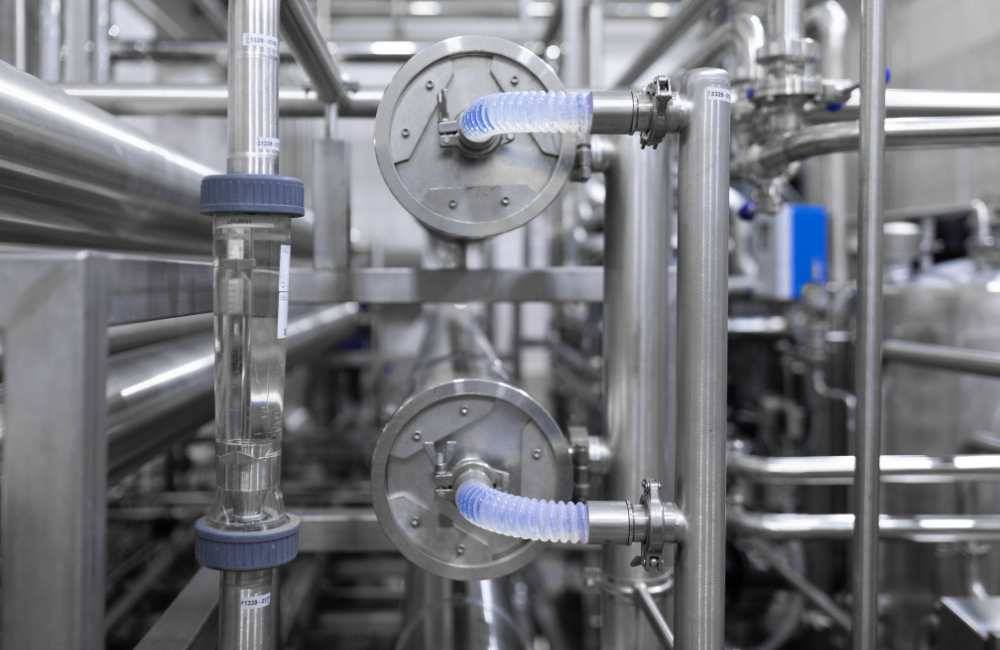
A Float Flow Meter, also known as a Rotameter, is a flow meter that operates on the principle of variable area measurement. It consists of a vertical or inclined tube with a conical shape expanding from bottom to top and contains a float inside. When fluid flows into the tube from below, the float rises until it reaches an equilibrium point between buoyancy force and gravitational force. The height position of the float indicates the flow rate on the scale attached alongside the tube.
How Does a Float Flow Meter Work?
The operation of a Float Flow Meter relies on the relationship between flow rate and the movement of the float. When liquid flows into the conical tube, the float rises due to fluid pressure until it reaches an equilibrium point where buoyancy force balances gravitational force.
At this position, the annular space area between the float and the pipe wall remains constant. This area is directly proportional to the height of the float; that is, a higher float position in the measuring tube indicates a greater flow rate.
For remote signal type meters, changes in the float's position are transmitted to an external indicator or converter through magnets installed inside. This converts the movement of the float into standard electrical signals such as 0-10 mA, 4-20 mA for remote signaling, display, recording, calculation, and control.
Structure and Components of Float Flow Meter
A Float Flow Meter consists of the following main components:
- Pipe Body: Typically made from high corrosion-resistant metal with mechanical strength, it can be adapted to various environments and fluids. Inside the pipe is a vertically tapered cone shape that widens from bottom to top.
- Float: Usually made of corrosion-resistant material, its shape and density are designed according to the measurement range and type of fluid being measured. The float moves up and down with the flow of liquid in the pipe.
- Indicator and Signal Converter: Used to display the flow rate at the installation point, it can be a needle gauge, digital or other types of displays. The signal converter converts the movement of the float into an electrical signal for remote transmission and control.
- Magnetic Filter: Some models have a magnetic filter to capture ferromagnetic particles in the fluid, preventing them from adhering to the float which may affect measurement accuracy.
Key Features of the Float Flow Meter

The Float Flow Meter has several key features that make it a good choice for measuring flow rates in various industries:
- High Accuracy: General accuracy can reach up to 1.0%, and for special models, it can reach as high as 0.5%, which is sufficient for most industrial flow measurement requirements.
- Wide Measurement Range: It can measure from low to high flow rates, with a typical range ratio of 10:1.
- Suitable for Various Fluid Types: Suitable for measuring the flow rate of liquids, gases, and steam, as well as various operating conditions such as corrosive environments, high temperatures, high pressures, and other harsh environments.
- Good Stability: Uses an all-metal structure and non-contact magnetic signal transmission. It has a robust construction, reliable operation, requires minimal maintenance, has a long service life, and does not experience drift or deviation over long-term use.
- Standard Output Signal: It offers several standard analog output signals such as 0-10 mA, 4-20 mA, which can be easily connected and used with various control systems.
Types of Float Flow Meter
Within the category of Float Flow Meters or float-type flow meters, there are several types to choose from based on suitability for specific applications as follows:
1. Traditional Rotameter
This is the basic form that consists of a glass or clear plastic tapered tube with a float inside, suitable for installation in areas where direct readings can be taken such as laboratories or small-scale production processes.
2. Metal Tube Rotameter
This is a rotameter that uses metal tubing instead of glass or plastic tubes, suitable for applications requiring high durability or in environments with high pressure or temperature conditions. Reading may use magnetic systems to send signals to external indicators.
3. Spring-Loaded Variable Area Flow Meter
This is an application of the variable area principle with the addition of a spring to counteract fluid force, making it suitable for use with high viscosity fluids and capable of measuring higher flow rates without needing to increase tube size.
How to Read a Float Flow Meter

Reading a Float Flow Meter is not difficult, but it must be done correctly to obtain accurate values:
- For clear tube Rotameters, read the value at the highest level of the float (not in the middle or bottom of the float)
- Read the value at eye level to avoid errors from viewing angles that are not straight on
- Check the unit of measurement displayed on the scale, which may vary by model and application such as LPH (liters per hour), m³/h (cubic meters per hour), GPM (gallons per minute) etc.
- For electric signal Float Flow Meters, read the value from the display screen connected to the device
Selecting the Right Float Flow Meter
Selecting a suitable float flow meter for your application is crucial. Consider the following factors:
- Type of Fluid: Choose a model that suits the liquid, gas, or steam you need to measure.
- Flow Range: Ensure the measurement range covers the required flow rates.
- Pressure and Temperature: Select a model that can withstand system pressure and temperature conditions.
- Required Accuracy: Consider the accuracy needed for your application.
- Casing and Float Material: Choose materials that are compatible with the fluid being measured and the operating environment.
- Connections: Consider connection size and type, such as threaded, flanged, or clamp connections.
- Remote Signal Output Required?: If remote data transmission to control systems or distant displays is needed, choose a model with this capability.
Usage of Float Flow Meter in Industries
Float Flow Meters are widely used across various industries due to their reliability and ease of use. Examples of usage in different industries include:
- Chemical and Pharmaceutical Industry: Used for measuring the flow of chemicals, solvents, and pharmaceutical mixtures to ensure accurate dispensing, mixing, and reactions.
- Oil and Gas Industry: Used for precise flow measurement which is essential in this industry.
- Beverage Industry: Used for proper portioning and mixing of beverages.
- Wastewater Treatment: Used in wastewater treatment plants and distribution networks to measure clean water, sewage, or slurry flow.
- Irrigation and Agriculture: Helps farmers increase efficiency and conserve water resources.
- HVAC Systems: Used to measure air flow and other gases in HVAC systems.
- Burner Control and Emission Monitoring: Used for measuring combustion air, fuel gas, and exhaust gas flows in industrial burners, boilers, and engines.
Comprehensive Flow Meter Services from SCMA
SCMA is ready to servewith comprehensive flow meter sales services, backed by extensive experience in the automation industry. We are not just equipment suppliers but trusted partners at every step:
- Consultation and System Design Services: Our team of expert engineers is available for consultation and system design tailored to the specific needs of each industry.
- Sales of High-Quality Products: We are distributors of leading global brands, including being the sole official distributor of ifm electronic in Thailand.
- Professional Installation Services: Our technical team provides professional installation services for Flow Meters and related systems to ensure maximum efficiency.
- Calibration and Maintenance Services: We offer calibration and maintenance services to maintain accuracy and extend the lifespan of Flow Meters.
- User Training Programs: We organize training courses to ensure customers can use and maintain equipment correctly.
- Comprehensive After-Sales Services: Providing comprehensive after-sales services including maintenance, system updates, and timely problem resolution.
Summary
Float Flow Meter is a highly efficient flow measurement tool, with a simple yet precise structure that allows for wide-ranging use across various industries. Key advantages include stability, minimal maintenance requirements, and the ability to measure diverse types of flows. SCMA Company Limited is ready to be your trusted partner in providing consultation, procurement, installation, and after-sales service for all types of Flow Meters, ensuring your business grows with maximum efficiency.
Frequently Asked Questions
What is a Flow Meter?
A flow meter is a measuring instrument designed to measure the volume, quantity, or rate of movement of fluids through containers such as pipes or tanks. It calculates from cross-sectional area, volume, and time that various fluids like water, oil, and gas pass through it. This tool is crucial in industrial processes requiring accurate measurement of fluid flow.
How does a Flow Meter work?
The basic principle of operation for a flow meter involves using the flow of fluids through an obstruction or specific structure, creating new patterns of flow. Then it measures these new flow patterns with various sensors such as pressure sensors, magnetic sensors, or ultrasonic sensors depending on the type of flow meter and suitability for the fluid being measured.
How many types of Flow Meters are there?
There are several types commonly used in industry, including:
- Rotameter - A float-type flow meter in a conical tube
- Variable Area Flowmeter - A variable area flow meter
- Turbine Flowmeter - A turbine-type flow meter
- Oval Gear Flowmeter - An oval gear flow meter
- Electromagnetic Flowmeter - An electromagnetic flow meter
- Orifice Plate Flowmeter - A plate orifice flow meter
Each type has its own advantages and suitability for different fluid properties and measurement requirements.