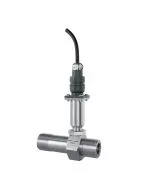
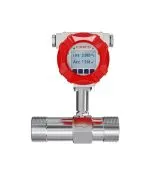
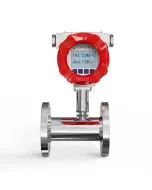
Flow meters are crucial components of pipeline systems in various industries, including water, oil, gas, and chemical sectors. They enable accurate measurement and control of liquid or gas flow. Turbine Flow Meter, also known as a turbine-type flow meter, is highly popular due to its high accuracy and versatile applications, especially for precise water flow measurements. This article will introduce you to the Turbine Flow Meter, covering how it works, components, pros and cons, and appropriate usage.
What is a Turbine Flow Meter?

A Turbine Flow Meter, or turbine-type flow meter, is a device used to measure the flow rate of liquids or gases through pipes. It works by using a turbine sensor that rotates blades or turbines powered by the kinetic energy of flowing fluids inside the meter. The rotational speed of the turbine is directly proportional to the fluid velocity, allowing for precise calculation of flow rates.
The principle behind Turbine Flow Meters involves converting the kinetic energy of flowing fluids into blade rotation, leading to accurate measurements. This type of meter is suitable for measuring clear and clean liquids, as well as gases and vapors such as hydrocarbons, chemicals, fuels, and other low-viscosity liquids. They can operate within a temperature range from -450 to 6,000 degrees Fahrenheit and withstand up to 6,000 psi pressure, making them an excellent choice for water flow measurement systems across various industries.
How a Turbine Flow Meter Works
The operation of a Turbine Flow Meter relies on a simple yet highly efficient physical principle, which forms the basis of current Turbine Sensor technology. The process works as follows:
- Fluid or Gas Flow: When fluid or gas flows into the meter, it exerts force on the turbine blades.
- Turbine Rotation: The turbine blades mounted on a shaft and bearing assembly begin to rotate. The rotation speed is directly proportional to the flow rate of the fluid.
- Signal Detection: As the blades spin, magnets attached to them move past metal plates embedded within the meter, generating electrical pulse signals.
- Data Conversion and Display: The frequency of these pulse signals is processed by an Electronic Turbine Meter to convert into flow rate values, which can be displayed in various formats such as analog, digital, or graphical.
This simple design results in minimal pressure loss and allows for efficient operation regardless of the direction of fluid flow. This makes the Turbine Flow Meter one of the most accurate flow measurement tools currently available, especially in high-precision water metering systems.
Main Components of the Turbine Flow Meter

A Turbine Flow Meter consists of several key components that work together to provide highly accurate flow rate measurements. The main components are as follows:
- Turbine Rotor (Turbine Rotor): This is the blade or turbine mounted on a shaft inside the meter, which rotates when fluid flows through it.
- Pickup Coil (Pickup Coil): A device installed around the blade that detects its rotation and sends signals to the electronic circuitry.
- Electronic Circuitry (Electronic Circuitry): Processes the signals received from the Pickup Coil and calculates the flow rate.
- Housing (Housing): The external structure that encases all components, designed to withstand high pressure and temperature.
- Bearings (Bearings): Support the rotation of the rotor smoothly and reduce friction.
The collaboration of these components enables the Turbine Flow Meter to measure flow rates accurately and with high stability.
Advantages of the Turbine Flow Meter
The Turbine Flow Meter has several advantages that make it popular across various industries. These benefits are key reasons why many companies choose this type of meter for their systems. The main advantages include:
- High Accuracy: Provides accurate measurements generally within ±0.5% to ±1.0%, making it suitable for high-precision applications.
- Broad Measurement Range (Wide Flow Range): Can measure flow rates over a wide range, from low to high flow rates.
- Fast Response: Quickly and accurately detects changes in flow rate.
- Cost-Effective: Compared to other flow measurement technologies, Turbine Flow Meters are often more cost-effective.
- Sleek Design: Compact and lightweight, making it easy to install and integrate into existing pipe systems.
- High Durability: Can operate in high-temperature and high-pressure environments.
- User-Friendly: Simple setup and operation.
- Wide Range of Applications: Suitable for various types of gases and liquids.
With these advantages, SCMA offers high-quality Turbine Flow Meters to customers across various industries, meeting diverse needs.
Selecting the Right Turbine Flow Meter

Selecting the right Turbine Flow Meter for your application is crucial to achieving accurate and highly efficient measurements. Key factors to consider include:
Properties of the Liquid or Gas
Before selecting a Turbine Flow Meter, it's important to understand the properties of the liquid or gas you intend to measure:
- Viscosity: Turbine Flow Meters are suitable for liquids with low to moderate viscosity. If the liquid has high viscosity, other types of flow meters may be necessary.
- Purity: The liquid or gas should be clean and free from contaminants to prevent clogging or damage to the turbine blades.
- Corrosiveness: If the liquid or gas is corrosive, it's advisable to choose a model made from corrosion-resistant materials.
For further guidance on selecting the right Turbine Flow Meter, you can read more here
Flow Range and Accuracy
Consider the flow range and accuracy required:
- Flow Range: Choose a model that can measure a flow range sufficient to cover your system's needs.
- Accuracy: Consider the level of accuracy needed for your application. In some cases, very high accuracy may be required, such as in custody transfer.
Operating Environment
The operating environment affects the selection of model and material:
- Temperature: Choose a model that can withstand the temperature range required for use
- Pressure: Consider the maximum pressure in the system and select a model that supports it
- Installation Location: Consider space limitations for installation, including necessary straight pipe lengths
Maintenance and Lifespan
Consider maintenance requirements and expected lifespan:
- Calibration Frequency: Some models may require more frequent calibration than others
- Maintenance Ease: Consider accessibility and ease of cleaning or maintenance
- Lifespan: A high-quality Turbine Flow Meter that receives proper maintenance can last for decades
Installing a Turbine Flow Meter
Proper installation of a turbine flow meter is crucial for achieving accurate measurements and extending the lifespan of the equipment. The installation steps are as follows:
- Select Installation Location: Choose an appropriate location, considering the required straight pipe lengths before and after the meter.
- Check Pipe Size: The size of the meter must match the size of the pipes in the system.
- Check Flow Direction: Install the meter correctly according to the direction of fluid or gas flow.
- Meter Installation: Install the meter following the manufacturer's instructions, using appropriate tools and equipment.
- Connection: Connect the meter to the control system or display device.
- Configuration: Set various parameters according to usage requirements.
- Function Testing: Test the meter's functionality to ensure it works correctly.
- Meter Reading and Inspection: Check measurement results to ensure accuracy as required.
Applications of Turbine Flow Meter
Turbine Flow Meters are widely used in various industries, demonstrating the versatility and efficiency of this type of meter. Key applications include:
- Oil and Gas Industry: Used for measuring oil and gas flow in pipelines, including the transfer of natural gas rights. Turbine meters are a suitable choice due to their high accuracy and durability under diverse operating conditions.
- Chemical Industry: Used for measuring chemical flow in production processes and laboratory chemical dispensing. Electronic Turbine Meters provide high accuracy in controlling chemical quantities.
- Water Industry: Used in water treatment systems and for monitoring water speed over long distances. The Flow Meter using Turbine technology provides high accuracy in measuring water flow.
- Food and Beverage Industry: Used in food and beverage production processes requiring high precision. The Turbine Sensor helps control liquid quantities during manufacturing.
- Plastics Industry: Used for measuring material flow in plastic production processes to ensure product quality.
- Energy Industry: Used in electricity generation and alternative energy systems, particularly in cooling systems and recirculating water systems.
- Potable Water Systems: Used for measuring water volume in potable water systems to monitor usage and leaks.
Maintenance of Turbine Flow Meter
Proper maintenance will help extend the lifespan and maintain the accuracy of the Turbine Flow Meter. Tips for maintenance include:
- Regular Cleaning: Regular cleaning of the meter is necessary to prevent accumulation of dirt and debris.
- Inspect for Wear and Tear: Inspect various parts such as blades and bearings for signs of wear or damage.
- Regular Calibration: Calibrate the meter at intervals recommended by the manufacturer to maintain accuracy.
- Replace Worn Parts: Replace any worn or damaged parts immediately to prevent further damage.
- Maintain Maintenance Records: Keep records of maintenance and calibration for future reference.
Comprehensive Services from SCMA for Turbine Flow Meter
SCMA Company Limited is a leader in the automation industry with over 40 years of experience. We are committed to being your trusted technical partner at every step, from design and installation to consultation and training. Our comprehensive services for Turbine Flow Meter include:
Consultation and System Analysis Services
We have a team of expert engineers ready to provide consultation and system analysis for your flow measurement needs, ensuring the selection of the best Turbine Flow Meter suited to any industrial application.
Design and Installation Services
We offer comprehensive design and installation services for flow measurement systems, from equipment selection through installation and testing, ensuring your system operates at peak efficiency.
Calibration and Maintenance Services
We provide calibration and maintenance services for Turbine Flow Meters according to international standards, ensuring accurate measurements and long-lasting performance of your equipment.
Training and Technology Transfer Services
Our training facility spans 600 sqm with a stage, sound system, and complete equipment to accommodate over 200 trainees. We are dedicated to transferring knowledge and technology about Turbine Flow Meters and other flow measurement systems to our customers and interested parties.
After-Sales Services
Our after-sales service team is available 24/7 for troubleshooting, system updates, or technical consultation to ensure your system runs smoothly and efficiently.
Summary
The Turbine Flow Meter is a highly accurate flow measurement device that operates on the principle of turbine rotation in response to fluid velocity. It is ideal for industries requiring high precision measurements such as oil, gas, and water. Especially when using an Electronic Turbine Meter with complex processing capabilities, despite some limitations, selecting the appropriate model and maintaining it well will help extend the equipment's lifespan and ensure continuous accurate measurement.
SCMA Company Limited is ready to be your technical partner in helping you select, install, and maintain Turbine Flow Meters so that you can maximize their benefits. With over 40 years of experience in the automation industry, we are committed to providing comprehensive and high-quality services to fully meet your needs.
Frequently Asked Questions
Which types of liquids is a Turbine Flow Meter suitable for?
Turbine Flow Meter is suitable for clear and clean liquids with low to moderate viscosity, such as water, fuel oil, and highly pure chemicals. It provides the highest accuracy when used with liquids that do not contain suspended particles.
How often should a Turbine Flow Meter be maintained?
Generally, it is recommended to calibrate a Turbine Flow Meter every 6-12 months depending on the usage conditions and the importance of accuracy. Checking for wear and tear of components should be done at least once a year; if used with clean liquids, maintenance intervals can be extended.
How does an Electronic Turbine Meter differ from a standard Turbine Flow Meter?
An Electronic Turbine Meter has more complex electronic systems that allow for diverse processing and display options, such as digital displays, network data transmission, and historical data logging. This makes it easier to track and analyze long-term flow data.