
Every house, building, or even condominium needs an important piece of equipment that many people might overlook. That is the "Water Meter", commonly known as "water meter," which calculates the amount of water used to charge monthly fees. Installing an appropriate water meter helps you manage your water expenses efficiently, but do you know that there are various types of water meters? What are their different features? And how should you choose one that suits your needs? Let's get better acquainted with this important piece of equipment.
What is a Water Meter?

A water meter, or water meter (Water Meter), is an instrument used to measure the volume of water flowing through it. It has internal mechanisms that calculate the volume and display the reading on a dial so we can read it in standard units such as liters or cubic meters. Some people may call it "water gauge" in everyday life.
The operation of a water meter is simple; when water flows through the measuring device, this device rotates or calculates according to the volume of water and then sends data to the dial via rotating numbers or sends electrical signals to the display system to show the amount of water used.
Currently, there are both mechanical (Mechanical) and digital signal transmitting types of water meters, known as AMR METER (Automatic Meter Reading), which can automatically send water usage data to other systems.
Types of Water Meters
Water meters or Water Meter come in several types that use different measurement principles. Generally, they are categorized into Turbine Water Meters and Piston Water Meters, suitable for various applications as follows:
1. Displacement Water Meter
This meter measures the volume of water in a specific area at a given time using a piston-type calculation mechanism that controls magnetic operation and displays results on the dial.
2. Positive Displacement Meter
Popular for use in buildings, residences, and small businesses, it offers accurate measurement even with low water volume. Available in various sizes starting from 5/8 inch, suitable for different flow rates.
3. Velocity Meter
This type of meter measures the speed of flowing water through an internal calculation device and converts it into volume units. It can be further divided into five subtypes:
3.1 Single and Multiple Jet Water Meter
This meter measures the speed of water flow through a turbine, which rotates according to the direction and force of the water, affecting the rotating shaft connected to the dial. Suitable for measuring small to moderate amounts of water because the turbine is not durable with large volumes.
For Multiple Jet types, it consists mainly of a volume measurement chamber and a recording device. When water flow impacts the turbine connected by magnets, the turbine rotates and induces another gear to move accordingly, displaying results on the recorder.
3.2 Multi-jet Turbine Water Meter
Also known as a double-layered impeller, it is commonly used in residential buildings, industrial factories, or high-rise buildings with large water usage.
3.3 Compound Water Meter
Suitable for measuring water flow rates from low to very high speeds, it features two separate measurement devices and a valve that controls the water flow independently. The impeller meter measures fast-flowing water while the Multi Jet meter measures slow-moving water. The system calculates the total volume based on readings from both devices before displaying the actual amount of water.
3.4 Electromagnetic and Ultrasonic Meter
Or electromagnetic flow meter, which works by sending signals through electrodes inside it and calculating the volume of water based on the difference in signal travel time through the liquid, then displaying the result digitally.
3.5 Ultrasonic Flow Meter
An ultrasonic flow meter with two transducers installed opposite each other on the pipe, emitting waves that bounce off the water inside and calculating speed and volume based on signals transmitted through the pipe from one side to the other. It is commonly used for measuring large volumes of water or other liquids.
This type of meter can be further classified into four installation types:
- Clamp-on (mounted externally to the pipe)
- Insert (inserted into the pipe)
- Portable clamp-on (portable type)
- Inline (mounted inline with the pipe)
4. Inferential Water Meter
Uses indirect flow rates of water volume by calculating volume from containers that are passed through turbines, such as Turbine meters, Woltman meters, Impeller meters, and Propeller-type flow meters.
5. Oscillatory Flow Meter
Uses the flow rate of water through the swinging of internal parts caused by water flow, then displays the signal from the swing.
6. Electromagnetic Flow Meter (Magflows/Magmeters)
Works according to Faraday's law, which states that when a conductor or water flows through a magnetic field, it generates a voltage drop proportional to the flow velocity.
7. Ultrasonic Flow Meter
Uses ultrasonic wave transmission through pipes to measure water speed and volume, suitable for measuring large volumes of water.
How to Choose the Right Water Meter for Your Usage Needs

Choosing the right water meter depends on the volume of water usage and the purpose of use, which can be categorized as follows:
1. Water Meters for Small-Scale Plumbing Work
If you need to use it in dormitories, apartments, or rental houses, a half-inch (½") water meter is recommended as it is affordable and accurate. It should have at least one standard certification from the Weights and Measures Department.
For example, single-stage turbine paddle wheel meters are compact, easy to install, cost-effective, and meet ISO 4064 and OIML R49 standards.
2. Water Meters for General Plumbing Use in Residential Buildings and High-Rise Structures
Water meters for high-rise buildings with higher water pressure than residential houses, such as condominiums, should be selected to ensure accurate readings, withstand at least 10 bar of water pressure, and can be installed both vertically and horizontally.
For example, double-stage turbine paddle wheel meters are highly accurate with a dry dial face, sealed tightly, driven by magnets, and meet ISO 4064, OIML R49, and TIS 3078-2563 standards.
3. Water Meters for Municipal Plumbing Work
These meters must meet the requirements of water utilities such as Bangkok Metropolitan Waterworks Authority (BMWA) or Provincial Waterworks Authority (PWA), and should be made from durable brass, accurate in readings.
For example, highly accurate dry dial face meters that are tightly sealed, driven by magnets, meet ISO 4064, OIML R49, and TIS 3078-2563 standards.
4. Water Meters for Projects and Industrial Plants
For large-scale plumbing systems that use a lot of water, meters should be selected to handle high volumes of water accurately and meet international standards.
For example, Woltman type meters certified by MID (EU standard) with OIML R49 and ISO 4064 certifications can handle large volumes of water and be installed both horizontally and vertically.
How to Read a Water Meter and Calculate Water Charges

The dial of a water meter typically comes in two main types, displaying either four digits or seven digits depending on the brand and model. The volume unit for measuring water is cubic meters (1 cubic meter = 1,000 liters).
Reading a Four-Digit Water Meter:
- The four-digit number represents the whole cubic meters (cubic meters).
- The three circular numbers represent the decimal places of cubic meters, which are in liters.
Reading a Seven-Digit Water Meter:
- The four black digits represent the whole cubic meters (cubic meters).
- The three red digits represent the decimal places of cubic meters, which are in liters.
How to Calculate Water Charges:
- Read the numbers on the water meter at the end of the month or when a meter reader comes.
- Subtract this number from the previous month's reading.
- The result is the amount of water used in cubic meters for that month.
- Multiply this number by the cost per unit of water.
Example: In October, you used 5 cubic meters of water. In November, you used 15 cubic meters of water. This means you used 10 cubic meters (15 - 5 = 10). If the cost per unit is 10 baht, then it would be 10 × 10 = 100 baht.
Special Observations:
The central paddle in the water meter helps detect leaks. If there is no water usage, the paddle should not spin. If it continues to spin, it may indicate a leak within the pipes and requires immediate inspection and repair.
Why does the water meter not spin?
Users often find that theirwater meter does not spin due to various reasons, even after opening the tap. This could be caused by issues such as:
- Water is not flowing into the meter: This may occur due to a closed main valve or damaged pipes in the area.
- The water meter is clogged: Dirt, sediment, or suspended particles can block internal mechanisms.
- Blade damage: Internal parts may be damaged from prolonged use.
- Insufficient water pressure: The internal mechanism is not being driven by enough water pressure.
- Air in the system: There may be air bubbles trapped within the pipe system.
If you find that your water meter does not spin when using water, it is advisable to contact a professional plumber or local water utility for inspection and repair.
Factors Affecting the Accuracy of Water Meters
There are several factors that affect the accuracy of water meter measurements, including:
- Condition of the Water Meter: If there is rust or sediment and foreign objects clogging the pipe, it can cause measurement errors.
- Age of Use: Older parts that are misshapen or damaged by hydraulic impact will affect accuracy.
- Dial Display: If the dial is unclear, it may cause reading errors.
- Installation Orientation: Incorrect or tilted installation can lead to inaccurate readings.
- Inlet and Outlet Pipes: There should be straight pipe sections that are the same size as the water meter and of sufficient length.
Requirements for Water Meter Monitoring and Lifespan
Water meter monitoring is important for maintenance and periodic accuracy checks. Water meters used for billing purposes must undergo initial mandatory inspection, limited use, and rotation according to schedule with the following lifespan:
- Water meters with a diameter of 25 mm or less: Not more than 6 years.
- Water meters with a diameter greater than 25 mm up to 50 mm: Not more than 4 years.
Regular monitoring of water meters helps you detect problems early and save costs in the long run.
Self-Inspection and Maintenance of Water Meters
Most water meters are installed outside the house or attached to an inner fence, making it convenient for utility workers to read them. However, outdoor installation exposes the meter to sun and rain, so regular inspection and maintenance is necessary:
- On/Off Water Valve: It must be in good condition and should turn smoothly.
- Folding Cover on the Dial: It must not be broken or damaged.
- Condition of Water Meter: No rust, no scale buildup or sediment accumulation.
- Dial Numbers: Must be clearly visible and the dial should not be cloudy or hazy.
- Leakage Signs: There must be no water dripping from joints. If leakage is detected, it needs to be fixed immediately as it can cause unnecessary high water bills.
Comprehensive Services from SCMA for Water Metering and Automation Systems
SCMA Company Limited is a leading industrial automation industry player with over four decades of experience. We are not just high-quality water meter distributors, but also full-service partners ready to provide consultation, design, installation, and training services to ensure your water measurement and automation systems operate at peak efficiency.
Services Provided by SCMA:
- Consultation and Design of Suitable Water Metering Systems: Analyze requirements and design water measurement systems that suit your usage, whether for residential homes, high-rise buildings, or industrial plants.
- Supply of High-Quality Water Meters: We are authorized dealers of products from leading global brands, including ifm electronic from Germany, which have international certification standards.
- Installation and Customization of Water Metering Systems: Provide professional installation services to ensure the system operates efficiently and accurately.
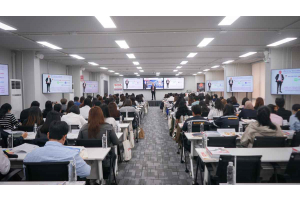
- Knowledge Transfer and Training on Water Meter Usage: With a fully equipped seminar room of 600 sqm, we offer both free and small group training sessions.
- After-Sales Service: Maintenance, system updates, and prompt problem-solving to ensure water meters operate efficiently throughout their lifespan.
SCMA is ready to be your Technical Solution Partner, working alongside you with a team of engineers and specialists ready to support every step of your water meter usage.
Summary
Water meters are essential equipment that every home needs. Choosing the right water meter ensures accurate measurement and correct calculation of expenses. Each type has its own advantages, depending on various factors such as water usage volume, water pressure, and installation location. Maintaining water meters in good condition helps save costs from leaks. When you need advice on SCMA's water meter system, we are your partners every step of the way.
Frequently Asked Questions
How to read the water meter?
- The four digits in front display the total amount of water used, measured in cubic meters (1 cu. m. = 1,000 liters)
- The three digits at the back represent the number of liters (the decimal point of cubic meters)
- The propeller or gear in the middle of the meter indicates the water usage status. If no water is being used, the propeller will not spin. In case the propeller spins without any water usage, it may indicate a leak inside the pipe; immediate inspection and repair are recommended.
How to check if the water meter is faulty?
- Try turning off all water usage inside the house and go outside to check if the water meter in front of your home is spinning.
- If the numbers on the water meter are moving backward or not moving when the water is turned on, it indicates a problem.
- Or if the numbers on the water meter increase while there's no water usage, observe whether there is any leakage or seepage from the water meter.
Why does the water meter spin faster than usual?
A water meter spinning faster than normal may be due to:
- High-pressure pumps causing high pressure in the pipes.
- Air displacement in the pipes due to booster pumps used for tall buildings. When there is a backflow of water in the pipe, air replaces the water and increases pressure, causing the propeller to spin faster.