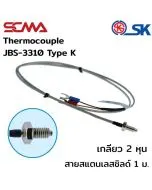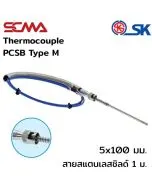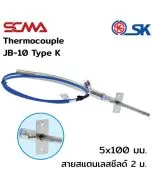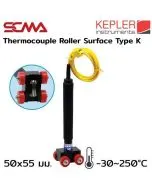
Thermocouples are highly popular temperature sensors, especially in industries that require precision and reliability. SCMA is an industrial measurement tool expert, ready to provide advice and supply thermocouples that meet your business and production process needs. Let's get better acquainted with thermocouples so you can choose the right one.
What is a Thermocouple?

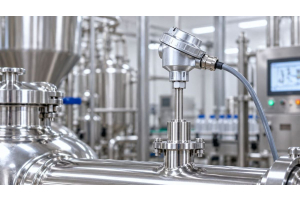
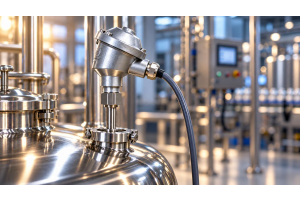
A thermocouple, or thermal couple, is a sensor used to measure temperature based on the thermoelectric effect. This effect generates an electromotive force (emf) when there is a difference in temperature between two points of different metals. Typically, a thermocouple consists of two metal wires with different chemical compositions that are connected at one end, known as the measuring or hot junction. The other end serves as the reference or cold junction. When the temperature at the measuring point changes, it generates an electrical voltage that can be converted into temperature readings.
What Does a Thermocouple Do?
Thermocouples primarily measure temperatures, especially in industrial applications such as controlling production process temperatures, checking machine and equipment temperatures, measuring furnace system temperatures, or scientific research. Due to the many advantages of thermocouples, such as small size, wide temperature range measurement capability, and high accuracy, they can be applied in various ways by selecting the appropriate type of thermocouple for specific applications, which helps ensure accurate measurements.
How a Thermocouple Works
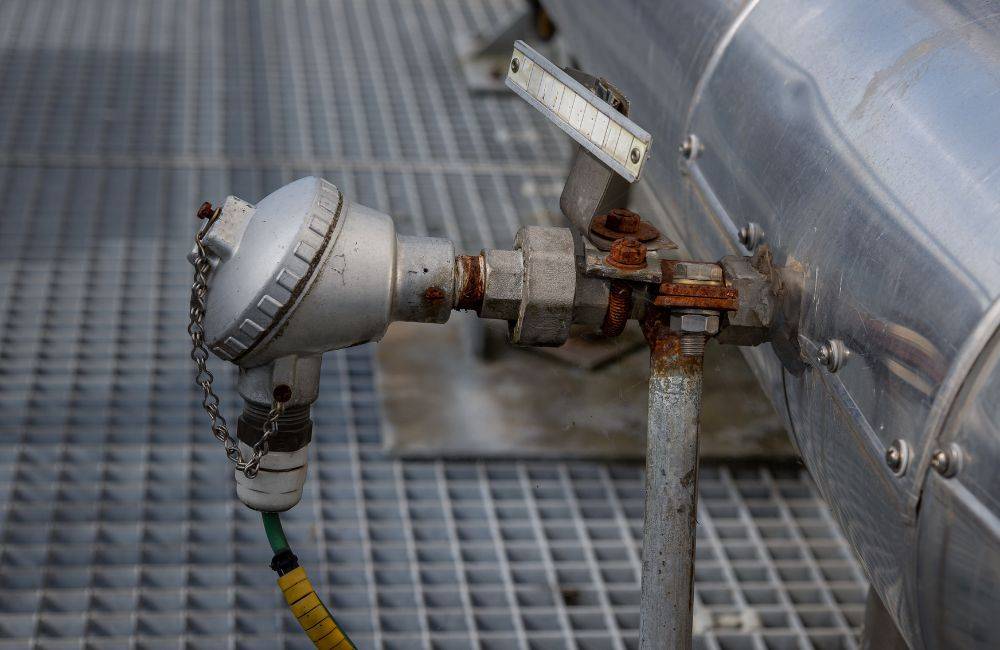
A thermocouple operates based on a principle known as the Seebeck Effect. This means that when two different metals are joined and one end of the junction is heated while the other end remains cooler, an electromotive force (EMF) or Seebeck EMF will be generated in the circuit. The difference in temperature (Temperature Gradient) between the measuring point and the reference point varies directly with the Seebeck EMF produced, which can be measured using a voltage meter. Then, the measured voltage is converted into a temperature value according to known relationships, where the coefficient of change of electrical voltage per degree of temperature depends on the metal pair used in the thermocouple.
Types of Thermocouples
Currently, there are various types of thermocouples produced, each using different metal pairs which result in varying Seebeck Coefficients. Additionally, they have different temperature ranges for use. The commonly used types of thermocouples are classified according to English letters as follows:
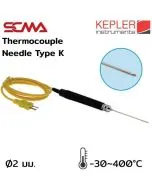
- Type K Thermocouple is made from Chromel–Alumel and can measure temperatures ranging from -200°C to 1260°C. It is the most widely used type.
- Type J Thermocouple is made from Iron–Constantan and can measure temperatures between 0°C to 760°C.
- Type E Thermocouple is made from Chromel–Constantan and can measure temperatures ranging from -200°C to 870°C.
- Type T Thermocouple is made from Copper–Constantan and can measure temperatures between -200°C to 370°C.
- Type N Thermocouple is made from Nicrosil–Nisil and measures temperature ranges from -270°C to 1300°C.
- Type B, R, and S Thermocouples are made from Platinum-Rhodium alloys with different proportions of metals. They can measure extremely high temperatures.
Selecting the appropriate thermocouple for a specific application requires considering the expected temperature range, required accuracy, environmental conditions during use, and budget constraints. For additional advice, you can consult with experts from SCMA.
Features of Thermocouple
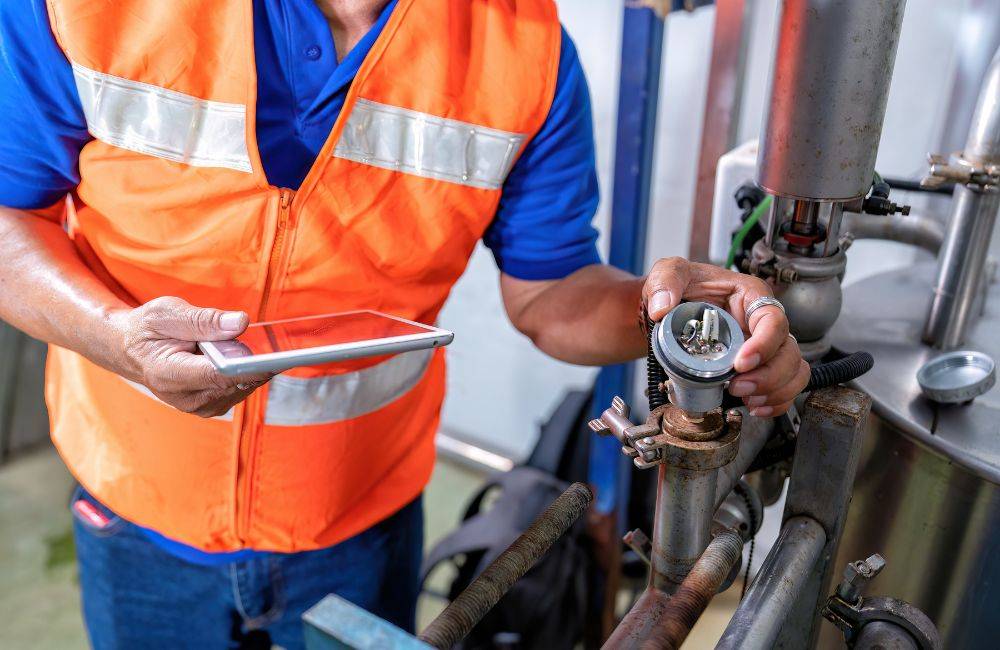
Thermocouples have several notable features that make them one of the most popular temperature sensors in industry, including
- They can measure a wide range of temperatures depending on the type of thermocouple. Some types can measure from -270 °C to 2300 °C.
- They are small in size, allowing them to be installed in limited spaces or easily measuring the temperature of small workpieces.
- Compared to other types of sensors, they are inexpensive and cost-effective for investment.
- They do not require a power supply, reducing installation system costs.
- They are durable against vibrations, impacts, and high pressure, suitable for industrial work.
- They have a high sensitivity to temperature changes and respond quickly.
- They can be used with thermoscopes or other display devices.
- They are highly versatile and flexible, allowing customization for specific applications.
Why are Thermocouples Important?
Thermocouples are crucial sensors in many industries. Accurate temperature measurement and control during production processes directly impact product quality and machine efficiency, especially in heat-related industries such as oil refineries, power plants, metal smelting and casting, petrochemicals, food and beverage industries, or even in engine maintenance work.
Moreover, thermocouples are also excellent alternative sensors for use in scientific research due to their outstanding features mentioned above, including high accuracy, ease of use, and relatively low cost.
If you need a digital multimeter, you can purchase from SCMA today!
SCMA is the leader in supplying and servicing industrial measurement tools, including various types of thermocouples such as Type K, Type J or other types according to your needs. Additionally, we also offer related equipment like digital multimeters, installation tools, and spare parts, all of which are high-quality products from leading brands carefully selected for you, along with reliable warranty and after-sales service.
If you need thermocouples or other temperature measurement equipment, you can contact SCMA for advice and quotations today.
Summary
Thermocouples are widely popular temperature sensors, especially in industries that require accuracy, durability, and cost-effectiveness. Choosing the right thermocouple for your specific application and environment will ensure accurate and reliable measurements. If you have any questions about selecting or installing a thermocouple, you can consult with experts from SCMA to maximize the efficiency of your temperature measurement tools.
Frequently Asked Questions
What is the function of a Thermocouple?
Thermocouple functions to measure temperature based on the thermoelectric principle, using two different metal wires connected together. When there is a difference in temperature at both junctions, an electric voltage will be generated. The measured voltage can then be converted into a temperature value.
What is a Thermocouple Sensor?
A thermocouple sensor or thermocouple is an instrument used for measuring temperature, with several notable features such as small size, high accuracy, wide range of measurable temperatures, durability in harsh environments, and affordability. Therefore, it is widely used in industries.
How do Thermocouples differ from RTDs?
Both thermocouples and RTD (Resistance Temperature Detector) are temperature sensors but operate on different principles. A thermocouple relies on the Seebeck Effect, converting temperature differences into electrical voltage, while an RTD depends on changes in resistance of the conductor as temperature varies. Generally, RTDs offer higher accuracy but have a narrower range of measurable temperatures compared to thermocouples.
What is a Thermocouple-Type Thermometer?
A thermocouple-type thermometer uses a thermocouple as the sensor for measuring temperature. Once the thermocouple measures the temperature, the thermometer displays the read value on its digital screen, making it convenient to use without having to manually calculate voltage conversion values. It is suitable for measuring temperatures in various conditions with high accuracy and comes in many different models to suit specific usage requirements.