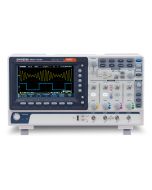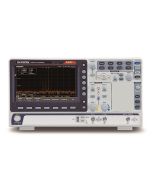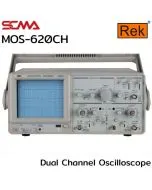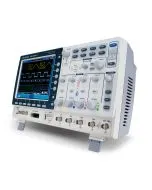
In the era of technology and innovation, Oscilloscopes have become an essential tool for modern industrial work. SCMA, experts in Oscilloscopes and electrical measuring equipment, would like to present knowledge about Oscilloscopes from their meaning, working principles, components, to various types, so that you can understand the importance of this tool and apply it effectively. SCMA is ready to provide consultation and comprehensive services for Oscilloscopes.
What are Oscilloscopes?

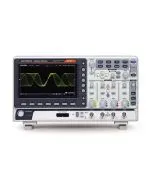
An Oscilloscope, or oscillograph, is a tool used to display and analyze electrical signals. It presents the results in graph form with a vertical axis (Y-axis) showing voltage values and a horizontal axis (X-axis) showing time values, allowing you to see the waveform of changing electrical signals over time. Oscilloscopes are used for analyzing problems in electrical and electronic equipment such as checking interference signals or measuring various properties of signals.
How do Oscilloscopes work?
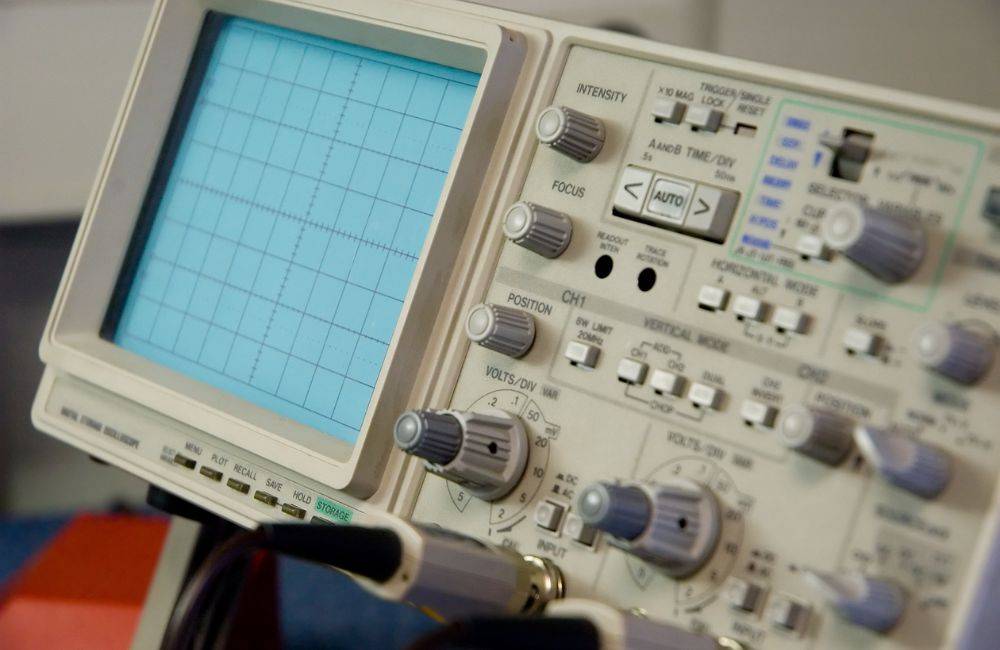
The working principle of Oscilloscopes involves processing electrical signals through two main parts:
- Vertical deflection (Vertical Deflection): The electrical signal passes through a voltage divider circuit and an amplifier circuit to the vertical deflector plate, creating vertical electron deflections that allow for measuring the voltage of the signal.
- Horizontal deflection (Horizontal Deflection): The signal passes through a sawtooth waveform generator circuit to the horizontal deflector plate, resulting in horizontal electron deflections over time.
When electrons are deflected both vertically and horizontally, it creates a bright spot on the screen, which is the display of the waveform of the signal.
What are the components of an Oscilloscope?

Oscilloscopes consist of the following main components:
- Probes : They are used to receive electrical signals into the device, including standard probes, high-voltage probes, and current probes.
- Power Supply : It supplies power to the circuits and components within the Oscilloscope, both direct current (DC) and alternating current (AC).
- Amplifier : It helps to amplify incoming electrical signals to a sufficient intensity for measurement, including both DC and AC amplifiers.
- Attenuator : It adjusts the signal strength to an appropriate level within the measuring range, available in adjustable and fixed types.
- Horizontal Deflection Plates : They create an electric field to deflect electrons horizontally, controlling the position of points on the X-axis of the graph.
- Vertical Deflection Plates : They create an electric field to deflect electrons vertically, controlling the position of points on the Y-axis of the graph.
- Controls : Used to adjust various aspects of waveform display such as height, width, and sensitivity in both vertical and horizontal directions.
- Cathode Ray Tube (CRT) : It displays the waveforms of measured signals, a glass tube with an evacuated interior coated with phosphor material that lights up when electrons hit it.
How many types of Oscilloscopes are there?
Oscilloscopes can be categorized based on technology and usage, primarily as follows:
- Analog Oscilloscope : This is an older type of oscilloscope that uses cathode-ray tubes to create images. It is not very expensive but has lower resolution.
- Digital Oscilloscopes : These are digital oscilloscopes that use transistor technology and digital data processing systems, offering higher accuracy and complexity than analog ones but at a higher cost.
- Mixed-Signal Oscilloscopes (MSO) : These are mixed-signal oscilloscopes that have both analog and digital inputs to analyze systems with multiple types of signals.
- Mixed-Domain Oscilloscope (MDO) : This is an oscilloscope that adds the ability to analyze radio frequency (RF) signals, in addition to analog and digital signals.
- Handheld/Portable Oscilloscopes : These are portable oscilloscopes suitable for field work or limited spaces. They are small and durable.
- PC-based Oscilloscopes : These are oscilloscopes that work in conjunction with a computer, either as separate hardware connected via USB or LAN, or as an all-in-one system.
What is a PC Oscilloscope?
A PC Oscilloscope is an oscilloscope that relies on the processing power of a personal computer (PC) to display and analyze signals. It offers high flexibility in use, ease of operation, portability, but may have lower resolution and slower processing speed compared to traditional oscilloscopes.
How does a PC Oscilloscope work?
A PC Oscilloscope connects to a computer via USB or PCIe ports and then feeds electrical signals into the hardware. The computer processes the signal and displays waveform graphs through installed software. Users can customize display settings and utilize various features of the program to analyze signal characteristics.
Compare Between PC Oscilloscope VS Oscilloscope Which One is Better?
Choosing between a PC Oscilloscope and a regular Oscilloscope depends primarily on the requirements and nature of use. The comparison can be made as follows:
- In terms of operation : A PC Oscilloscope uses computer resources for processing, while a regular Oscilloscope utilizes dedicated hardware and equipment.
- Regarding price : Generally, a PC Oscilloscope is often cheaper because it does not require many specialized components.
- In terms of usage : A PC Oscilloscope is suitable for general tasks that are not overly complex, such as testing electronic devices, maintenance, or learning. On the other hand, a regular Oscilloscope is more appropriate for high-precision work like research and development, industrial applications, etc.
If you're interested in Oscilloscopes, contact SCMA to purchase today!
SCMA is a leader in importing and distributing measuring instruments, testing equipment, including Oscilloscopes of high quality from leading brands worldwide. We provide consultation and after-sales service by a team of experts. If you are looking for Oscilloscopes for industrial work, research, or maintenance, you can browse our products on the website or contact us at 02-009-5000 for more information. SCMA is ready to advise and serve all customers with heart.
Summary
Oscilloscopes are important tools for analyzing electrical signals and have numerous benefits in industrial work, whether it be research and development, quality testing, or repairing electronic equipment.SCMA specializes in consulting and providing Oscilloscopes that meet the needs of every business. Interested parties can place orders or inquire for more information today.
Frequently Asked Questions
What is the role of an oscilloscope?
Oscilloscopes (oscilloscope) are used to display and analyze electrical signals, presenting the results in a two-dimensional graph where the Y-axis represents voltage and the X-axis represents time. This allows for detailed measurement and examination of various characteristics of electrical signals such as voltage, frequency, phase, and waveform.
What is a signal measuring device?
A signal measuring device or Signal Analyzer is a tool used to analyze the characteristics and behavior of electrical signals. This information can be utilized for improving or resolving issues in electrical and electronic systems, with Oscilloscopes being one type of signal measuring device that has the ability to present signal results in an easily understandable graphical format.
What is a scope?
Scope is simply an abbreviation for Oscilloscope, commonly used in industry circles to facilitate clear and concise communication.
What is an electrical signal waveform measuring instrument?
An electrical signal waveform measuring instrument is essentially an oscilloscope. The primary function of an oscilloscope is to record and display changing electrical signals over time in the form of a wave graph, allowing for better understanding of the behavior of electrical signals.