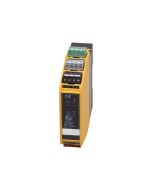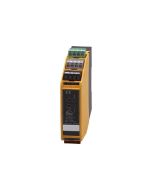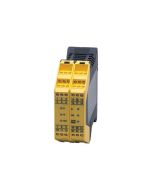

Safety Relay, or safety relay devices, are crucial components in the safety systems of industrial machinery. They help prevent potential hazards to both operators and machines. In this article, SCMA will introduce you to safety relay devices, from their basic functions, types of relays, usage, selection, and maintenance, so that you can understand and apply them effectively.
What is a Safety Relay?

Safety Relay is an electronic device specifically designed for industrial safety systems. It receives signals from various sensors such as emergency stop buttons, light curtains, or safety door switches and immediately stops the operation of machinery when a dangerous situation is detected. With high reliability design and compliance with international safety standards, the safety relay circuit plays a crucial role in preventing accidents and injuries to workers in industrial plants.
What is the Difference Between a Safety Relay and a Relay?
Relay and Safety Relay, despite both being related to electrical circuit control, have significant differences that make Safety Relays stand out in terms of industrial safety. The safety relay circuit is developed from general relays with more complex circuits, higher reliability, and international safety standard certification for use in high-safety systems.
What is a Safety Relay?
A Safety Relay or safety relay is a special type of relay designed specifically for safety systems. It has an internal circuit with self-monitoring and redundancy systems, featuring forcibly guided contacts that ensure the system will always switch to a safe state when abnormalities occur. It works in conjunction with various safety devices such as emergency stop buttons, light curtains, or abnormality detection sensors, and must be manually reset after a safety event occurs.
What is a Relay?
A relay functions as an electrical device that operates on the principle of electromagnetic induction. It consists of a coil and contacts, acting as a switch to control high-power circuits with lower current. When current flows through the coil, it generates a magnetic field that pulls the contacts to change state, allowing for the opening or closing of electrical circuits without direct contact with high voltage electricity. Relays are commonly used in motor controls, lighting systems, or general electrical equipment.
How many types of Safety Relay are there?
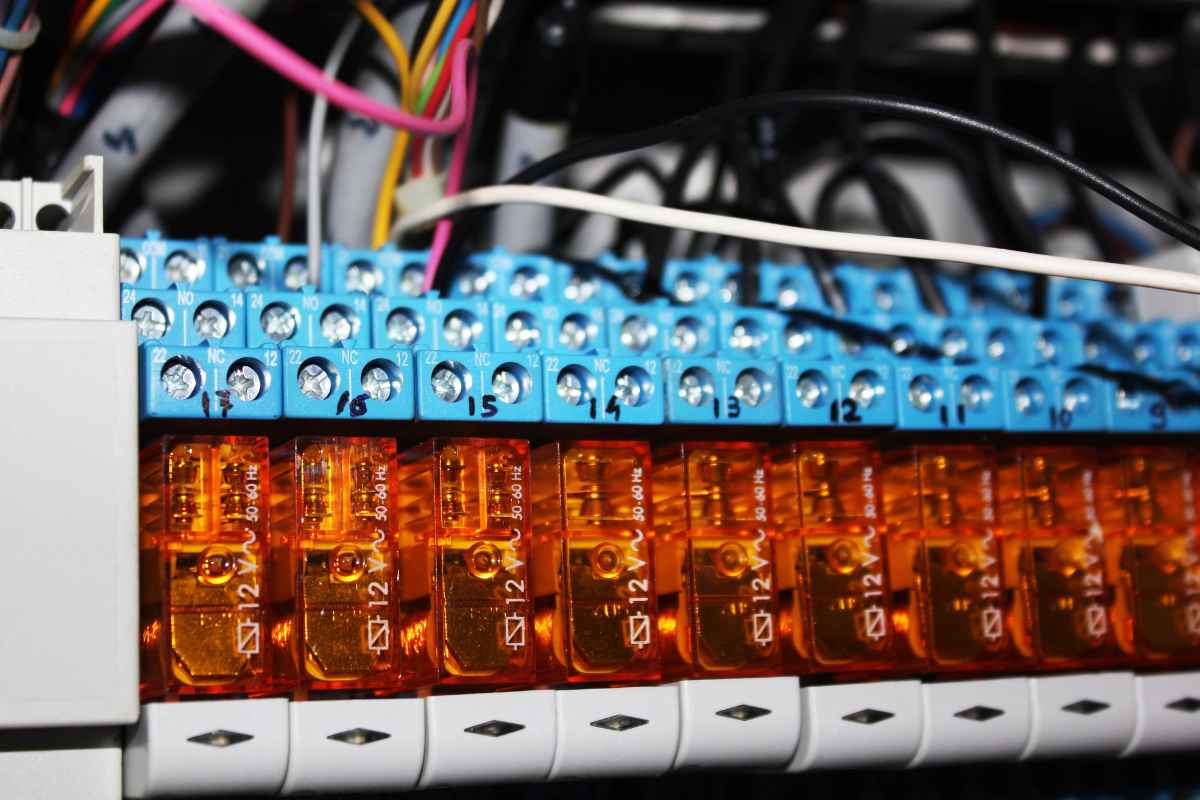
Safety Relays or safety relay equipment can be categorized into several types based on the criteria used for classification. Understanding the three main types of Safety Relays according to their working principles and various types based on usage characteristics will help in selecting appropriate equipment for work, thereby enhancing safety efficiency in industrial systems.
Categorizing Safety Relay by Working Principles
Safety Relays can be divided into three main types based on the working principles of their circuits:
- Contact Safety Relay - Uses special contacts that are resistant to high voltage and current, making them reliable and popular in industrial applications.
- Solid State Safety Relay - Has no moving parts, is vibration-resistant, compact, lightweight, and has a longer lifespan.
- Wireless Safety Relay - Uses radio signals for communication, easy to install even in hard-to-reach areas, suitable for systems with frequent movement or changes.
Categorizing Safety Relay by Usage Characteristics
In addition to categorization based on working principles, Safety Relays can also be categorized according to specific usage characteristics as follows:
- Shock Safety Relay - Protects against impact hazards in heavy machinery such as forklifts, cranes, or metal presses.
- Heat Safety Relay - Used in high-temperature systems, cuts power when temperatures exceed set values to prevent fires or heat damage.
- Fire Safety Relay - Specifically designed for fire protection systems, works with smoke or heat sensors.
- Earth Leakage Safety Relay - Detects electrical leakage and cuts the circuit to prevent electric shock or short-circuit hazards.
Why is the Use of Safety Relay Important in Industrial Factories?
Safety Relays are crucial for industrial factories because relays play a role in preventing injuries and fatalities of personnel from various dangers such as impacts, excessively high heat, electrical short circuits, and electric shocks. They detect abnormalities and quickly cut off the circuit. Additionally, relays protect business assets from damage, increase production efficiency, and help factories comply fully with legal safety regulations.
How to Select the Right Safety Relay?
Choosing the right safety relay is a crucial factor in determining the efficiency of an industrial plant's safety system. It’s important to select safety relays that meet production and operational standards according to international safety standards such as IEC 61508 or EN ISO 13849-1, ensuring that the equipment will function correctly and reliably during dangerous situations. Key factors in selecting a Safety Relay include:
- Compatibility with the Hazard to be Prevented - Choose the type of safety relay that matches the specific risks in that area, such as relays for preventing access to dangerous areas, emergency stop buttons, or high-temperature protection relays.
- Compatibility with Environmental Conditions - Consider the working environment such as temperature, humidity, dust, vibration, or ease of access to installation points to select a model that is durable and suitable for actual use conditions.
- Response Capability - Choose equipment with fast detection and system shutdown capabilities when dangerous events occur. Quick response is crucial in preventing accidents.
- Voltage and Current Tolerance - Check the voltage and current ratings that the equipment supports to match the plant's electrical system, extending its lifespan and ensuring operational efficiency.
- Brand and Supplier Reliability - Choose equipment from reputable manufacturers and suppliers with product warranties and good after-sales service for quality assurance and support when issues arise.
Usage and Maintenance of Safety Relay for Optimal Performance
Safety Relays are industrial safety equipment. Proper usage and maintenance are crucial to ensure the device operates efficiently and has a long service life. In addition to selecting appropriate equipment, you should know how to use and maintain it correctly to ensure that the safety system will work reliably when needed.
Usage of Safety Relay
Using relays properly is a key factor in ensuring optimal performance of the safety system. Important usage guidelines include:
- Install according to manuals and standards - Follow manufacturer instructions and safety standards strictly, including wiring and settings.
- Use for intended purposes - Use Safety Relays only as per their type and design purpose. Using them outside of specified applications may lead to system failure.
- Monitor environmental conditions - Regularly observe changes in the environment that could affect performance, such as temperature, humidity, or vibration.
Maintenance of Safety Relay
Regular maintenance extends service life and ensures that Safety Relays will function correctly during emergencies. Maintenance practices to follow include:
- Check according to schedule - Set a regular inspection schedule as per manufacturer recommendations or industry standards, typically at least once a year.
- Test operation - Test system functionality by simulating emergency scenarios such as pressing the emergency stop button or blocking light curtains to ensure proper shutdown.
- Inspect external condition - Regularly check for any abnormalities on the exterior, such as cracks, burns, or other damage that may affect performance.
- Clean - Clean the equipment and installation area with a dry cloth or slightly dampened cloth to remove dust and debris that could interfere with sensor operation.
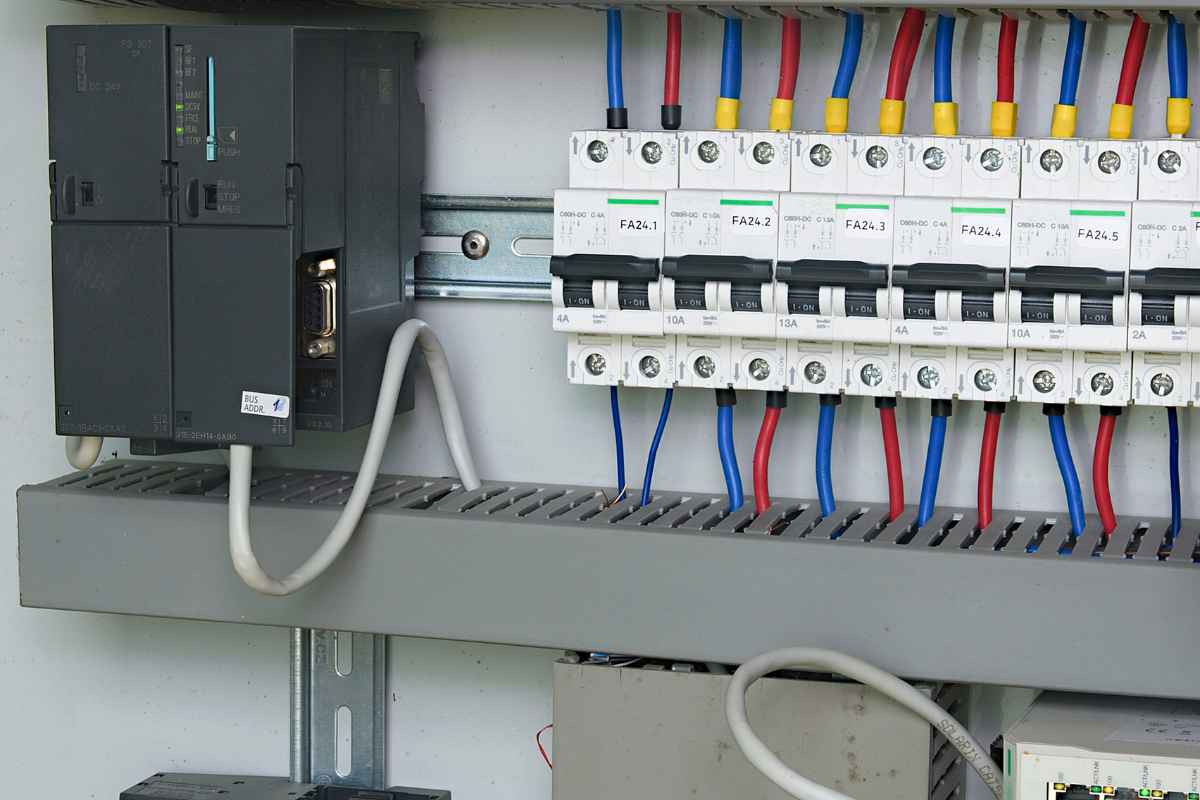
If you are interested in Safety Relays, SCMA is now available for purchase!
SCMA is a high-quality distributor of internationally certified safety relays. We offer a wide range of models from leading brands to meet your specific needs. Our team is knowledgeable and ready to provide consultation on selecting the appropriate safety relay for your factory's safety system. Additionally, we provide fast nationwide shipping and long-term product warranties. Contact us today to elevate the safety standards in your factory!
Summary
Safety relays are crucial components of industrial safety systems. With specialized designs that offer high reliability and international safety certifications, they effectively prevent accidents and injuries to workers. Selecting the appropriate safety relay involves considering various factors such as required safety levels, types of connected safety devices, and special functions. Proper usage and maintenance are essential for ensuring that the safety relay operates correctly when needed.
SCMA is ready to be your trusted partner in providing high-quality safety relays and consulting on safety systems for your industrial factory. We aim to create a safe working environment and enhance production efficiency. Contact us today for more information and receive excellent services from our professional team!
Frequently Asked Questions
What is a Safety Relay?
A safety relay is an electronic device specifically designed for industrial safety systems. The relay detects signals from various safety devices and cuts off the power supply to machinery when danger occurs, complying with international safety standards such as ISO 13849-1 and IEC 61508.
Where are safety relays used?
Safety relays are used in industrial plants and areas with dangerous machinery, such as emergency stop systems, safety gates, light curtains, safety mats, and two-hand control systems to prevent accidents and injuries to workers, as well as protect machines from damage.
What is the difference between a Safety Relay and a General Relay?
Safety relays have more complex internal structures with redundancy circuits and self-checking systems. They feature forcibly guided contacts that switch to a safe state when an anomaly occurs, complying with safety standards and designed specifically for safety systems. In contrast, general relays have simpler structures and are used in general control applications.
What are Y1 and Y2 on Safety Relays?
Y1 and Y2 are terminals for the reset circuit on a safety relay, where Y1 is typically the input terminal for manual reset buttons, and Y2 is the terminal for power supply or reference voltage. Pressing the reset button connects the circuit between Y1 and Y2, allowing the safety relay to return to normal operation after a safety incident.