
Water Flow Sensor - A smart device that completely transforms traditional water resource management! In an era where water conservation and precise process control are essential, monitoring the flow rate of water is a crucial factor for success. SCMA offers advice on selecting the right flow sensors to meet every need, whether it's industrial applications, agriculture, or smart building systems. With a team of experts ready to recommend solutions tailored for your business.
What is a Water Flow Sensor (Flow Meter)?
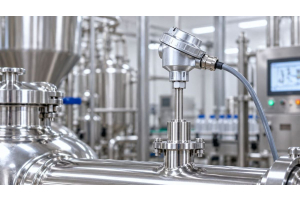
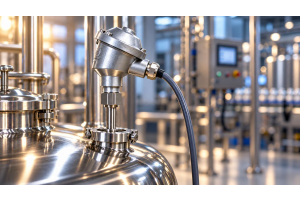
Flow sensors or flow switches are critical industrial devices used to measure the volume or rate of fluid movement, such as water or gas flowing through pipes and channels. This tool helps users assess and analyze the amount of fluid being used or produced, allowing for proper resource allocation and increased operational efficiency. When selecting a flow meter, accuracy, required measurement range, and installation safety should be considered to ensure reliable results and cost-effective investment.
How Does a Water Flow Sensor (Flow Meter) Work?
The operation of a flow meter sensor relies on both mechanical and electronic principles. It measures the volume of water used or controls the amount of water supplied, sending digital signals (logic 0 and 1). Inside the sensor is a paddle that rotates when water flows through it; the speed of rotation correlates with the flow rate in the pipe. This movement is detected by Hall effect sensors which send out pulse signals; the number of pulses per unit time indicates the volume of water flowing, while the pulse width corresponds to water pressure. These sensors can operate effectively with various types and temperatures of water, including hot water, cold water, and even slightly contaminated water.
Water Flow Sensor (Water Flow Meter) What Types Are There?
Water flow sensors or flow meters can be divided into two main groups: contact and non-contact flow sensors. Contact type sensors have moving parts that directly interact with the fluid, suitable for use with fluids without risk of clogging or contamination. Non-contact types do not have moving parts interacting with the fluid, making them ideal for high cleanliness requirements or fluids prone to clogging. Each type has different working principles and advantages/disadvantages, which can be categorized into six main types.
Electromagnetic Flow Meters
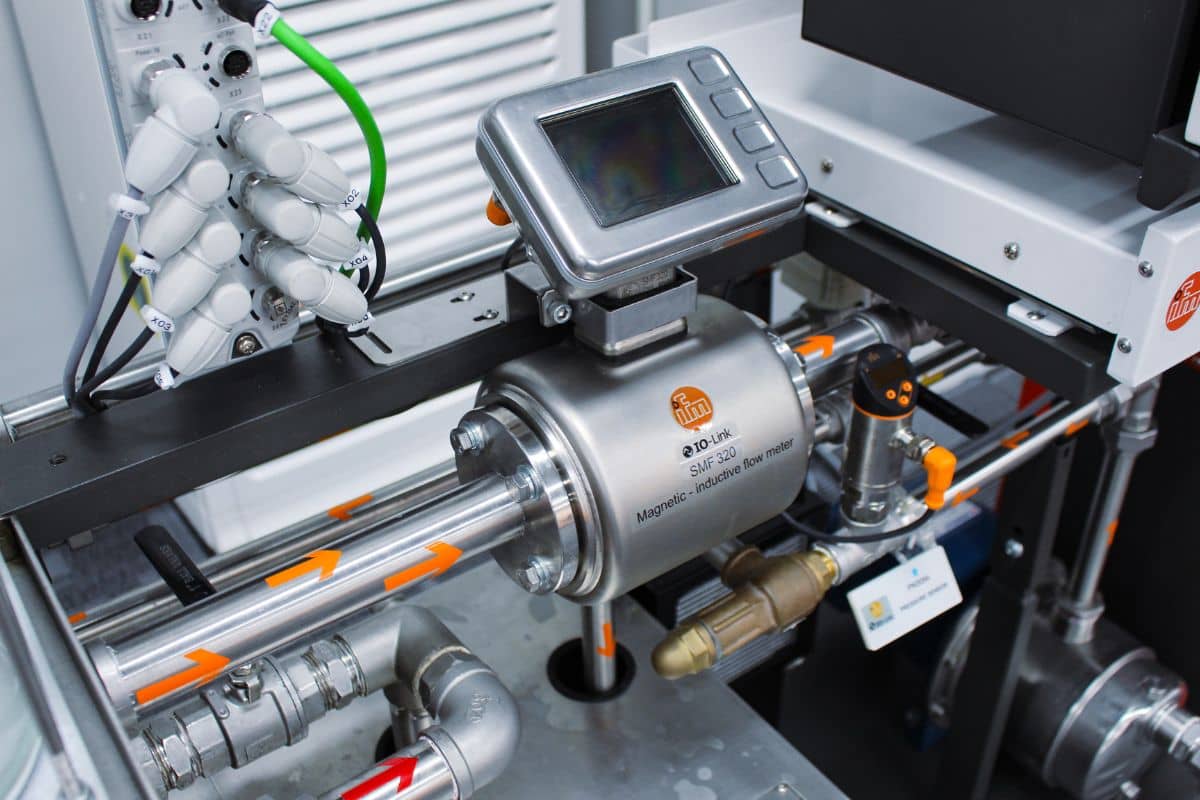
This type of meter works according to Faraday's law. It measures the voltage generated when electrically conductive fluid flows through a magnetic field. Suitable for measuring fluids that are electrical conductors, such as mineral-rich water or liquids in chemical industries. Advantages include no moving parts contacting the fluid, no pressure loss, and ability to measure contaminated fluids.
Positive Displacement Meters
This type of flow meter works by dividing the flow into fixed volumes and counting how many times these volumes are filled and emptied, allowing for accurate volume measurement. The operation is rhythmic, with each cycle generating pulses used to calculate total volume. Suitable for measuring high viscosity fluids or low flow rates due to high accuracy even at very low flow rates.
Oscillatory Flow Meters
This type of meter uses the oscillation or vibration principle of internal parts caused by fluid flow, such as vortex meters that use vortices generated when fluids pass an object. The frequency of these vortices is proportional to the flow rate. Suitable for measuring humid gases and gas mixtures. Advantages include minimal maintenance, high accuracy, and ability to operate at high temperatures and pressures.
Inferential Meters
This type of meter measures flow rate indirectly by calculating from the speed of the flow, for example, turbine or paddle meters that spin when fluid passes through. The spinning speed is proportional to the flow rate. Its advantages include easy installation and low cost, but it may have issues measuring fluids with contaminants or high viscosity as this can cause the paddles to spin inconsistently or wear out.
Ultrasonic Flow Meters
This type of meter uses high-frequency sound waves to measure flow rate. There are two main types, the Doppler method that measures frequency changes when waves reflect off particles in the fluid and the transit-time method that measures the difference in time for sound waves traveling with and against the flow direction. Its advantages include no direct contact parts exposed to the fluid, causing no pressure loss, and some models can be installed externally on pipes, making installation and maintenance convenient.
Differential Pressure Meters
This type of meter relies on the principle of differential pressure when fluid passes through a point where there is constriction in the pipe (such as an orifice plate). The difference in pressure is proportional to the square of the flow rate. Its advantages include high durability, capable of operating in high-temperature environments, and requiring minimal maintenance. However, it causes pressure loss in the system and accuracy may decrease at low flow rates.

What can be inferred from the Water Flow Sensor (Water Flow Meter) readings?
Flow sensors provide important information about the behavior and volume of fluid movement within a system. This data is crucial for process control, resource management, and maintenance planning. The primary values obtained from flow meters include:
- Volumetric Flow Rate - Indicates the volume of fluid passing through a point per unit time, measured in m³/s (cubic meters per second). It is denoted by Q and calculated using the formula Q = VA where V is the flow velocity and A is the cross-sectional area that the fluid passes through. This value is useful for calculating water usage, process control, and system efficiency checks.
- Mass Flow Rate - Measures the mass of fluid passing through a point per unit time, measured in kg/s (kilograms per second). It is denoted by ṁ (m-dot). This value is particularly important in processes requiring high accuracy such as chemical industries, pharmaceutical production, or thermal processes because it is not affected by temperature and pressure changes that may impact fluid density.
Water Flow Sensor (Water Flow Sensor) for Industrial Use - What Can It Do?
Flow meters are crucial devices in the industrial sector, enabling operators to monitor, control, and improve production processes efficiently. These tools not only enhance product quality but also reduce production costs, conserve energy, and minimize environmental impact. The primary benefits of flow sensors in industrial applications include:
- They can analyze the volume of water, gas, or other liquid usage, check inlet and outlet wastewater, and control chemical dosing. This information helps in efficient resource allocation and appropriate environmental treatment.
- They help control production by adjusting the flow rate of liquids appropriately, which directly impacts product quality and consistency. Precise control also helps reduce waste from the manufacturing process.
- They can quickly detect leaks in pipe systems and flow channels, preventing resource loss, reducing costs, and protecting against potential hazards from chemical or hazardous material leakage.
- They help balance the flow within the system for efficiency, reduce energy consumption in pumping or conveying liquids, and extend the lifespan of equipment such as pumps, valves, and pipes.
- They provide data that can be used for trend analysis, production planning, maintenance forecasting, and compliance with environmental regulations. This information is crucial for executive decision-making.
How to Choose the Right Water Flow Sensor for Optimal Performance
Selecting a flow meter that meets your specific needs is crucial for accuracy, efficiency, and longevity of the equipment. Investing in high-quality meters tailored to your requirements not only ensures accurate results but also saves costs over time by reducing maintenance and replacement expenses. Here are key criteria to consider when selecting an appropriate flow meter:
- Consider the type of fluid you need to measure - Choose a meter designed specifically for the type of fluid you are measuring, whether it is water, air, gas, or special liquids.
- Select a reputable company - Prioritize purchasing from manufacturers or distributors with a good reputation, extensive experience, and standardized installation records.
- Check the measurement accuracy range - Choose a meter that offers appropriate accuracy for your specific needs, especially in industries requiring high precision.
- Consider environmental durability - Evaluate the meter's ability to withstand temperature, pressure, chemicals, and operational conditions that may affect its performance.
- Prioritize after-sales service - Choose a supplier with excellent after-sales services, product warranties, and a support team ready to provide advice and assistance when issues arise.
If you are interested in Water Flow Sensor, SCMA is now available for purchase!
SCMA is a high-quality flow sensor supplier covering all types and usage requirements. Whether it's magnetic-electric sensors, ultrasonic sensors, or differential pressure sensors, our expert team is ready to provide consultation on selecting the most suitable sensor for your specific needs. Additionally, SCMA offers comprehensive after-sales services including maintenance, periodic calibration, and system upgrades to ensure that your sensors operate at peak efficiency throughout their lifespan.Contact SCMA todayto receive special offers and tailored advice for your project!
Summary
A Water Flow Sensor, or a device that measures the rate of water flow, is an essential component with significant roles in various industries and applications. There are several types available based on different operating principles such as magnetic-electric, positive displacement, oscillation, inference, ultrasonic, or differential pressure sensors. Each type has its own advantages and limitations. Selecting the appropriate sensor requires considering multiple factors including fluid type, flow rate range, required accuracy, budget, and maintenance requirements.
SCMA is a reliable partner in providing high-quality water flow sensors that meet your needs. With our experienced team, we do more than justsupplying quality products; we also provide consultation to ensure you receive the best solutions, along with comprehensive services from selection through maintenance. This allows you to be confident that your water flow measurement system will operate efficiently and accurately throughout its lifespan.
Frequently Asked Questions
What is a water flow sensor?
A water flow sensor, or water flow meter, is an instrument used to detect and measure the volume or velocity of water flowing through pipes or channels. It converts the movement of water into electrical signals that can be read and processed. These sensors come in various types based on different working principles such as electromagnetic, paddle wheel, or ultrasonic. Each type is suitable for different applications depending on the nature of the water, pipe size, and required accuracy.
What are the benefits of using a water sensor?
Water sensors offer several advantages such as monitoring and controlling water usage in systems, calculating water costs, detecting leaks, managing production processes that require water to meet standards, checking pump and pipe system efficiency, saving energy in pumping and cooling systems, collecting data for analysis and planning water use, and ensuring safety in fire suppression systems. All of these benefits help improve operational efficiency, reduce costs, conserve resources, and enhance safety in various systems and processes.
How does a flow sensor work?
Flow sensors operate based on different physical principles depending on the type. Generally, they detect water movement and convert it into electrical signals. For example, paddle wheel sensors use the force of flowing water to rotate blades; the rotation speed is proportional to flow rate. Electromagnetic sensors apply Faraday's law by measuring voltage generated when electrically conductive water flows through a magnetic field. Ultrasonic sensors emit high-frequency sound waves and measure frequency or time changes as the waves travel, while pressure sensors measure differential pressure before and after a constriction point in the flow path, which correlates to flow rate.
Where are water flow sensors located?
Water flow sensors can be installed in various positions depending on the purpose and type of system. Common installation locations include:
- Domestic water supply systems - Installed at the main pipe entering a building to measure total water usage, or installed at branch points to measure water use in individual sections.
- Industrial systems - Installed in production lines that use water, cooling systems, or wastewater treatment systems.
- Irrigation systems - Installed in water supply pipes or irrigation canals to control the amount of water delivered to agricultural areas.
- Fire suppression systems - Installed in fire suppression system pipes to monitor functionality and readiness.
- Building control systems - Installed in HVAC (heating, ventilation, and air conditioning) systems to control water flow in cooling systems.
- Water-using equipment - Sometimes installed in specific water-using devices such as industrial washing machines or automatic dishwashers.