Have you encountered frequent failures of temperature sensors due to corrosive chemicals or high pressure in production process pipelines? The device called Thermowell or THERMO WELL is a crucial solution for this problem. SCMA is ready to provide comprehensive services including sales and consultation on industrial measurement tools. This article will take readers deep into what Thermowells are, how they work, and a checklist of the right ways to choose them to maximize the lifespan and value of your measuring instruments in the factory.
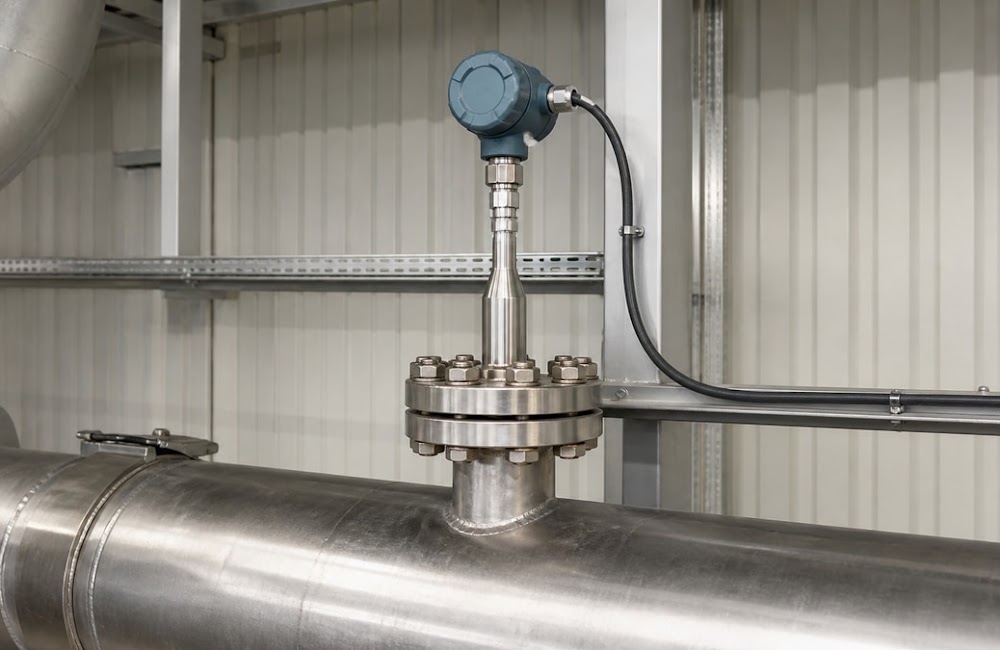
What is a Thermowell?
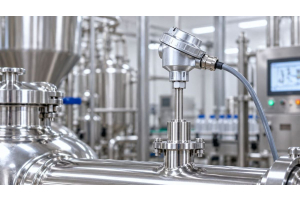
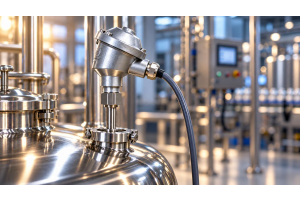
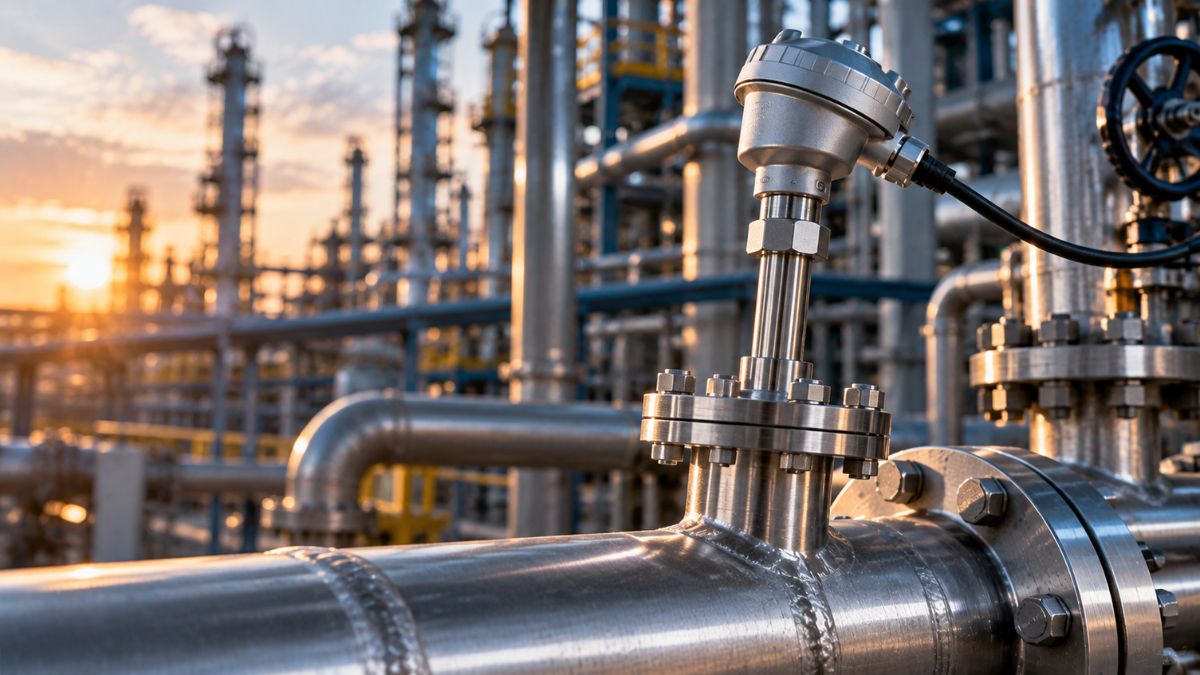
A Thermowell is a metal sleeve designed to protect temperature sensors installed in industrial production processes. The THERMO WELL acts as a shield, preventing measuring instruments from coming into direct contact with corrosive liquids, gases, or chemicals. Installing a Thermowell helps maintain the condition of the sensor for accurate operation under harsh conditions such as high pressure and intense flow rates.
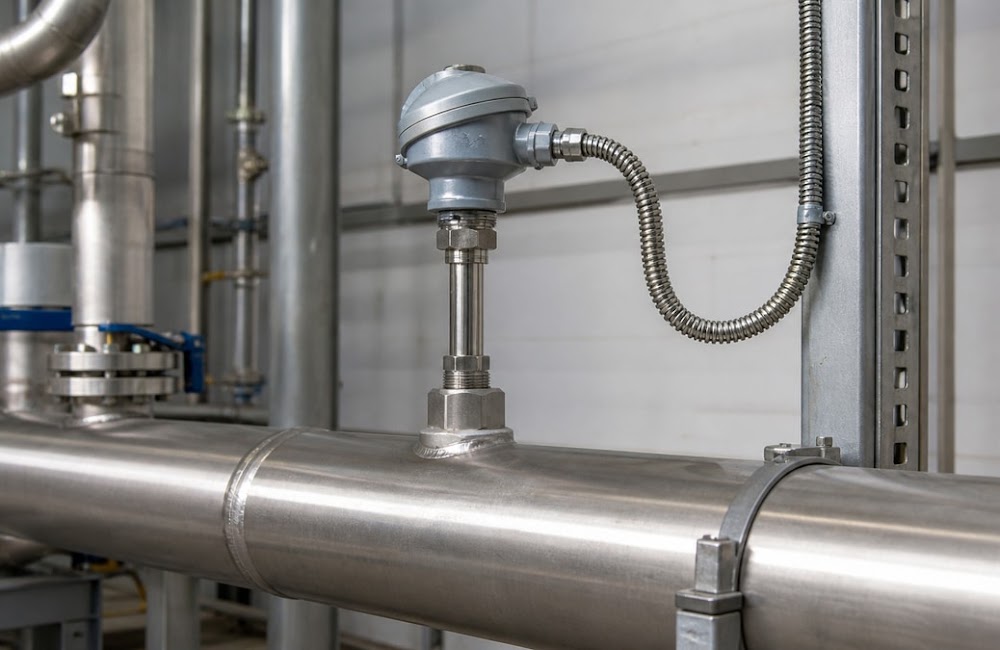
How a Thermowell Works
The basic principle of operation for thermowells emphasizes protection alongside efficient heat transfer to ensure seamless temperature control system performance.
Heat Transfer
The fluid in the pipe or tank transfers temperature through the metal wall of the Thermowell into the sensor inside. This process relies on thermal conductivity principles so that the temperature measurement and control tools can accurately read values without direct contact with the substance.
Protection
The structure of the thermowell serves as an excellent shield that is resistant to severe chemical corrosion, handles high system pressures excellently, and protects against impacts from fast-moving liquid flow, which effectively reduces physical damage to sensors.
Maintenance Convenience
The installation of this equipment allows engineers to remove RTD temperature sensors or thermocouples for calibration or replacement immediately, without needing to halt production processes or transfer liquids out of pipes and tanks. This saves time and reduces revenue loss.
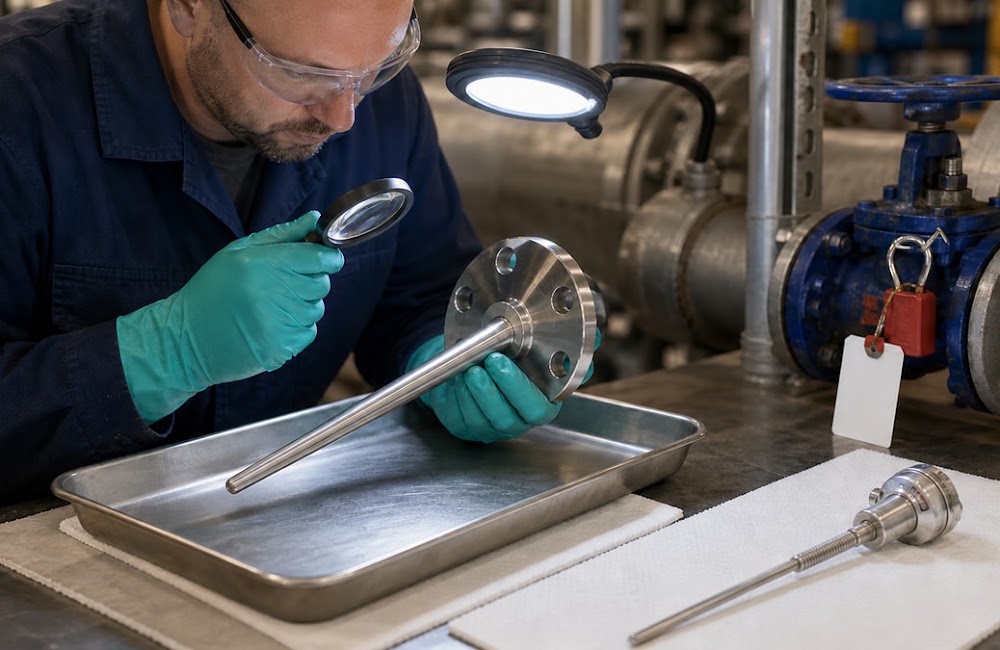
How many types of Thermowell are there?
The Thermowell type is something that needs to be considered in line with the working environment, and can be divided into main groups based on stem design and process connection as follows:
By Stem Design
- Straight Thermowell: This type of thermowell has a uniform diameter throughout its length, emphasizing strength and durability.
- Stepped Thermowell: The end part of the stem is reduced in size to allow the sensor to detect temperature changes more quickly.
- Tapered Thermowell: Designed with a gradual reduction in size until the tip of the Thermowell. This type excels at handling vibration from high flow rates.
By Process Connection
- Threaded: Thermowell is an easy-to-install or replace component, suitable for systems with moderate pressure.
- Weld-in: This type of thermowell provides the highest strength and prevents leakage in high-pressure and high-temperature systems.
- Flanged: Installed using a flange to secure it to the pipe. It is convenient for disassembly and cleaning, suitable for chemical industry corrosion resistance.
How to Maintain a Thermowell
Proper maintenance of the thermowell is crucial for protecting sensors from harsh environments, preventing premature degradation.
Inspection & Cleaning
Engineers should regularly inspect the exterior for leaks at threads or flanges and clean any deposits or soot on the outer surface of the thermowell to prevent thermal insulation layers that can cause temperature measurement errors.
Corrosion & Wear Inspection
Closely observe the material for signs of corrosion or thinning due to chemicals in production processes, and inspect for damage from high-speed fluid flow. If severe vibrations are detected, consider calculating a new Wake Frequency for the Thermowell.
Crack Inspection
In systems with very high pressure or temperature, maintenance teams should periodically perform non-destructive testing (NDT) on the thermowell. Suitable methods include Dye Penetrant Testing (PT) or Ultrasonic Testing (UT) to detect cracks that are not visible to the naked eye.
Sensor Calibration
When it is necessary to remove the Thermowell for cleaning, use this opportunity to calibrate temperature measuring instruments as well, to ensure readings remain accurate and comply with plant quality control standards.
Usage of Thermowell
The application of thermowells is akin to providing protective armor for temperature measuring instruments, with the primary purpose of installation as follows:
Protecting Sensors from Harsh Conditions
The main function of a Thermowell is to prevent measuring tools from coming into direct contact with high-pressure liquids, highly-velocity fluids, or corrosive chemicals in the pipeline. Isolating the sensor from these substances significantly reduces the risk of damage.
Increase Maintenance Convenience
The design incorporating thermowells allows technicians to immediately replace or repair temperature sensors without needing to halt production processes or transfer liquids out of pipes and tanks, thus saving time and reducing revenue loss.
Extend the Lifespan of Measuring Instruments
When the sensor does not have to endure direct corrosion and physical impact, Thermowell becomes a crucial factor in ensuring that equipment operates accurately for longer periods, thereby reducing long-term replacement part costs.
Benefits of Thermowell
The decision to invest in installing Thermowells in industrial pipeline systems offers a worthwhile return through several outstanding benefits, as follows:
Effective Protection for Sensors
The first advantage of Thermowell is its role as an effective shield protecting industrial level measurement tools from contact with corrosive chemicals, aggressive liquids, or high flow rate processes. This helps maintain the condition of temperature probes in optimal working order.
No Shutdown Required (No Shutdown)
If a sensor malfunctions or reaches its calibration cycle, engineers can immediately remove the equipment from the Thermowell for maintenance or replacement without shutting down the system. This significantly reduces time and cost losses due to Production Downtime.
Able to Handle High Pressure Systems
The manufacturing process of the casing can be formed from solid metal rods to achieve maximum strength. This structure prevents leaks and withstands massive pressure in petrochemical or power plant industrial systems with confidence.
Designed for Every Application
Users can choose various stem shapes that suit their working conditions. Proper Thermowell design enhances heat transfer efficiency, ensuring the highest accuracy and sensitivity in temperature measurement.
How to Choose a Thermowell
The principle of selecting the right Thermowell involves considering the type of sensor, installation size, and actual working environment to ensure that the THERMOWELL operates at maximum efficiency.
- Select materials suitable for chemicals: Thermowells are components that come into direct contact with substances. For food industry applications, stainless steel (SUS304 / SUS316L) should be chosen; general water work can use brass, while extremely high-temperature jobs may consider ceramic.
- Consider the stem profile: Choose a straight stem for standard durability, select stepped when quick temperature response is required, or opt for tapered to reduce vibration risks.
- Determine the insertion length: Ensure that the length matches the depth of the probe sensor so that the tip of the sensor fits perfectly at the bottom of the Thermowell, which helps achieve optimal heat transfer.
- Specify thread or flange configuration: Choose the connection (Process Connection) of the THERMOWELL to match the pipeline or tank standards in the production process to prevent leakage issues during operation.
Caution in Installing Thermowell
Although a Thermowell may seem like a simple device, incorrect installation can lead to severe damage to the system. Therefore, it is important to pay attention to the following precautions.
- Avoid Wake Frequency Issues: The flow of liquid through the stem of a THERMOWELL can create vortices. If the frequency matches the natural frequency of the metal, it could cause excessive vibration leading to breakage and failure of the stem.
- Check Flow Velocity (Velocity): Carefully calculate the flow rate in the pipe before selecting the shape. If the velocity is too high, using a THERMOWELL with a tapered design would be safer than a straight one.
- Use Thermal Compound: A Thermowell has a small gap between the sensor and the housing. Filling this space with thermal silicone compound will reduce response time, improving temperature accuracy.
- Adequate Immersion Length: The tip of the THERMOWELL should be installed in the middle section of the pipe to avoid the impact of accumulated wall temperatures.
Summary
In summary, a Thermowell is an important component that acts as a protective shield, extending the lifespan and maintaining accuracy for temperature sensor systems in factories. Correctly choosing the form and material of a THERMOWELL can significantly reduce downtime. If you are looking for experts to consult or purchase industrial measuring tools, SCMA is ready to provide comprehensive solutions with an experienced engineering team.
If you want to buy a Thermowell, SCMA is now available for purchase!
Investing in high-quality Thermowells is an investment towards long-term production stability. Company SCMA as a provider of measurement and testing solutions, and automation systems, is delighted to be your technical partner. We have a team ready to consult on selecting THERMOWELLS and offer calibration services all in one place, so that your factory can operate at maximum efficiency.
Frequently Asked Questions
Does a Thermowell need to be used with thermal paste?
Filling thermal paste into the gap between the sensor and Thermowell will greatly enhance its temperature response speed.
Which material is most commonly used for making Thermowells?
Stainless steel grades 304 and 316L are the most popular due to their corrosion resistance from common chemicals and suitability for food industry applications.
What does Wake Frequency mean in Thermowell design?
This refers to the frequency of water vortexes when fluid hits the probe. If not calculated properly, it may cause THERMOWELL to vibrate and lead to damage.
What is the metrological meaning of a Thermowell?
In metrology, Thermowell refers to a pressure-resistant housing designed to protect the sensor from direct exposure to harsh process conditions.
How often should Thermowells be replaced?
This depends on the working environment. If signs of corrosion, erosion, or thinning of the wall are found through NDT testing, they should be replaced immediately.