
Accurate temperature sensors are the heart of an efficient temperature control system in modern industry, acting as vigilant guardians monitoring temperature changes around the clock. Company SCMA is dedicated to providing knowledge and advice on selecting appropriate sensors for each industry, helping your business save energy, reduce production costs, and enhance product quality to meet global standards.
What is a Temperature Sensor?

A temperature sensor, or Temperature Sensor, is a critical device that measures or detects temperature levels in the desired area. It observes the difference between set temperatures and actual temperatures in the working environment by sending input signals to controllers for comparison with preset values. If deviations are detected, the system will command heating or cooling devices to adjust the temperature accordingly. This component plays an essential role in automatic temperature control systems widely used in factories, laboratories, and areas requiring constant temperature maintenance to prevent production process damage.
What are the benefits of having a temperature control system?
Temperature sensors are crucial for enhancing efficiency and safety in industrial manufacturing processes and consumer products by maintaining the temperature at a constant level as per specified standards, preventing damage and contamination. For instance, in the food industry where strict temperature control is necessary for safety reasons, closed-loop systems are more effective than open-loop systems because they continuously measure and adjust temperatures, leading to accuracy and reducing long-term errors.
What benefits do Temperature Sensors offer for industries?

Temperature sensors are critical components in industrial control systems that measure and transmit real-time temperature data to controllers for precise heating or cooling processes within industries or laboratories. This system enables heating or cooling equipment to operate automatically when temperatures deviate from set values, which is particularly important in areas requiring strict temperature control such as computer server rooms, cold storage rooms, laboratories, and production processes sensitive to temperature.
Temperature Sensor Usage in Industrial Applications
Temperature sensors play a crucial role in controlling quality and efficiency of production processes across various industries by accurately measuring and controlling temperatures at critical points, reducing damage during manufacturing, enhancing product quality, and increasing workplace safety. The following are important applications in different industrial sectors.
Heat Treatment
Temperature control is extremely important for the physical properties of products during metal heat treatment processes. Sensors help accurately control temperatures in furnaces, heat treatment ovens, and heat transfer equipment, affecting the hardness, toughness, and molecular structure of treated metals.
Packaging Industry
Temperature sensors are crucial in automatic packaging systems by controlling the temperature of adhesive applicators, sealing strips, shrink film sealers, and labeling machines to operate at appropriate temperatures and times. This ensures that packages are strong, attractive, and effectively protect products.
Plastic Industry
Temperature is a critical factor affecting flowability, solidification, and quality of plastic parts during molding. Temperature sensors work with cooling machines, plastic pellet dryers, and extrusion equipment to control temperatures within optimal ranges for each material type, reducing waste and increasing production efficiency.
Healthcare Industry
Temperature accuracy is crucial in laboratories and healthcare facilities. Sensors help control the environment in sterilization equipment, incubators, and refrigeration systems for biological samples and drugs, affecting the precision of test results and quality of medical products.
Food & Beverage Industry
Appropriate temperature is key to maintaining food quality and safety. Temperature detectors help control fermentation, mixing, sterilization, and baking processes to produce consistent, safe products for consumers that meet food safety standards.
Electronics Industry
Electronic components are sensitive to high temperatures. Sensors play a vital role in controlling production environments, preventing moisture, and monitoring component temperatures during operation, including in computers, electric motors, and cooling systems, extending equipment lifespan and protecting against excessive heat damage.
What are the types of Temperature Sensors used in Industrial Applications?
There are four main types of temperature sensors commonly used in industry: Thermistor (NTC/PTC), RTD (Resistance Temperature Detector), Thermocouple, and Semiconductor-based sensors. Each type has specific characteristics that suit different environmental conditions and requirements.
1. Negative Temperature Coefficient Thermistors (NTC Thermistors)
Thermistors are temperature sensors based on the principle of resistance change with temperature, particularly NTC thermistors which have a decrease in resistance as temperature increases. These sensors are highly sensitive to small changes in temperature and are suitable for measuring temperatures from -50°C to 250°C. Although they provide nonlinear output, their low cost and durability make them popular choices for temperature measurement in refrigeration systems and electronic devices.
2. Resistance Temperature Detectors (RTD)
RTDs or Resistance Temperature Detectors are sensors that work on the principle of resistance change with temperature, typically made from platinum, nickel, or copper, with platinum offering the highest accuracy. RTDs provide linear output and high stability, operating in a temperature range of -200°C to 600°C. They are ideal for industries requiring high precision and stability such as food processing, pharmaceuticals, and manufacturing processes that require strict quality control.
3. Thermocouples
Thermocouples consist of two different metal wires connected together and work on the Seebeck Effect principle by generating an electric voltage proportional to temperature. Although they offer lower accuracy than RTDs, their advantage lies in their wide operating range from -200°C to 1750°C and low cost, making them popular choices for high-temperature manufacturing processes such as steel, ceramics, and metal plating industries.
4. Semiconductor-based Temperature Sensors
These sensors operate based on the properties of semiconductors that change with temperature, often produced in integrated circuit (IC) form which is small and cost-effective. They provide linear response over a temperature range from -70°C to 150°C. Although they offer lower accuracy and slower response compared to other types, their ease of use and integration into electronic systems make them good choices for modern electronic devices and automatic control systems.
Which Temperature Sensor Brand is Good? What are the High-Quality and Recommended Models?

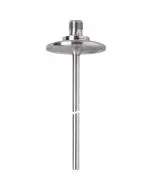
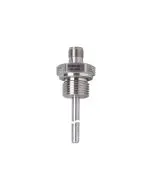
ifm Brand Temperature Sensor Model TA2415
https://scma.co.th/ta2415-efector-600-temp-sensor-ta-050cler12-a-zvg-us-us.html
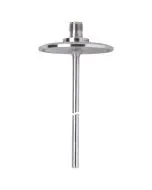
ifm Brand Temperature Sensor Model TA2812
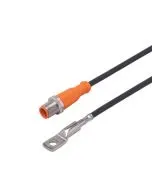
ifm Brand Temperature Sensor Model TCC541
Interested in Temperature Sensors? You Can Purchase from SCMA Today!
SCMA offers a wide range of high-quality temperature sensors suitable for various industrial needs, including RTD, thermocouples, thermistors, or semiconductor-based sensorsWe cover all temperature ranges and usage environments. Our team of experts is ready to provide advice on selecting the appropriate sensor for your specific application, ensuring optimal performance in controlling process temperatures.
Summary
A Temperature Sensor is a crucial device in modern industry, tasked with detecting and measuring temperature to ensure efficient process control. There are various types of temperature sensors, each with different characteristics and suitability for specific applications. Selecting the appropriate Temperature Sensor for the job can enhance production efficiency, maintain product quality, save energy, and increase workplace safety. SCMA is ready to serve customers with high-quality Temperature Sensors and expert advice to meet the needs of every industry.
Frequently Asked Questions
What are the three types of temperature sensors?
The main types of temperature sensors commonly used in industry include thermocouples, which are suitable for high-temperature measurements; RTDs (Resistance Temperature Detectors), known for their high accuracy; and thermistors, which have a high sensitivity to temperature changes. Each type has its own advantages and limitations depending on the application.
What is the function of a coolant water temperature sensor?
A coolant water temperature sensor measures the temperature of the cooling water in the cooling system to ensure that it operates at an appropriate temperature. It sends signals to the control system to adjust the operation of pumps, fans, or valves when the temperature changes, preventing overheating damage and maintaining the efficiency of machinery.
What is a temperature regulator sensor?
A Temperature Regulator Sensor, also known as a temperature sensor, serves both to detect temperature and control system operation to maintain it within a specified range. It works in conjunction with control devices such as heating or cooling systems to keep the environment at a constant desired temperature. These sensors are widely used in HVAC systems and manufacturing processes that require precise temperature control.
What are the symptoms of a faulty coolant water temperature sensor?
Symptoms of a faulty coolant water temperature sensor often manifest through abnormal cooling system operation, such as an engine overheating or running too cold, incorrect temperature readings on the dashboard, or fans operating continuously or not at all. Additionally, increased fuel consumption or reduced machine performance may be observed. Immediate inspection and replacement should be carried out upon noticing these symptoms.