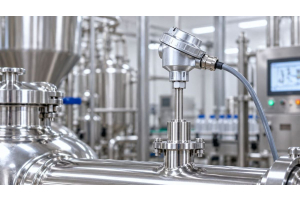
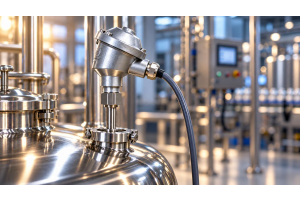
Sensor Distance, or distance sensors, are crucial industrial equipment that enhance production efficiency, improve accuracy, and boost safety in work processes. This article by SCMA will introduce you to distance sensors, from their working principles and types to their applications and importance in the industry.
What is a Sensor Distance (Distance Sensor)?
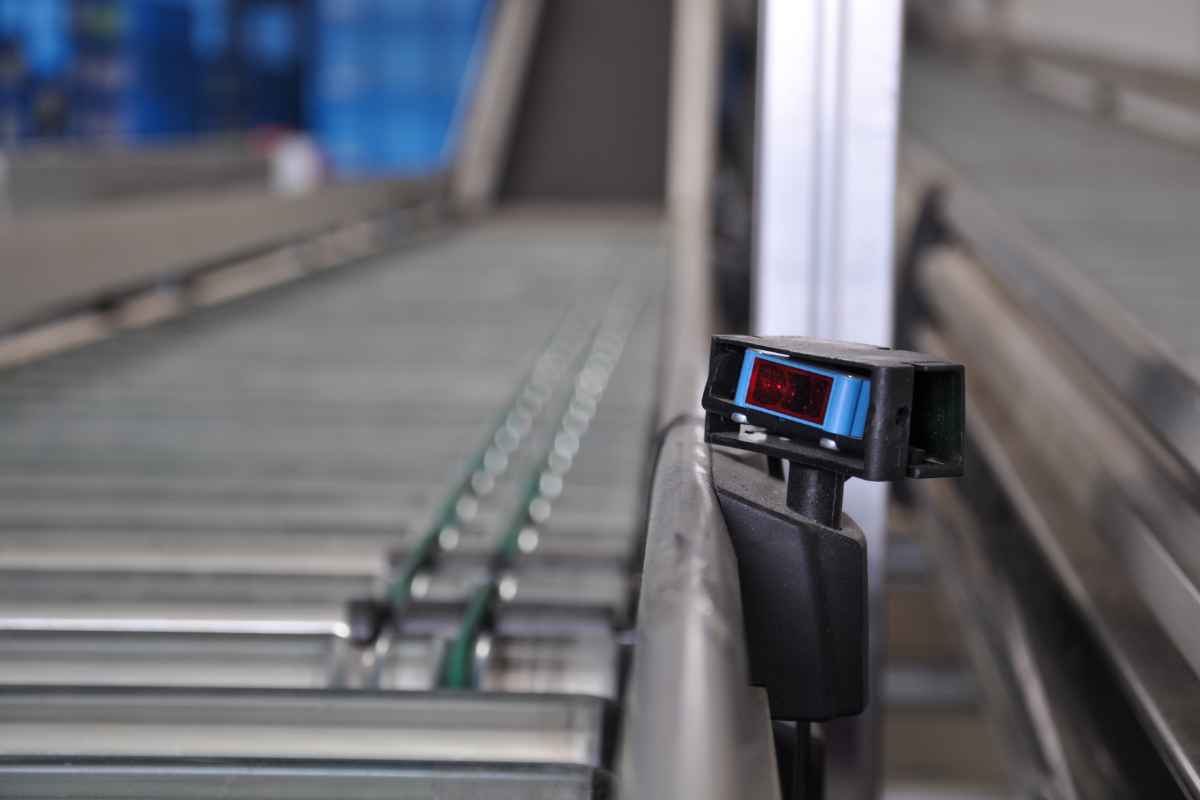
Displacement Sensors are electronic devices that detect the distance from an object and measure it through electrical output signals without direct contact with the workpiece, thus avoiding damage to the objects being inspected. These sensors operate by emitting a laser beam towards the object and receiving the reflected light to process into highly accurate micron-level distance measurements. They can display results in digital format, send analog signals, and connect to automatic control systems, making them popular for high-precision industrial applications such as measuring thickness, checking deformation, or detecting workpiece deviations.
How a Distance Sensor Works
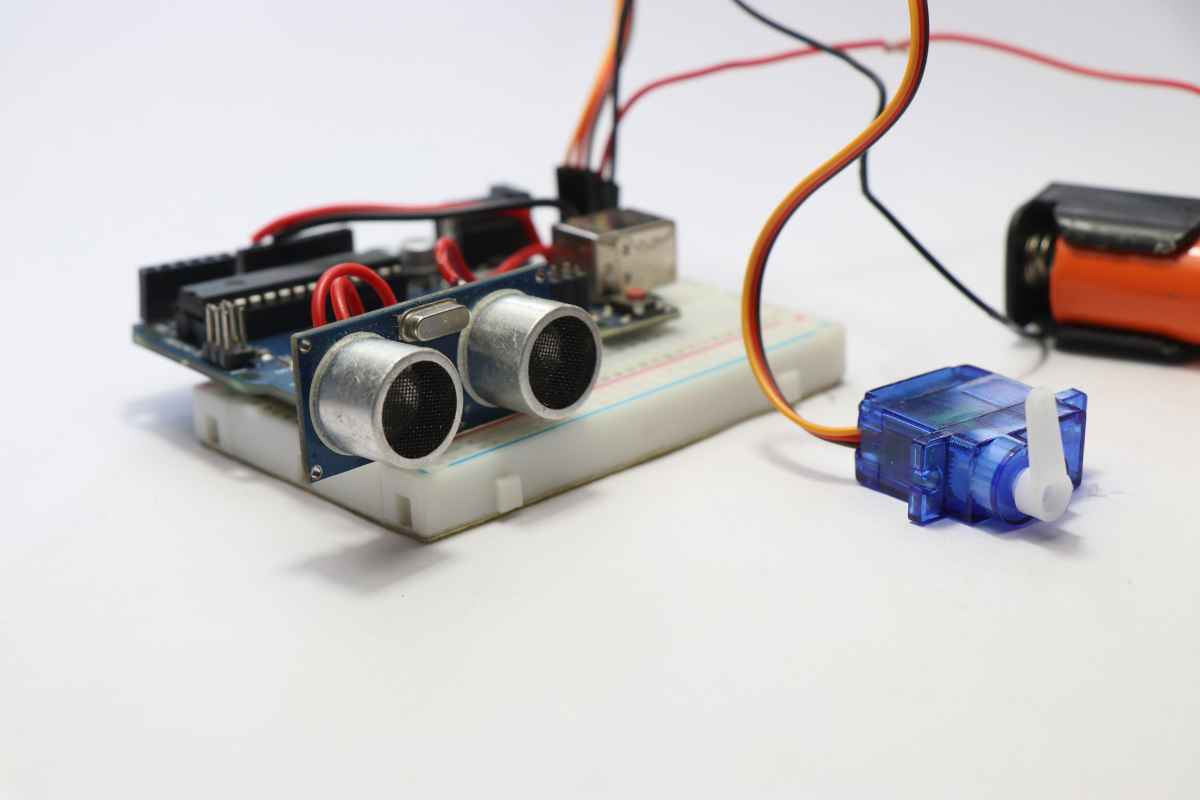
Distance sensors work on the same principle as sonar devices in measuring sound by sending out ultrasonic pulses from a transmitter. Then, it measures the time taken for the sound wave to travel to an object and bounce back to the receiver. Once the time value is obtained, the sensor calculates the distance using the speed of sound in air as a basis, allowing it to determine how far away an object is from the sensor. This works even when the surface of the object is uneven or curved.
Types of Distance Sensors
Laser technology plays a crucial role in the development of highly accurate distance measurement sensors, which are categorized into three main types based on their working principles and applications. Each type specializes in measuring distances, positions, or creating detailed 3D images differently, making them suitable for specific industrial requirements.
Laser Range Finders
This type of sensor is specialized in directly measuring the distance between the sensor and a target object using Time of Flight or Phase Shift principles, achieving high accuracy. It can measure distances from just a few centimeters to several hundred meters, making it suitable for area surveying, construction site measurements, automatic navigation systems, and position control during manufacturing processes.
Laser Displacement Sensors
This type of sensor is highly accurate in detecting changes in position or distance at close to medium ranges using the triangulation principle. It can measure changes as fine as micrometers, making it popular for surface quality inspection, thickness measurement, vibration detection, or material deformation during high-precision manufacturing processes.
Laser Scanners
Laser distance meter scanning switchscans in all directions to create a detailed 3D image or map of an object or area, collecting thousands to millions of data points to form a "point cloud" that accurately represents shape and surface details. This technology is used in reverse engineering, 3D modeling, quality inspection of parts, automatic navigation for robots, and virtual reality imaging in the entertainment industry.
Examples of Distance Sensor Usage
The technology of Distance Sensors can detect subtle changes in distance or shape that are nearly imperceptible to the naked eye and send data to quality control systems or automation systems. Important examples of application include:
- Thickness Measurement - Checking the consistency of thickness in sheet materials such as rolled steel, laminated glass, or plastic sheets to ensure production quality meets standards.
- Height and Level Measurement - Detecting abnormalities or defects on printed circuit boards (PCBs) or components that require high precision, capable of detecting micron level deviations.
- External Diameter Measurement - Checking the size of cylindrical parts in mass production such as shafts, pipes, or screws to confirm they are within acceptable tolerance ranges.
- Bending and Flatness Detection - Analyzing the smoothness of various material surfaces such as glass, metal sheets, or plastic parts to detect warping or bending that may affect product quality.
- Positioning and Placement - Checking the assembly position of complex components such as camera modules, automotive parts, or medical devices that require high accuracy.
- 3D Profiling - Creating a three-dimensional model of an object or surface by scanning and measuring distances at multiple points, aiding in the detection of multi-directional warping and analysis of complex shapes.
Which Brand of Distance Sensors is Good? Which Models are High-Quality and Worth Using?

IFM Brand Distance Sensor Model O1D120
https://scma.co.th/o1d120-efector-220-pmd-o1dlf3kg-io-link-de.html
IFM Brand Distance Sensor Model O5D100
https://scma.co.th/o5d100-efector-220-pmd-o5dlcpkg-us-de.html
IFM Brand Distance Sensor Model OID200
https://scma.co.th/oid200-efector-220-pmd-oidlcpkg-us-de.html
The Importance of Distance Sensors for Industry
Distance sensors are a crucial component in modern industries driven by precision and automation. They use ultrasonic, laser, and reflective light technologies to accurately measure distance even in challenging environments. The application of long-range object detection sensors in manufacturing processes, quality inspection, safety control, and automated systems not only enhances production efficiency and reduces costs but also elevates industry standards for quality and safety.
Interested in Distance Sensors? You Can Buy from SCMA Today!
SCMA is a high-quality distributor of distance sensors from leading global brands. With years of experience in the industrial sector, we are confident in offering products that meet your business needs with quality and reliability. Whether you need laser range finders, displacement sensors, or laser scanners, our team is ready to consult and recommend the best product for your application. SCMA has a dedicated technical support team to assist with both product selection and fast nationwide delivery. Contact us today to upgrade your industrial system with high-quality distance sensors from SCMA!
Summary
Distance sensors, or range sensors, are crucial components that play a significant role in modern industries. With their ability to accurately and quickly measure the distance between the sensor and an object, they are widely applied in various applications such as manufacturing processes, safety systems, logistics, and autonomous vehicles.
There are several types of distance sensors available, including laser range finders, displacement sensors, and laser scanners. Each type has unique features and limitations, making it important to choose the right sensor for your specific application to ensure optimal performance.
SCMA is a reliable partner in providing high-quality distance sensors and technical consultation for your business. With a wide range of products from leading brands and an expert team, SCMA is ready to help you select the best sensor for your industrial needs.Contact us today to enhance production efficiency and product quality with distance sensors from SCMA!
Frequently Asked Questions
What is a distance sensor?
A distance sensor is an electronic device designed to measure the distance between the sensor and a target object using various technologies such as laser, ultrasonic, or electromagnetic waves. The sensor converts the distance measurement into an electrical signal that can be processed or displayed in an automatic control system or display device.
What is a proximity sensor?
A proximity sensor is designed to detect objects within close range, typically up to several centimeters to about one meter. It may use inductive, capacitive, or high-frequency ultrasonic technology. These sensors are commonly used in automatic control systems, such as detecting objects on a conveyor belt or checking the position of workpieces in machinery.
How does a laser distance sensor work?
A laser distance sensor works by emitting a laser beam to the target object and detecting the reflected light. There are two main principles: Time of Flight (ToF), which measures the time it takes for the light to travel back and forth, and Triangulation, which calculates the distance based on the angle at which the reflected light hits the detector. Laser sensors offer high accuracy and can measure both short and long distances depending on their design.
What is an ultrasonic sensor?
An ultrasonic sensor uses high-frequency sound waves beyond the range of human hearing (above 20 kHz) to measure distance. It works by emitting sound waves and measuring the time it takes for them to bounce back, then calculating the distance based on the speed of sound in air. These sensors have advantages such as functioning well in various environments, including dark or dusty conditions, and can detect a variety of objects regardless of color or transparency.