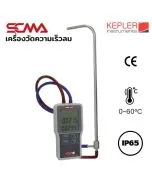

Wind speed measuring tools, or Anemometers, are crucial instruments for measuring and controlling wind speeds across various industries such as meteorology, aviation, maritime navigation, or even in air conditioning systems. SCMA, a leader in measurement tools and automation systems, provides information and recommends wind speed measuring instruments suitable for your specific needs.
What is an Anemometer?

A wind speed measuring tool, or Anemometer, is a device used to measure the speed and direction of wind or air flow. Typically, it measures linear velocity (meters per second, feet per second, miles per hour, etc.) or volumetric flow rate (cubic meters per minute, cubic feet per minute, etc.). Wind speed measuring devices come in various types, each with different operating principles and suitability for specific applications.
How does a wind speed measuring tool work?
Most Anemometers operate on the principle of force exerted by wind on movable surfaces such as cups, propellers, or use the principle that air flow cools objects like hot wires. Some models utilize ultrasonic waves or lasers; when wind passes through, these devices move or change in some way. The internal system counts revolutions or calculates the amount of energy changed over a period of time and converts it into wind speed.
What are the benefits of a wind speed meter?
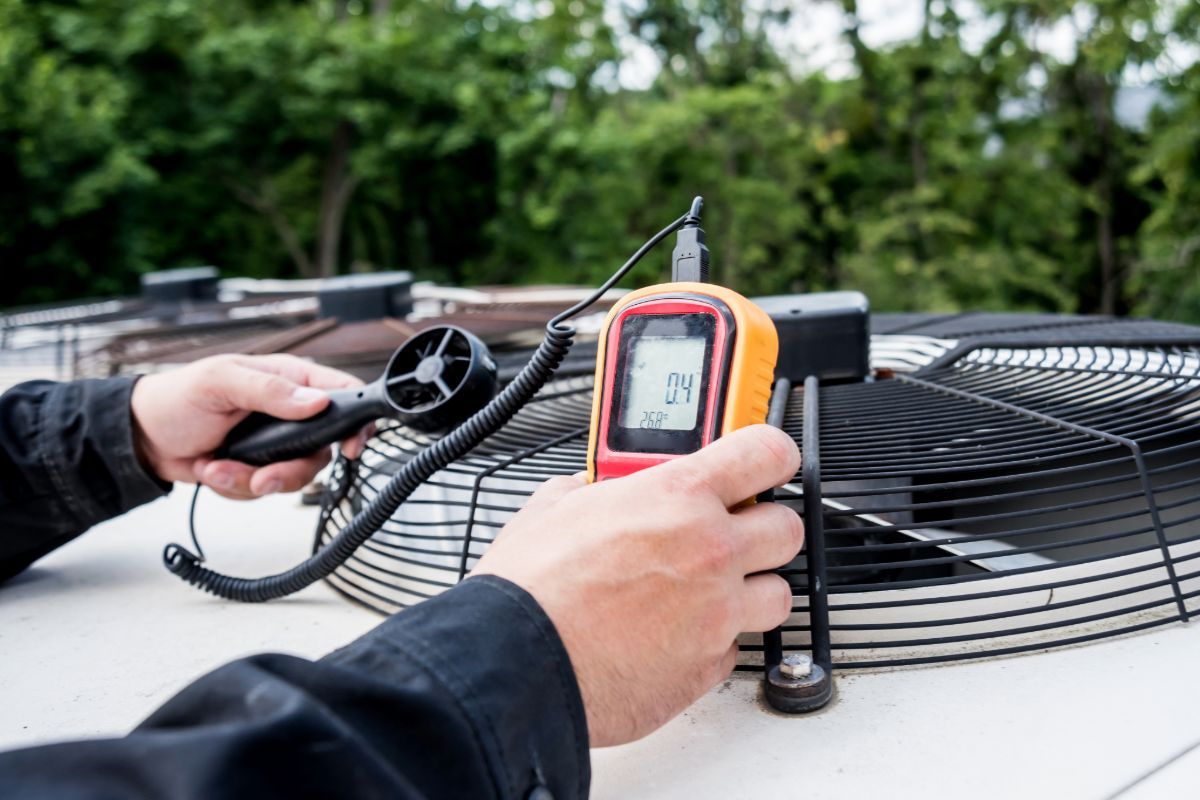
A wind speed meter is a highly useful tool for measuring and collecting data on wind speeds, which can be applied in various fields such as:
- Meteorology - used to measure, forecast weather conditions, and issue storm warnings
- Aviation - used to assess the safety of aircraft takeoffs and landings
- Engineering - used in designing and testing the strength of buildings, vehicles, etc.
- Industry - used to control wind speeds in air conditioning systems, ventilation systems, etc.
- Research - used to study the behavior of winds, airflow patterns, pollution dispersion, etc.
What is an Anemometer Used For?
The primary function of an anemometer is to measure wind speed and direction. Data from the anemometer is used in a variety of applications, such as:
- Meteorologists use it for weather monitoring and forecasting
- Pilots use the wind speed measurement tool to assess safety before takeoff
- Engineers use the data for designing buildings and structures that can withstand wind forces
- Scientists and researchers use the information to analyze wind patterns and air distribution
- Industrial plants use anemometers for controlling ventilation systems and airflow management
Types of Wind Speed Meters
Wind speed meters come in various types, depending on the application and environment. Each type has its own advantages and disadvantages as follows:
1. Propeller Anemometer (Windmill anemometer)
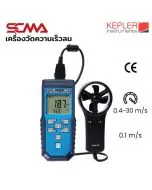
This type of anemometer resembles a wind turbine, featuring blades attached to a rotating shaft. When the wind blows, the blades spin in a horizontal plane. The device counts the number of rotations within a specified time period and calculates the wind speed. This model is relatively inexpensive but must be constantly adjusted to face perpendicular to the wind for accurate readings. It is suitable for applications that do not require high precision.
2. Cup Anemometer
The cup anemometer has three or four half-spherical cups attached to arms rotating around a vertical axis. When the wind blows from any direction, it causes the cups and arms to rotate with the force of the wind. The rotational speed is converted into wind speed. Its advantage lies in not needing to be adjusted according to the wind direction like the propeller type. It is commonly used in general weather stations.
3. Ultrasonic Anemometer
The ultrasonic anemometer uses high-frequency sound waves transmitted through the air, with multiple transmitters and receivers. Changes in the speed of the wave traveling between each pair of transmitter-receiver units, caused by the movement of the air, are used to calculate wind speed across several axes. Its advantage is its high accuracy and durability; it has no moving parts and is suitable for applications requiring high precision such as research.
4. Hot Wire Anemometer (Thermoelectric anemometer)
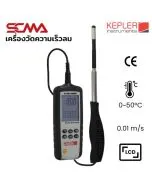
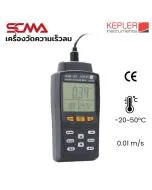
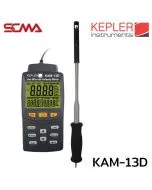
This type of wind speed meter uses a small wire that is hotter than the surrounding air. When the wind blows over the hot wire, it cools down. The device calculates the rate at which heat is lost from the wire and converts this into wind speed. Its advantage lies in its fast response time and ability to measure low wind speeds accurately. However, it is fragile and expensive, making it suitable for high-precision applications such as aerodynamic research.
How to Use a Wind Speed Meter Correctly

Using a wind speed meter correctly will help achieve accurate measurement results. Follow these steps:
- Select an Anemometer that is suitable for the environment and characteristics of the wind you want to measure
- Install securely in a position where the wind can pass freely without any obstructions
- Face the instrument as perpendicular to the direction of the wind as possible (except for cup types that rotate around)
- Set the desired measurement unit, turn on the device and wait until it stabilizes for accuracy
- Read the measured value, record results periodically, and compare with standards
- Clean and maintain the instrument regularly according to the user manual
- Calibrate the device as per specified intervals, and store properly when not in use
Why are wind speed measuring tools important?
Wind speed measuring tools are essential in many industries because:
- Wind speed data is crucial for aviation safety, maritime activities, and other outdoor activities.
- Building design must consider wind force to ensure structural stability and strength.
- Wind speed affects the dispersion of pollutants, smoke, exhaust gases, impacting air quality and the environment.
- Weather forecasting and storm warnings rely on data from anemometers to ensure accuracy.
- Air conditioning and ventilation systems in buildings must control wind speed appropriately to create comfortable conditions.
- Research and development in various engineering fields, such as aircraft, automobiles, wind turbines, also require wind speed measurement data.
Therefore, wind speed measuring tools are indispensable in many industries to ensure safety, efficiency, and sustainable development.
If you're interested in purchasing a wind speed measuring tool, contact SCMA today!
SCMA is ready to offer a variety of wind speed measuring tools from different brands, ranging from basic digital anemometers for general work to advanced models for high-precision requirements. Our team of experts is available to provide consultation, recommendations, and proper demonstration of usage, as well as comprehensive after-sales service to ensure that you get the best wind speed meter tailored to your needs.
Summary
An anemometer is a crucial tool for measuring and recording wind speed data, which can be applied across various industries, from meteorology and aviation to research and development. There are several types available, each with its own advantages and disadvantages. Therefore, selecting the appropriate model based on your needs, along with proper usage and maintenance, will ensure accurate measurements and maximize the utility of the collected data.
SCMA is ready to provide consultation and supplyanemometers that meet your requirements, along with comprehensive services from SCMA covering pre-sales to after-sales support, ensuring you are fully confident in the quality of our products and services.
Frequently Asked Questions
What are wind speed measurement tools?
The main types of wind speed measurement tools include:
- Windmill type
- Cup type
- Ultrasonic type
- Hot wire type
Each type has its own characteristics, advantages, disadvantages, and suitability for different applications.
What is a wind speed meter?
A wind speed meter, or anemometer, is a tool used to measure the speed and direction of wind or air flow. The measurement results are usually displayed as linear velocity or air flow rate. There are several types available for different applications such as windmill type, cup type, ultrasonic type, etc.
What is a wind tester?
The term "wind tester" means the same as "wind speed meter" or "anemometer." Its main function is to measure the speed and direction of wind or air flow.
What are the units for measuring wind speed?
Commonly used units for measuring wind speed include:
- Meters per second (m/s)
- Kilometers per hour (km/h)
- Feet per minute (ft/min)
- Miles per hour (mph)
- Knots
Air flow rate is typically measured as:
- Cubic meters per second (m³/s)
- Cubic feet per minute (cfm)
- Liters per second (l/s)