In temperature control systems related to heating or cooling, thermostats that regulate temperature play a crucial role in maintaining the set temperature level. This equipment is widely used across various systems, from household appliances to industrial machinery. Thermostats help reduce the risk of overheating or undercooling which could cause damage and also enhance the efficiency of different devices. Understanding and correctly using thermostats is essential for both general users and system engineers.
What are temperature control thermostats?

A temperature control thermostat is an apparatus used to measure and control the temperature within a specified range by turning electrical circuits on or off according to changes in temperature. Thermostats (Thermostat) are widely popular devices for controlling temperatures in industrial applications, heating systems, air conditioning systems, and various electrical appliances. This equipment helps ensure system stability, reduces overheating risks, and extends the lifespan of devices. The thermostat is a critical mechanism for managing heat in various usage scenarios.
How do thermostats work?
The operation principle of thermostats relies on their response to temperature changes. When the set temperature is reached, the device automatically switches electrical circuits on or off. Thermostat working principles include both bimetal expansion types and closed system pressure changes with gas or liquid. Additionally, there are electronic types that use temperature sensors for high accuracy. Temperature control thermostats can therefore be accurately used to regulate heating processes in various systems, such as in hot water boilers or automatic heating systems.
Benefits of Using a Thermostat
Using a thermostat helps to stabilize the system, save energy, and increase safety, especially in manufacturing processes or applications that require constant temperature. The thermostat functions by accurately switching the system when the temperature changes.
- Helps prevent equipment damage from excessively high or low temperatures
- Reduces unnecessary energy consumption through automatic temperature control
- Extends the lifespan of machinery and control systems
- Increases safety in manufacturing processes and industries
- Improves the efficiency and accuracy of system operation
Usage Characteristics of Thermostats

Thermostats are widely used in various industries, particularly in heating and cooling systems as well as machinery and electrical equipment that require continuous temperature control. SCMA provides consultation for selecting thermostats to achieve optimal performance.
- HVAC systems such as air conditioners and heaters
- Control systems in hot water boilers (Boiler)
- Industrial heating equipment such as ovens and steam boilers
- Home appliances such as refrigerators, irons, rice cookers
- Ice prevention equipment in low-temperature areas
How many types of thermostats are there?
Currently, thermostats have been developed in various forms to suit different applications appropriately. Each type has its own working principle and characteristics. What is a thermostat? It should be selected according to the nature of the work to reduce control errors.
Mechanical Thermostat
A mechanical thermostat uses the expansion properties of two different metals (Bimetallic Strip) with varying coefficients. As temperature changes, the metal strip bends and triggers contact points to open or close circuits. Suitable for general use where high accuracy is not required.
Digital/Electronic Thermostat
A digital/electronic thermostat uses electronic sensors to detect temperature and display it on a screen with precise control. Digital thermostats are often used in equipment requiring fine-tuned control, such as pharmaceutical refrigerators or industrial cooling systems.
Programmable Thermostat
A programmable thermostat allows setting time and temperature ranges according to pre-programmed schedules. Suitable for work requiring control of different temperatures at various times, such as office buildings or food production facilities.
Smart Thermostat
A smart thermostat is a model that can be controlled through the internet or an application. It has learning functions for user behavior, helping to save energy and increase convenience in remote control.
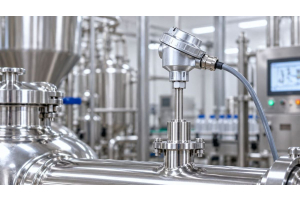
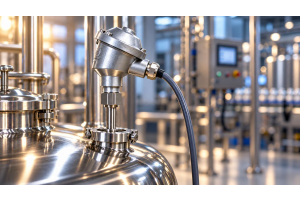
Immersion Thermostat
An immersion thermostat is suitable for installation in water tanks, boilers, or systems where liquids are the heat transfer medium. The thermostat directly detects temperature from the liquid to control equipment.
How does a Thermostat differ from a Temperature Controller?
Although both devices are used to control temperature, they differ in terms of capabilities and operational structure. Therefore, a Thermostat is suitable for certain types of work while a Temperature Controller is better suited for others.
Thermostat
A Thermostat is a simple on-off switch device that controls temperature by cutting off the circuit when the set temperature is reached. It is commonly used in general systems such as irons, kettles, or heaters where high precision is not required.
Temperature Controller
A Temperature Controller is an electronic device with a complex circuit that works alongside sensors to measure and control temperature using PID or ON-OFF controls. It is ideal for high-precision work such as in laboratories or automated machinery.
Why use a Thermostat? What is its importance?

A Thermostat plays a crucial role in ensuring that production processes or usage remain within safe and appropriate temperature conditions, especially in industries where temperature errors could cause severe damage.
- Provides accurate temperature control
- Prevents damage to equipment
- Enhances overall system safety
- Reduces energy costs from excess usage
- Promotes sustainable production practices
If you are interested in thermostats for temperature control, you can now purchase from SCMA!
If you are looking for a thermostat that meets the needs of various control systems, SCMA offers a wide range of options in terms of type, accuracy, and durability. Whether it's for hot water boilers, cooling systems, or industrial machinery, we are happy to provideservicesand consultations to help you choose the most suitable equipment for your specific needs. Our thermostats from SCMA meet reliable quality standards, along with comprehensive technical support and after-sales service.
Summary
Thermostats are essential components in heating and cooling control systems, whether for industrial applications, buildings, or general electrical appliances. SCMAis ready to provide comprehensive advice and services for all types of thermostats, enhancing efficiency, reducing risks, and saving energy for users. If you need reliable temperature control equipment, choose SCMA.
Frequently Asked Questions
What is the role of a Thermostat?
The primary function of a thermostat is to control the temperature of a system within a safe and appropriate range by switching electrical power on or off to heating or cooling devices based on preset values. A thermostat plays an important role in maintaining balance within the system, preventing overheating or undercooling hazards, and extending the lifespan of equipment.
What is a Thermostat?
A thermostat is an automatic device that measures and controls temperature by switching electrical circuits on or off at set values. Thermostats are commonly found in heating and cooling systems, available both manually and automatically. They play a role across various sectors including residential, industrial, and medical.
What is the difference between a Thermostat and a Temperature Controller?
Both devices control temperature but differ in technology and application:
- Thermostat is a basic control device that works by switching circuits on or off when the set temperature is reached.
- A Temperature Controller uses advanced technology to precisely control temperature through PID calculations.
What temperature range can a Thermostat handle?
The temperature range of a thermostat varies depending on the model and type of equipment. Generally, it can accommodate from -40°C up to over 300°C in some models. Water boiler thermostats typically operate within 30-90°C, while industrial applications may require devices that handle temperatures up to 400°C. SCMA offers products covering all temperature requirements.