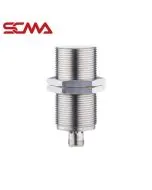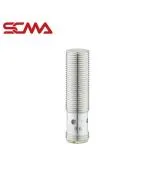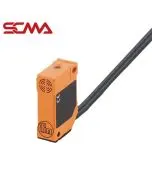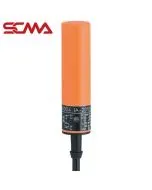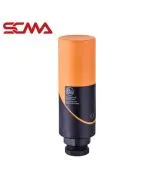

Proximity sensors are a crucial technology that enhances manufacturing efficiency in modern industries. Have you ever wondered how automated production lines detect workpieces without touching them? Proximity Sensor is the answer that enables precise automation systems. This article will explain what Proximity Sensors are, how they function, and how to utilize object detection sensors for practical benefits so that you can choose the right one.
What is a Proximity Sensor?

A Proximity Sensor is a type of sensor designed for detecting metal objects without physical contact (Non-contact Detection). It replaces traditional limit switches that require direct contact with workpieces. This proximity object detection sensor is durable, has a long lifespan, and can operate in various environments, making it widely used in industries such as automotive, food processing, and automated production lines.
What is a Capacitive Proximity Sensor?
A Capacitive Proximity Sensor is a type of proximity sensor that can detect all types of objects, including both metal and non-metal materials such as plastic, water, wood, glass, and powder. It works based on the principle of changes in capacitance when an object comes near. This type of proximity detection sensor is suitable for detecting liquid levels in tanks, counting bottles in packaging lines, or detecting non-conductive materials. Capacitive Proximity Sensors are highly flexible industrial sensors with a wide range of applications.
How does a Proximity Sensor Work?

Capacitive Proximity Sensor works by detecting changes in the electrical capacitance between the sensor and an object. Factors such as distance and size of the object affect the amount of electrical capacitance. When an object comes close to the detection surface, it causes a change in the electrical capacitance value. The oscillator circuit inside the proximity sensor detects this change and converts it into an electrical signal for transmission to the control system.
How does an Electrostatic Capacitance Type Proximity Sensor Work?
Electrostatic capacitance type proximity sensors work by detecting changes in the electrical capacitance between the sensor and an object. Factors such as distance and size of the object affect the amount of electrical capacitance. This type of proximity sensor can detect both conductive and non-conductive materials, making it widely used in industrial applications.
How does a Magnetic Induction Type Proximity Sensor Work?
Magnetic induction type proximity sensors work by creating a high-frequency magnetic field. When a metal object enters the magnetic field, an eddy current is generated, causing the magnetic field to weaken. In this context, a proximity sensor detects changes in the magnetic field and converts it into an electrical signal. This type of industrial sensor is suitable for detecting metals only.
How does a Magnetic Proximity Switch Work?
Magnetic proximity switches or Reed Switches work by using a permanent magnet to control the opening and closing of contacts. A proximity sensor operates when a magnet comes close, causing internal contacts to move into contact and send an electrical signal. This type of proximity sensor has a simple structure, is durable, and is suitable for detecting the position of doors, windows, or covers in industrial sensors.
Applications of Proximity Sensors

Proximity sensors have a wide range of applications in various industries. Proximity Sensor is a sensor that can operate in environments with water, oil, dust, and high or low temperatures. The object detection sensor is suitable for use as an industrial sensor and a sensor used in high-precision industrial work.
- Object Position Detection - Proximity Sensors are used to detect the position of parts on production lines, count products, and control the operation of automatic machines. Proximity sensors are essential in modern automation systems.
- Transportation and Logistics - Proximity sensors detect packages on conveyor belts, control automated doors in warehouses, and check the position of containers. Various types of proximity sensors can be selected according to suitability.
- Quality Inspection - Proximity Sensors are tools for checking the completeness of parts, detecting dents, missing pieces, or incorrect assembly. Industrial sensors help reduce waste and improve product quality.
- Control Operation - Proximity sensors control the movement of industrial robots, set lift stops, and control CNC machine operations. Sensors used in this type of work must be highly accurate and reliable.
- Level Detection - Capacitive Proximity Sensors detect the level of liquids, powders, or plastic pellets in storage tanks. Proximity sensors help control raw material quantities during production processes.
- Food Industry - Stainless steel or fluororesin proximity sensors are used in food production lines to detect bottles, cans, and packaging. This technology is resistant to chemical cleaning and high temperatures.
- Agriculture - Proximity sensors are used in agricultural machinery to detect seeds, control greenhouse door openings and closings, and automatic feeding systems.
What are the prominent features of a proximity sensor?
Proximity sensors have several outstanding features that make them widely used in industrial applications. Proximity Sensor is designed to withstand various environmental conditions, and proximity object detection sensors offer advantages over touch sensors and light-based sensors.
- Non-contact Detection - Proximity sensors do not need to come into contact with objects, thus preventing wear and tear, damage to workpieces, and extending the lifespan of the sensor. They are ideal for detecting delicate or sensitive surface materials.
- Durable in Various Environments - These industrial sensors perform well even with water, oil, dust, or chemicals. Proximity Sensors are not affected by the color of objects or interfering light.
- Fast Response - Proximity sensors respond quickly at a millisecond level, suitable for detecting fast-moving objects on production lines.
- Broad Temperature Range - Proximity sensors operate from -40°C to 180°C, depending on the model. They can be used in both cold rooms and industrial ovens.
- Material Detection - Some types of proximity sensors can detect objects through boxes, plastic bags, or non-metallic walls.
- No Moving Parts - These industrial sensors use electronic circuits and have no mechanical moving parts, thus requiring minimal maintenance.
- Energy Efficient - Proximity sensors consume little power, making them suitable for energy-saving systems or battery-operated applications.
Looking to purchase proximity sensors? SCMA is now available for your needs!
Choosing high-quality proximity sensors is crucial for industrial applications because Proximity Sensors are the heart of automated systems that require precision and reliability. SCMA offers a wide range of high-quality Proximity Sensors, including inductive, capacitive, and magnetic types. Our team of experts is ready to provide consultation for selecting the appropriate proximity object detection sensors that meet your requirements, along with comprehensive after-sales services to ensure maximum efficiency throughout the lifespan of your industrial sensor applications.
Summary
Proximity Sensors are non-contact object detection sensors that play a crucial role in modern industries. Proximity Sensor technology enhances production efficiency, reduces costs, and increases safety. There are various types of proximity object detection sensors suitable for different applications. Industrial sensors used in such categories have several outstanding features including durability, fast response, and operation in diverse environments. SCMA is your high-quality sensor partner with all types of Proximity Sensors available, along with excellent services. Contact us today for consultation and to select the appropriate proximity sensors that meet your needs.
Frequently Asked Questions
What is a Proximity Sensor?
A proximity sensor is a non-contact object detection device that can detect the presence of objects at close range. The Proximity Sensor converts detection into an electrical signal and is widely used in industries to control machinery, count workpieces, and check positions without touching the object.
How many types of Proximity Sensors are there?
There are mainly three types of Proximity Sensors: inductive (for detecting metal), capacitive (for detecting all materials), and magnetic (for detecting magnets). Additionally, other types such as ultrasonic and photoelectric proximity sensors are used for specific applications.
How does an Inductive Proximity Sensor work?
An inductive proximity sensor works by creating a high-frequency electromagnetic field from the coil. When a metal object enters this magnetic field, eddy currents are generated within the metal causing the magnetic field to weaken. The sensor detects this change and converts it into an electrical signal. It is suitable for detecting all types of metals at distances ranging from 0-50 mm.
Which type of proximity sensor can detect both metallic and non-metallic objects?
A capacitive proximity sensor is a type that can detect both metal and non-metal objects. This type of close-range object detector works by detecting changes in capacitance, making it capable of detecting plastic, wood, glass, liquids, powders, and metals. It is ideal for applications requiring the detection of various materials.
How far can a Proximity Sensor detect?
The detection range of a proximity sensor depends on its type and size. Generally, an inductive proximity sensor can detect from 0.5-120 mm, while a capacitive proximity sensor can detect from 0.5-60 mm depending on the material. The detection range also varies based on the size and material of the object being detected.