
Water flow meters are crucial devices that help manage and control water in industrial systems efficiently. If you're looking for an accurate way to measure water volume or want to know what a Water Flow Meter is, how it works, and the types of Water Flow Meters available, this article provides comprehensive information on all aspects to help you choose the right flow measurement tool from SCMA that suits your needs.
What is a Water Flow Meter?

Water Flow Meter or Flow Meter for Water is a measuring tool that indicates the volume of water or liquid flowing through an area over a period. It can measure both flow rate, such as 150 liters per minute, and cumulative usage similar to household water meters but with much higher accuracy and durability. Suitable for industrial plants requiring high precision and resilience in various environmental conditions.
How a Water Flow Meter Works
The Flow Meter, or Magnetic Flow Meter works differently depending on the technology used. The basic principle is to measure the volume or speed of liquid flowing through a measurement point and convert it into the desired flow rate value, such as Magnetic Flow Meters which use electromagnetic induction according to Faraday's law. When electrically conductive liquids flow through a magnetic field, an induced voltage proportional to the flow velocity is generated. On the other hand, Thermal Flow Meters use heat dispersion principles by measuring temperature changes between two RTD sensors when there is flow, and the measured value directly correlates with the flow rate.
How many types of water flow meters are there?
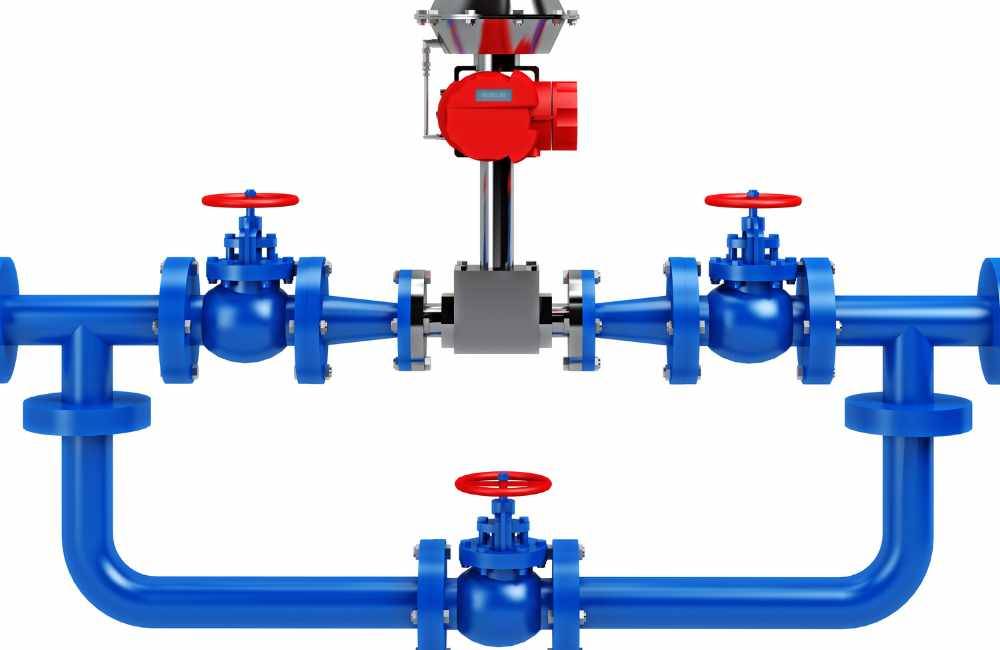
Water flow meter comes in various types to suit different liquid characteristics and usage conditions. Each type has its own working principle and advantages, selecting the right one can ensure accurate measurement results and cost-effectiveness.
1. Turbine Flowmeter
Turbine flowmeters use a rotating paddle wheel when liquid flows through it, with the rotational speed directly proportional to the flow rate. Suitable for clean liquids and those with low viscosity, providing high accuracy over a wide measurement range. Often used in petroleum and chemical industries where precise volume measurement is required.
2. Ultrasonic Flowmeters
Ultrasonic flowmeters use high-frequency sound waves to measure water flow meters, without direct contact with the liquid, thus having no moving parts and causing no pressure loss. Suitable for large pipes and liquids containing impurities, can be installed externally on the pipe without cutting it, making maintenance convenient.
3. Differential Pressure Flowmeters
Differential pressure flowmeters measure the difference in pressure between two points in a pipe using devices such as Orifice Plate or Venturi Tube, which is a traditional and widely used method due to its simple structure, low cost, and high reliability.
4. Electromagnetic Flowmeter
Electromagnetic flowmeters or Magnetic Flow Meter for water use the principle of electromagnetic induction, suitable for conductive liquids such as tap water, wastewater, and chemicals, providing high accuracy without moving parts, thus no wear and tear, durable for long-term use, and do not cause pressure loss in the system.
5. Rotameter Flowmeter
Rotameter Flowmeter is a Variable Area flow meter that uses a float moving up and down in a tapered tube. When fluid flows through, the position of the float indicates the flow rate, which can be easily read with the naked eye. It is inexpensive and suitable for approximate measurement or simple flow control.
6. Vortex Flowmeter
Vortex Flowmeters use the principle of vortex shedding, featuring a bluff body in the center of the pipe. As fluid flows through, alternating vortices are generated whose frequency varies with flow rate. Suitable for liquids, gases, and steam, they offer high accuracy over a wide measurement range and are robust in harsh environments.
7. Coriolis Flowmeters
Coriolis flow meters are among the most accurate types of flow meters, utilizing the Coriolis effect to measure tube deformation when a mass of liquid flows through it. They can simultaneously measure both mass and volume, as well as density and temperature. Ideal for high-precision applications such as in food and pharmaceutical industries.
What Do Water Flow Meter Readings Indicate?
Water flow meter readings can provide important information necessary for controlling production processes and managing water resources. The flow meter displays various values that are useful in many ways.
- Volumetric Flow Rate - Flow Meter measures in units of m³/s, L/min or GPM indicating the volume of liquid flowing per unit time. It is denoted by Q and calculated from Q=VA (V=speed, A=cross-sectional area).
- Mass Flow Rate - Water flow meter of the Mass Flow Meter type measures in kg/s or lb/hr. It is denoted by ṁ and is suitable for controlling chemical quantities that require high accuracy.
- Totalized Flow - Water Flow Meter shows the cumulative volume that has flowed through, such as cubic meters or liters. It is used for billing or water usage records.
- Flow Velocity - Some flow rate measuring tools display velocity in m/s, aiding in analyzing the efficiency of pipe systems.
- Temperature and Pressure - New flow meter models often have built-in temperature and pressure sensors, helping to improve compensation calculations.
Benefits of Water Flow Meter in Industrial Applications
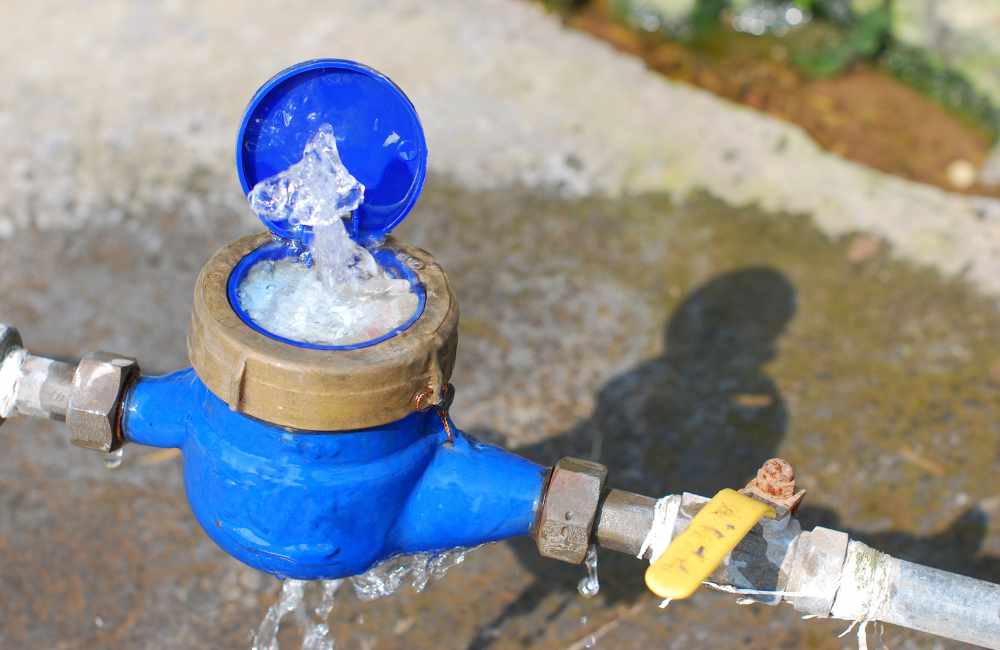
Water flow meters play a crucial role in enhancing production efficiency and resource management in industrial plants. These devices help ensure precise process control, leading to cost savings.
- Resource Analysis and Control - Flow Meter helps monitor the volume of water, gas, chemicals both inflow and outflow, as well as wastewater. This data is used to plan resource management and environmental treatment effectively.
- High Accuracy and Durability - Industrial Water Flow Meter offers accuracy up to ±0.5% or better, suitable for all types of liquids including corrosive wastewater and chemicals. It withstands high temperatures and pressures.
- Production Quality Control - Water Flow Meter helps control the quantity of raw materials and chemicals used in production according to specified formulas, directly impacting product quality and standards.
- Leak Detection - Flow Meter can quickly detect leaks in pipe systems by comparing flow rates at different points. This reduces losses and prevents potential damage.
- Energy Savings and Cost Reduction - Flow Meter helps balance the flow in systems, ensuring pumps and equipment operate at maximum efficiency. This reduces energy consumption and operational costs.
Selecting the Right Water Flow Meter for Your Needs
Choosing the right water flow meter is crucial for ensuring accuracy and efficiency in use. Each type of flow meter has its own advantages and disadvantages, so careful consideration of various factors is necessary.
- Consider the Type of Flow to Measure - Choose a flow meter that suits the type of fluid, such as water flow meters for clean water, wastewater, or chemical fluids. Also consider liquid properties like viscosity, electrical conductivity, and temperature.
- Select a Reputable Supplier - Purchase flow meters from companies with experience and knowledgeable engineering teams that can design systems, install them correctly according to international standards, and provide consultation.
- Accuracy and Measurement Range - Choose a flow meter with the required accuracy level; generally ±1-2% is sufficient for most applications, but higher precision work requires ±0.5% or better. Also consider the measurement range (Turndown Ratio).
- Environmental Durability - Flow meters must withstand operational conditions such as high temperatures, high pressure, corrosive chemicals, or vibrations. Choose appropriate materials and protection levels (IP Rating).
- After-Sales Service - Select a supplier of water flow meters that offers comprehensive after-sales service, including warranties, calibration services, maintenance, and spare parts availability. They should also have credible customer references.
If you want to buy a Water Flow Meter, SCMA is now available!
Regular maintenance of the Water Flow Meter is crucial for ensuring accurate operation and extending its lifespan.SCMA is ready to provide sales services for high-quality Water Flow Meters of various types, along with a team of expert engineers who are available for consultation, design, installation, and comprehensive after-sales service to ensure your Water Flow Meter operates at maximum efficiency. We are ready to be a good partner in developing measurement and control systems in your factory.
Summary
A water flow meter is an essential tool in modern industry, helping with accurate measurement and control of water volume, cost savings, and environmental friendliness. Choosing the right flow meter for your specific needs will enhance production efficiency and reduce losses. SCMA is ready to provide comprehensive services related to flow meters, from product selection, installation, to maintenance, with an experienced team to ensure that your measurement system operates at maximum efficiency throughout its lifespan.
Frequently Asked Questions
What is a Water Flow Meter?
A water flow meter is a tool for measuring the volume and rate of flow of water or liquid through a pipe system. It can display the flow rate per unit time, such as liters per minute, or cumulative usage. It is more accurate and durable than general water meters, suitable for use in industrial plants that require precise measurement and control of water usage.
How does a Water Flow Meter work?
A water flow meter works by using various technologies to measure such as rotating blades, ultrasonic waves, electromagnetic induction, or pressure differences. Each method converts the movement or properties of flowing water into an electrical signal and processes it into a flow rate or volume displayed on a screen or transmitted to a control system.
What is the role of a Water Flow Meter?
The main role of a water flow meter is to measure and display the amount of water flowing through the system, help control production processes according to standards, detect leaks in pipe systems, record water usage for resource management, calculate production costs, and send data to an automatic control system to adjust pump and valve operations appropriately.
How many types of flow meters are there?
There are seven main types of flow meters including Turbine Flowmeter which uses rotating blades, Electromagnetic Flowmeter based on electromagnetic induction, Ultrasonic Flowmeter using sound waves, Rotameter with a float, Vortex Flowmeter measuring vortices, and Coriolis Flowmeter measuring pipe deformation. Each type is suitable for different applications.
Which Water Flow Meter Model is Good and High Quality from SCMA
FMC240 DN50 Series Electromagnetic Flow Meter (Magnetic Field Flow Meter)
https://scma.co.th/fmc240-electromagnetic-flow-meter-dn50-series.html
FMC240 DN100 Series Electromagnetic Flow Meter Remote type (Magnetic Field Flow Meter)
https://scma.co.th/fmc240-electromagnetic-flowmeter-remote-type-dn100.html
FMC240 DN100 Series Electromagnetic Flow Meter (Magnetic Field Flow Meter)
https://scma.co.th/fmc240-electromagnetic-flowmeter-dn100.html
SUPMEA SUP-LUGB Vortex Flow Meter (Vortex Flow Meter) with temperature & pressure compensation
https://scma.co.th/supmea-sup-lugb-vortex-flowmeter-with-temperature-pressure-compensation.html