Air Cylinder is the heart of an automatic system. Problems such as worn-out piston seals or air leakage across chambers cause the piston rod to move jerkily, disrupting the machine's rhythm and causing production lines to suddenly halt. SCMA offers Pneumatic Cylinders of high quality for maintenance needs. We have cylinder ready for immediate delivery on-site with our engineering team available to review specifications in detail. Prevent issues where you buy an Air Cylinder but cannot screw it back into its original position. You can easily order through our online system.
What is an Air Cylinder? Why Can't Automation Systems Do Without This Equipment?
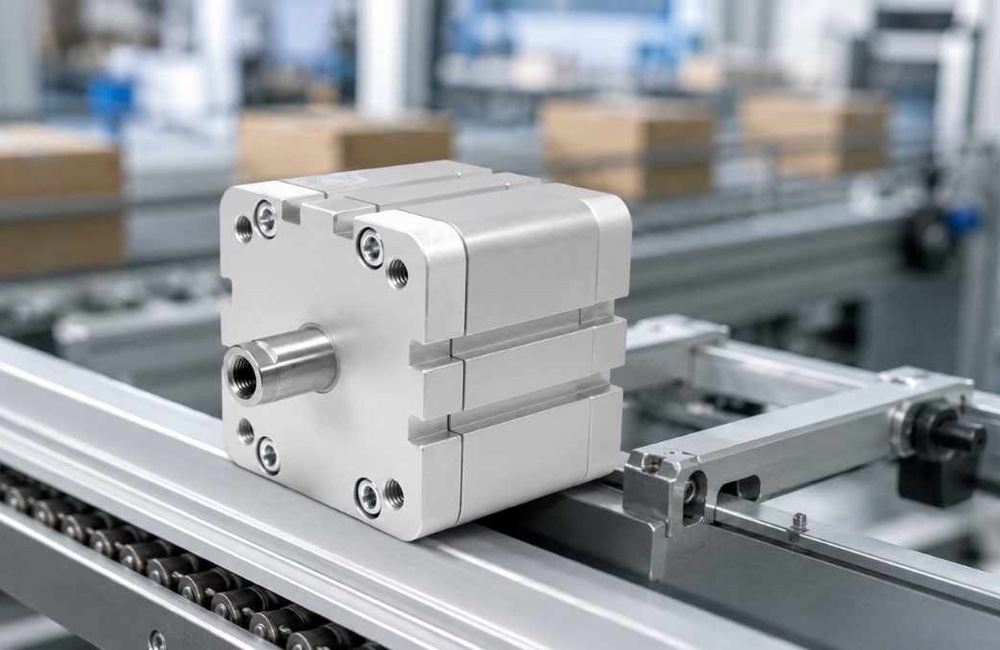
The most common question among new mechanics is what is an air cylinder. This piece of equipment serves as the actuator, converting compressed air energy into linear motion. Understanding what pneumatic means helps clarify this concept. Pneumatic systems use compressed air to transmit power; thus, a Pneumatic Cylinder is like the limbs of machinery, responsible for pushing, pulling, lifting, or sliding workpieces in production lines. These cylinders are designed to perform repetitive tasks at high speeds, making them indispensable in automation systems within factories.
In-depth Engineering Insights into How Pneumatic Cylinders Work
The internal mechanism of Pneumatic Cylinder is precisely designed. The cylinder chamber is clearly divided into two sides; when the valve supplies air to the rear port, compressed air pushes the piston rod out to perform programmed tasks. The speed and force (Force) of an Air Cylinder depend on the size of the piston bore (Bore Size). These values vary directly with the pressure supplied to the system. Maintenance technicians must always calculate pressure in relation to load weight.
The Types of Pneumatic Cylinders That Maintenance Technicians Must Know About
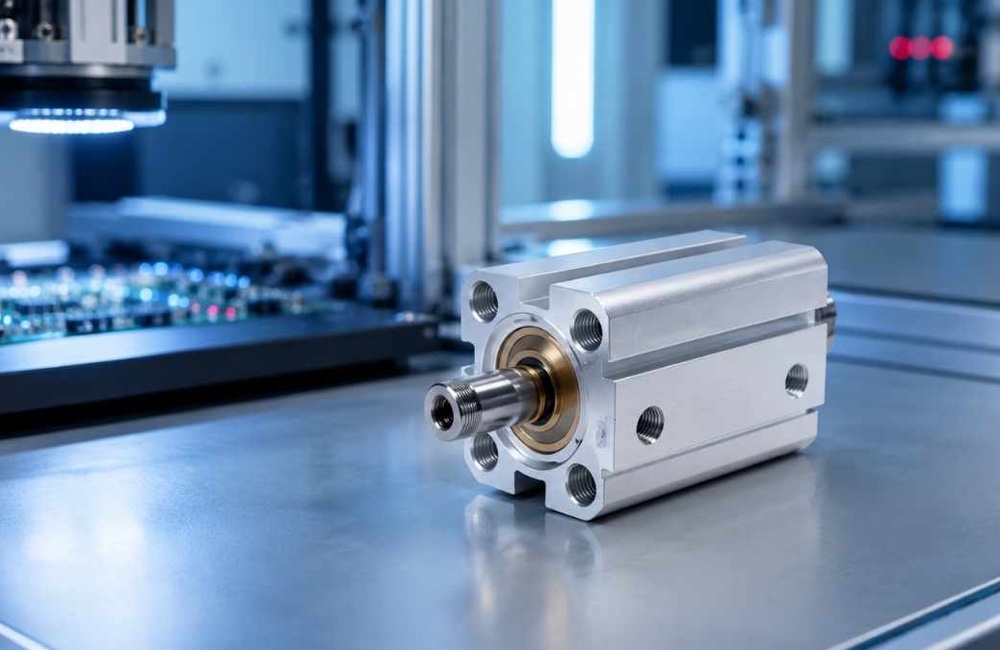
The selection of Air Cylinder must primarily consider the machine's operational mode. System designers classify cylinder types based on their air pressure receiving characteristics.
Single-Acting Cylinder Model
This type of cylinder uses air to push in one direction only, relying on internal springs to return the piston rod to its original position. This model is suitable for short-range work that does not require a pulling force back. Maintenance technicians often use this pneumatic cylinder with pressing or sorting tasks on conveyor belts.
Double-Acting Cylinder Model
The system uses air to control both forward and reverse movements. Technicians can more accurately control the movement speed compared to single-acting cylinders. The double-acting pneumatic cylinder is the most commonly used standard model in industrial factories, effectively supporting heavy loads.
Cylinder Piston Jamming Issues, Seals Leaking, and Initial On-Site Inspection Methods
The majority of machine downtime issues stem from internal components of cylinders deteriorating. Technicians can observe initial symptoms to assess maintenance needs immediately.
- Piston jerking (Stick-slip) occurs due to excessively narrow air speed control valve settings or improper adjustment relative to on-site load conditions.
- The lubricant inside the cylinder completely dries up, causing friction between the piston and cylinder wall during movement.
- An abnormally slow-moving piston may be caused by low compressed air pressure or blocked air pipes due to flattened tubing.
- A hissing sound of leaking air at the cylinder head is a result of worn-out or deteriorated rod seals over prolonged use.
- Dust and water droplets from the air compressor enter, scraping against the piston surface, causing rubber seal sets to fail in retaining compressed air pressure.
- When encountering wear marks on the cylinder, technicians must immediately disassemble parts to replace new seal kits for repairs.
How to Calculate Specifications for Air Cylinder Replacement Parts
Purchasing a air cylinder to replace the original part must be accurate. Misreading specifications will prevent proper assembly of the replacement part into its original location.
- Maintenance engineers should start by reading the Nameplate of the air cylinder to check the product code in detail.
- The technician team must verify the Bore (bore diameter) and Stroke (maximum extension length) of the pneumatic cylinder to match the original specifications exactly.
- Do not reduce or increase part specifications without assessing potential impacts on the working mechanism.
- Note the installation pattern (Mounting Type) clearly, such as L-bracket mounting, flange mounting, or clevis mounting.
- These attachment points are crucial; ordering incorrectly will prevent screws from fitting into the original machine structure at all.
Supplementary Equipment to Enhance Air Cylinder Control Efficiency
The operation of a air cylinder can be made perfect with supplementary equipment for control. Technicians recommend using flow control valves (Flow Control Valve) to adjust the speed of piston extension and retraction in sync with machine rhythms. Controlling speed helps reduce impact at end points. Installing auto switches (Auto Switch) is another important helper. This device works together with magnetic rings inside the cylinder’s piston, sensors send signals confirming endpoint positions back to the PLC cabinet so that the next piston cylinder can start working according to the sequence.
Pneumatic Cylinder Preventive Maintenance Standards
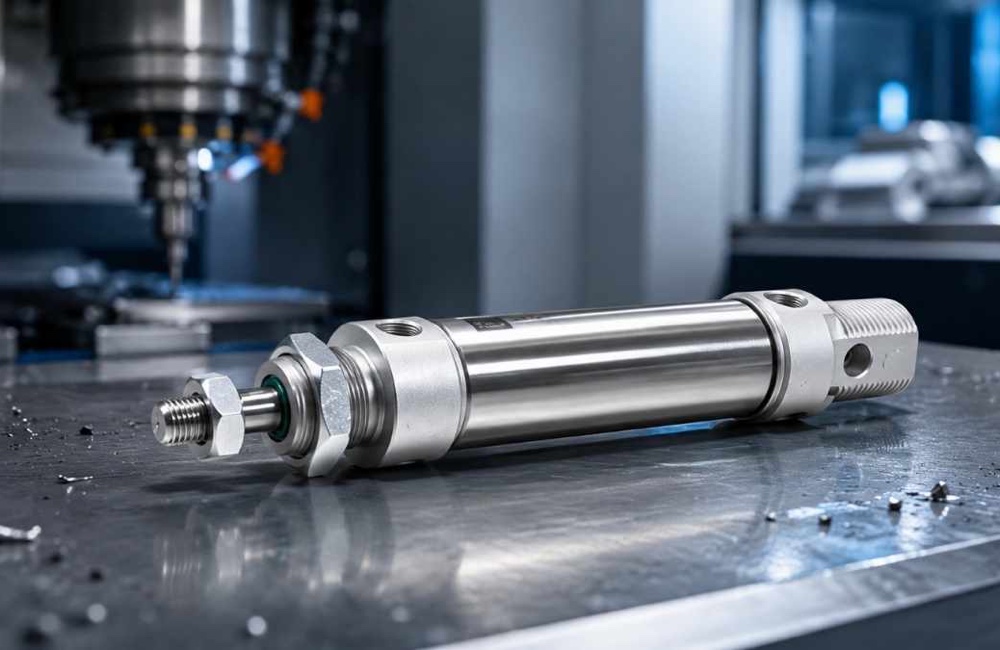
The maintenance department must have a clear Preventive Maintenance plan for pneumatic cylinders. Preventive maintenance helps extend the lifespan of components.
- The maintenance team needs to set regular quality checks on compressed air. Compressed air from compressors should be as dry and clean as possible.
- Compressed air must pass through a filter regulator lubricator (FRL) system at all times, to prevent rust and oil residue buildup inside the cylinder housing.
- The water separator helps reduce dust particles that can cause scratches on internal rubber seal components of pneumatic cylinders.
- Strictly check the alignment of parts parallel with the piston rod's movement path.
- Inclined installation of cylinders will result in side loads, causing bearings and rubber seals to wear out much faster than expected.
Summary
In summary, pneumatic air cylinder is a critical component driving machinery in automation systems. Choosing high-quality pneumatic cylinders with proper maintenance reduces production line downtime. If you are wondering what an air cylinder is or need to compare spare parts specifications, the engineering team from SCMA is ready for in-depth consultation. We have stock cylinders available for immediate urgent delivery.
If you want to purchase, SCMA is now offering sales!
SCMA offers convenient and fast online services. Customers simply need to take a photo of the nameplate and mounting hole dimensions of the pneumatic air cylinder and send it directly to our website. Our engineering support team is ready to compare high-quality replacement brand specifications for pneumatic cylinders, and provide free engineering parameter checks. We deliver special urgent pneumatic cylinder shipments, allowing mechanics to install them perfectly without worrying about machine modifications.
Frequently Asked Questions (FAQ) About SCMA Pneumatic Cylinder Usage
Q1: What drives a pneumatic system, and how does it differ from a hydraulic cylinder?
A: Pneumatic systems are driven by compressed air from an air compressor. They offer high speed, cleanliness, and are suitable for general industries. In contrast, hydraulic cylinders use oil to generate immense pressure, making them ideal for heavy machinery or metal presses. Pneumatic cylinders, however, are easier to maintain and do not get messy.
Q2: Why does my pneumatic cylinder have a hissing sound at the piston rod?
A: The air leakage in pneumatic cylinders is usually due to worn-out piston rod seals (Rod Seal). This can be caused by external dust particles adhering to the piston rod and being dragged into the seal, causing wear. A mechanic must disassemble and replace the seal kit immediately to stop the leak.
Q3: When purchasing an air cylinder online with SCMA, do they check the mounting size?
A: They ensure everything is accurate. The SCMA engineering team will request information on the distance between mounting holes (Pitch) of air cylinders, as well as the thread size at the end of the rod to confirm that your cylinder can fit perfectly into the existing bracket or Y-Joint without needing any new drilling.
Q4: My cylinder is jerking, and adjusting the speed controller doesn't help. What should I do?
A: Have a maintenance technician remove the load first and test it unloaded. If cylinder still jerks, it could be due to dried-up lubricating grease inside or friction between the piston and cylinder sleeve. Maintenance must disassemble parts for overhaul or consider replacing the entire unit.
Q5: What should I do if my pneumatic cylinder's nameplate is worn off?
A: Don't worry, just take a full picture of your pneumatic cylinder, measure its diameter and the maximum extension length (Stroke) of the rod, then send it to SCMA via LINE. Our engineers have extensive experience in calculating and matching specifications for new air cylinders so you can continue using them without issues.