Having trouble with your electrical system being wasteful or machines stopping unexpectedly? Motion Sensor is an important solution that can effectively resolve these issues. SCMA, as an expert in industrial equipment, is ready to provide comprehensive sensor solutions. With the experience of SCMA's engineering team, this article will take you through the working principles, types, and how to choose the right equipment to ensure long-term safety improvements in your factory.
What is a Motion Sensor?
Motion Sensor (Motion Sensor) is a device that detects physical movement of humans, animals, or objects within a defined radius. As a leading company in the distribution of industrial equipment and automation systems, SCMA offers a range of Motion Sensor products, including Sensors for motion control that meet international standards. These devices convert movement into electrical signals to quickly control other systems.

How the Motion Sensor Works
The basic mechanism of the motion sensor relies on emitting signal or light waves to impact the target, after which the system measures the reflected distance to convert the changes into an electrical signal.
PIR Sensor (Infrared)
This system operates by detecting changes in thermal radiation from people or animals moving in front of the sensor. The infrared sensor responds to temperatures that differ from the background environment. When a living being passes by, the system sends a trigger signal to the control switch to immediately turn on the alert light.
Ultrasonic Sensor
This type of sensor works by emitting high-frequency sound waves beyond human hearing into the environment. The device waits to receive the reflected sound waves from moving objects. Calculating the time of the reflected sound allows the ultrasonic sensor to accurately detect objects even in areas with obstructions.
Laser / ToF Sensor
The Time of Flight technology works by precisely firing a laser beam at the target. The system calculates the time or angle of the reflected light to determine the position. This type of sensor is highly suitable for measuring distances on production lines that require millimeter-level precision.
How many types of motion sensors are there?
According to SCMA's data, motion sensors are divided into 3 main types based on technology. Choosing the right technology can greatly enhance operational efficiency.
Passive Infrared (PIR) Sensors
This type of sensor works by detecting changes in thermal radiation or temperature from human or animal bodies moving through. The device detects temperature differences compared to normal room temperature. Infrared sensors are highly popular for use in controlling lighting systems in office buildings.
Microwave Sensors
The device operates by sending out microwave waves over a wide area. The system measures the reflected waves to detect changes in objects. This type of wave has the advantage of penetrating thin obstacles, making it suitable for hiding the device for aesthetic purposes in the working area.
Ultrasonic Sensors
This system emits high-frequency sound waves to cover the target area. The sensor waits to receive reflected waves when an object moves in and disrupts the original wave pattern. This type of device is highly sensitive and can detect even slight movements, making it ideal for bathrooms with corners.
Maintenance of Motion Sensors
There are clear guidelines for maintaining motion sensors to ensure long-term and accurate operation. Tips from SCMA's engineering team on the field include cleaning the lens, checking the viewing angle, and regularly testing the lighting system.
Cleaning
Dust on the lens should be cleaned using a soft microfiber cloth, gently wiping the lens surface or signal receiving area to prevent scratches. Users should avoid using corrosive or strong alcohol-based cleaners. It is strictly forbidden to use harsh chemicals, as they may damage the lens coating and reduce the detection range.
Inspection and Adjustment
The system administrator should check the viewing angle to ensure there are no obstructions in front of the sensor, such as overgrown trees or boxes blocking the working range. Adjusting the sensitivity is another important step. It is recommended to test by walking through the actual area to see if the detection range still responds according to the original standard settings.
Electrical System Check
Technicians must regularly check the wiring to see if the wire connections are loose, show signs of burning, or have moisture buildup at the connection points. Measuring the voltage with a standard device helps ensure a consistent and stable power supply to the equipment.
Application of Motion Sensors
The application of motion sensors in major industries plays an important role in controlling production belts, machine safety systems, as well as accurately inspecting the position of workpieces.
Safety Light Curtain System
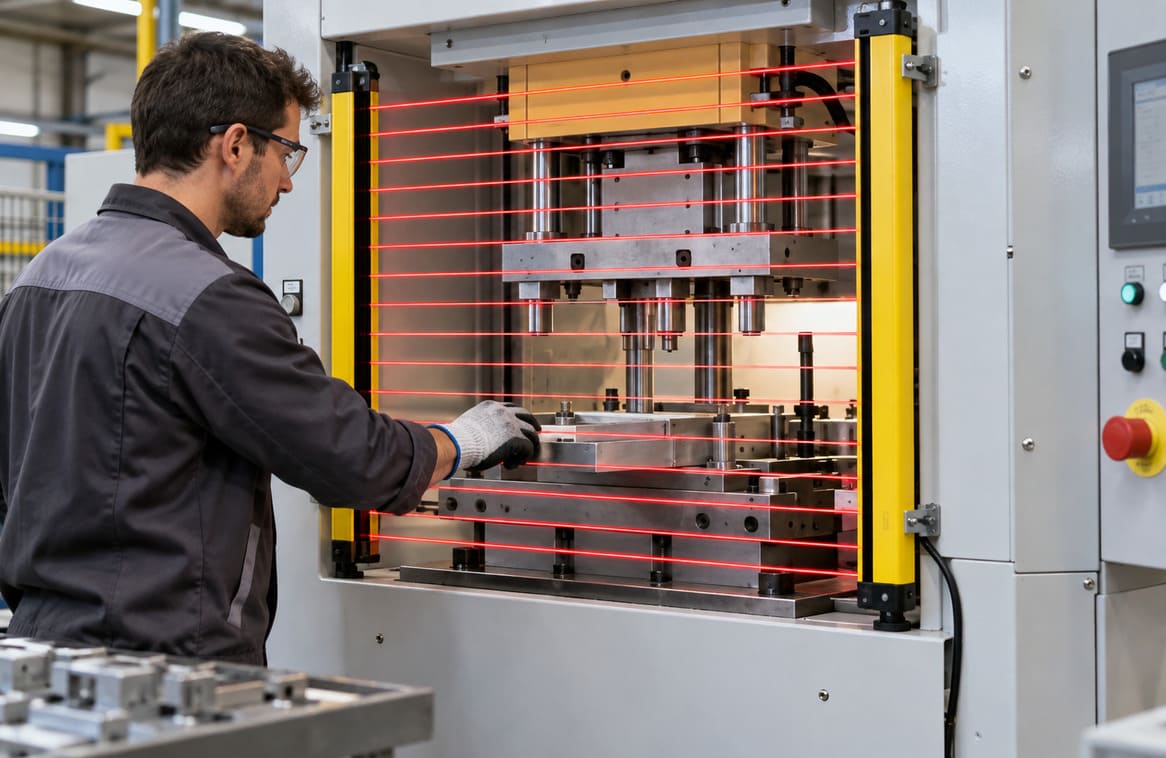
In a case study we have done, the installation of safety light curtains effectively prevents hazards from heavy machinery. The infrared sensor will immediately stop the operation of the machine as soon as someone walks into the dangerous area. This system significantly reduces accidents in the working area.
Conveyor & Assembly Line
In the production line, sensors are used to detect positions as well as count the number of products passing through a designated point. The data obtained will be used to control the motor's operating cycle in correlation with the workload. This type of application helps increase smoothness and reduce errors from human visual counting.
Displacement & Position Measurement
The component manufacturing industry uses sensors to accurately measure the stroke length, thickness, or position of workpieces. The device can quickly inspect the size of moving parts. These data help engineers separate non-standard parts before they proceed to the next process.
Where should motion sensors be installed?
Selecting the appropriate installation location will help maximize the potential of motion sensors. Main areas include production lines in factories, warehouses, as well as office buildings.
Factory and Industrial Areas
Production lines require accurate detection of the position and movement of objects or workpieces on conveyor belts. Installing sensors at component assembly points helps control the timing of robotic arms to ensure synchronization. Automated systems can operate at maximum efficiency.
Warehouses
Large storage areas require control of cargo transportation and monitoring of forklift entry and exit. Installing sensors near automatic roll-up doors helps open the doors only when a vehicle approaches. This application significantly reduces traffic accidents within the area.
Common Areas and Corridors
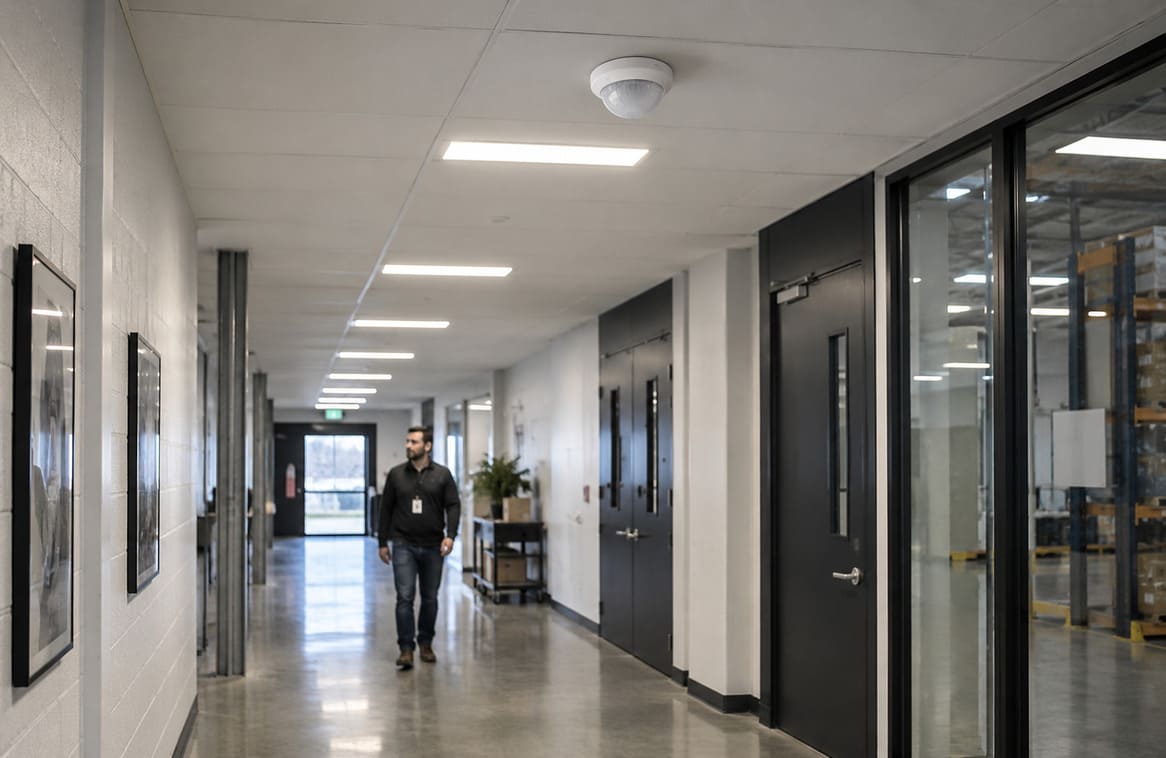
Managing common areas focuses on automatically turning on lights only when people pass by to save energy. Ceiling sensors are suitable for corridors, restrooms, or emergency staircases. Such automated operation helps reduce the workload of security personnel in patrolling to turn off lights.
Advantages of Motion Sensors
The main advantages of motion sensors include energy savings, increased safety, and enhanced convenience in use. Users can control automated systems without manually turning them on or off.
Energy Saving
Reduced electricity costs occur from automatically turning on or off lights or air conditioners only when people are in the room. This smart system completely eliminates the problem of forgetting to turn off lights when leaving an area. Organizations can clearly reduce utility expenses when installing light sensors.
Safety
The device serves as an intruder alarm by detecting abnormalities around the building to send immediate warning signals. Sensors can work with CCTV to automatically activate the video recording system. This proactive security system provides peace of mind for property owners throughout the night.
Convenience
Touchless operation helps increase convenience when entering or exiting dark areas without having to search for light switches. This fully automated system is suitable for installation in corridors or parking lots. Users can carry full hands of luggage and pass through automatic doors smoothly.
How to Choose a Motion Sensor
Purchasing a motion sensor from SCMA that offers good value for investment should consider several important factors. Evaluating the type of sensor, detection range, as well as the usage environment will help you get the most suitable device.
Sensor Type:
PIR (Infrared): Detects heat from people to control lighting
Microwave: Sends waves to detect objects through obstacles
Ultrasonic: Uses reflected sound waves to measure distance and movement
Encoder / Speed Sensor: Measures rotational speed and distance in industrial applications
Range and Area: Choose the detection range (meters) that fits the size of the area, check the sensor's field of view or signal reception angle
Environment: Check the waterproof and dustproof rating (IP Rating) if used outdoors, select the durability against temperature and humidity levels
System Integration: Study more information about the sensor to ensure the device can work with the existing automatic control system
Summary
In summary, Motion Sensors are a crucial component in creating an automated system that enhances safety and reduces energy loss in industries. Choosing the right type of motion detection sensor for the application will have a positive impact on long-term profitability. If your factory is looking for a solution to upgrade the production process, the SCMA engineering team is ready to provide consultation, system design, and installation services directly at your factory, including in Bangkok, Chonburi branch (EEC), and Lampoon branch.
Interested in purchasing or consulting via LINE Official: @SCMA
If you want to buy a motion sensor, you can buy it from SCMA today!
Understanding technical insights will help entrepreneurs choose the right technology to reduce errors in the production line. If you want to upgrade your factory standards with a high-performance motion sensor, SCMA Co., Ltd. offers a distribution service with an engineering team that designs integrated solutions. We are ready to take care of you from calibration work consultation all the way through after-sales service with leading expertise.
Frequently Asked Questions
Can motion sensors be used with general building lights?
They can be used immediately with general lighting systems by selecting a model with an internal relay circuit to safely act as a switch to turn the lights on and off.
Which type of sensor is suitable for outdoor use?
Microwave Sensor is most suitable for outdoor use because the frequency waves are not affected by sunlight temperature like infrared models.
Is detecting through walls with microwave waves dangerous?
This device emits very low frequency waves, which are industry-standard certified, so there is no danger to humans during use.
Will the sensor activate if a pet walks by?
Standard PIR sensors may activate. Users should choose a model with Pet Immunity function which will exclude detection of living beings below the weight threshold.
How long can the delay time before turning off the lights be set?
Most devices allow users to adjust the delay time from a few seconds up to several minutes, depending on the device's specifications.