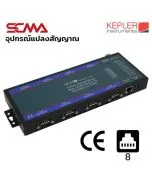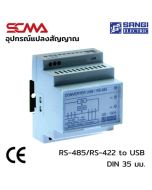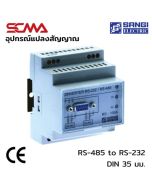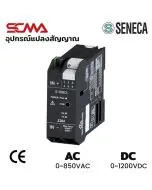

A converter is a signal conversion device, an important component that plays a role in various industries. It helps to convert one type of signal or energy into another, enabling different equipment or systems to work together efficiently. Whether it's computer systems, electronics, audio and video systems, or even automotive systems, converters play a crucial role in making technology function smoothly and seamlessly.Equipment or systems can thus operate effectively together.
What is a Converter?

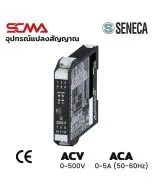
A converter is a signal conversion device, an important component responsible for converting various signals such as temperature, direct current (DC) or alternating current (AC) into standard signals used in industrial applications, such as 4-20 mA, 0-20 mA, 0-5 VDC, or 0-10 VDC. This allows the signals to be transmitted to control systems or display devices. Converters may also be referred to by other names like Transmitter, Signal Transmitter, or Pulse Isolator depending on their usage. These standard signals are defined to ensure that control equipment from different manufacturers can work together efficiently.
What are the types of Converters?
Converters come in various types depending on their usage and industry. Each type has different functions and operations, ranging from signal conversion, digital file conversion to various forms of energy conversion. Understanding the types of Converters can help in selecting and using them appropriately and efficiently.
1. Computer System Converters
Computer system converters are responsible for converting data or digital signals, such as File Converter that converts files from one format to another, and Data Converter that converts data between digital and analog formats. These devices play a crucial role in linking information systems and various equipment together.
2. Electronics Converters
This type of converter is related to electrical energy conversion, such as AC-DC converters that convert alternating current (AC) to direct current (DC), DC-AC Converter or Inverter which works in the opposite direction, and Voltage Converter that adjusts voltage levels. These devices are extremely important in general electrical and electronic systems.
3. Audio and Video Converters
This type of converter is responsible for converting multimedia signals, such as Audio Converter that converts audio file formats and quality, and Video Converter that converts video signals between different standards and formats, allowing the playback or editing of multimedia files on various devices.
4. Automotive System Converters
In the automotive industry, converters come in many forms such as Catalytic Converter that reduces exhaust emissions, Torque Converter used in automatic transmission systems, and Power Converter in electric cars and hybrid vehicles. These devices play a significant role in improving efficiency and reducing environmental impact.
Benefits of Using a Converter

A Media Converter is a good example of how to utilize a converter effectively in a network system. The device can convert signals between different communication mediums, such as Fiber Optic and LAN (Ethernet), enabling the network system to operate at maximum efficiency. Using converters offers several advantages that help both small and large organizations design and use systems flexibly and efficiently.
Extended Reach
A Media Converter helps overcome the distance limitation of LAN cables, which can only transmit data up to 100 meters, by converting signals to be transmitted over Fiber Optic cables that support distances up to 80 kilometers. This allows for connecting devices at great distances without worrying about distance limitations.
Easy Installation and Use
Converters are generally compact, not cluttering space. Installation is easy by simply connecting the signal cables from both ends to the converter, which automatically converts the signals.
Signal Interference Protection
Using a Media Converter with Fiber Optic cables helps protect against electromagnetic interference and other types of signal noise, ensuring stable and accurate data transmission. This is especially beneficial in environments with high electrical interference.
Increased Data Transmission Efficiency
Converters help increase data transfer speed by adjusting speeds from 10 Mbps to 100 Mbps or from 100 Mbps to 1,000 Mbps. This enhances the efficiency of data transmission.
Support for Power Over Ethernet
Some models of Media Converters support PoE (Power over Ethernet) technology, allowing power to be supplied directly to end devices through network cables. This reduces the complexity of wiring and device installation.
Cost Savings
Using a Media Converter allows for an effective integration between Fiber Optic and LAN cable usage, making it unnecessary to use expensive Fiber Optic cables at every point in the network. This helps reduce overall system costs.
Selecting the Right Converter for Your Needs

Choosing the right converter that meets your requirements is crucial for efficient and cost-effective system operation. Users should consider various factors comprehensively, including usage objectives, compatibility with existing equipment, quality, and safety standards to ensure they get a converter that best suits their needs.
- Consider Usage Objectives: Select the appropriate Converter based on your requirements, such as choosing a Temperature Signal Converter for converting signals from temperature sensors or an Inverter with suitable wattage for converting direct current to alternating current.
- Check Compatibility: Ensure the Converter supports your equipment or system, such as checking input and output ranges, connector types, and supported communication protocols to avoid potential usage issues.
- Select a Reputable Brand: Choose a brand with a good reputation, clear warranty terms, and a history of quality products to ensure reliability and have options in case of product issues.
- Consider Safety: Especially for electrical converters, opt for models with safety features such as surge protection, short circuit prevention, and overheating protection to prevent damage to equipment and users.
Interested in Converters? You Can Buy from SCMA Today!
Choosing a high-quality and suitable converter is crucial for accurate control systems and measurements. SCMA proudly presents high-quality converters that have been carefully selected to meet the diverse needs of our customers.
In addition, we offer high-quality multimeters designed specifically for industrial use, capable of accurately testing and calibrating converters. Our multimeters feature special functions that allow detailed analysis of signals from converters, in addition to measuring voltage, current, resistance, and more.
SCMA is ready to provide consultation and recommend converters that meet your needs. Our team of experts will assist you in selecting products that fit your application and budget, along with quality after-sales service.
Summary
Converters are essential devices that convert signals or energy from one form to another, enabling various equipment and systems to work together efficiently. Converters come in many types for use in computer systems, electronics, electrical work, audio and video systems, and automotive systems.
Selecting the right converter involves considering several factors such as input and output signal type, operating range, accuracy, response time, and environmental durability to achieve optimal performance in use.
SCMA provides high-quality converters and multimeters suitable for testing and calibration work. Our team of experts is ready to provide consultation and recommend products that meet your needs, ensuring you get the best performance and value for your investment. Interested in our products orservices? Contact SCMA today!
Frequently Asked Questions
What is the function of a Converter?
A digital to analog converter (DAC) is an electronic device that converts signals or energy from one form to another, allowing different devices or systems to work together or adjust signals for specific applications. For example, it can convert electrical voltage from one level to another, or convert analog signals into digital signals.
What is a Power Inverter?
A power inverter (Power Inverter) is a type of converter that converts direct current (DC) electricity to alternating current (AC). It is commonly used in renewable energy systems, such as solar panel systems which produce DC and need to convert it to AC for use with standard electrical appliances. Or in vehicles where AC devices are needed from the vehicle's DC battery.
What does a Converter Circuit do?
A converter circuit changes the characteristics of electrical signals or energy from one form to another, depending on the type of converter. For example, an AC-DC Converter converts alternating current (AC) to direct current (DC), a DC-DC Converter adjusts the level of voltage in direct current (DC), and an ADC (Analog-to-Digital Converter) converts analog signals into digital signals.
What is the function of a Transmitter?
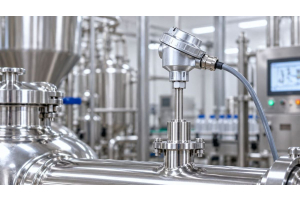
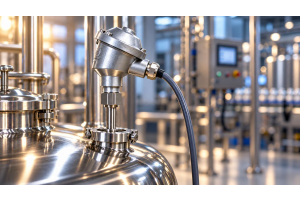
A transmitter, or signal sender, is a device that converts signals from sensors (such as RTD, Thermocouple, pressure sensor) into standard signals that can be sent to control systems or display devices. For example, it converts resistance signals from an RTD into a current signal of 4-20 mA, which is a standard in industrial applications, allowing the signal to travel long distances without significant loss or interference.