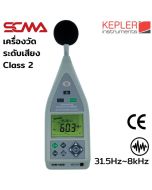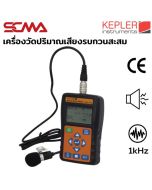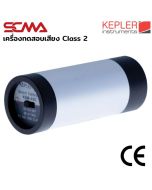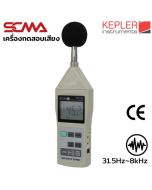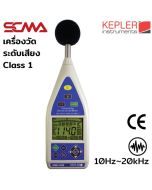
A Sound Level Meter, or sound level meter, is a crucial device for measuring and assessing the loudness of sounds in various environments such as factories, construction sites, or daily life. This tool helps control noise pollution and protect human health from potential dangers caused by excessively loud noises. This article will introduce you to the Sound Level Meter in detail.
What is a Sound Level Meter (Sound Level Meter)?
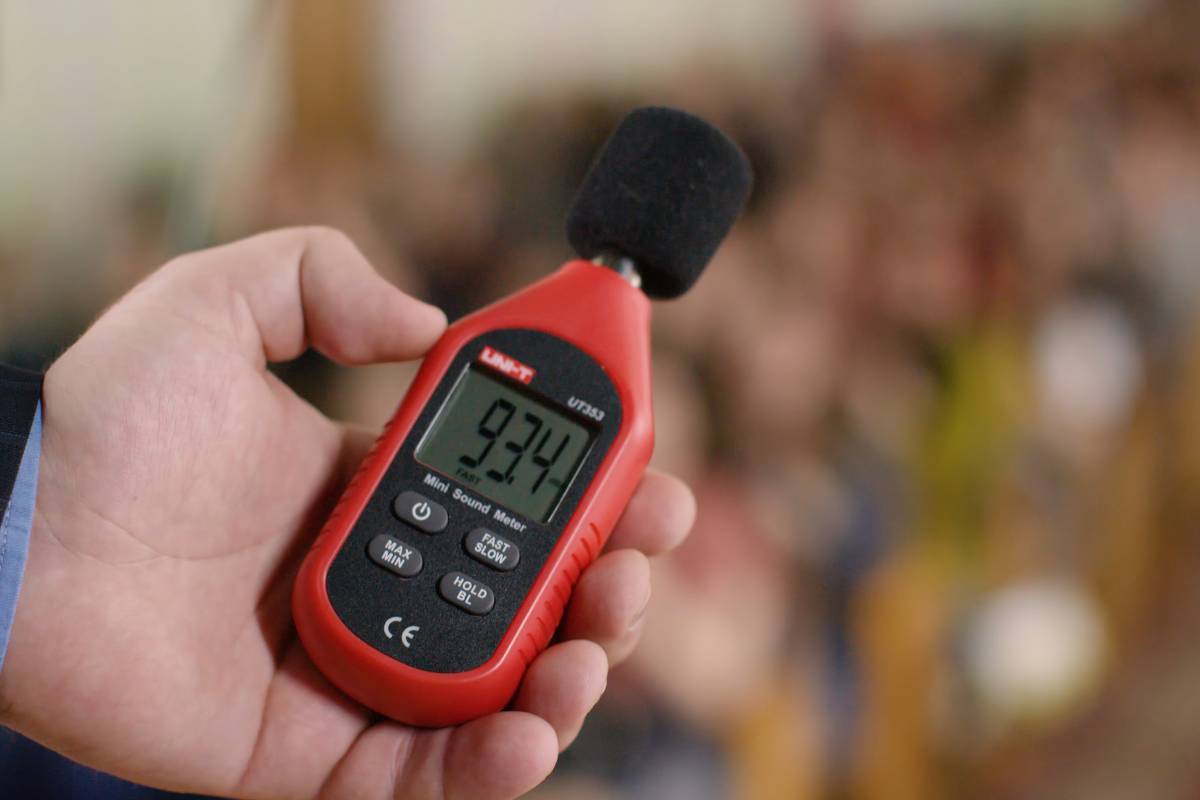
A sound level meter, or Sound Level Meter, is a device used to measure the loudness of sounds in decibels (dB) and includes multiple functions in one unit. It can detect and analyze sound waves in various environments and display numerical values that can be compared with safety standards. When using it, you should extend your arm fully or use a tripod to minimize the impact of body movement on measurement. It is widely used in occupational health, noise pollution control, and acoustic engineering work.
How a Sound Level Meter Works
A high-quality microphone serves as the "ear" of the device, with a thin diaphragm that vibrates in response to incoming sound waves. This vibration is converted into an electrical signal whose strength directly correlates with the loudness of the sound. Then, the amplifier circuit increases the strength of the weak electrical signal enough for further processing.
A crucial component is the frequency weighting circuit that adjusts the signal to closely match human hearing perception, whether it's A-weighting which simulates low-level sound detection or C-weighting for louder sounds. The smart processing system calculates various values such as average (Leq), maximum (Lmax), or other necessary statistical measures.
For the highest accuracy, the meter often comes with accessories like a windscreen to reduce wind noise, ensuring reliable results even in unfavorable environments. Finally, all data is displayed as numerical values in decibels on the screen, and in newer models, data can be recorded for long-term sound trend analysis.
Benefits of a Sound Level Meter
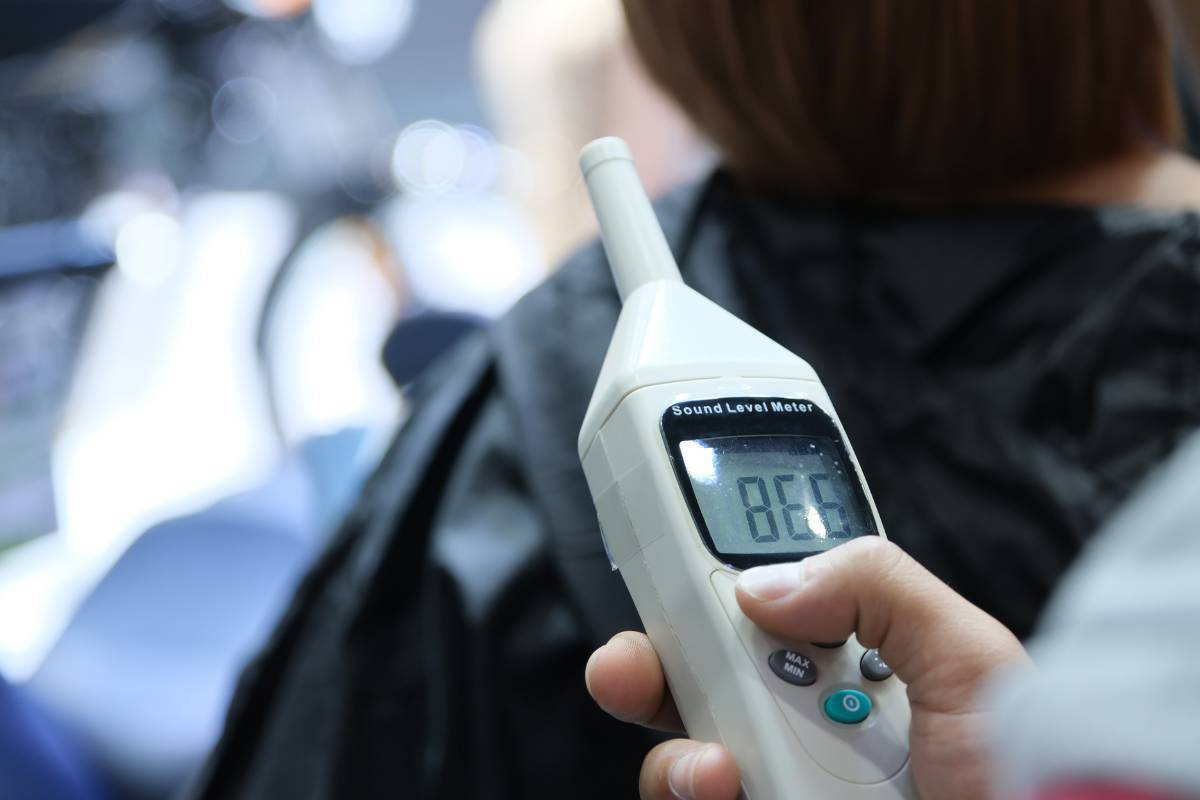
Benefits of sound measurement devices are numerous in various fields such as health protection, legal compliance, and environmental quality improvement. This tool helps us effectively monitor and control noise pollution to protect hearing and create a safe environment for everyone.
- Hearing Protection: Used to check sound levels in workplaces and public areas, preventing hearing loss, tinnitus, and other health issues caused by excessive noise exposure.
- Compliance with Regulations: Helps businesses comply with government regulations on sound levels in workplaces, residential areas, and public spaces.
- Risk Area Identification: Helps identify areas with abnormally high noise levels, such as near busy streets or industrial zones, allowing for effective noise reduction measures to be implemented.
- Improving Work Efficiency: Helps control sound levels in the workplace appropriately, reducing distractions and increasing work efficiency, leading to fewer errors and higher productivity.
- Ensuring Safety: Important in hazardous areas such as construction sites or industrial plants, enabling employees to hear warning signals and communicate effectively, reducing the risk of accidents.
Types of Sound Level Meter
Sound level meters come in various types designed to meet specific needs, from high-precision scientific research requirements to general industrial and community measurements. Choosing the right type of sound level meter will help ensure reliable results and a worthwhile investment.
Class 1 Sound Level Meter
High-end professional tool with the highest accuracy (±1.5 dB) as per IEC 61672-1 standard, suitable for researchers, acoustical engineers, or high-resolution applications such as noise mapping and compliance monitoring. This class of meter is expensive and requires regular calibration.
Class 2 Sound Level Meter
A cost-effective option for general use, with acceptable accuracy (±2.0 dB), suitable for community noise pollution monitoring, workplace environment assessment, or preliminary sound measurements. This type of meter is easy to use, affordable, and popular in safety and occupational health applications.
Integrating Sound Level Meter
An innovation that not only measures instantaneous values but also calculates average levels over time (Leq), which is crucial for assessing long-term health impacts of noise. This type of meter can calculate various statistical values such as maximum (Lmax) and minimum (Lmin) levels, providing a deep understanding of sound characteristics.
Logging Sound Level Meter
A smart assistant for long-term monitoring with the ability to automatically log continuous data over 24 hours or more. Data is stored in internal memory or a memory card, along with octave band frequency analysis functions and automatic measurement scheduling, enabling accurate tracking of sound trends and identification of sources.
Sound level meters measuring dB A, dB C, and dB Z use different scales to filter out sound frequencies in a way that suits human hearing characteristics and various applications. Parameters such as SPL, Leq, SEL, MAX, and Min are used for measuring and analyzing sounds in different ways.
Sound level meters dB A, dB C, dB Z
- dBA (A-weighted decibels): This measures sound levels adjusted to resemble human hearing, where humans are more sensitive to frequencies between 1,000 - 6,000 Hz compared to lower and higher frequencies. dBA is suitable for measuring sounds in general environments such as workplace noise or safety-related noises.
- dBC (C-weighted decibels): It has a relatively flat frequency response and resembles human hearing at very high sound levels. dBC provides measurements that emphasize lower frequencies more than dBA, making it suitable for measuring loud sounds or bass-heavy noises such as large machinery noise or concert sounds.
- dBZ (Z-weighted decibels): This measures sound without frequency weighting or adjustment, capturing the full range of frequencies. dBZ is suitable for measuring sound levels for technical sound analysis requiring raw data from all frequencies, such as laboratory sound analysis.
Parameters SPL, Leq, SEL, MAX, Min
- SPL (Sound Pressure Level): This is the sound pressure level measured at a specific moment, typically averaged over a period of time.
- Leq (Equivalent Continuous Sound Level) : Represents the equivalent continuous sound level over a period of time, indicating the total sound energy during that interval
- SEL (Sound Exposure Level) : Recalculated Leq value to represent the accumulated sound energy over a specified period, adjusted to show as if it were for one second
- MAX : Represents the highest sound level measured during a period of time
- Min : Represents the lowest sound level measured during a period of time
Sound level meters have several parameters used to measure and analyze sound in various environments, each with different characteristics and applications as follows:
SPL (Sound Pressure Level)
- Used to measure the sound pressure level at a specific moment, displaying results in dB which represents the loudness of the sound heard during that time
- Used when needing to know the current noise level, such as measuring industrial or construction site noise levels to assess whether they are within legal and standard acceptable limits
Leq (Equivalent Continuous Sound Level)
- Represents the average sound level over a period of time, or the equivalent constant sound level for that duration, such as one hour or eight hours
- Suitable for assessing sound in environments with fluctuating noise levels, such as traffic noise, workplace sounds, or factory production noises, to evaluate long-term impacts on listeners.
SEL (Sound Exposure Level)
- Used for measuring the cumulative sound level over a specific period, calculated by combining all sounds during that time and presenting it as a single value.
- Used when needing to know the total sound level in a given timeframe, such as measuring aircraft takeoff and landing noise over a period of time to calculate people's exposure to noise nearby.
Max (Maximum Sound Level)
- Represents the highest sound level measured during a specified time period, used to observe the peak sound levels occurring in that event.
- Used in situations requiring knowledge of the maximum sound level occurring in specific environments, such as machinery operating at full capacity or vehicles accelerating.
Min (Minimum Sound Level)
- Represents the lowest sound level measured during a specified time period, used to observe the minimum sound levels occurring in that event.
- Used for assessing the quietness of areas needed, such as meeting rooms, recording studios, or relaxation spaces, to ensure that the lowest sound level is within an appropriate range for use.
Usage of Sound Level Meter

A sound level meter is a versatile device with wide applications across various sectors including industry, public health, environment, entertainment, and research. Selecting the appropriate sound level meter for specific purposes will help in obtaining accurate data leading to informed decisions regarding noise management.
- Workplace Safety Control: Measure and control sound levels in industrial plants or offices to prevent health risks from excessive noise, ensuring compliance with safety standards.
- Community Impact Assessment: Monitor and analyze sound levels in public areas near construction sites or residential zones to assess the impact of noise on communities and find ways to reduce acoustic pollution.
- Sound Management in Entertainment Businesses: Control sound levels at concerts, movie theaters, recording studios, and other entertainment events to ensure high-quality and safe sound for both audiences and performers.
- Research and Development: Used in scientific research on sound, development of equipment or systems related to sound, acoustic design of buildings, and testing the effectiveness of noise-absorbing materials.
Components of a Sound Level Meter
A sound level meter is an intricate device that consists of major components working in harmony to provide accurate and reliable measurements Each component plays a specific role crucial for the process of converting sound waves in air into meaningful numerical values for users.
- Condenser Microphone: The heart of the meter that receives sound waves and converts them to electrical signals with high sensitivity and wide frequency response, enabling accurate detection of sounds.
- Microphone Preamp: Amplifies the weak electrical signal from the microphone to a level sufficient for further processing. This helps maintain signal quality and reduce noise.
- Frequency Weighting Circuit: Adjusts signals to suit measurement requirements, with four main types A, B, C, and D. Each type is designed to simulate human ear response in various conditions or for specific purposes.
- RMS Detection Circuit and Average Value Circuit: Processes signals to calculate sound level values in different formats, including average, peak, and statistical values. This provides comprehensive data for analysis.
- Display Section: Presents measured values in a user-friendly format, available as digital (numeric) or analog (needle pointer), depending on the model and design of the meter.
- AC and DC Output: Channels for sending data to external devices such as data loggers, computers, or advanced signal analyzers for further processing or additional data recording.
If you are interested in Sound Level Meters, SCMA is now available for purchase!
SCMA is a high-quality supplier of sound level meters that meet international standards, both Class 1 and Class 2 from leading global brands. They provide consultation to help you choose the right equipment for your needs. Additionally, SCMA offers calibration services according to ISO/IEC 17025 standards and expert training on how to use the equipment properly to ensure maximum efficiency. Contact SCMA today to receive advice and special offers for sound level meters that meet your requirements.
Summary
A Sound Pressure Level Meter, or a sound level meter, is an essential tool for measuring and controlling noise pollution. There are various types and levels of accuracy to choose from based on the suitability of your work. Using high-quality and standard-compliant sound level meters correctly will help in effectively managing and preventing hazards caused by noise. SCMA provideshigh-quality measurement tool servicesand comprehensive services, including sales, calibration, and training on how to use the equipment properly. This ensures you can trust in accurate and reliable measuring tools, helping to elevate safety standards and control pollution levels within your organization.
Frequently Asked Questions
What does a Sound Level Meter measure?
A sound level meter measures the loudness of sounds in decibels (dB). It can measure instantaneous sound levels, average sound levels (Leq), maximum sound levels (Lmax), and minimum sound levels (Lmin). Additionally, a frequency-analyzing sound level meter can also measure sound energy in each frequency band. This data helps assess the impact of noise on human hearing and the environment.
How do you use a Sound Level Meter?
Using a sound level meter involves these basic steps:
- Turn on the device and calibrate it before use.
- Select frequency weighting (A, C or Z) and time weighting (Fast, Slow or Impulse) according to the type of sound being measured.
- Place the device in an appropriate position by pointing the microphone towards the noise source and keeping it at least one meter away from walls or reflective objects.
- Measure sound levels over a specified period of time and record the results.
- Turn off the device and store it in its protective case after use.
How many types of sound detectors are there?
Sound level meters can be categorized into the following main types:
- By accuracy:
- Class 1 (High Accuracy)
- Class 2 (Medium Accuracy)
- By function:
- Basic Sound Level Meter: Measures basic sound levels
- Integrating Sound Level Meter: Calculates average values over a period of time
- Logging Sound Level Meter: Continuously records data for later analysis
- Frequency Analyzer: Analyzes sound in different frequency bands
What is the difference between dB and dBA?
The difference between dB and dBA lies in the frequency weighting used to measure sound levels:
- dB (decibel): This is a unit used to measure physical quantities such as sound pressure, sound energy, or sound power without frequency weighting (also known as Z-weighting or dBZ), which measures all frequencies equally
- dBA (A-weighted decibel): This is a unit for measuring sound levels that uses A-frequency weighting, which adjusts the frequency response to be closer to human hearing. It reduces sensitivity to low frequencies (such as below 500 Hz) and increases sensitivity to mid-to-high frequencies (approximately 1-5 kHz). dBA is commonly used in assessing noise pollution and its impact on humans