
Valve Terminal is a centralized compressed air valve innovation that addresses the issue of tangled wiring in control panels. This working model helps on-site technicians drastically reduce downtime caused by searching for broken signal wires. Engineers can manage the entire production line's compressed air system with just one set of equipment. SCMA offers online valve specification comparison services and delivers spare parts to your factory immediately.
What is a Valve Terminal?
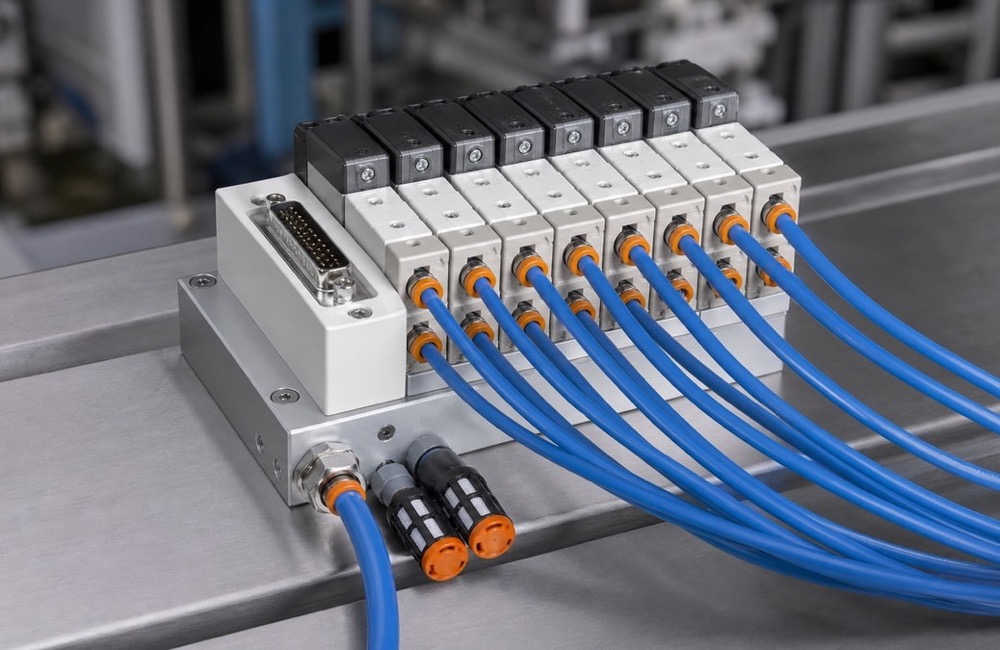
Valve Terminal is a set of equipment that combines multiple solenoid valves on a single manifold base. This device controls the direction of compressed air to pneumatic cylinders or actuators within machinery. The system's highlight is integrating compressed air outlets with electrical signal connections in one unit, reducing wiring complexity effectively compared to traditional systems. Electricians can save installation space inside control panels clearly when using this design.
Benefits of Switching from Individual Valves to Centralized Systems
Many on-site technicians have likely struggled with tangled valve wires that make circuit tracing difficult. Adopting a centralized system like Valve Terminal quickly solves this issue. All signal wires are consolidated into one port for maximum neatness. When coil burnout or valve malfunction occurs, engineers can immediately check the status through LEDs on the device. This benefit reduces downtime from several hours to just minutes when searching for faulty points.
Structure and Main Components
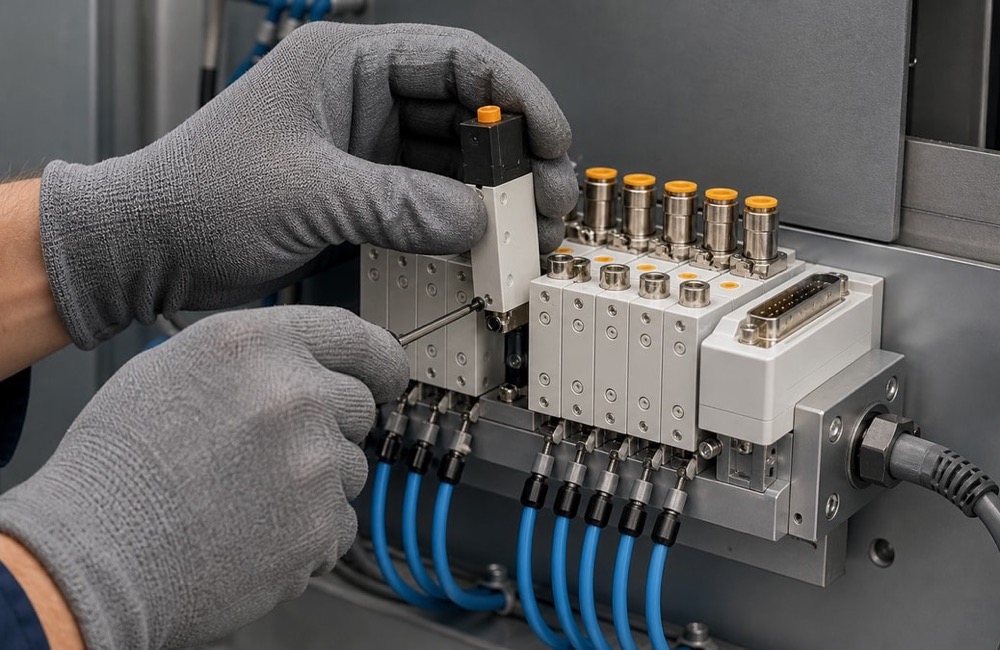
The main structure of Valve Terminal consists of a Manifold Block base for supplying the main air, and an internal circuit board that serves to transmit signals between the valve set and the PLC board in the control cabinet. The Solenoid Valves are plugged into the top to separate the operation of each station independently. This group of equipment is designed to allow individual valves to be replaced immediately in case of emergency; maintenance personnel can simply unscrew a few bolts to remove faulty valves without having to dismantle the entire air system.
Connection and Control Technology
Communication technology is crucial for accurately controlling Valve Terminal. Currently, connection types are divided into three main forms based on the structure of machinery.
Multipin (D-Sub) Connection
The first type uses a Multipin cable (D-Sub) to transmit electrical signals. A single cable contains multiple cores hidden inside for controlling individual valves. This system is suitable for small machines that do not have many air cylinder control points; installation can be quick and easy by plugging the jack into the module.
Fieldbus Connection
The second type uses Fieldbus protocols such as Profinet or EtherCAT. This technology meets the needs of large, highly complex machines. The valve set can quickly send data back to the PLC for deeper fault detection; engineers can analyze real-time air system status from the display screen.
Smart IO-Link Technology
The final type is the popular IO-Link system in industry. Its highlight includes easy installation and direct parameter setting through PLCs, meeting the needs of new machine design that requires deep data extraction; maintenance teams can efficiently plan preventive maintenance.
Challenges on the Shop Floor with Traditional Solenoid Valves
The installation of individual valves creates long-term maintenance burdens that cannot be avoided. System designers therefore recommend upgrading to Valve Terminals to address these issues.
- A classic problem is the large number of connection points (Fittings), which increases the likelihood of air leaks.
- The air compressor has to work harder to compensate for lost pressure, leading to exorbitant electricity costs in the factory.
- When wires break or connections become loose, tracing the source of the problem becomes extremely difficult within control cabinets.
- Production lines must be shut down longer than usual while waiting for electricians to fix tangled circuits.
Selecting Valve Terminals That Match PLC and Existing Systems
When designing a new system or ordering spare parts for Valve Terminals, three main factors need to be evaluated. First, the communication protocol must match the brand of PLC in use on-site. Next, the air flow rate (Flow rate) must be sufficient for all cylinders operating simultaneously; well-designed pneumatic systems should not experience pressure drops when multiple actuators move at once. Lastly, consider the water and dust protection standard (IP Rating); if installed outside a cabinet, choose an IP65 or IP67 specification.
Applications in Manufacturing Lines
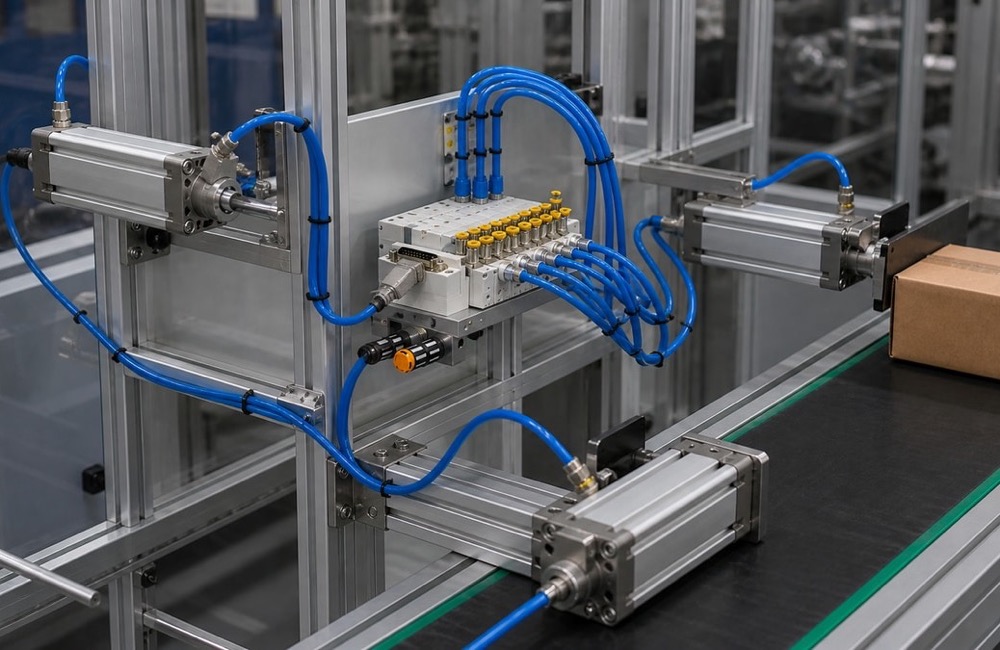
Modern industrial plants use Valve Terminals to enhance machine stability. Upgrading the pneumatic system improves manufacturing accuracy in tangible ways.
- The automotive assembly industry uses this equipment to control robotic arms that grip metal parts.
- A centralized valve system helps reduce cycle time while increasing precision.
- The food industry prefers stainless steel Food Grade models for controlling product sorting systems.
- Specialized materials are resistant to cleaning chemicals and minimize bacterial accumulation points.
Summary
The installation of Valve Terminal helps organize wiring while effectively solving leakage issues at connection points. The maintenance team reduces downtime by immediately identifying faulty areas through the LED status indicators on the device. SCMA has an engineering team available for online consultation and provides expedited spare part delivery right to your factory, ensuring you can resume production lines promptly.
If you want to purchase, SCMA is ready to serve today!
SCMA is prepared to provide engineering consultancy regarding Valve Terminal through our online channels specifically. We understand the urgency when machinery stops working. Our engineering team is ready to match specifications of leading valves with your existing system. Simply take a picture of the Nameplate and send it for us to assess. Order spare parts for expedited delivery directly to your factory, solving issues without waiting for technicians.
Frequently Asked Questions (FAQ)
Q1: How does the Valve Terminal differ from a general Manifold Valve?
Answer: A general manifold only includes air outlets but requires separate wiring for coils. In contrast, Valve Terminal integrates both air lines and circuit boards together. This centralized design uses just one control signal line or LAN cable to command all valves.
Q2: Can additional valve stations be added later?
Answer: Yes, most models in the market are designed as modular (Modular) to accommodate production line expansion. Engineers can purchase an extension block along with a new Valve Terminal set and immediately attach it to the existing base.
Q3: If one valve fails, do you have to replace the entire unit?
Answer: No, you don't need to. You can unscrew and remove only the faulty valve from the Valve Terminal for replacement immediately. The integrated circuit board and other valves on the system will continue to operate normally without interruption.
Q4: Which PLC brands does it support?
Answer: Valve Terminal supports standard protocols such as PROFINET, EtherCAT, CC-Link, DeviceNet. It works seamlessly with well-known PLC brands from both European and Japanese sides without limitations.
Q5: If I want to switch my old valve system to a centralized SCMA Valve Terminal, can you design it online for me?
Answer: Sure, send us the air system diagram or pictures of your existing control cabinet via LINE. The SCMA engineering team will provide free specification recommendations for Valve Terminal. We are ready to offer cost-effective circuit design solutions for quick purchase consideration.




