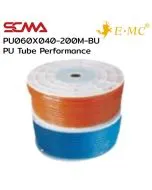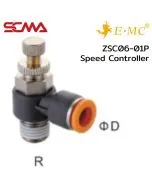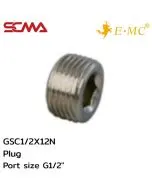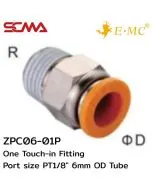
Pneumatic System is the crucial heart that drives factory machinery to operate continuously without interruption. Production line issues can be resolved by selecting high-standard pneumatic or nimetic parts. SCMA has a comprehensive inventory of nimetics, complete with an online ordering system that allows you to compare specifications and receive your order quickly at the factory.
The Meaning of Pneumatic System (Nimetic System)
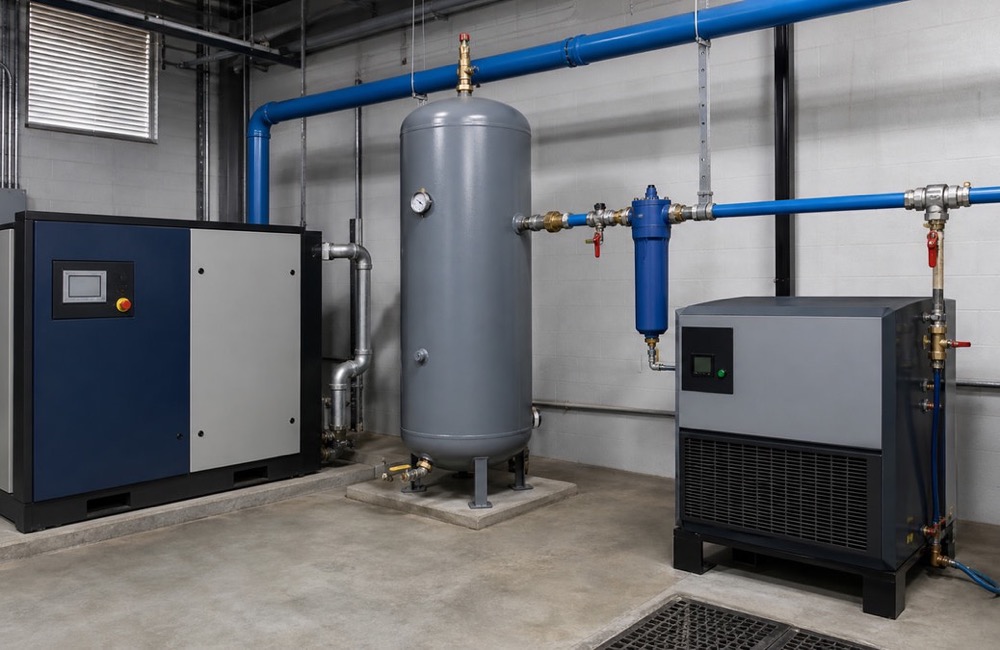
Pneumatic System, or what technicians commonly refer to as air system, is a technology that applies air pressure to create mechanical movement. The meaning of the pneumatic system is to convert compressed air energy into pushing or pulling force through actuator devices. Many people ask, what is pneumatic? Simply put, it's the science of controlling the movement of air to command various mechanisms. A pneumatic system means the core driving force that enables automated machinery to operate quickly and accurately. Pneumatic equipment is durable for heavy industrial use in factories, effectively reducing complex maintenance issues.
Main Components in an Industrial Pneumatic System
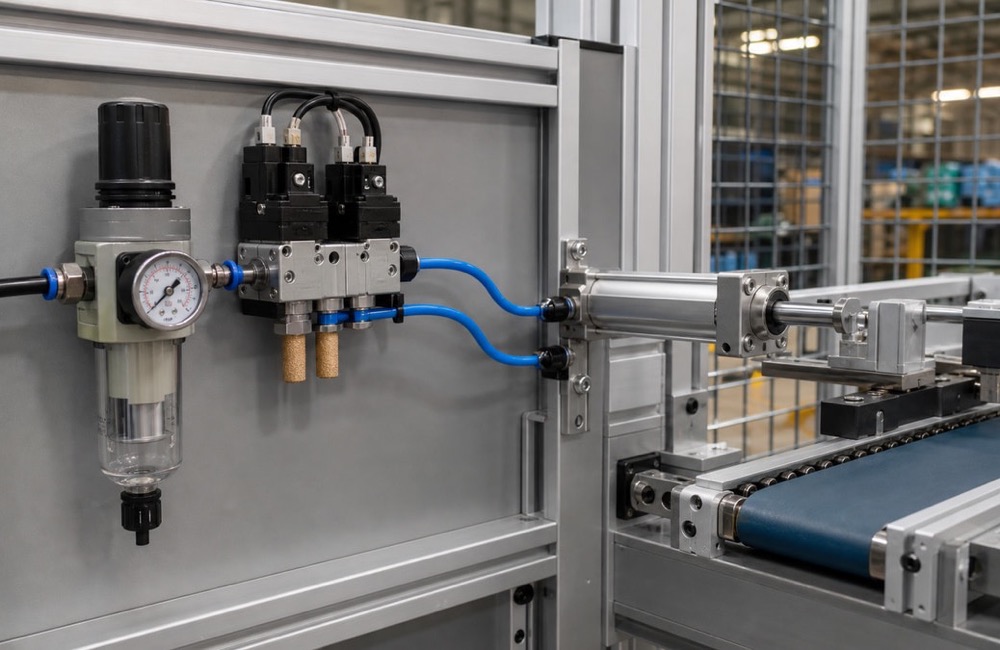
Equipment in Pneumatic System work together as a closed circuit to harness air energy efficiently. Maintenance technicians must understand the function of each component in the Air System to diagnose on-site issues accurately.
Air Compressor (Air Compressor) - The Power Source of the System
The power source of the Pneumatic System starts with an air compressor that draws surrounding air and compresses it into high-pressure air. Although the volume of air decreases, it is imbued with potential energy ready for use. A good air pump must maintain a constant pressure consistently over time. Technicians need to regularly drain water from the air tank to efficiently transfer compressed air to subsequent Pneumatic equipment. Clean, high-pressure air from the source is a crucial foundation that extends the lifespan of all automated machinery along the production line.
FRL Unit (FRL Unit) - Dust and Water Filter
Compressed air from the pump must pass through an FRL unit before entering any equipment. This device captures dust particles and water mixed with the air thoroughly. Clean air helps extend the lifespan of rubber seals within every pneumatic component. Neglecting to clean filters is a primary cause of premature failure in mechanisms.
Directional Control Valve (Directional Control Valve)
The filtered compressed air quickly flows into the directional control valve. This valve acts as a brain, opening and closing or changing the direction of airflow according to commands from the PLC cabinet. The selection of pneumatic valve size must match the volume of air required by the cylinder for smooth operation.
Air Cylinder (Pneumatic Cylinder) - Final Actuator
The end point of the circuit is the final actuator, an air cylinder that converts pneumatic energy into mechanical force. High-pressure compressed air impacts the piston to create movement according to programmed instructions. Calculating the size of the cylinder in a Pneumatic System must always include safety margins. The equipment will provide reliable pushing power for workpieces, fully meeting automation requirements.
What is the Function of a Pneumatic System?
New maintenance technicians ask what a pneumatic system is and how it works. The basic principles of a pneumatic system rely on the difference in air pressure according to physical laws. External air is pumped and compressed until it has a smaller volume, causing the accumulated pressure to try to find an outlet. When we command to open a pneumatic valve, compressed air rushes into the cylinder pushing the piston inside, immediately generating mechanical energy. The response mechanism of pneumatic equipment occurs in milliseconds to create powerful and continuous driving force.
Common Issues Encountered with Pneumatic Systems on Site
The disruption of a pneumatic system creates headaches for plant engineers that are unavoidable. We have compiled the most common issues in air systems to help maintenance workers prepare and respond promptly.
- A classic problem causing production lines to shut down is air leakage at joints (Fittings) or torn pneumatic hoses.
- The cost of electricity from air compressors rises rapidly as the machine must continuously compensate for lost air.
- Moisture and water accumulation in the air line system cause rust on internal pneumatic equipment and degrade rubber seals.
- Clogged valves malfunctioning out of sync result in production downtime, requiring maintenance workers to urgently replace parts.
Advantages of Choosing a Pneumatic System Over Hydraulic Systems
Machinery designers opt for a pneumatic system over hydraulic systems due to cost-effectiveness. Pneumatic technology perfectly meets the safety requirements in modern factories.
- The standout feature of air systems is their high cleanliness, as exhaust air does not create pollution in the area.
- Factories no longer worry about oil stains on parts, fully meeting the needs of food and pharmaceutical industries.
- The speed of movement of pneumatic cylinders is clearly faster than hydraulic systems.
- Maintenance is easy; maintenance workers can loosen bolts and replace parts immediately without worrying about oil spills.
Pneumatic Applications in Manufacturing Lines
All industries widely utilize the potential of pneumatic to increase productivity. The application of a pneumatic system helps ensure smooth and error-free automated processes.
- Automotive assembly plants use pneumatic systems to control robotic arms that hold car bodies during welding.
- The packaging industry uses pneumatic cylinders to push products into boxes or arrange them on conveyor belts.
- The precision and speed of the equipment clearly reduce machine cycle times.
- Increasing production volume in the same amount of time significantly reduces per-unit manufacturing costs.
Preventive Maintenance Guidelines
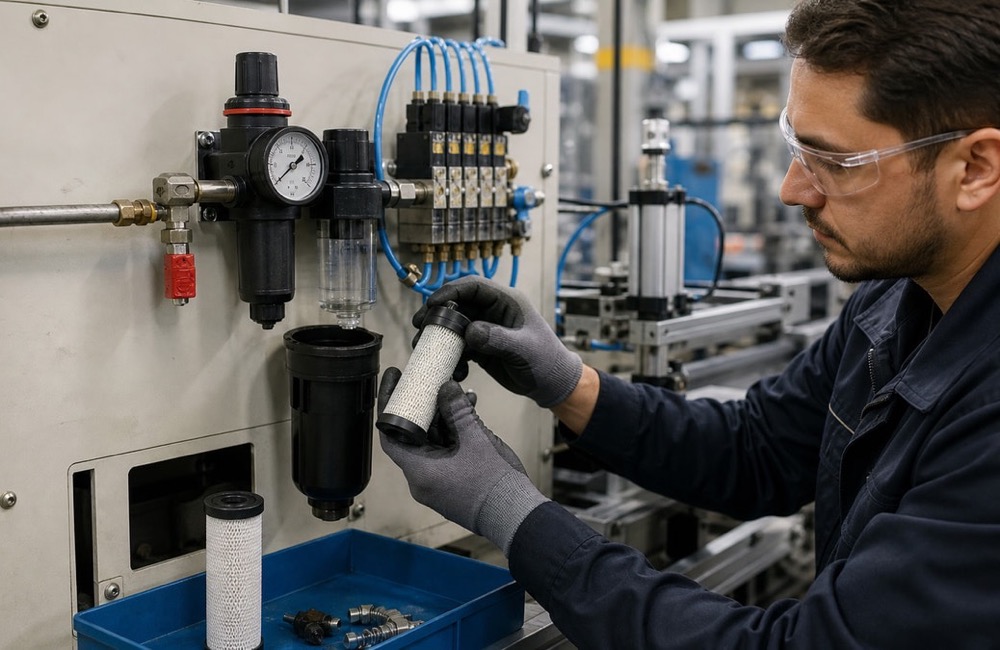
Maintaining machine uptime starts with serious attention to the quality of compressed air in the Pneumatic System. Maintenance technicians should schedule daily routines to drain water from the air receiver tanks, reducing moisture accumulation. Teams must regularly check the condition of filters in FRL sets; if they find dirt or blockages, new pneumatic parts should be replaced immediately. Technicians need to listen for any leaking air sounds at joints or cylinder seals while machines are running slowly. If abnormalities are detected, quickly replace air lines to prevent air compressors from overloading and drawing excessive current.
Summary
The Pneumatic System is a crucial mechanism in modern industrial operations. Understanding what pneumatic systems are helps engineers maintain them correctly. If your air system has issues, SCMA offers an online team to compare specifications for pneumatic spare parts and deliver them quickly to the factory.
If you want to buy, SCMA is available for purchase today!
SCMA understands that every minute a machine stops working means significant damage. We have designed the pneumatic spare parts specification comparison service through an online system that is quick and efficient. You can take a photo of the Nameplate of the faulty part, send it to the SCMA engineering team for free evaluation via this link, immediately order Pneumatic System spare parts from us and we guarantee fast delivery straight to your factory. This solves problems without having to wait for a technician's inspection.
Frequently Asked Questions (FAQ)
Does the Pneumatic System consume a lot of electricity?
The pneumatic equipment itself does not use electricity directly; the main cost lies in the air compressor (Air Compressor). Ensuring there is no air leakage in the Pneumatic System is the best way to save on energy costs for your factory.
What are the negative effects of air leaks in a pneumatic system?
In addition to higher electricity costs for the air compressor, the end-of-line pressure of the air system will drop, causing cylinders to lack operating pressure. The pneumatic equipment will malfunction, leading to an immediate increase in defective products (Defect) on the production line.
How often should FRL air filters be changed?
The replacement period for pneumatic parts depends on the environment. Typically, engineers recommend checking filter elements every 3-6 months. If the filter element in the Pneumatic System turns dark or has a thick layer of oil residue, it must be replaced immediately.
Can European and Japanese pneumatic equipment be used together?
Pneumatic parts can be interchanged if the thread size and operating pressure levels match. The SCMA online engineering team is ready to help compare pneumatic specifications across brands, allowing you to fit them perfectly at 100%.
If a machine stops suddenly, can SCMA quickly provide an online spare parts specification comparison service?
Absolutely. Simply take a photo of the Nameplate of the faulty air system part and send it to the SCMA Line Official account. Our team will evaluate the pneumatic specifications and offer replacement solutions for you to consider, with immediate purchase and fast delivery.