Pneumatic cylinders are drive components that convert compressed air energy into mechanical movement to power machinery. If the air cylinder is damaged or worn out, it can cause production lines to stop functioning. Mechanics must urgently find new pneumatic cylinders to replace them immediately. SCMA offers free online specification comparison services for cylinders, along with expedited spare parts delivery so you can continue running your machine without waiting.
What are pneumatic cylinders or cylinders?
New maintenance technicians often ask what cylinders are. Simply put, they are drive components that convert compressed air energy into linear motion. The cylinder works by receiving air pressure to push the piston inside the tube, creating a pushing or pulling force to move various parts of the machinery. In industry, this component is known by many names such as air cylinder or pneumatic cylinder. These are all the same device. The primary function of the pneumatic cylinder is like the muscles of an automatic machine that continuously drives workpieces. Understanding what a cylinder is helps engineers accurately diagnose problems on-site when malfunctions occur.
How Air Cylinders Work in Pneumatic Systems
Many people wonder if the internal mechanism of an air cylinder is complex. In reality, this device relies solely on air pressure differences. When a valve directs compressed air into the rear port, the pressurized air enters and pushes against the cross-sectional area of the piston. The cylinder rod extends to push the workpiece over a distance. To retract the rod back in place within a pneumatic system, compressed air is used to push it back through the front port, or a spring can be employed to retract it according to the device's structure. Engineers must calculate pressure in relation to the size of the cylinder to generate sufficient pushing force for load movement. The speed of movement of the pneumatic cylinder can be adjusted by installing air flow control valves at the joints.
Types of pneumatic cylinders commonly used in factories
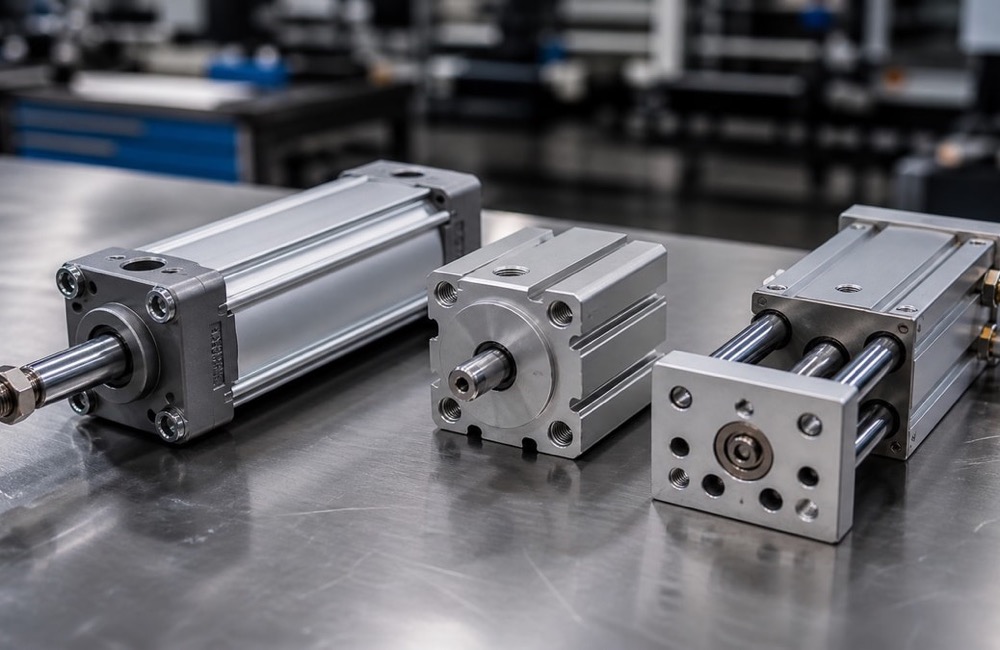
Choosing the type of pneumatic cylinder that suits the nature of work can help extend the life of machinery in a practical way. Engineers designing systems need to understand the specific characteristics of each type of equipment before making purchasing decisions.
Single Acting Cylinder and Double Acting Cylinder
Pneumatic cylinders are divided into two main groups based on their mode of operation. The first group uses compressed air for one-way extension, with a return spring inside pushing the piston back to its original position. This type is suitable for work that requires short strokes and not too high impact force. The second group uses compressed air for both forward and reverse movements. This is the most commonly chosen pneumatic cylinder type in industries as it allows technicians to control speed and reduce the impact of the cylinder more accurately.
Cylinder shapes that fit installation space requirements
Users can freely choose the shape of pneumatic cylinders to match the installation space within the machine structure. The round line type is compact and easy to install, while the profile type is popular in European industries for its strength and durability. Compact cylinder shapes are designed to save space and hide inside automated machines with limited space. Selecting a cylinder design that aligns with mounting screw points helps on-site assembly workers work faster and more safely.
Get to know guided cylinders for high-precision applications
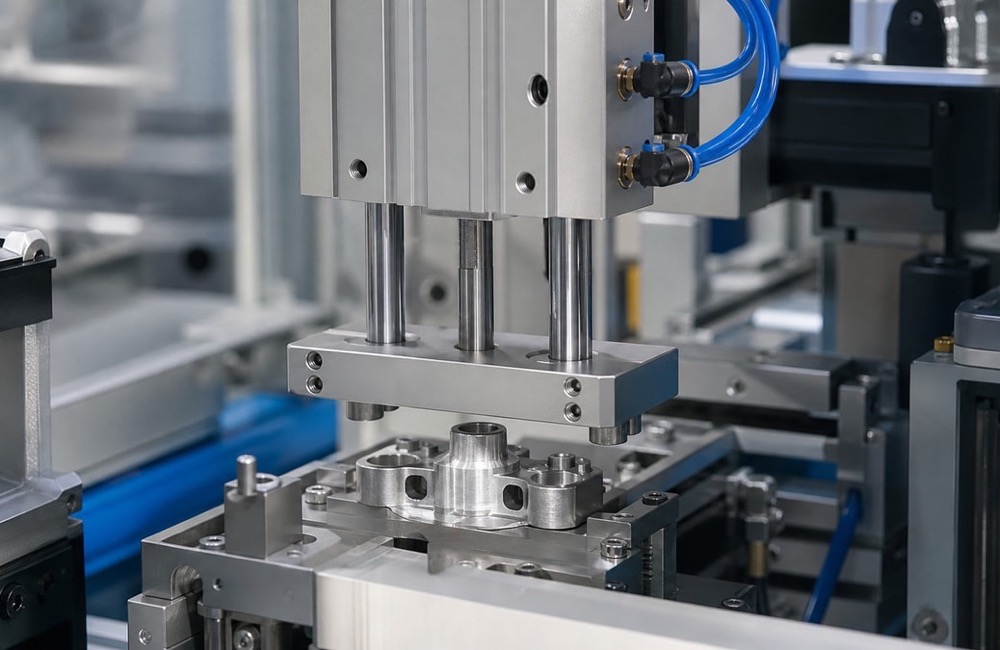
Handling electronic components requires the utmost precision. Ordinary piston cylinder axes can easily rotate or twist during movement, leading engineers to opt for guided cylinders, which address lateral vibration issues by incorporating a steel center guide shaft that supports radial loads and prevents workpiece misalignment or damage. This equipment is ideal for Pick and Place operations or Stopper functions on conveyor belts in pneumatic systems. Maintaining precise positioning throughout the operational cycle of pneumatic cylinders significantly reduces defect rates in production lines.
How to select pneumatic cylinders that fit specifications and are durable
Misordering spare parts is a nightmare for on-site technicians. Correctly selecting pneumatic cylinders can eliminate ordering errors entirely. Engineers must evaluate the working parameters of the cylinder to match the existing system for optimal performance.
- Calculate the bore size (cylinder diameter) in accordance with the weight of the workpiece that needs to be pushed.
- The stroke length must be measured precisely to fit the distance the shaft extends; ordering too short can result in insufficient reach, while ordering too long wastes compressed air.
- Check the mounting type (pneumatic cylinder) of the old unit—whether it is flange-mounted, pedestal-mounted, or clamped.
- If machinery operates at high speeds, choose a model with an Air Cushion to prevent the piston from impacting the end cap and breaking.
Common Failures and Causes of Cylinder Sticking
The issue of a cylinder getting stuck and unable to move is not caused by just a few engineering reasons. Maintenance technicians must analyze the symptoms to address the root cause. Checking the condition of the pneumatic cylinder during PM cycles helps prevent sudden machine downtime.
- The piston seal (Piston Seal) inside has worn out, causing compressed air to leak across chambers and equalizing pressure on both sides so that the shaft cannot move.
- The cylinder shaft is scratched by dust particles from the work area. When pulling back the shaft, these particles will immediately damage the seal.
- Excessive lateral impact force beyond specifications causes the pneumatic cylinder shaft to bend and lose its shape, leading to stiffness and sticking.
- Air leakage at the rod seal can be detected by a hissing sound near the front. Parts should be replaced promptly before air pressure is lost.
Maintenance of Piston Seals and Cylinder Shafts
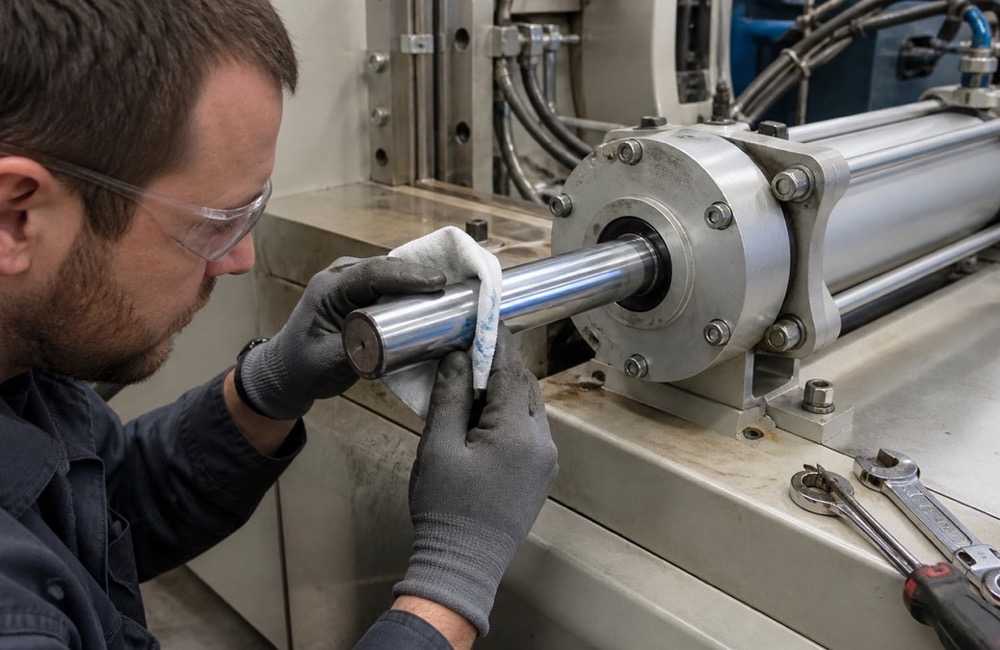
The lifespan of a pneumatic cylinder depends directly on the quality of compressed air. Technicians must check the air filter set to prevent water droplets from entering the pipes. Water mixed in with the pneumatic system will wash away lubricating grease inside the cylinder pipe, causing severe friction. In areas with heavy dust and smoke, additional dust wipers should be installed around the piston shaft of the cylinder. Engineers should avoid lateral impact forces (Side Load) on the shaft; if vertical weight needs to be supported, a guided cylinder should be used instead. Regular maintenance of the seals in pneumatic cylinders can significantly save replacement part costs for factories.
Summary
Pneumatic cylinders are a crucial mechanism that enables automated machinery to function perfectly Understanding what a cylinder is, along with knowing how to analyze the symptoms of pneumatic cylinder failure, helps mechanics reduce downtime on-site. Engineers must pay attention to how to select pneumatic cylinders according to specifications and maintain clean air quality in the pneumatic system. SCMA offers online specification comparison services for pneumatic cylinders along with fast delivery of spare parts.
If you want to purchase, you can buy from SCMA today!
When your old pneumatic cylinder breaks down and causes production lines to stall, SCMA is ready to help solve the problem through quick online spare part specification services. Take a picture of the Nameplate of the old one or measure the Bore size along with Stroke send it to us for free evaluation. Our engineering team provides standard brand cylinders that are 100% interchangeable. Order pneumatic cylinders from SCMA and get your work done quickly, with fast delivery of cylinders nationwide, no need to wait for technicians to come on-site, allowing you to restart production as soon as possible.
Frequently Asked Questions (FAQ)
Q1: What is the ISO 15552 standard cylinder?
This is an international standard that defines the external dimensions and mounting points of air cylinders. You can replace a cylinder from another brand with the same standard without drilling new holes in your machinery.
Q2: How do you check for air leakage across the piston chamber on-site?
Disconnect one end of the air line and supply air to the other side of the pneumatic cylinder. If compressed air blows back, it indicates that the piston seal (Piston Seal) inside is worn out or torn. You must replace the cylinder parts immediately.
Q3: Is it more cost-effective to change only the seal kit or to replace the entire cylinder?
If the shaft and inner tube walls are still smooth, changing the seal kit of the air cylinder can save costs. However, if the shaft is deeply scratched, replacing a new set of pneumatic cylinders will solve the problem more permanently than repairing it.
Q4: Are there cylinders that are resistant to chemical environments?
Yes, engineers can choose models made from stainless steel (Stainless Steel) for both the cylinder and shaft. This material is highly corrosion-resistant and suitable for pneumatic systems in food, pharmaceuticals, and chemical industries.
Q5: How long does it take SCMA to evaluate specifications after sending them photos?
The SCMA engineering team is ready to respond quickly during business hours with a comparison of pneumatic cylinder specs. Once you send clear photos detailing the issue through Line Official, we offer solutions and deliver cylinders promptly.