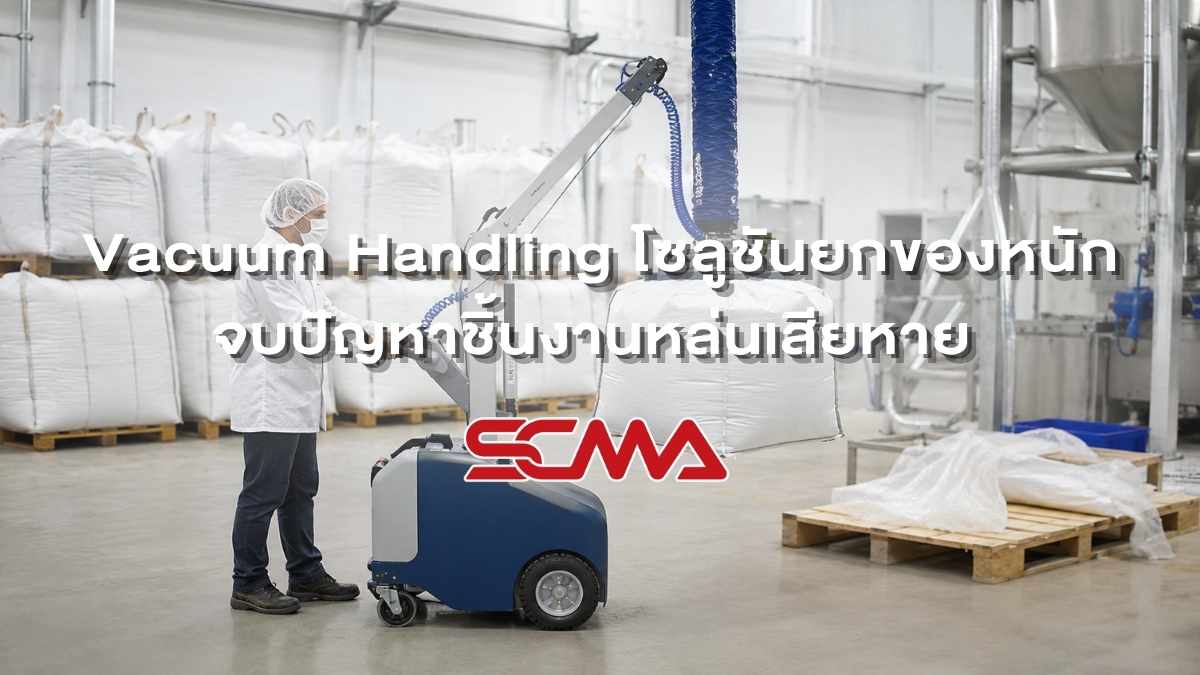
Vacuum Handling is a classic on-site solution to the problem of repetitive heavy lifting by workers, which can lead to back injuries, decreased efficiency, and the risk of dropped parts causing damage. SCMA would like to introduce vacuum lifters and high-quality handling equipment for easy online ordering. Our engineering team will help assess the vacuum pump operating principles and calculate lifting weights for free, preventing the purchase of material lifters that do not meet actual working specifications.
What is Vacuum Handling? Why are Warehouses and Production Lines Incomplete Without It?
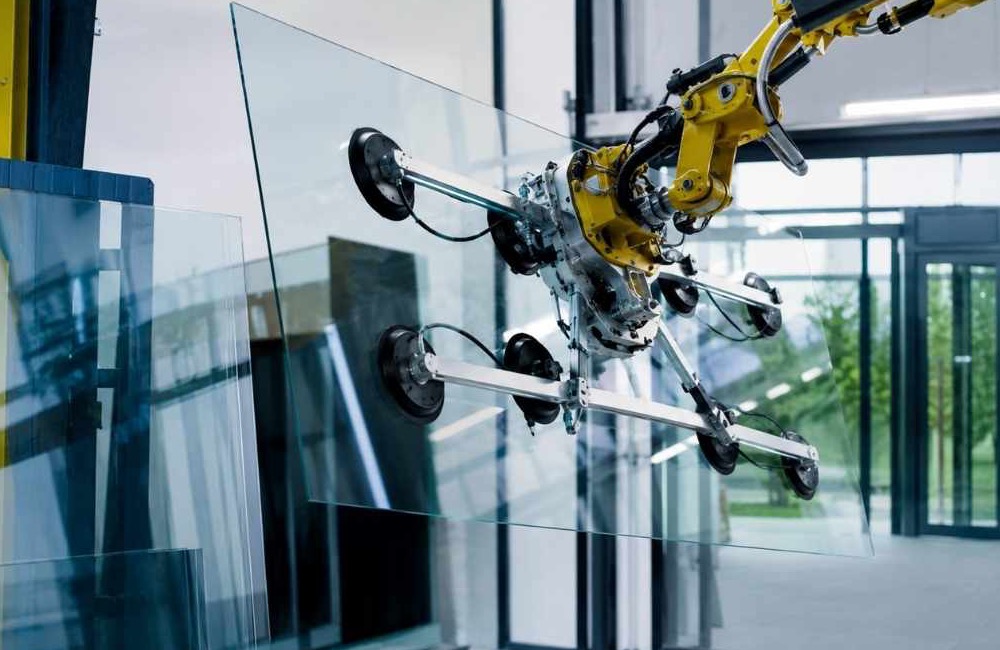
Plant engineers must understand the correct meaning of Vacuum Handling. This system uses negative pressure (vacuum) to lift and move parts to higher elevations. This technology helps reduce human effort by nearly 100%, addressing the lifting of heavy, bulky items such as steel plates, glass sheets, cardboard boxes, or cement bags. A single worker can safely control a vacuum lifter to lift hundreds of kilograms of weight. Modern warehouses and automated production lines must have this system installed.
In-Depth Understanding of Vacuum Pump Operating Principles: The Heart of Creating Suction Force
The power mechanism of the lifting system is crucial, and technicians need a deep understanding of vacuum pump operating principles. The pump functions to evacuate air from a closed system (volume displacement) to create a vacuum. The depth of the vacuum (vacuum level) and flow rate from the pump are directly proportional to the actual weight that Vacuum Handling can lift. Engineers must evaluate pump specifications in relation to part surface contact, preventing insufficient suction force leading to dropped parts mid-air.
Vacuum Lifters (Tube Lifters) - Solutions for Reducing Employee Injuries
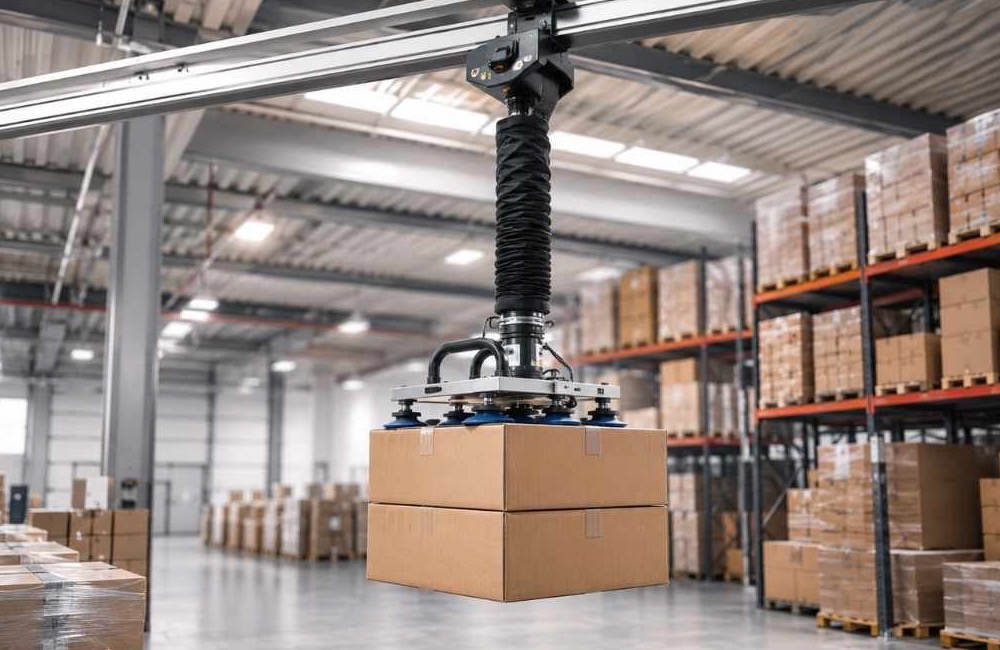
When it comes to popular equipment, vacuum lifters are designed for quick handling (Fast Handling). The structure uses large air tubes that expand and contract based on pressure differences. Employees can control the entire operation with one hand (One-hand Operation) by adjusting the valve with their fingertips to command material lifters to lift or lower items. This technology perfectly reduces back muscle strain according to ergonomics principles, addressing workplace safety issues.
Differences between Air Suction Systems and Traditional Material Lifters
Selecting a lifting system depends on the suitability of the work environment. Hoists or material lifters with mechanical systems require hooks or straps to secure the load, which can risk scratching the surface of the item. Workers need space underneath the item for threading ropes, causing inconvenience. The Vacuum Handling system immediately grabs items from above without damaging surfaces (Damage-free). The rubber suction pads are gentle and do not harm the surface. The workflow is several times faster than traditional chain hoists.
Evaluating Vacuum Specifications for Surface Materials (Porous vs Non-Porous)
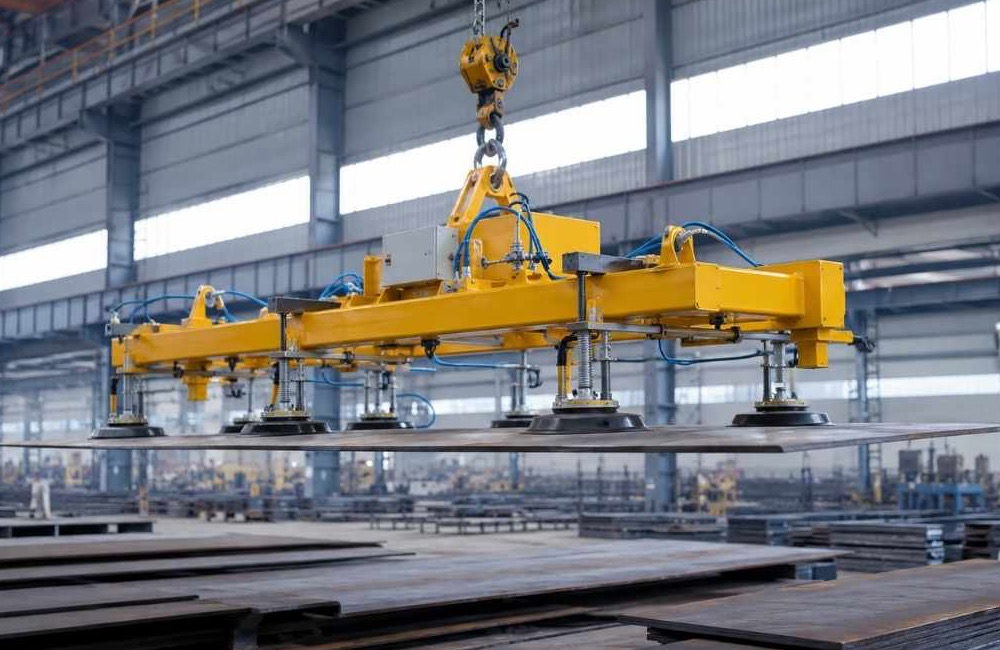
In designing a Vacuum Handling system, the surface characteristics of the material must be considered primarily. Engineers need to calculate physical variables accurately for safety.
Calculating Vacuum Force for Smooth Non-Porous Surfaces
Smooth surfaces such as glass, steel plates, and acrylic require a deep vacuum (High Vacuum) level to ensure adhesion. The system does not necessarily require pumps with high flow rates (Flow Rate). Engineers can comfortably use vacuum pump working principles of rotary vane types in smaller sizes. The suction cups will adhere firmly without falling off.
Tips for Selecting Pumps for Porous Materials
Porous materials such as cardboard boxes, cement sacks, and wooden sheets allow external air to seep through the surface into the system continuously. Engineers must choose pumps with extremely high flow rates (Flow Rate) vacuum lifters in order to extract air quickly. The amount of air drawn out must exceed the air leaking in to maintain a constant lifting force.
Evaluating Leakage Rates for Maintaining Lifting Force
The evaluation of leakage rates (Leakage Rate) is crucial in designing material lifters systems. Technicians need to account for pump capacity (Safety Factor) to compensate for pressure loss at various joints. Ignoring this aspect will cause the system to lose negative pressure, leading to a drop in lifting force and potential danger during material handling.
Falling Workpiece Mid-Air and How to Check for Leaks on Site
The highest risk when using a vacuum lifter is the workpiece falling during operation. Maintenance technicians must know how to check for initial leaks.
- Sudden drop in suction power while lifting occurs due to clogged dust filters (Vacuum Filter) in the Vacuum Handling system.
- The accumulated dust reduces air flow, causing the pump to fail to maintain suction and lose lifting force. Technicians must remove and clean the filter.
- Carefully inspect the rubber seals around the suction pad (Suction Lip) before starting each production shift.
- A small tear on the suction pad allows outside air into the system (Air Leak), causing immediate loss of lifting power.
- Technicians must replace new spare parts, strictly forbidden to use tape for temporary repairs to ensure safety.
Safety Features in Vacuum Lifting Systems
Labor laws and safety standards mandate that Vacuum Handling systems must have complete safety equipment installed.
- Engineering rules require all lifting machinery to install non-return valves (Non-return Valve) to prevent air backflow.
- Systems meeting the standard must include a hidden vacuum reservoir (Vacuum Reservoir) within the structure of material lifters.
- In case of power failure, when factory air pumps suddenly stop working, these safety devices will temporarily maintain suction force.
- The non-return valve locks in the vacuum in the system, preventing workpieces from falling onto workers at the machine.
- The system gradually releases suction pressure slowly, giving time for the workpiece to safely lower and touch the ground.
Summary
Using Vacuum Handling helps reduce worker injuries and clearly increases production speed. If you are looking for a vacuum lifter, our team of engineers at SCMA is ready to consult on vacuum pump operation principles. We are happy to design systems to your specifications and deliver equipment nationwide for immediate use.
Want to buy? You can purchase from SCMA today!
Purchasing departments no longer need to worry about calculating the specifications for Vacuum Handling. SCMA offers convenience through our online service. You don't have to risk calculating the Safety Factor yourself. Simply take a photo of the workpiece, inform us of its weight and material, send all this information via our Line OA SCMA's support engineering team, who will handle the calculation of specifications for material lifters. They select the suction pad size and pump model free of charge. We provide accurate engineering specifications, deliver products quickly, and equipment is ready to be installed and used at your factory immediately without any specification errors.
Frequently Asked Questions (FAQ) About Using Vacuum Lifting Systems
Q1: Can porous bags such as cement or sugar sacks be lifted using a vacuum lifter?
A: Yes, definitely. SCMA engineers will use High Flow vacuum pumps in conjunction with special thick sponge pads (vacuum lifter) to compensate for air leakage around the bag's surface, ensuring safe lifting of heavy loads.
Q2: If the power goes out suddenly while lifting a steel plate, will the workpiece fall and crush someone?
A: No immediate drop. Industrial standard Vacuum Handling systems are always equipped with Check Valves to prevent sudden drops. When the power fails, the valve locks in place, holding the vacuum and allowing the workpiece to slowly lower to the ground.
Q3: If the rubber suction pad deteriorates, can I buy just the rubber part separately for replacement or do I need to replace the whole set?
A: You can order only the rubber pads (Rubber Pad) or edge seals to repair material lifters. They are easy to disassemble and help save maintenance costs. We recommend sending us a photo of your existing pad for size comparison.
Q4: How often do vacuum material lifters need maintenance?
A: The most frequent maintenance is cleaning the dust filters, which should be done weekly. For vacuum pumps, if it's an oil-based model, change the oil according to operating hours; for oil-free models, almost no maintenance is required.
Q5: I'm not sure whether online-purchased equipment from SCMA can lift my workpieces. What should I do?
A: We operate with a 100% engineering support system. We won't sell Vacuum Handling systems without assessing the specifications first. Send us a video clip of your workplace, along with dimensions and weight information, and our team will use software to confirm the lifting capacity for you.