Having trouble with machines stopping due to misdetection of glass bottles or clear film sheets? The transparent object sensor is a crucial component that can completely and decisively solve this problem. SCMA is ready to be your technical partner, specializing in designing such systems for your factory. In this article, our engineering team will take you deep into the method of selecting the right equipment. Readers will gain knowledge that can be used to improve production lines with precision, effectively reducing waste.
What is a Transparent Object Sensor?
Transparent object sensor from SCMA is a high-performance electronic device specifically designed for industrial applications. These devices are primarily responsible for inspecting objects that normal light can easily pass through, such as glass bottles, film sheets, or clear plastic packaging. Using this technology helps automated systems operate with precision, greatly reducing errors in product counting on the production line.

How the Transparent Object Detection Sensor Works
The working principle of the transparent object detection sensor according to SCMA standards relies on the technology of detecting changes in the amount of reflected light. When a transparent object passes through the light beam, the material causes a slight refraction or attenuation of the signal intensity. A specially designed signal receiver processes this change and then sends an electrical command to the machine to alert that the transparent object detection sensor has detected a target.

How many types of transparent object detection sensors are there?
Currently, the technology used to detect transparent materials is diverse, in order to meet the environmental conditions of each factory. The main equipment recommended by our engineering team is divided into two types of technologies that are most popular in the industrial system, as follows:
Photo Sensor for Special Applications
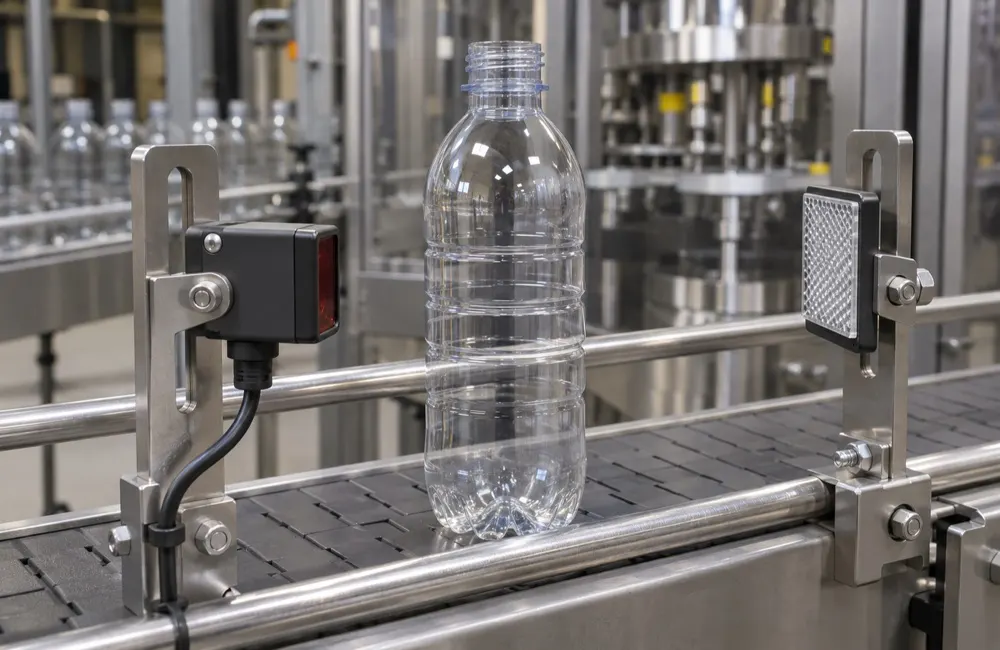
This type of photo sensor is a device that uses a specific wavelength light beam to detect changes when light passes through the material. The system mainly works with Reflective Plate to check the attenuation of light when a glass bottle is placed across the path. This solution is very suitable for the beverage industry that requires high-speed detection of targets on the conveyor belt.
Ultrasonic Sensors
The ultrasonic sensor uses the principle of emitting high-frequency sound waves that hit the target and then capture the time it takes for the waves to reflect back. The advantage of this technology is that it operates without limitations regarding the transparency, color, or shininess of the target object's surface, making the detection of transparent film or liquid in containers highly stable. It eliminates problems caused by reflections that can confuse other types of sensors.
Maintenance of Transparent Object Detection Sensors
Based on the team SCMA's experience in managing projects, extending the lifespan of automated equipment starts with proper maintenance. Regular maintenance helps prevent unexpected machine shutdowns. The important steps are as follows:
Cleaning the Sensor Lens
A dirty lens surface is the top cause of device misreading or delayed warning signals. Users should regularly wipe dust, fingerprints, or oil stains on the lens surface with a soft, clean cloth. Taking care of this point helps prevent distorted reflections, which is a key factor that reduces the performance of transparent object detection.
Checking the Condition of Cables and Connection Points
A complete wiring system helps ensure seamless signal transmission to the controller throughout the production process. Maintenance engineers should carefully inspect the condition of the cables and connection points to ensure there are no tears or damage. Operators must be careful to prevent moisture accumulation at the connectors to avoid short circuits during operation.
Adjusting Sensitivity Settings
When the environment changes, the light intensity that the device receives may slightly deviate from the original value. If the system starts frequently missing detections of glass or transparent plastic bottles, adjust the sensitivity settings immediately. Proper settings will help the device accurately distinguish the differences in light passing through the target material again.
Testing the Actual Operating Range
Good preventive maintenance must include simulating actual operation in the production line to check readiness. Engineers should test the operating range according to the planned schedule to identify any faults before starting the next production run. This step confirms that the installation position is still in the best focus range and is ready for continuous production.
Application of Transparent Object Detection Sensors in Industry
Applying transparent object detection sensors into automated systems helps solve problems in production lines that are difficult for human eyes to inspect. These technologies are widely used in many sectors to improve accuracy and increase productivity for businesses.
Drinking and Packaging Industry
Beverage manufacturing plants need to count or check the position of transparent plastic bottles on the conveyor belt constantly. High-speed devices allow machines to align bottles or precisely command the liquid dispensing head to operate, reducing problems such as bottles falling, missing intervals, or pouring water onto empty conveyor belts, which can cause serious damage to the production system.
Packaging and Film Sheet Industry
In the product wrapping process, checking the presence of transparent film or plastic packaging bags is a major challenge. The system detects changes in light passing through the film sheet to check whether the packaging has been drawn into the sealing machine. This helps prevent unsealed products from being released to the market, which benefits the overall quality control standards.
Electronics and Semiconductor Industry
In the production of electronic components, there are materials such as wafers that are highly transparent and glossy. Special transparent object detection sensors help identify the position of these wafers without touching the workpiece, reducing the risk of scratches and contamination, ensuring the product quality meets the strict standards of the factory.
Automated Machine Control System
Detection data is the core information that commands the machine to start or stop according to the schedule set in the program. When a transparent workpiece moves to the correct position, the signal receiver will notify the PLC to immediately trigger the next mechanism. This well-coordinated operation clearly reduces the machine downtime.
Advantages of Transparent Object Detection Sensors
Investing in the right technological equipment is a key factor that gives factories a long-term competitive advantage. The benefits of using these systems are reflected through consistent performance results that meet industry standards.
High Accuracy in Material Discrimination
This system uses infrared or laser light to pass through the target workpiece to effectively detect transparent objects. The device is set up to filter out external interfering light, allowing it to sharply identify the transparency of glass bottles. This level of accuracy is difficult to achieve with older devices that were not designed for specialized on-site applications.
Reduction of Errors in the Production Line
These intelligent technologies quickly identify the position or presence of workpieces in automated processes, reducing the burden on workers who have to stand and visually inspect transparent workpieces, which are prone to fatigue or decision-making errors. Factories can control the defect rate to the lowest level according to international standards.
Continuous Operational Efficiency
When machines accurately know the position of the workpiece, the operation of various mechanisms will flow smoothly without interruption. The system helps prevent damage that may occur from collisions or misalignment of workpieces during the process. The production line can proceed continuously at full capacity, clearly increasing profits for the manufacturer.
How to Choose Transparent Object Detection Sensors
Selecting equipment that is suitable for the actual working environment requires technical expertise to achieve the best results. SCMA would like to provide a preliminary checklist for selecting transparent object detection sensors to help engineers make informed decisions.
Detection Type: Consider using coaxial or retro-reflective photoelectric sensors with special light filtering functions to receive light refracted specifically from transparent materials.
Sensing Range: Define the safe distance between the transmitter and the object on the conveyor belt to prevent obstructing the movement of the machine.
Working Environment: Assess the amount of dust, humidity, or oil mist in the factory to select an appropriate IP rating that ensures durability in real-world usage.
Signal Output Format: Check the type of electrical signal (e.g., PNP, NPN) to ensure compatibility with the factory's existing PLC control system.
Size and Installation Area: Choose the shape and size of the transparent object detection sensor to fit narrow spaces or hard-to-reach installation points on the machine.
Precautions for Installing Transparent Object Detection Sensors
Aside from selecting the appropriate model, the installation location and setup are key factors in the system's success. Engineers should pay attention to these precautions to ensure that the transparent object detection sensor operates at full efficiency according to its specifications.
Avoid Direct Sunlight: Natural light from outside shining on the lens surface may cause the receiver to malfunction. Consider installing additional light shielding plates.
Be Cautious of Reflective Angles of Glossy Objects: Installing at a perfectly perpendicular angle may cause excessive reflection. Slightly tilt the sensor to reduce false reflections.
Stability of Mounting Points: The structure that holds the device must be strong and not vibrate with the machine's motion to maintain a consistent focus distance over time.
Signal Cable Management: Route the cables away from large motors or sources of electromagnetic waves to prevent noise from reaching the controller.
Summary
Transparent object sensors are an essential technology for factories aiming to enhance the accuracy of detecting glass bottles and film sheets. Understanding the basic principles of operation, selecting the appropriate model, and maintaining the equipment properly can significantly reduce machine downtime. If you are looking for an expert in automation systems, SCMA Company is ready to be your partner, offering consultation, project design, for your business.
Interested in purchasing or consulting via LINE Official: @SCMA
If you want to buy transparent object sensors, you can purchase from SCMA today!
Investing in reliable measurement technology is the shortcut to achieving excellent production standards for the industry. SCMA Co., Ltd. (SCMA), a leader in measurement instruments, is ready to provide comprehensive solution services from sales through to after-sales service. Our engineering team is willing to visit the actual site to assess and recommend transparent object sensors that solve your problems most precisely.
Frequently Asked Questions
What types of applications is the transparent object detection sensor suitable for?
It is highly suitable for beverage production lines, packaging, and the electronics industry, especially tasks that require counting or checking the position of glass bottles or transparent film on conveyor belts.
How does an ultrasonic sensor differ from a light-based sensor?
The ultrasonic sensor uses sound waves for detection, making it unaffected by the color or transparency of the object. This ensures stable operation even if the target object has a highly glossy surface.
How often should the sensor lens be cleaned?
It depends on the factory environment. If there is a large amount of dust or oil, it should be wiped clean every day. Keeping the lens clean helps prevent distorted reflections that can cause the system to read values inaccurately.
Can a regular sensor be used instead of the transparent object detection model?
We strongly do not recommend it, as regular devices do not have special light filtering functions for specialized tasks. Light may pass through transparent objects without triggering an alert, causing the machine to malfunction.
Does SCMA offer sensor installation services?
SCMA company offers project services, comprehensive solutions, including post-sale calibration. Our engineering team is ready to provide consultation, design, and install automated systems directly at your factory.