Experiencing issues with inaccurate liquid measurement in your production process that are affecting your factory's costs? Our engineering team is ready to present industrial measurement solutions with Transit Time Flow Sensor, which is a flow sensor high-performance non-intrusive system. This article will take entrepreneurs deep into the working principles, as well as a checklist for purchasing to enhance sustainable production efficiency.
What is a Transit Time Flow Sensor?
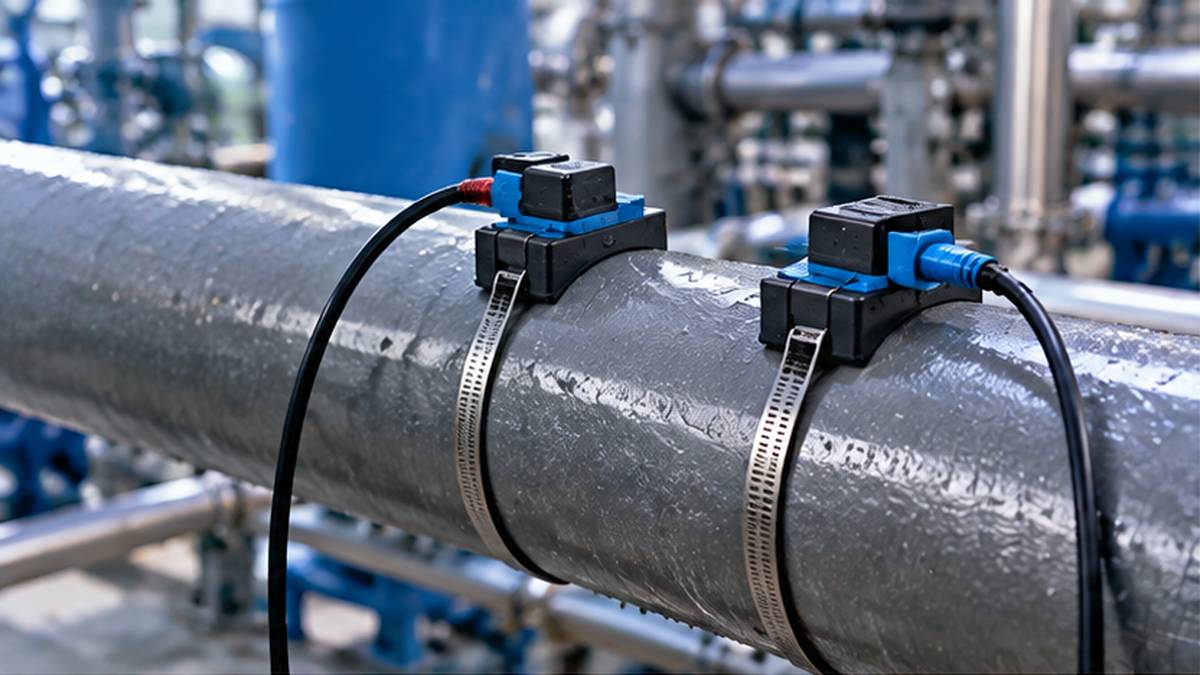
A Transit Time Flow Sensor is a Ultrasonic Flow Meter device that uses the principle of emitting high-frequency sound waves diagonally through the pipe. The device calculates the liquid's velocity based on the difference in time it takes for the sound waves to travel in the direction opposite to the flow.
Principle of Operation of Transit Time Flow Sensor
The principle of operation of flow meter of this type relies on the speed of sound waves (Time of Flight) passing through the liquid inside a closed pipe. The processing procedure is divided into the following main steps
Installation of Transducers
The first step begins with the installation of two sound signal transceivers at the opposite sides of the pipe, positioned to face each other at an angle. The flow sensor will use these transducers to generate ultrasonic waves to transmit through the liquid during the process
Wave Transmission in the Direction of Flow
The system will send the first set of sound signals in the same direction as the movement of water in the pipeline. This sound wave will reach its destination faster, as it is pushed by the normal speed of the liquid flowing through
Wave Transmission Against the Direction of Flow
At the same time, the device will send another set of sound signals in the opposite direction of the water flow. The sound waves traveling against the current will take a clearly longer time to reach the opposite signal receiver compared to the first set of waves
Processing and Calculation
The electronic circuit will calculate the time difference by comparing the time taken for the sound waves to travel in both directions. This time difference varies directly with the speed of the liquid, leading to an accurate calculation of the water flow rate
How many types of Transit Time Flow Sensor are there?
If categorized by installation and usage methods, this type of flow meter is mainly available in two types. Users must choose the ultrasonic sensor technology that is suitable for the structure of the piping system.
External Clamp-on Type
This type does not require cutting or drilling the pipe. It is easy and quick to install by clamping the sensor on the outside of the pipe wall. It is especially suitable for temporary measurement, large special pipe work, or work where the factory does not want to stop the production system and waste time.
Inline Process Type
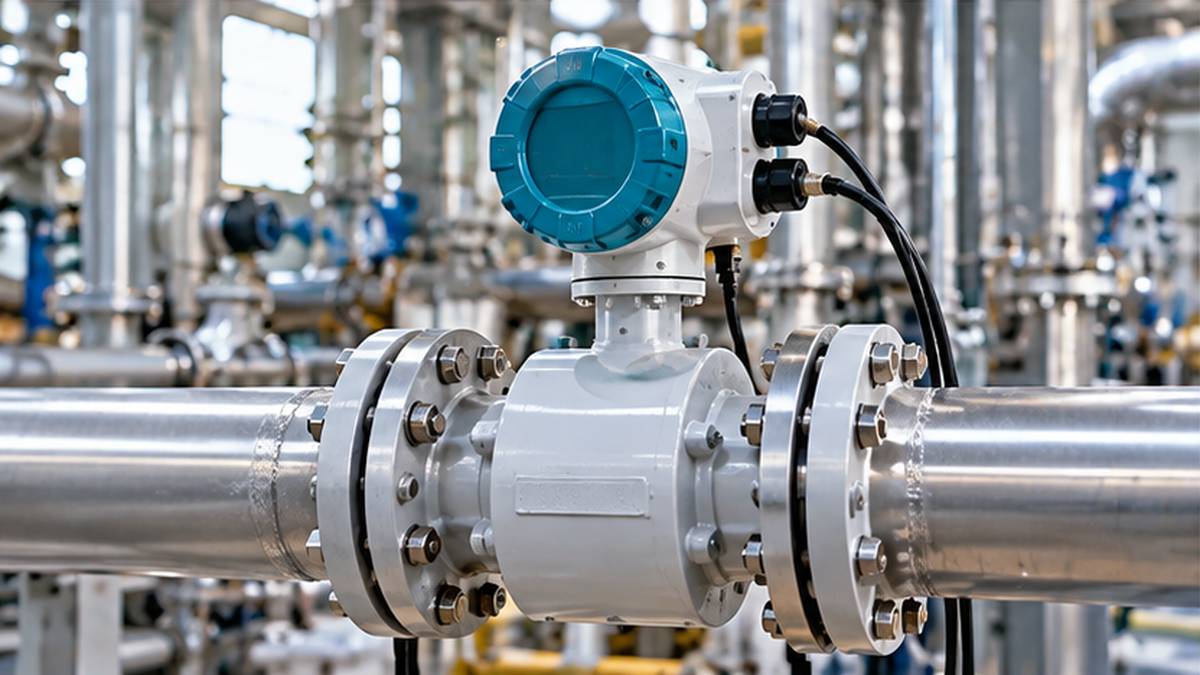
This structure comes with a sensor housing designed to connect directly to the piping line. The inline type provides very high measurement accuracy, suitable for permanent process control that requires the highest level of stability.
Maintenance of Transit Time Flow Sensor
Maintaining the ultrasonic flow meter sensor is very easy, especially the Clamp-on type that does not have any parts that come into direct contact with the liquid. The key point is to always keep the external equipment in good condition.
Cleaning and Inspection of Pipe Surface
Operators just need to regularly clean the dirt around the signal transmission area on the pipe surface, and check the condition of the sound coupling gel. If the gel is found to be dry or deteriorated, clean it and apply new sound-conducting gel instead.
Electrical System Inspection and Accuracy Calibration
Technicians should check the signal cables to ensure there are no tears, regularly observe the display screen to ensure the sound wave strength values are within normal limits, and send the meter for periodic calibration to confirm its accuracy.
Application of Transit Time Flow Sensor in Industry
Flow sensor technology is widely applied in various industries, whether it be water supply systems, chemical industries, food factories, or renewable energy groups
Non-intrusive Liquid Measurement
The external clamp-on device has no mechanical components protruding to block the flow direction inside the pipe, resulting in no pressure drop in the system, allowing the liquid pumping process in the factory to proceed with maximum efficiency
Easy Installation Without Interrupting Production
The factory can immediately install the external clamp-on flow meter into the operating system, this function helps reduce revenue loss from production line shutdowns, which is a major obstacle for factory managers
Suitable for Clear and Clean Liquids
Ultrasound wave technology works best when used with clean liquids, such as pure water, liquid chemicals, requiring very little amount of air bubbles and suspended solids to prevent sound wave scattering
Advantages of Transit Time Flow Sensor
The decision to switch to Transit Time technology brings many benefits to the engineering systems within the factory, with the following notable features
No Obstruction in the Water Path
When using the external clamp-on sensor, there is no mechanism obstructing the flow. The water pump does not need to work harder to compensate for the pressure loss, helping to save electricity in a tangible way
Easy and Quick Installation Saves Time
The technicians can complete the external pipe-clamping installation within a short period of time. There is no need to use heavy tools for cutting and welding pipes, helping to reduce installation costs and reduce the risk of on-site accidents
No Issues with Worn Mechanical Parts
Since there are no rotating propeller parts following the water current, the device does not experience problems with worn or broken parts. There is no clogging from debris mixed in with the water, resulting in a longer lifespan of the ultrasonic sensor compared to traditional systems
High Accuracy Covers All Pipe Sizes
The Transit Time technology can process liquid velocity in a detailed and accurate manner. Users can apply it without any limitations to both small pipe systems and large special raw water pipe systems
Reduces Long-Term Maintenance Burden
Maintenance technicians do not need to disassemble parts to clean them like propeller-type meters. Maintenance is easy, helping to significantly reduce the workload of the engineering team
How to Choose a Transit Time Flow Sensor
Before deciding to purchase a flow meter, operators must consider environmental factors comprehensively. The checklist below is important information for selecting the most suitable device.
- Check the pipe size: Measure the outer diameter, specify the thickness, and type of pipe material, such as steel, PVC, to select a flow sensor that matches the specifications.
- Analyze the liquid properties: Ensure that the liquid is clean and does not contain excessive air bubbles or sediment to allow ultrasonic waves to travel effectively.
- Determine the flow range: Evaluate the minimum and maximum flow rates in the production process to enable the Transit Time Flow Sensor to process accurately.
- Inspect the environment: Check the temperature and pressure of the water in the pipe, and the weather conditions at the installation site, to select an appropriate level of protection (IP Rating) for durability.
- Select the installation type: Consider whether the work site is suitable for clamp-on installation (without cutting the pipe) or requires stability through inline installation.
- Check the output signal: Specify the signal format for connecting to the control system (PLC), such as 4-20mA signal, pulse signal, or digital communication.
Checklist for Installing a Transit Time Flow Sensor
Once the industrial measuring instrument has been selected to meet the requirements, preparing before actual installation is a crucial step that will help the sensor operate perfectly.
- Find a straight pipe installation point: Choose a straight pipe location with a distance from the valve and pump according to the standard manual specifications to ensure the smoothest water flow.
- Clean the pipe surface: Scrape off rust, scale, and other stains on the area where the sensor will be installed to ensure a smooth surface and prevent air layers from blocking between the pipe walls.
- Prepare the acoustic coupling gel: Check that the amount of acoustic coupling gel is sufficient. The gel serves as an important medium for transmitting sound waves through the pipe to the liquid.
- Check the distance between the sensor heads: Calculate the distance between the signal transmitting and receiving heads correctly according to the calculator program. Any deviation will affect accuracy.
Summary
Transit Time Flow Sensor is an Ultrasonic Flow Meter technology that accurately measures water flow rates without interfering with the production process. With the advantage of easy installation and no wearing mechanical parts, this device is a worthwhile long-term investment. If you are looking for a high-quality flow sensor, the engineering team SCMA is ready to provide advice and design a solution that suits you.
Interested in purchasing or consulting via LINE Official: @SCMA
If you want to buy Transit Time Flow Sensor, you can buy it from SCMA today!
The technical information in this article is very important in helping entrepreneurs choose the right flow meter. SCMA, as a technically proficient partner with a wide range of service branches covering major industrial areas, provides sales and design of fully integrated automated system solutions. If you are interested in upgrading factory performance, contact us to receive immediate consultation from our engineers.
Frequently Asked Questions
What types of liquids can Transit Time Flow Sensor measure?
Suitable for clear liquids such as tap water, cooling water, and liquid chemicals with very little air bubbles or sediment.
Can the sensor be installed without stopping the machine?
Yes, if you choose the Clamp-on model, which clamps the sensor externally without needing to drill any pipes.
Does this device reduce the water pressure in the system?
If using the Clamp-on model, it will not cause pressure drop (Zero Pressure Drop) because there are no components obstructing the flow direction.
How often do you need to clean the internal parts?
For the Clamp-on model, internal parts require almost no maintenance. Just clean the external pipe surface and ensure the acoustic coupling gel is fully applied.
Can it still be used if the pipe is very large?
It can be used effectively. The ultrasonic wave technology can accurately support large-diameter raw water pipes.