Having trouble with incorrect electrical measurements or unexpected machine shutdowns? Analog Multimeter is an essential basic tool for every practitioner. SCMA Co., Ltd. (SCMA) recommends how to use a multimeter in detail through this article. Learning how to use a multimeter correctly will help improve the performance of analog multimeters and extend the lifespan of machines sustainably.
What is an Analog Multimeter?
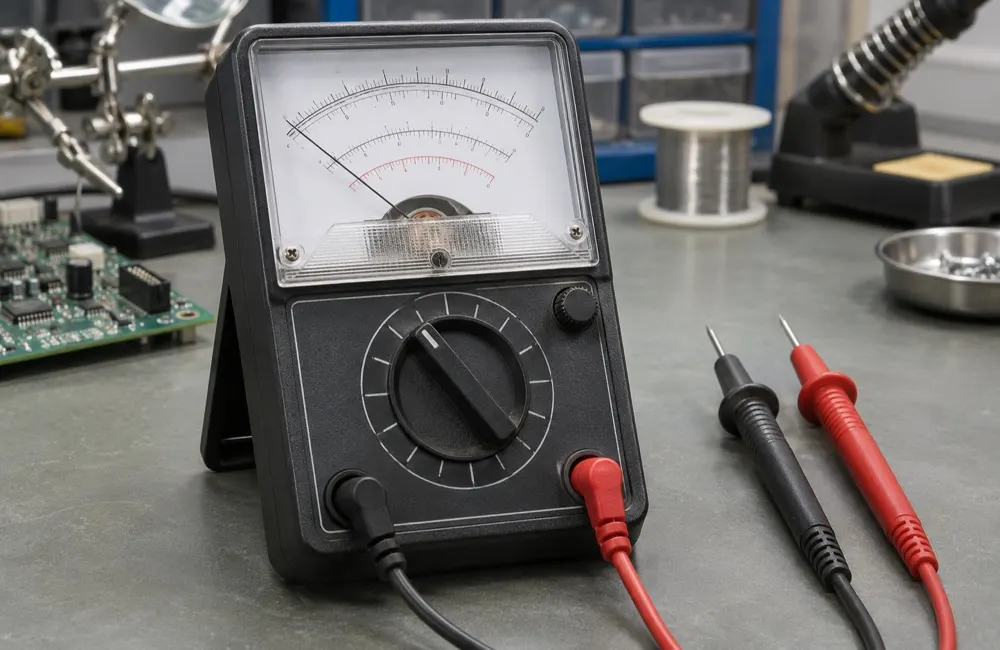
Analog Multimeter or analog-style multimeter (Analog Multimeter) is a traditional electrical measuring instrument that uses a needle on a scale dial to display measured values instead of digital numbers. Many people ask what can a multimeter measure. The answer is that this device can measure voltage, measure electric current, and measure electrical resistance all in one unit. Those who study how to use a multimeter of this type will be able to quickly observe the fluctuations of electrical signals.
How an Analog Multimeter Works
Understanding the basic principles of operation is a good starting point for learning how to use a multimeter effectively. Analog multimeters have internal mechanisms that convert electrical quantities into mechanical quantities to display results accurately.
Basic Principle of Moving Coil
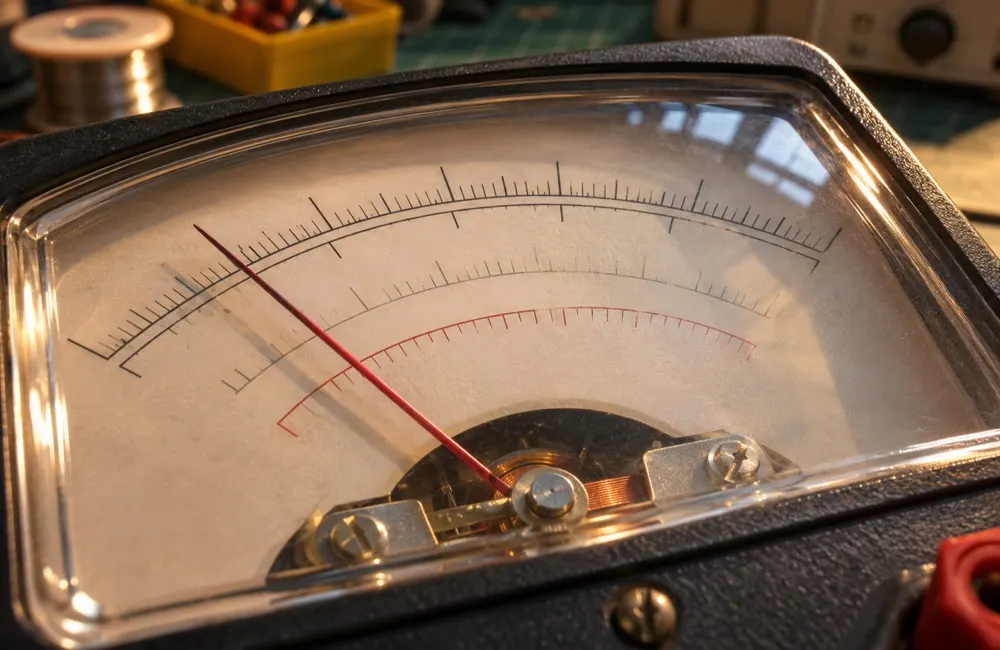
This mechanism uses the principle of a magnetic field combined with electric current. The electric current flowing through the coil in the magnetic field creates a mechanical force that causes the coil to rotate. This rotation is the key part of analog multimeters that SCMA engineers recommend understanding. Learning how to use a multimeter helps users know the coil's limitations to prevent damage.
Movement of the Needle on the Dial
The rotational force from the coil pulls the needle to deflect along the scale on the dial. The deflection angle varies directly with the amount of current flowing through. Using this type of multimeter is notable for its ability to show signal trends. If asked what does a multimeter measure, in this aspect, the needle's movement clearly indicates circuit abnormalities.
Measuring Various Values, Both DC and AC
Measuring direct current (DC) current flows directly through the meter, causing the needle to deflect. Measuring alternating current (AC) voltage requires passing through a rectifier circuit to convert AC to DC before entering the coil. Measuring resistance (Ohm) uses an internal power supply to provide current through the resistor being measured. The correct way to use a multimeter must select the measurement range that corresponds to the electrical system.
How many types of analog multimeters are there?
For industrial use, analog multimeters are designed in various forms to meet a wide range of applications. Before learning how to use a multimeter, users should select the appropriate type of tool according to the nature of the work.
1. Standard Portable Analog Multimeter
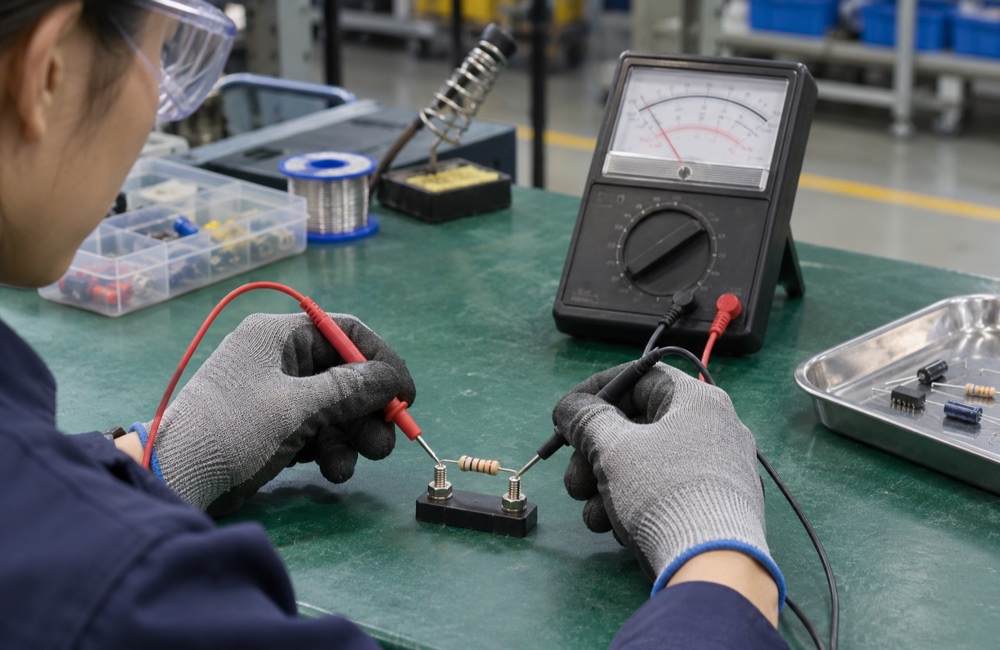
The most commonly used general-purpose instrument comes with a compact size and has a rotary switch for selecting the measurement range (Range Selector). The device uses a shared scale on the dial for multiple values such as volts, amps, ohms. This format fully answers the question what does a multimeter measure in general electrical work. Using this multimeter is suitable for basic electronic repairs.
2. High Sensitivity / Laboratory Analog Multimeter
The structure is an analog meter with a higher internal resistance per volt than the standard model (High ohms-per-volt). This design helps reduce errors caused by drawing current from the circuit being measured. It is suitable for delicate electronic circuits. How to use a multimeter of this grade requires careful handling. The structure of this type of analog multimeter is highly precise and delicate, with internal mechanisms that are fragile and should be protected from shocks.
Multimeter Maintenance
Proper maintenance helps extend the lifespan and maintain the accuracy of the device Using a multimeter carefully is an important part of maintenance. Those who understand how to use a multimeter know well that proper storage reduces the rate of damage
Setting the Measurement Range for Safety After Use
Users should turn off the switch or move it to a high AC voltage range, such as AC 250V or OFF, every time after use How to use a multimeter this helps prevent damage in case of accidentally measuring voltage without re-setting Analogue multimeter will be protected from voltage surges
Battery Management When Not in Use
Remove the internal battery when not in use for a long time to prevent battery leakage from corroding the circuit board. This problem is the main cause of analogue multimeter failure before its time Using a multimeter ohm range requires battery power, so always check the battery condition
Storing in Appropriate Environment
Store the tool in a dry place, free from moisture, dust, and excessive heat. Clean the external body with a slightly damp cloth or mild cleaning agent. Do not use corrosive chemicals. If you wonder whether what can a multimeter measure in a remote area, the answer is yes, but you must strictly follow how to use a multimeter as per the manual
Always Check the Measurement Range Before Work
Workers must check the measurement range and function before each measurement. Never use the resistance range to measure voltage, as this will damage or burn the meter. SCMA engineers always emphasize that using a multimeter must be careful to avoid dropping due to the high fragility of the analogue multimeter mechanism
Zero Adjustment Every Time
Technicians must properly adjust the zero position of the meter's scale and ohmmeter before measuring resistance Basic how to use a multimeter this helps compensate for the decreasing internal battery voltage Analogue multimeter will read accurately only when starting from the true zero point
Use of Analog Multimeters in Industry
In the manufacturing industry, analog multimeters play an important role in analyzing real-time changing signals Using a multimeter in the factory helps effectively reduce the downtime of the production line
Real-time Electrical Signal Analysis
The industry chooses this tool to inspect and analyze continuously changing electrical signals. Observing the needle's flicker helps technicians easily see the trend. If you want to know what a multimeter is used to measure in the factory, it is mostly to check the stability of current. Analog multimeters clearly address the signal's up and down fluctuations
Selecting a Measurement Range Higher Than the Expected Value
The key principle is to always rotate the range selector switch to a value higher than the expected measurement to prevent damage to the meter. How to use a multimeter is considered an iron rule for all electricians. Using a multimeter with large machinery can cause serious damage if the range is set incorrectly
Connecting the Test Leads and Setting the Needle to Zero
Technicians must always correctly insert the red test lead into the positive terminal and the black test lead into the negative terminal. They must also adjust the needle to zero on the dial before measuring resistance. Experience from the SCMA team found that neglecting this basic method of using a multimeter leads to incorrect fault assessments. Analog multimeters require high precision
Precautions Regarding Changing the Measurement Range
Never change the measurement range while the test leads are still in contact with a circuit that has current or voltage. Using a multimeter safely requires disconnecting the leads before rotating the switch. Analog multimeters risk internal short circuits in the switch if this rule is violated
Advantages of Analog Multimeters
Analog multimeters have a key advantage in their continuous display, which helps quickly observe changes Using this type of multimeter has specific advantages that digital tools cannot fully replace
Ability to See Change Trends
The movement of the needle allows you to see increasing or decreasing values in real time, suitable for observing signal swings or charging behavior How to use a multimeter in this way helps clearly see electrical behavior Analog multimeter is therefore an excellent technical analysis tool
Quick Inspection of Electronic Components
The tool responds to signals quickly, suitable for checking capacitors or transistor operation that digital numbers may not read in time Those who wonder What can a multimeter measure well Checking these components is the answer Using an analog multimeter saves a lot of time in problem analysis
Resistant to High-Frequency Interference and Energy Efficient
Operators can use it well in home or car electrical work without needing battery power to measure voltage or current Analog multimeter is resistant to high-frequency interference signals (EMI/RFI) How to use a multimeter is therefore simple and always ready to use
How to Choose an Analog Multimeter
Investing in a high-quality standard device is a valuable long-term investment. For those looking for a reliableanalog multimeter to use, it is important to consider key features to supportusing a multimeter at a professional level
Meter Sensitivity (Sensitivity - kΩ/V): Choose a high sensitivity value, such as 20 kΩ/V for DC voltage, because it draws very little current from the circuit being measured, suitable for those who knowwhat a multimeter is used for in delicate electronic work
Durability and Protection System (Overload Protection): Look for models with a fuse and protective diode, which help prevent the needle from bending when accidentally measuring beyond the scale. This is important when learninghow to use a multimeter
Scale and Mirror (Mirrored Scale): The scale should have a mirror line that reflects the needle to help the eye align directly with the needle, reducing reading errors and increasing the accuracy ofanalog multimeters
Comprehensive Measurement Range (Range): It must have complete functions, including AC voltage (ACV), DC voltage (DCV), DC current (DCA), or resistance measurement (Ohms), to ensureusing a multimeter covers all tasks
Brand and Material Quality: Choose from reputable brands in the industry, such as KYORITSU or international standard brands for accuracy
What can a multimeter measure in daily life
Aside from its use in industrial environments, many may wonder what can a multimeter measure in general environments. Analogue multimeters are versatile tools that can be applied in daily life in a cost-effective manner.
Check vehicle electrical systems: Check car batteries, charging issues, blown fuses. Knowing the basic way to use a multimeter helps assess the condition of the vehicle promptly.
Measure household voltage (ACV): Check if the outlet has normal power, inspect damaged extension cords. Analogue multimeters clearly display 220V voltage.
Check continuity of wires (Continuity): Locate broken points in phone chargers or electrical appliances. Using the multimeter resistance range helps identify broken circuits.
Test flashlight and battery: Check the remaining power in AA, AAA batteries, effectively answering the question of what can a multimeter measure at home.
Summary
Analogue multimeter or analogue-style multimeter is a measuring instrument that uses mechanical principles to accurately display signal fluctuations. Those who fully understand the way to use a multimeter can immediately answer what can a multimeter measure in industrial systems. If you are looking for a reliable tool, the SCMA engineering team is ready to provide advice on using a multimeter as well as offer comprehensive our services.
Interested in ordering or consulting via LINE Official: @SCMA
If you want to buy an analog multimeter, you can buy it from SCMA today!
This article is designed to provide knowledge on thecorrect way to use a multimeter to prevent errors in the production process, reflecting SCMA's vision as a leading measurement tool service provider. In addition to sellinghigh-quality analog multimeters, we also have a comprehensive service system covering calibration up to automated project design. Whether you are wonderingwhat a multimeter is used to measure in complex systems, the SCMA team is ready to provide you withanalog multimeters along with the best solutions.
Frequently Asked Questions
Is an analog multimeter as accurate as a digital one?
Digital models have higher readability precision, but analog models have the advantage of quick response to signal changes, so technicians choose them according to appropriateness.
Why must Zero Adjustment be set every time?
To compensate for the decreasing internal battery voltage. If zero adjustment is not set before measuring resistance, it will cause high reading inaccuracies.
What is the difference between the ACV and DCV measurement ranges?
ACV is used to measure alternating current voltage such as household or factory electricity, while DCV is used to measure direct current voltage such as car batteries.
What happens if the measurement range is set incorrectly during use?
Using the resistance measurement range to measure voltage will cause current to surge into the internal circuit, resulting in blown fuses or severe damage to the meter.
Can we repair a multimeter with a stuck needle?
The stuck needle condition is mostly caused by damaged moving coil mechanism. Users should send the device to a specialized service center for inspection instead of attempting self-repair.