

Have you ever encountered issues with object detection on production conveyor belts that caused the line to stop? This problem can be solved by choosing a high-performance Through Beam Sensor or Through Beam Photoelectric Sensor. The company SCMA offers consultation services along with designing comprehensive automatic system solutions. This article will guide you through the working principles, types, and maintenance methods to maximize the lifespan of these devices.
What is a Through Beam Sensor?
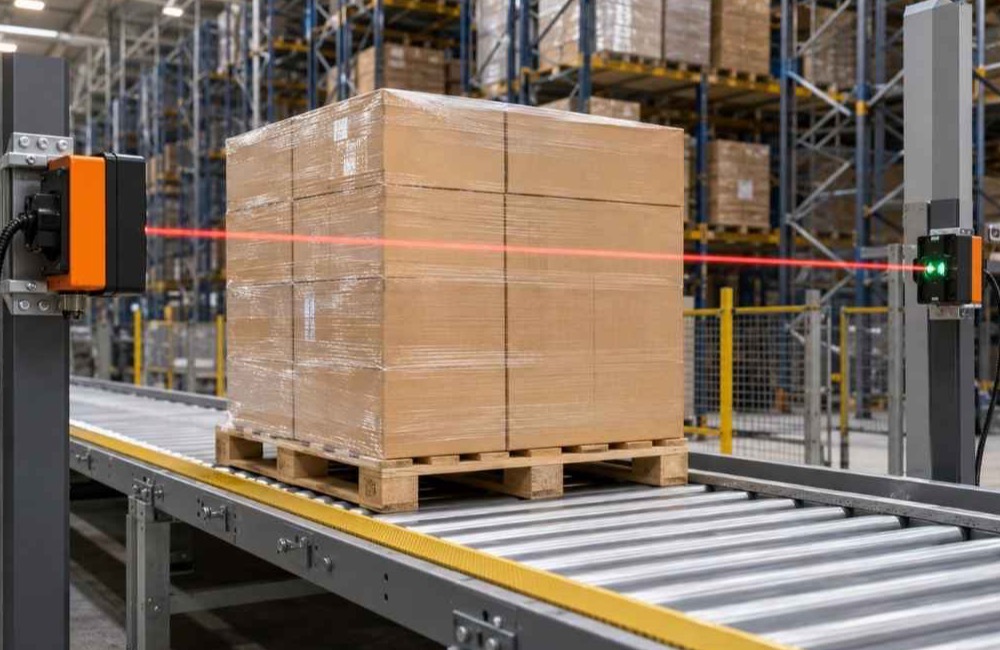
Through Beam Sensor is a type of Through Beam Photoelectric Sensor, which uses continuous light beams. It consists of an emitter (transmitter) and receiver placed opposite each other to create a beam for detecting objects that pass through it. This method provides extremely high accuracy.
How Does a Through Beam Sensor Work?
The working principle of the Through Beam Sensor involves continuously emitting light beams from the emitter (transmitter) to the receiver located on the opposite side. When an object moves and blocks this beam, the receiving unit of the Through Beam Photoelectric Sensor does not receive the light; the sensor immediately changes its status to send data to the PLC Control system for further action.
How Many Types of Through Beam Sensors Are There?
Selecting a through beam photoelectric sensor can be categorized based on the type of light source into 3 main types as follows:
1. Infrared (Infrared)
This type of sensor uses invisible infrared light for operation, with a notable advantage in detecting objects at long distances and being highly resistant to external environmental light interference. Using an Infrared Through Beam Photoelectric Sensor is therefore suitable for work environments with high dust levels.
2. Laser (Laser)
A laser light source provides a very intense beam that shoots in a straight line, offering extremely high accuracy. Applying Laser Through Beam Photoelectric Sensor addresses the need for detecting small objects and counting highly precise workpieces in manufacturing lines requiring precision.
3. Visible Light (Visible Light)
This system uses red LED light that can be seen by workers with the naked eye, making it easier to quickly and conveniently align the beam axis between the transmitter and receiver. Through Beam Photoelectric Sensor of visible light type significantly reduces installation time.
How to Maintain Through Beam Sensors
Based on the experience of the SCMA engineering team, proper maintenance of Through Beam Photoelectric Sensor can help prevent sensor malfunction issues. The checklist that should be followed is as follows:
1. Cleaning the Signal Transmission Lenses
A clean and soft cloth should be used to regularly clean the front lens areas of both the transmitter and receiver units, to prevent dust or oil residues from accumulating. Allowing the lenses to remain dirty can cause the detection range of Through Beam Photoelectric Sensor to decrease, leading to false error alerts.
2. Checking Alignment of Light Beams
Vibration from machinery may shift the position of the equipment. It is important to regularly check that the light beams are aligned properly. Accurate alignment of Through Beam Photoelectric Sensor helps maintain a stable detection signal.
3. Annual Inspection of Wiring and Equipment Condition
The condition of the signal wires, connectors, and cable joints should be checked for any damage, loosening, or deterioration over time. Preventive annual maintenance for Through Beam Photoelectric Sensor helps reduce the risk of unexpected production line downtime.
Usage of Through Beam Sensor
The application of Through Beam Photoelectric Sensor covers a wide range of industries and can be categorized into 4 main usage types as follows:
1. General Object Detection
This is used to check the presence of workpieces in the production process. When an opaque object moves through the beam, the signal will be immediately interrupted. The Through Beam Photoelectric Sensor then sends data to the control system to instruct robots to pick up and handle the next piece.
2. Safety Door Protection System
This is commonly installed in automatic door or remote-controlled factory door systems. If a person, forklift truck, or object blocks the beam while the door is moving, the Through Beam Photoelectric Sensor will order the door to stop and open immediately to prevent dangerous accidents.
3. Counting Workpieces on Conveyor Belts
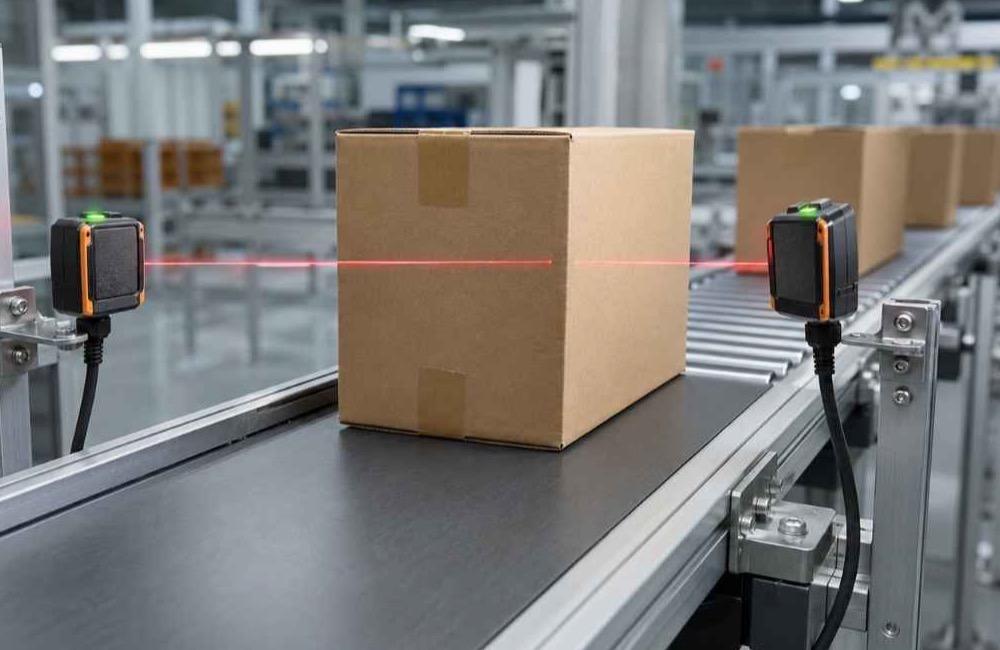
Installed alongside a conveyor belt to quickly count items passing through the beam. With the high response speed of Through Beam Photoelectric Sensor, the system can accurately count large numbers of workpieces without any loss.
4. Perimeter Security Intrusion Detection System
This is used to install around the perimeter fence of a factory to detect intruders walking through the beam at night. Using Through Beam Photoelectric Sensor with long-range infrared enhances security for high-value inventory areas effectively.
How to Choose a Through Beam Sensor
To make the most of your Through Beam Sensor purchase and ensure it meets your usage requirements, consider the following factors for optimal performance of the Through Beam Photoelectric Sensor.
- Detection Range (Sensing Distance): Choose a distance between the transmitter and receiver that covers the actual width of the work area.
- Environment: Check the IP Rating level to assess dust resistance, water resistance, and heat tolerance.
- Object Characteristics: Consider size, opacity, and transparency of the object for selecting an appropriate light source.
- Machinery Control System: Verify output signal type (NPN, PNP, Relay) to match your existing system.
- Installation: Choose a housing style that is easy to install, space-saving, and convenient for wiring.
Differences Between Through Beam Sensor and Other Types of Photoelectric Sensors
In addition to the Through Beam Sensor, there are also Reflective (uses a reflector) and Diffuse (reflects directly from an object) types. The key difference is that the Through Beam Photoelectric Sensor offers the highest accuracy and detection range, despite requiring separate installation of transmitter and receiver units on opposite sides.
Summary
In summary, the Through Beam Sensor is a highly accurate detection device suitable for long-range applications. Understanding the type of Through Beam Photoelectric Sensor will help in selecting equipment that meets your needs. If you encounter design system issues, SCMA has an engineering team ready to provide consultation, design, and full-service installation solutions.
If you want to buy Through Beam Sensor, SCMA is now available for purchase!
Selecting high-quality sensors directly impacts production efficiency. If you are looking for Through Beam Sensor froma world-renowned brand, SCMA is ready to provide you with high-quality Through Beam Photoelectric Sensor sales and after-sales service. You can view the details atour services page. Browse all products atall products, or open the online catalog atcatalog online to find the best solution for you.
Frequently Asked Questions
Is the Through Beam Sensor suitable for transparent objects?

Detecting transparent objects with this type of sensor may be difficult due to light passing through the object. It is recommended to switch to a model specifically designed for transparent objects.
Which model should I choose if there's a lot of dust in the work area?
We recommend choosing a model that uses an infrared light source, as its wavelength can better penetrate dust compared to other types of light.
Is wiring more complicated than with other sensor types?
Wiring must be done separately for both the transmitter and receiver sides, so installation time is slightly longer than for Diffuse or Retroreflective models.
Can the detection range be adjusted?
The maximum detection range is set according to the specifications of the device. However, in some models, sensitivity (Sensitivity) can be adjusted at the receiver to reduce interference from ambient light.
What is the average lifespan of a sensor?
If properly maintained, protected from impact, and kept dry, Photoelectric Sensor equipment can last for several years.