
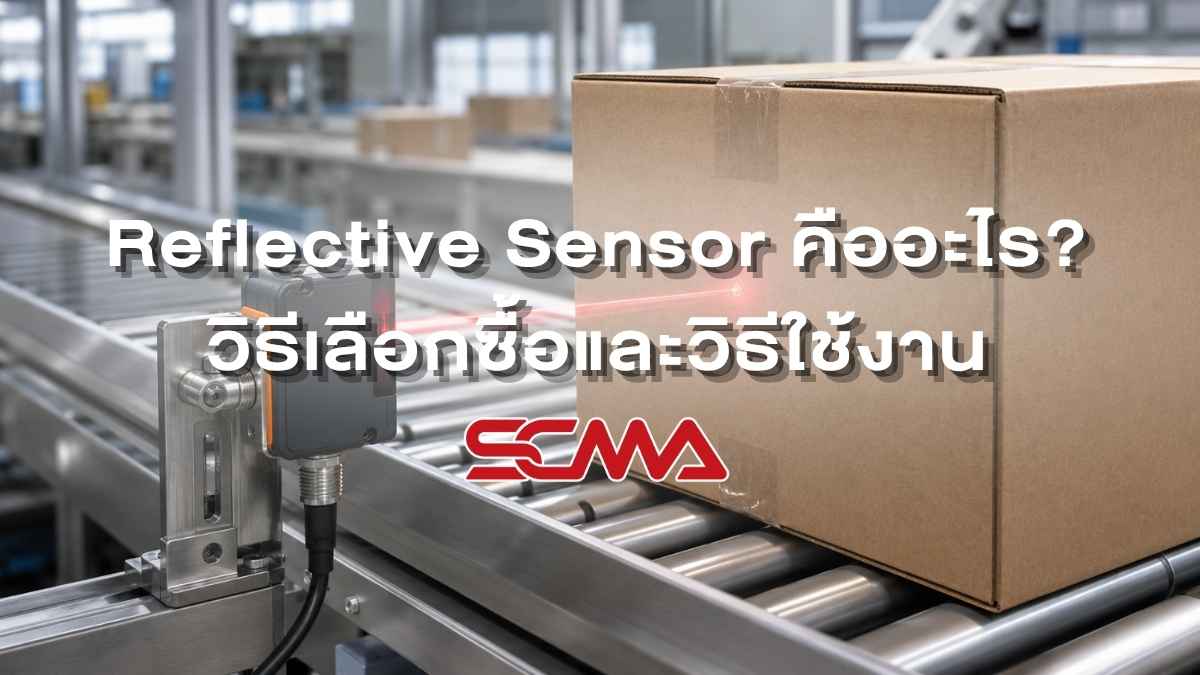
Is your factory facing issues with incorrect object detection causing production lines to come to a halt? SCMA Co., Ltd. is ready to be your partner in solving these problems with high-quality Reflective Sensors and IR Reflective Sensors. This article will take you through the workings, selection process, and preventive maintenance guidelines to minimize losses in production processes effectively.
What are Reflective Sensors?
A reflective sensor or object detection sensor using reflected light is an apparatus that works by emitting a beam of light towards the target object. The light can be either laser-based or IR (Infrared) Reflective Sensor which emits infrared rays to receive the reflected light back. This system enables machines to detect the presence, position, or distance of workpieces quickly without direct contact.
How do Reflective Sensors Work?
The basic principle starts with emitting a beam from the emitter (Emitter) towards the target area that needs detection. When light hits the surface of an object, part of it reflects back to the receiver (Receiver). An IR Reflective Sensor processes the intensity of reflected light to determine the status of the object, measure distance, or accurately assess the color of the surface.
How Many Types of Reflective Sensors Are There?
We categorize this type of sensor based on the reflection characteristics of light to make system design easier. When selecting equipment such as an IR Reflective Sensor, consideration must be given to three main reflection types.
1. Direct Reflection Type (Diffuse-reflective Type)
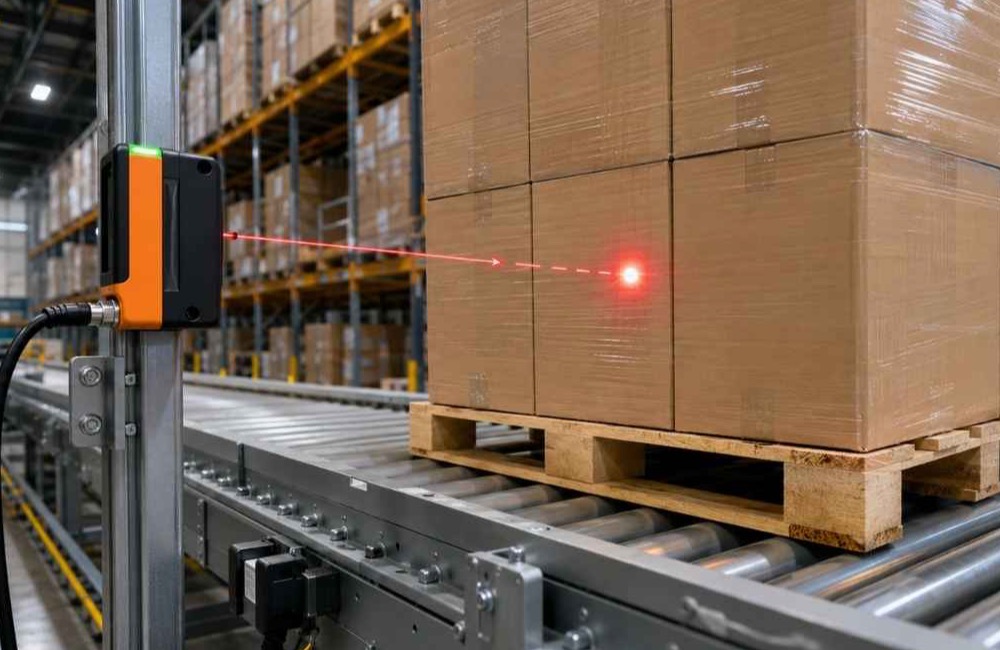
This type of sensor has both the transmitter and receiver in one unit. Light is emitted and directly reflected back from the surface of the target object. This model is suitable for detecting general objects on conveyor belts, and engineers often use this IR Reflective Sensor to detect black-and-white lines in industrial robots.
2. Reflected Through a Reflecting Plate Type (Retro-reflective Type)
The transmitter and receiver are housed together with light being emitted towards a reflecting plate (Reflector) which reflects it back as a straight path. If an object interrupts the beam, the IR Reflective Sensor immediately detects the loss of light. This type of sensor is widely used for detecting transparent objects, glass bottles, or items with glossy surfaces.
3. Surface Reflection Type (BGS / FGS Type)
This system works by utilizing a focused optical system to distinguish between the target object and the background clearly. The application of an IR Reflective Sensor in BGS type is particularly suitable for installation areas with limited space, addressing tasks that require high precision in separating workpieces with different colors and surfaces.
Maintenance of Reflective Sensor
Proper maintenance of reflective detection sensors is crucial to prevent errors from inaccurate readings. The checklist below is the guideline our engineers recommend for properly maintaining IR Reflective Sensors.
Clean Lens Properly
Users should clean the lens surface only with a microfiber cloth or soft cloth dampened with isopropyl alcohol solution. Do not use harsh corrosive chemicals to clean the sensor's contact surfaces under any circumstances. Maintaining cleanliness on the lens surface will help the IR Reflective Sensor receive and transmit light efficiently.
Check Wiring and Connections
The maintenance team must regularly inspect for wire breaks or oxide buildup at connection points (Connectors). Secure connections prevent signal loss issues during high-speed machine operation. The integrity of the IR Reflective Sensor's wiring is crucial to data transmission into the control system.
Calibrate Distance Appropriately
Techs should regularly test the reflection distance between objects and sensors according to preventive maintenance schedules. If the sensor frequently misses detecting objects, recalibrate sensitivity settings to match the work environment. Regular calibration of IR Reflective Sensors helps maintain production line accuracy sustainably.
Avoid Risky Environments
Install protective covers if using sensors in areas with dust, oil vapor, or heavy moisture. Protecting the IR Reflective Sensor from harsh environments reduces lens and internal circuit wear rates. This approach extends equipment lifespan and lowers long-term replacement costs.
Usage of Reflective Sensor
The application of reflective sensors in industrial factories must be based on the environment and production goals. The working mode of IR Reflective Sensors is designed to meet three specific job requirements.
Diffuse-Reflective Usage

This usage focuses on directing light to an object and having it reflect back immediately to the receiver to change the status of the Output signal. Engineers choose this type of IR Reflective Sensor for detecting opaque objects or counting items on a conveyor belt, suitable for packaging industries that require fast item counting.
Retro-Reflective Usage
This mode uses the principle of sending light to hit a reflector plate installed on another side. When an object passes through the beam, it triggers the sensor to send an alert signal. Using this type of IR Reflective Sensor addresses the need for counting large cardboard boxes passing through inspection points. The reflective system through a reflector plate provides longer detection range and higher stability compared to direct reflection off objects.
Specular Reflective Usage

This system is tailored to detect objects with highly reflective surfaces such as clear glass, shiny metals, or semiconductor wafers in the electronics industry. The angle of incidence for IR Reflective Sensor must be properly set to receive reflected light completely. This technique helps reduce issues caused by scattered light that can cause other types of sensors to malfunction when encountering glossy surfaces.
How to Choose a Reflective Sensor
Selecting equipment that meets the needs of your workplace is crucial for reducing Total Cost of Ownership. Here are some guidelines for considering Reflective Sensors and IR Reflective Sensors for your factory:
- Evaluate Reflection Patterns: Choose technology (Diffuse, Retro, BGS) that suits the color and surface of the target object
- Check Detection Range: Measure the distance between the installation position of the IR Reflective Sensor and the workpiece to select a model with sufficient light transmission range
- Verify Output Signal Type: Check your existing control system for compatibility with NPN, PNP or Analog signals before deciding on various Reflective Sensor models
- Protection Standards (IP Rating): Assess the work environment; if there is high dust or humidity, choose IR Reflective Sensors with an IP67 rating or higher
Installation Warnings for Reflective Sensors
Even with careful selection of measurement equipment, improper installation can lead to operational errors. Users of Reflective Sensors should avoid the following issues during assembly:
- Avoid Direct Light Impact Angles: Avoid installing IR Reflective Sensors directly perpendicular to shiny surfaces; instead, use a slight angle to reduce intense reflections
- Avoid Light Interference Sources: Do not install Reflective Sensors near high-intensity light bulbs or areas where direct sunlight hits, as this can interfere with signal reception
- Prevent Vibration: Securely mount the IR Reflective Sensor to the main structure to prevent focus deviation when machinery is in heavy use
Summary
Reflective Sensor is a crucial component that enables production lines to operate quickly and with high accuracy in an automated manner. Understanding the working principles of each type of IR Reflective Sensor helps engineers design seamless manufacturing systems. SCMA is ready to partner for consultation and design automation solutions or supply industrial products that precisely meet your needs.
If you want to purchase Reflective Sensors, SCMA is now available for your purchase!
To deliver genuine knowledge content for our readers and elevate the standards of Thai industrial technology is our intention. If you are ready to invest for better results, we have premium Photo Sensors and IR Reflective Sensors from the brand ifm, available for every application. The expert engineering team at SCMA is ready to provide close guidance and service right at your factory starting today.
Frequently Asked Questions
What are the advantages of reflective sensors?
This type of equipment can detect workpieces without direct contact. This principle helps reduce damage to the surface of objects and reduces wear on the sensor itself.
Can IR Reflective Sensors detect black objects?
Black objects absorb infrared light well, making detection more difficult than with bright surfaces. Engineers recommend choosing models with Background Suppression (BGS) systems to address this issue directly.
How do NPN and PNP signals differ?
NPN type signals release negative voltage (0V) when the sensor is activated, while PNP type signals release positive voltage (24V) to send data to the controller system.
How often should the lens of a reflective sensor be cleaned?
The frequency of maintenance depends primarily on the working environment. If the production area has a lot of dust, it is recommended to clean with a microfiber cloth weekly.
What are the standout features of ifm's reflective sensors?
Photoelectric Sensors from ifm stand out for their durability in harsh industrial environments. The equipment provides accurate measurements with modern connectivity technology for automation systems.




