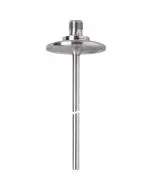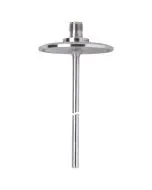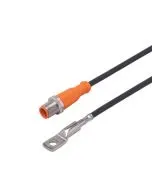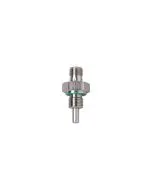

Temperature Sensors are crucial in every industry that requires temperature control. Did you know that choosing the right one can increase production efficiency by up to 40%? This article will introduce you to Temperature Sensors in detail, so you understand that a temperature sensor is an indispensable tool for quality control and can be used with maximum efficiency.
What are Temperature Sensors?

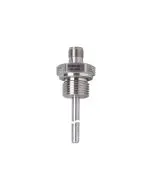
Temperature Sensors, or temperature sensors, are measuring tools used to detect and measure heat levels or coldness in areas that require control. Temperature Sensors convert thermal energy into readable electrical signals, allowing temperature sensors to send data to control systems to adjust temperatures to set values. Temperature detectors are critical input devices in industrial automation processes and are key components in HVAC systems, industrial machinery, medical equipment, as well as everyday appliances. Modern temperature measuring sensors are highly accurate and responsive, helping ensure efficient temperature control.
What are the Benefits of Temperature Sensors in Industry?
Temperature Sensors play a crucial role in enhancing efficiency and safety in industrial production processes. By controlling temperature within an appropriate range, they prevent damage from excessive heat or cold. Temperature Sensors not only help maintain product quality but also save energy and reduce production costs. Temperature sensors are also important heat detection sensors in safety systems, preventing accidents caused by abnormally high temperatures. Additionally, temperature monitoring sensors aid in data collection and analysis of temperature trends, making them essential tools for preventive maintenance planning. Furthermore, temperature measuring sensors ensure products meet international standards.
What Industries Are Temperature Sensors Commonly Used In?
Temperature Sensors are widely used in various industries that require precise temperature control. Temperature sensors are a crucial component of automated systems that help increase production efficiency, and each industry's temperature sensor has different applications based on specific needs. Moreover, temperature sensors determine the quality of products in many processes as they help maintain production standards.
Heat Treatment Industry
In the heat treatment industry, temperature sensors are crucial for controlling the high-precision temperatures of furnaces. Temperature sensors are installed at various points in the furnace to monitor heat distribution, ensuring that workpieces achieve desired hardness and properties. Additionally, thermal detection sensors prevent overheating or incomplete heating, making temperature sensors a critical factor in determining the quality of steel and metals. Furthermore, temperature measurement sensors also help save energy during the heat treatment process.
HVAC and Air Conditioning Industry
Temperature Sensors are essential to HVAC systems that control temperature and humidity in buildings. Temperature sensors are installed in various rooms to measure and adjust temperatures appropriately, creating comfort for occupants while saving energy. Additionally, air conditioning system temperature sensors prevent ice formation on cooling coils, and thermal detection sensors ensure efficient operation by controlling the compressor and fan functions. Therefore, temperature measurement sensors play a vital role in reducing electricity costs.
Electronics Industry
In the electronics industry, Temperature Sensors play a crucial role in controlling temperature during chip and circuit board manufacturing processes. Temperature Sensors help maintain constant temperatures in clean rooms, preventing damage from thermal expansion and ensuring equipment durability through testing. Heat detection sensors are used to identify abnormal hot spots in circuits, making Temperature Sensors essential tools for quality control and extending the lifespan of devices.
Packaging Industry
Temperature Sensors are critical components in packaging machinery that require heat for sealing or shrinking film. These sensors ensure that the seal temperature is just right, preventing plastic from melting too much or too little. Temperature Sensors help create tight and aesthetically pleasing seals, and they are also used in shrink wrap machines requiring consistent heating. Heat detection sensors prevent package burning, making Temperature Sensors key determinants of packaging quality and reducing waste in production processes.
Healthcare Industry
In the healthcare industry, Temperature Sensors are vital for controlling temperatures of medical equipment and laboratories. These sensors are used in vaccine and drug storage units that require constant temperature maintenance to preserve medication quality. Temperature Sensors also play a role in sterilization machines and incubators, ensuring effective sterilization through accurate temperature detection. They are critical components in diagnostic tools, setting standards for medical safety and preventing sample degradation in laboratory settings.
Food & Beverage Industry
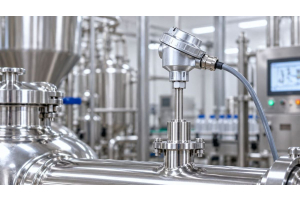
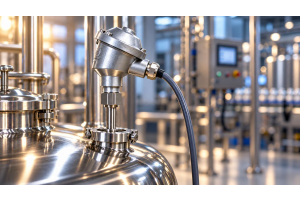
Temperature Sensors are crucial tools for controlling food quality from production to storage. Temperature Sensors are used in pasteurization, cooking, baking, and refrigeration processes. These temperature sensors ensure that the food is cooked properly and safe from pathogens. They also check temperatures in cold rooms and refrigerators, helping prevent food spoilage. Temperature Sensors comply with HACCP standards, making them essential tools for quality control. Additionally, temperature measuring sensors extend product shelf life.
Plastic Industry
In the plastic industry, Temperature Sensors play a vital role in controlling the temperatures of injection molding machines and extruders. Temperature Sensors are installed on barrels and nozzles to control the melting temperature of plastics, ensuring that the plastics have the appropriate viscosity for forming. They also monitor cooling systems in mold setups, preventing warping of parts by detecting heat levels. Temperature Sensors are critical factors in determining production cycles, making them quality controllers for plastic products. Furthermore, temperature measuring sensors reduce waste during the manufacturing process.

What are the Types of Temperature Sensors?
Temperature sensors come in various types designed for different environments and applications. Each type of temperature sensor has its own working principle and specific features. Industrial temperature sensors can be either contact or non-contact, with each type having distinct advantages and disadvantages. The selection of a suitable temperature detection sensor depends on the temperature range, accuracy, and environmental conditions. There are primarily three types of temperature sensors that are widely used.
1. Thermistors
Thermistors are a type of temperature sensor that operates on the principle of resistance change with temperature. These temperature sensors are made from semiconductor materials highly sensitive to temperature, and they come in two types: NTC (Negative Temperature Coefficient) and PTC (Positive Temperature Coefficient). An NTC thermistor's resistance decreases as temperature increases, while a PTC thermistor's resistance increases. This type of temperature sensor is small, fast-responding, and cost-effective, making it popular for use in electrical appliances. Thermistors are suitable for measuring temperatures ranging from -90°C to 130°C but require additional circuitry to convert the signal.
2. Resistance Temperature Detectors (RTD)
RTDs (Resistance Temperature Detectors) are temperature sensors that use pure metals as the sensing element, with platinum being commonly used due to its high stability. RTD temperature sensors have excellent linearity and accuracy, making them ideal for precise measurements. They can measure temperatures from -200°C to 850°C and are industrial standards for accurate measurement, thus important in laboratories. However, these temperature sensors cost more than thermistors.
3. Thermocouples
Thermocouples are the most widely used type of industrial temperature sensor due to their wide measurement range. They operate on the Seebeck effect, which occurs when different metals are joined together. Thermocouple temperature sensors can measure temperatures from -200°C to 2,300°C and come in various types (Type K, J, T, E) based on the metal used. These thermal detection devices are durable and fast-responding, making them a first choice for high-temperature measurements. Thermocouples are cost-effective but less accurate than RTDs, suitable for heavy industrial applications.
How to Check Temperature Sensors
Checking temperature sensors is crucial to ensure accurate and reliable temperature measurements. Temperature sensors that have been in use for a long time may degrade or become inaccurate, which can cause faulty system control if the sensor is damaged. Regularly checking temperature sensors is therefore an important preventive maintenance measure.
- Inspect External Condition - Check for cracks, rust, or physical damage to the temperature sensor. Also ensure that the Temperature Sensor is installed in an appropriate position and not obstructed.
- Check Connections - Inspect the wiring and connectors of the temperature sensor to ensure they are tight, not loose or broken. For thermocouple type temperature sensors, use wires that match the sensor.
- Calibration - Calibrate Temperature Sensors against a reference instrument to check the accuracy of the heat detection sensor and correct any deviations.
- Measure Resistance - For RTD (Resistance Temperature Detector) and Thermistor type temperature sensors, use a multimeter to measure resistance and compare it with standard tables to check if the sensor is functioning properly.
Why Should You Check Temperature Sensors?
Regularly checking temperature sensors is essential to maintain the accuracy of temperature control in manufacturing processes. Even slight deviations in a temperature sensor can result in low-quality products or significant damage. A properly checked sensor ensures that the system operates according to specified standards, and well-maintained sensors have a longer lifespan, reducing replacement costs. Additionally, normal functioning temperature sensors help save energy and increase production efficiency, making temperature sensors crucial for maintaining organizational reliability. Moreover, temperature sensors must be legally inspected in many industries, particularly food, pharmaceuticals, and healthcare. Therefore, temperature measuring sensors need to have clear calibration histories.

Why is temperature measurement important in industry?
Temperature Sensors measure temperature are a critical factor that determines the success of manufacturing processes in every industry because Temperature Sensors help maintain consistent product quality by controlling and monitoring temperatures. These sensors not only aid in production but also serve as essential tools for developing new products, and temperature sensors are at the heart of modern automated control systems.
- Quality Assurance - Temperature Sensors help manufacturers ensure consistent product quality by detecting abnormalities immediately, making them a preventive tool against defects.
- Compliance with Standards - Many industries have strict temperature requirements. Temperature Sensors help meet ISO, GMP, HACCP standards and serve as verifiable evidence of control.
- Product Development - Heat sensors provide crucial data for refining formulas and production processes. Temperature Sensors help understand material behavior under various temperatures.
- Durability and Lifespan - Temperature Sensors test product durability in extreme temperature conditions, allowing for predictions of lifespan and improvements in strength.
If you are looking for "High-Quality Temperature Sensors", think of SCMA!
Choosing high-quality Temperature Sensors is a worthwhile investment for controlling production processes that require precision. SCMA specializes in selling Temperature Sensors from leading global brands, offering consultation on selecting the right temperature sensors for every industry. Whether it's industrial-grade temperature sensors, heat detection sensors for safety systems, or temperature sensors for laboratories, with over 20 years of experience, we provide quality-selected products and comprehensive after-sales services including installation, calibration, and maintenance. This makes temperature sensors a worthwhile investment, and SCMA’s temperature sensors will help enhance your production efficiency.
Summary
Temperature Sensors are essential equipment in every industry that requires precise temperature control. As mentioned above, there are various types of Temperature Sensors such as Thermistors, RTDs, and Thermocouples, each with their own advantages and disadvantages suitable for different applications. Temperature sensors are used across a variety of industries including metal coating, HVAC systems, electronics manufacturing, packaging, healthcare, food, and plastics. The quality of products and production efficiency is determined by temperature sensors, making regular inspection and maintenance essential to ensure accurate operation. Investing in high-quality heat detection sensors from SCMA will help you be confident that your production processes are efficient, with comprehensive support services provided by our expert team to ensure your temperature sensors operate at full efficiency throughout their lifespan.
Frequently Asked Questions
What are the industrial temperature measuring tools?
The main types of industrial temperature measurement tools include various Temperature Sensors such as Thermocouples, which are most commonly used due to their wide range of measurements; RTDs (Resistance Temperature Detectors) for high accuracy; and Thermistors for fast response. Additionally, there are Infrared Thermometers for non-contact temperature measurement, Data Loggers for continuous temperature recording, and Temperature Transmitters that convert signals from Temperature Sensors into standard signals. Each type of sensor is suitable for different applications, such as heat detectors for furnaces or temperature sensors for cold rooms.
How many types of temperature measurements are there?
Temperature measurement with Temperature Sensors can be divided into two main methods: contact and non-contact. Contact methods use Temperature Sensors such as Thermocouples, RTDs, or Thermistors that must directly touch the object being measured, while non-contact methods use Infrared Sensors or Pyrometers to measure thermal radiation. Additionally, sensors are categorized based on their operating principles, such as resistance change, thermoelectric effect, or liquid expansion. Each type of temperature sensor has its advantages and disadvantages and different measurement ranges.
How do you measure temperature correctly?
To accurately measure temperature with Temperature Sensors, one must select a Sensor that is suitable for the temperature range and environment. Install the temperature sensor in a position representative of the area to be measured, avoid sources of heat or cold interference, wait until the temperature sensor reaches equilibrium before reading values, regularly calibrate the temperature detector against reference equipment, and use appropriate cables, especially Compensation Cables with Thermocouples. Well-maintained temperature sensors will provide accurate and reliable measurement results.
What materials are used in temperature measuring devices?
Temperature Sensors use a variety of materials depending on the type of Temperature Sensor. Thermocouples use two different metals, such as Chromel-Alumel (Type K) or Iron-Constantan (Type J), while RTDs use platinum, nickel, or copper, with platinum offering the highest stability. Thermistors are made from semiconductor materials like metal oxides of Manganese, Cobalt, Nickel. Each type of temperature sensor selects materials based on desired properties such as temperature range, sensitivity to change, and environmental durability. Modern temperature detectors also have protective coatings for increased durability.
Which Temperature Sensors are Good Quality from SCMA?
- 1.JB-T, Straight Pin Connector 5mm. Shield Wire=5m. K(CA) SK Thermocouple Supports Maximum Operating Temperature: 300°C
- 2.JB-35C 15X300mm Type K(CA) SK Thermocouple
- 3.JB-35 SK Thermocouple (Thermocouple) 22X300 mm Type K(CA)
- 4.JB-35 12.7X300mm Type K(CA) SK Thermocouple (Thermocouple)
- 5.JB-30N 9.5X100mm 1/2" NPT Type K(CA) SK Thermocouple (Thermocouple)
- 6.JB-30S 6X200 mm Thread 3/8" NPT Type K(CA) SK Thermocouple (Thermocouple)
- 7.JB-10 6x200 mm Stainless Steel Shield Wire 2M Type K(CA) SK Thermocouple (Thermocouple)
- 8.PCSB 5X100 mm Stainless Steel Shield Wire 2M Type J(IC) SK Thermocouple (Thermocouple)
- 9.JBS-3097 5x25 mm Stainless Steel Shield Wire 5M Type K(CA) SK Thermocouple (Thermocouple)
- 10.JBS-3310 Thread M6 Stainless Steel Shield Wire 2M Type K(CA) SK Thermocouple (Thermocouple)