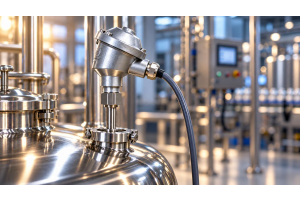

What is the role of a Temperature Controller (Temp Control) in controlling industrial system temperatures? This article SCMA will guide you through understanding temperature controllers, their functions, types, and applications in industry to help you efficiently choose the right Temperature Controller for your needs. For high-quality temperature control solutions, you can consult with experts.
What is Temp Control?
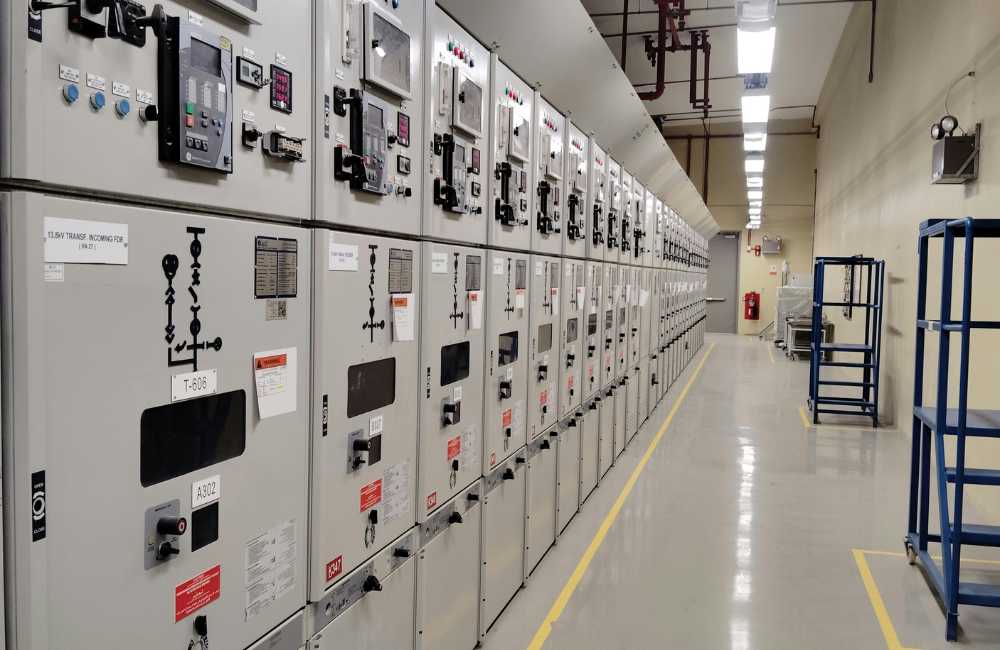
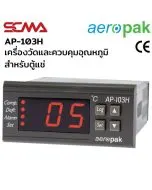
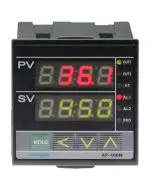
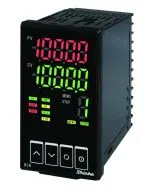
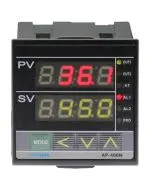
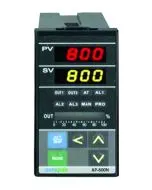
Temperature Controller or Temperature Control Device is an equipment that receives signals from temperature sensors, processes the measured data and displays it on a screen, while also sending output to control other devices such as adjusting Heater temperatures. This Temp Control is crucial in automatic temperature control systems, processing thermal information and instructing various temperature control devices to operate appropriately for desired conditions.
Operation of Temp Control
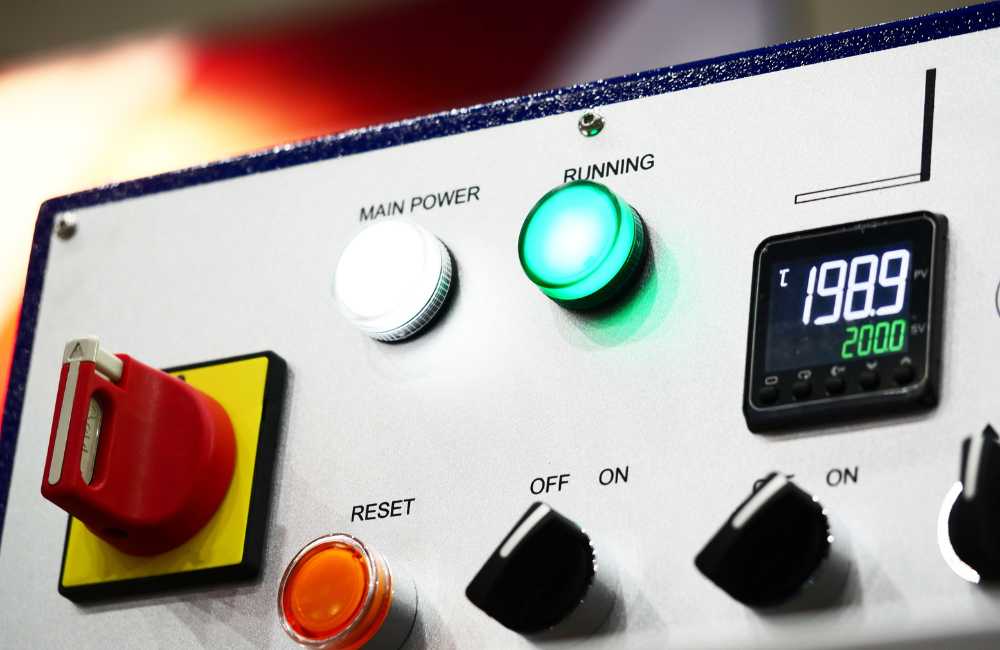
In the operation of Temperature Controller, it starts with setting at the SV section, which specifies the temperature we want to control in the production process, such as setting it to 500ºC. Then, the temperature controller compares or calculates the difference between PV and SV values. The PV value is obtained from reading the Sensor Input. If the PV value is less than SV, it will instruct the Control Signal Output to send a signal through SSR, which acts like a switch, to increase the heating output of Heater. When the temperature at PV exceeds SV, it reduces the Control Signal Output to decrease the heater's operation. This control process is known as On-Off Control.
What are the functions of Temp Control?
A Temperature Controller, or Temp Control, has special features that enhance its performance. The main functions include Auto-tuning, Self-tuning, and Heater Burnout Alarm, each playing a crucial role in ensuring optimal temperature control.
Auto-tuning
The Auto-tuning function of the Temperature Controller allows the controller to automatically calculate the appropriate PID values for the system without requiring complex manual adjustments, making the use of temperature controllers easier and more efficient.
Self-tuning
The Self-tuning function of Temp Control continuously evaluates and adjusts the PID parameters when environmental conditions change, such as load changes or weather variations. This ensures that the temperature controller maintains consistent control performance.
Heater Burnout Alarm
The Heater Burnout Alarm function of the Temperature Controller monitors the status of the heater by measuring the current flowing through it. If a malfunction or burnout is detected, an immediate alarm signal will be sent to prevent potential damage to temperature control equipment and products.
Types of Temp Control?
Temperature controllers come with a variety of features and capabilities. We can categorize them into four main types: Analog, Digital, Multi-Loop Modular, and Special Type. Each type has its own advantages and applications depending on the user's requirements and budget.
Analog Temperature Controller (Analog)
The Analog Temperature Controller is a basic temperature control device that uses a needle gauge to display temperature values. It is cost-effective and suitable for general applications where high accuracy is not required. The primary control method is ON-OFF Control, which is easy to use but does not offer as much parameter customization as Digital Temp Control.
Digital Temperature Controller (Digital)
The Digital Temperature Controller is the most commonly used type today. It features a clear LED 7-Segment display for reading temperature values, supports both ON-OFF and PID Control methods, and includes an Auto-tuning function that automatically adjusts parameters to ensure high-efficiency operation.
Multi-Loop Modular Temperature Controller (Modular)
The Multi-Loop Modular Temperature Controller is designed for systems requiring simultaneous control of multiple temperature points. It can be installed on a DIN Rail to save space and connected to PLCs or Computers via RS-485 communication ports, allowing monitoring and controlling over more than 1,000 control devices.
Special Temperature Controller (Special)
The Special Temperature Controller is designed specifically for controlling electronic valves. It has special functions to open and close valves based on set temperature values, can monitor and log data through RS-485 communication ports, making it suitable for systems that require liquid flow adjustment for temperature control.
Between Temp Control and Thermostat, What Are the Differences?
Both Thermostat and Temperature Controller are temperature control devices, but they differ in terms of usage and capabilities. Temp Control is often used in industries requiring high precision, while Thermostat is suitable for home and building use. Therefore, temperature controllers have different features and prices.
- Thermostat (thermostat)
- Controls low temperature range from 0-80°C, suitable for general use
- Installed in homes, apartments, or offices to control air conditioners and heaters
- Works on ON-OFF mode, turning devices on or off when temperature changes from set value
- Easy to use with simple settings, suitable for general users
- Temperature Controller (temperature controller)
- Controls temperature from negative to very high, suitable for industrial use
- Used in industries such as food factories, electrical appliance factories, beverage industry
- Uses special temperature sensors, supports multi-mode control for maximum accuracy
- Complex settings with more customization options for detailed and accurate use
Applications of Temp Control in Industry
Temperature Controllers are widely applied in various industrial settings, including heating systems, cooling systems, and valve control. Each application has its own advantages and is suitable for different tasks, making temperature controllers indispensable in modern manufacturing processes.
- Heating and Cooling Control Applications: Examples of heating and cooling control applications for general temperature regulation often use Heating/Cooling control to maintain a constant temperature, utilizing signals from the Temp Controller to manage operations.
- Motor Valve Control Applications: Examples of motor valve control applications for precise control tasks typically rely on the accuracy and efficiency of valves, using signals from Temperature Controllers to command the opening and closing of motor valves.
- Solid State Relay Applications: Examples of Solid State Relays used for temperature control, employing digital signals from Temp Control to trigger Solid State Relays and control heaters.
- Power Regulator Applications: Examples of Power Regulators used for temperature control, utilizing standard 4-20 mA DC signals from Temperature Controllers to regulate Power Regulators and control heaters.
- Infrared Thermometer Applications: Examples of Infrared Thermometers used for tasks where objects are in motion, such as controlling the temperature of moving ceramic tiles on a conveyor belt.
Basic Ways to Use Temp Control That You Should Know!
Using a Temperature Controller comes in various forms depending on the specific needs of each task. A temperature controller can operate either in ON/OFF mode or PID Control Temp Control, with each type having its own advantages and disadvantages. Therefore, selecting the appropriate operating mode for a given application is crucial to achieving optimal performance.
- ON/OFF Control - This is a two-position control where the output switches between off and on, or 0% to 100%. The output will switch off only when the temperature reaches the set point. In ON/OFF control, switching occurs around the setpoint value; for example, if the setpoint is 100°C, the output will turn off at 100°C and immediately turn on again once the temperature drops below 100°C. The Hysteresis setting determines how much lower than the setpoint the temperature must drop before the output turns back on after switching off. This results in an oscillating (Hunting) behavior around the setpoint, with overshoot occurring every time control starts.
- PID Control - PID control provides the highest efficiency in temperature regulation. The P component reduces overshoot and hunting, while the I component eliminates offset, which is a constant difference between the setpoint and measured value. The D component responds to external disturbances. In PID control, settings for P, I, and D must be configured; however, modern temperature controllers feature Auto-tuning functions that adjust these values according to external conditions. This helps reduce overshoot as PID control cuts off before reaching the setpoint, with the cutoff period determined by the auto-tuned external environment.
Why is Temperature Control Important for Water Quality Testing?
Temperature Controller, this temperature control equipment is crucial in the industry due to its accuracy in processing and adjusting temperatures, which directly affects product quality and production efficiency. Even a slight error in temperature control can cause significant damage. Temperature controllers are essential devices that help maintain standards in every manufacturing process.
- Food Industry: Precise temperature control helps preserve nutritional value, prevent spoilage, and maintain food safety standards, especially in pasteurization, freezing, and storage processes.
- Plastics Industry: Consistent and accurate temperature is a critical factor in injection molding, extrusion, and blow molding to achieve products that meet specifications with smooth surfaces, no warping or shrinking.
- Ceramics Industry: Ceramic firing requires detailed temperature control in each stage (Ramp/Soak) to achieve the desired strength, color, and properties. Incorrect temperatures may cause pieces to crack or deform.
- Metal Industry: Heat treatment processes require high accuracy in temperature and time control to achieve the desired microstructure and hardness of metals as designed.
- Other Benefits: Reduce waste from production processes, save energy through efficient operation, extend equipment lifespan, and ensure standardized manufacturing quality.
How to Choose a Temp Control?
Choosing a control system depends on the level of accuracy required. ON/OFF Control is suitable for general tasks that can accept fluctuations within ±2-5°C, and it's cost-effective. Meanwhile, PID Control offers high precision and stable control, making it ideal for applications requiring accuracy such as plastic injection machines or coffee roasters. Fuzzy Control is best suited for systems with frequent changes and adapts better than standard PID controls. A good Temperature Controller should have an Auto-tuning function to automatically adjust parameters.
Operation
Choosing a control system depends on the level of accuracy required. ON/OFF Control is suitable for general tasks that can accept fluctuations within ±2-5°C, and it's cost-effective. Meanwhile, PID Control offers high precision and stable control, making it ideal for applications requiring accuracy such as plastic injection machines or coffee roasters. Fuzzy Control is best suited for systems with frequent changes and adapts better than standard PID controls. A good Temperature Controller should have an Auto-tuning function to automatically adjust parameters.
Size
Standard DIN size is a crucial factor for installation, with 1/32 DIN (48x24mm) suitable for limited spaces, 1/16 DIN (48x48mm) being the most popular, and 1/8 DIN (96x48mm) and 1/4 DIN (96x96mm) offering larger screens that are easy to read from a distance. Additionally, one must consider the depth of the unit, cooling space, and ease of wiring at the back. The selected Temperature Controller should fit the control cabinet size and installation environment.
Alerts
Alarm systems help prevent damage from abnormal temperatures by providing High/Low Alarm notifications when thresholds are exceeded, Deviation Alarm for deviations from setpoints, and Sensor Break Alarm in case of sensor failure. Alert formats should include LED lights, buzzer sounds, and relay outputs to connect external alarm systems, along with an Alarm Delay function to avoid false alarms. A Temperature Controller with comprehensive alert features can reduce operational risks.
Input
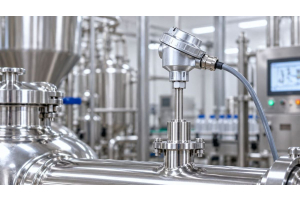
Choosing the input must match the sensor used. Thermocouple (Type J, K, T) is suitable for wide temperature ranges, durable, and cost-effective; RTD (PT100) offers high accuracy but at a higher price; Thermistor suits low temperatures. A good device should have Universal Input supporting multiple types, along with Input Calibration and Sensor Break Detection functions to ensure reliability. Temperature controllers that support various temperature sensors increase flexibility in use.
Output
The output must suit the equipment being controlled. Relay Output (5A) is used for small loads with limited lifespan, SSR Drive (12VDC) controls Solid State Relays for large loads without contact points, Analog Output (4-20mA, 0-10V) provides continuous control through SCR or Inverter, and Communication (RS485, Ethernet) connects to PLC/SCADA. A good device should have multiple outputs for flexibility. Temperature Controllers with comprehensive output options can meet various usage requirements.
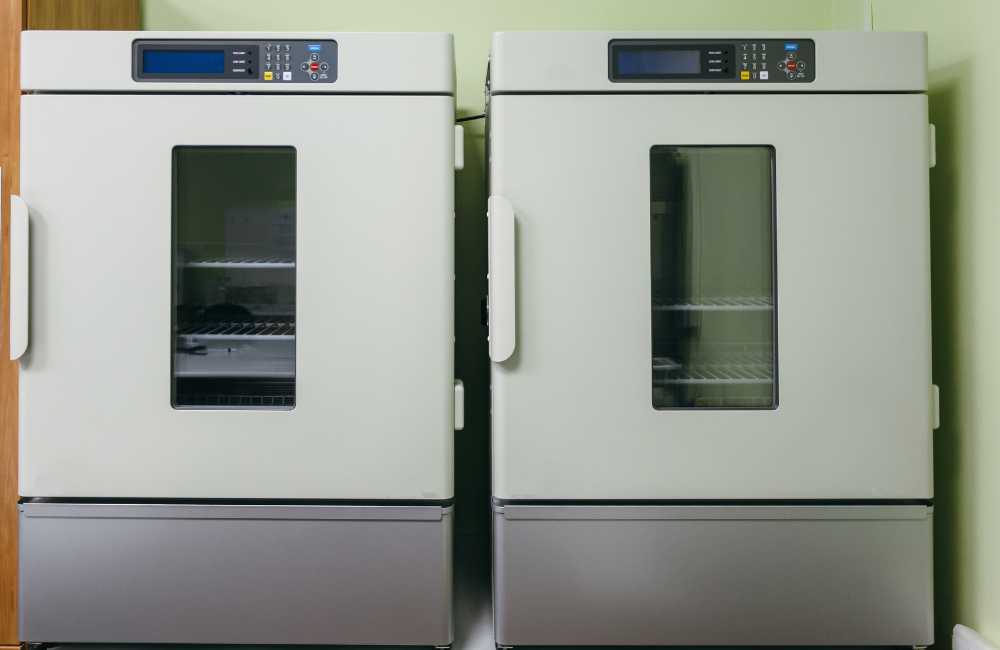
If you are looking for high-quality "Temp Control", think of SCMA!
When choosing to purchase a Temperature Controller or high-quality temperature control equipment, it is crucial to select an experienced and knowledgeable distributor. SCMA specializes in Temp Control and comprehensive temperature control devices, providing extensive consultation and after-sales service to ensure customers receive the perfect Temperature Controllers for their needs.
Summary
Temp Control or Temperature Controller is a crucial device in production processes across all industries. It works by comparing PV and SV values to send control signals to various equipment. There are four main types of temperature controllers: Analog, Digital, Multi-Loop Modular, and Special Type. Each type has its own advantages and uses. Selecting the right Temperature Controller requires considering factors such as operation, size, alerts, inputs, and outputs to achieve optimal system performance for your temperature control needs. For those seeking high-quality Temp Control, SCMA is ready to provide comprehensive consultation and services to meet all customer requirements.Consultation and Services are available.
Frequently Asked Questions
What is Temp Control?
Temp Control or Temperature Controller is a temperature control device that receives signals from sensors, processes and displays the Temperature value on the screen, and sends output to control various devices such as Heaters or Cooling systems to maintain the set temperature.
What does Temperature Control do?
Temperature Control functions by receiving values from sensors to compare with the Setpoint value, then sending output signals to control heating or cooling devices to maintain the desired temperature range, and has alert functions when the temperature is abnormal.
What types of temperature controllers are there?
Temperature controllers are divided into four main types: Analog Temperature Controller with a dial face, Digital Temperature Controller with an LED display, Multi-Loop Modular installed on DIN Rail for multi-point control, and Special Temperature Controller designed specifically for valve control. Each type has its own advantages and different applications.
How does Temperature Control work?
Temperature Control works by receiving signals from temperature sensors (PV) to compare with the set value (SV). If PV is lower than SV, the temperature controller sends a signal for the Heater to operate. But if PV is higher than SV, it reduces the operation of the Heater. This process is an ON-OFF control method or may use PID Control for higher accuracy.
How does Temperature Control work in transformers?
Temperature Control in transformers works by using sensors to measure the temperature of transformer oil. When the temperature exceeds the set value, the temperature controller orders cooling fans or systems to activate and reduce the temperature. Controlling Temperature in transformers is important to prevent equipment damage from excessive heat.
Which Model is Good, Interesting and High Quality from SCMA for Temperature Control?
- 1. Shinko Temperature Controller Model BCR2R00-16
- 2. Shinko Temperature Controller Model BCD2R00-16
- 3. Shinko Temperature Controller Model BCS2A10-00
- 4. Shinko Temperature Controller Model BCS2R10-16
- 5. Aeropak Temperature Controller Model AP-900N-301
- 6. Aeropak Temperature Controller Model AP-1200K
- 7. Aeropak Temperature Controller Model AP-106H
- 8. Aeropak Temperature Controller Model AP-642 1200 CA+AL
- 9. Aeropak Temperature Controller Model AP-54R
- 10. Aeropak Temperature Controller Model AP-600N-101
- 11. Aeropak Temperature Controller Model AP-107FE
- 12. Aeropak Temperature Controller Model AP-618D