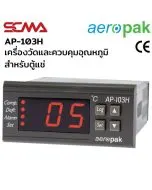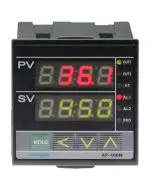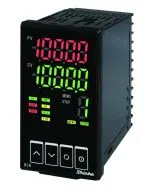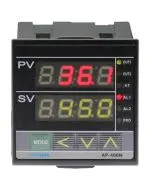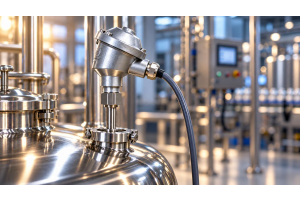
Temperature Controller is a crucial control device in modern industry, helping to maintain the desired temperature accurately, thus enhancing production efficiency and ensuring consistent product quality. Company SCMA presents comprehensive information about temperature controllers to help you understand their operation, types, and how to select the appropriate one for your needs.
What is a Temperature Controller?

What is Temperature? What is a Controller? A temperature controller is an equipment used to control temperature, suitable for all types of industrial applications. It maintains the set temperature by working with temperature sensors and heating/cooling devices. Temperature controllers play a vital role in various industries such as plastics, rubber, chemicals, food, ceramics, laboratories, and packaging lines, enhancing production efficiency and ensuring consistent product quality.
How a Temperature Controller Works
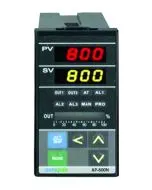
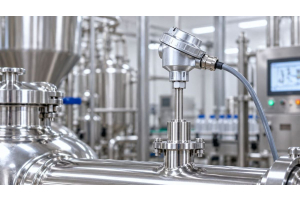
A thermostat works by receiving signals from temperature sensors (PV) and comparing them to the set value (SV), then processing this information to send control signals to heating/cooling devices to adjust the temperature back to the target value.
Main Components of a Temperature Control System:
- Input Section - Receives signals from sensors (Thermocouple, RTD, Thermistor) and converts them into the current temperature value (Process Value: PV) for comparison with the set value (Set Value: SV).
- Processing Section - Processes the difference between PV and SV using control algorithms (ON/OFF, P, PI, PID) to calculate appropriate control signals.
- Output Section - Sends control signals (Control Signal) in various forms such as Relay, 4-20mA, 0-10V, SSR Drive to Actuators (Contactor, Solid State Relay, SCR).
- Actuator & Heating Device - Signal amplifiers and heating/cooling devices (Heater, Cooling Unit, Steam Valve) that adjust the temperature in the process.
- Feedback Loop - Temperature sensors in the process send real-time temperature values back to the controller continuously, creating a closed-loop control system that automatically adjusts.
Why is a Temperature Controller Important?
Temperature Controller This temperature control equipment is crucial in the industry due to its accuracy in processing and adjusting temperatures, which directly impacts product quality and production efficiency. Even minor temperature control errors can result in significant damage.
Importance in Various Industries:
- Food Industry - Precise temperature control helps preserve nutritional value, prevent spoilage, and maintain food safety standards, especially in pasteurization, freezing, and storage processes.
- Plastics Industry - Consistent and accurate temperature is a critical factor in injection molding, extrusion, and blow molding, ensuring products meet specifications with smooth surfaces that do not warp or shrink.
- Ceramics Industry - Ceramic firing requires meticulous temperature control at each stage (Ramp/Soak) to achieve desired strength, color, and properties. Temperature errors can cause pieces to crack or deform.
- Metal Industry - Heat treatment processes require high accuracy in temperature and time control to achieve the desired microstructure and hardness of metals as designed.
- Other Benefits - Reduce waste from production processes, save energy through efficient operation, extend equipment lifespan, and build confidence in standardized manufacturing.
Investing in high-quality Temperature Controllers is therefore a worthwhile investment, preventing potential damage and providing a competitive edge in business.
What Types of Temperature Controllers Are There?
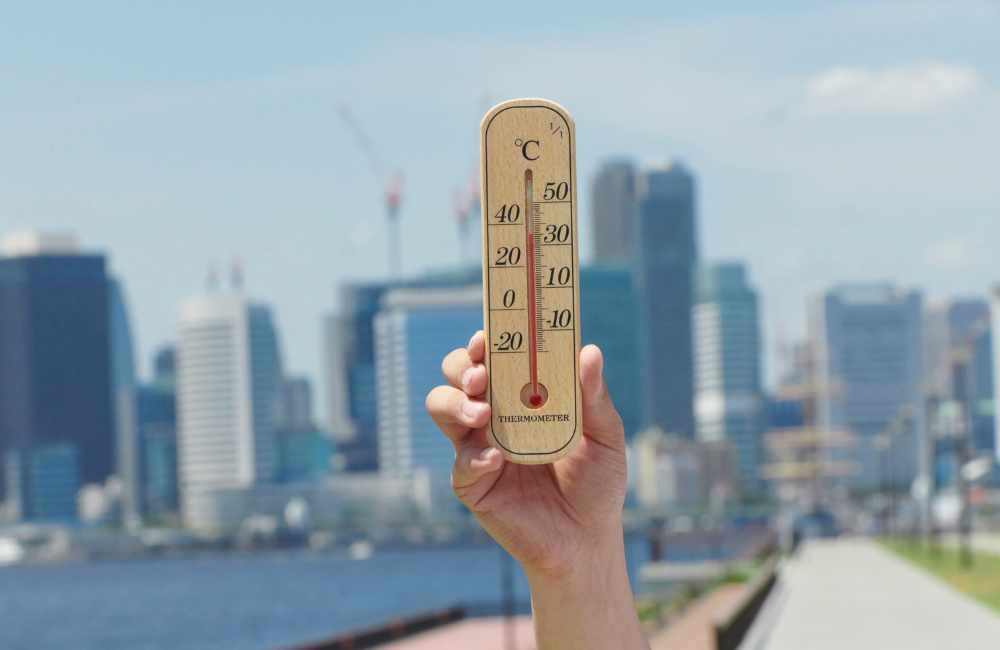
Temperature controllers come in various types based on technology and the complexity of control, ranging from basic models to those with special functions for specific applications.
1. Analog Temperature Controller (Analog Temperature Control)
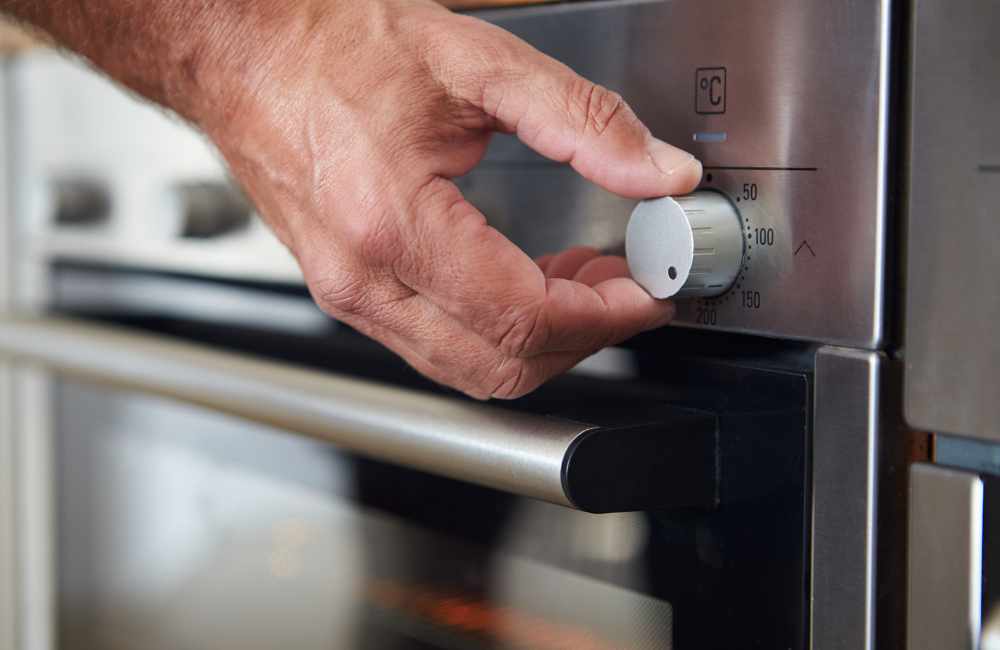
The analog controller is a basic model featuring an analog dial display showing temperature values, operating on simple electronic circuits to control ON/OFF functions. It offers high durability and ease of use without complexity, being the most cost-effective option suitable for applications that do not require extremely precise temperature control, such as small ovens, water heaters, or tasks where a ±2-5°C fluctuation in temperature is acceptable.
2. Digital Temperature Controller (Digital Temperature Control)
The digital controller is the most widely used type today, featuring easy-to-read and clear LED 7-Segment displays in various sizes from 1/32 DIN to 1/4 DIN. It supports both ON/OFF and PID control with automatic tuning functions that automatically find optimal parameters. It offers diverse outputs including Relay, SSR, and 4-20mA, supporting multiple sensor types. Some models can program Ramp/Soak functions, making them suitable for applications requiring high precision.
3. Multi-Loop Modular Temperature Controller (Multi-loop Modular Temperature Control)
The modular controller is designed for DIN Rail installation to save space in control cabinets, capable of controlling multiple points simultaneously within a single unit (2-64 points), reducing wiring complexity. Most models do not have built-in displays and require connection through PLC or PC software via RS-485 or Ethernet ports. They can be easily expanded by adding modules and feature password security systems, making them suitable for large automated systems requiring control of multiple points.
4. Special Temperature Controller (Special Function Temperature Control)
Controllers designed specifically for specialized applications such as Valve Motor Controllers that proportionally control valve opening and closing, Cascade Controllers for systems with high delays, and Limit Controllers that shut down the system when temperatures exceed dangerous levels. They feature special functions not found in standard controllers, support industrial protocol communication, and have built-in data logging capabilities, making them suitable for tasks with specific requirements such as sterilization systems, metal furnaces, or applications requiring high safety.
What Factors Should Be Considered When Choosing a Temperature Controller?
Choosing the right temperature controller involves considering five key factors to ensure that the equipment meets your specific needs, whether you require heating control only, cooling control only, or both in one system.
Operation of Temperature Controller
Selecting a control system requires determining the level of accuracy needed. ON/OFF Control is suitable for general applications that can tolerate fluctuations within ±2-5°C and are cost-effective, while PID Control offers high precision and stability, making it ideal for tasks requiring accuracy such as plastic injection machines or coffee roasters. Fuzzy Control is best suited for systems with frequent changes and adapts better than standard PID.
Size of Temperature Controller
Standard DIN size is a crucial factor in installation, where 1/32 DIN (48x24mm) fits limited spaces, 1/16 DIN (48x48mm) is the most popular size, and 1/8 DIN (96x48mm) and 1/4 DIN (96x96mm) offer larger screens for easy reading from a distance. Additionally, consider the depth of the unit, space for heat dissipation, and ease of wiring at the back.
Alarms on Temperature Controller
Alarm systems help prevent damage from abnormal temperatures by providing High/Low Alarm when exceeding set values, Deviation Alarm for deviation from Setpoint, and Sensor Break Alarm if the sensor fails. The alarm format should include LED lights, buzzer sounds, and relay output to connect external alarm systems, along with an Alarm Delay function to avoid false alarms.
Input of Temperature Controller
Selecting the input must match the sensor used. Thermocouple (Type J, K, T) is suitable for wide temperature ranges and is durable and cost-effective, RTD (PT100) offers high accuracy but at a higher price, while Thermistor is ideal for low temperatures. A good controller should have Universal Input supporting multiple types with input calibration and sensor break detection functions to ensure reliability.
Output of Temperature Controller
The output must be compatible with the equipment being controlled. Relay Output (5A) is used for small loads, has limited lifespan, SSR Drive (12VDC) controls Solid State Relays for large loads without contact points, Analog Output (4-20mA, 0-10V) provides continuous control through SCR or Inverter, and Communication (RS485, Ethernet) connects to PLC/SCADA systems. A good controller should have multiple outputs for flexibility.
If you are interested in purchasing a Temperature Controller, SCMA is now available for your purchase!
SCMA, the leading supplier of industrial heater control systems, offers high-quality Temperature Controllers from world-class brands. Our range covers all types, from basic to advanced models with PID Control and standard Communication Protocol. We have stock available for immediate shipment and a team of experts ready to advise on selecting the right model for your application, whether it's oven control, plastic injection machines, HVAC systems, or other special applications. Additionally, SCMA provides comprehensive after-sales service including training, Thai language manuals, product warranties, calibration services according to standards, spare parts, and maintenance by skilled technicians. For inquiries or quotations,contact SCMA today
Summary
Temperature Control is a crucial device in the industrial sector, maintaining constant temperature as specified to ensure consistent product quality, energy savings, and increased workplace safety. Choosing an appropriate temperature controller involves considering various factors such as control type, size, alarm system, input and output types to ensure the device meets your specific needs. SCMA is ready to be a reliable partner in providing high-quality temperature control equipment with comprehensive services from consultation to installation and after-sales support, ensuring you receive the best products and services for your business.
Frequently Asked Questions
What is the function of a Temperature Controller?
A Temperature Controller functions to control and maintain temperature at a set value by receiving signals from temperature sensors, comparing them with the Setpoint, and sending control signals to heating/cooling devices. Additionally, it has supplementary features such as displaying temperature, alarming in case of abnormalities, data logging, and communicating with central control systems.
What are the 3 types of Temperature Control tools?
The three main types of temperature controllers include ON/OFF Controller which operates in an on-off manner when the temperature reaches the set value, suitable for general work; Proportional Controller which adjusts power according to the proportional difference in temperature providing smoother control; and PID Controller using a Proportional-Integral-Derivative algorithm offering the most accurate and stable control, ideal for high precision tasks.
What are the steps of Transformer Temperature Control?
Transformer temperature control works by installing temperature sensors on the windings and transformer oil. When the temperature rises during operation, it compares with the set value (typically 65-85°C). If exceeded, it commands cooling fans to start or automatically reduces load. There are two alarm levels: Alarm (85°C) and Trip (95°C), to prevent damage from excessive heat.
How many types of Controllers are there?
Industrial controllers are primarily divided into four main types: Temperature Controller for temperature control, Pressure Controller for pressure control, Flow Controller for flow rate control, and Level Controller for liquid level control. Each type works similarly by receiving signals from sensors, comparing them with set values, and sending control signals to devices that adjust the value. The Temperature Controller is the most commonly used in industry.
Which models are worth considering?
1.Aeropak Temperature Controller Model AP-900N-301 Temperature controllers
https://scma.co.th/aeropak-ap-900n-301.html
2.Aeropak Temperature Controller Model AP-106H Temperature controllers
https://scma.co.th/aeropak-ap-106h.html
3.Aeropak Temperature Controller Model AP-54R Temperature controllers
https://scma.co.th/aeropak-ap-54r.html
4.Aeropak Temperature Controller Model AP-600N-201 Temperature controllers
https://scma.co.th/aeropak-ap-600n-201.html
5.Aeropak Temperature Controller Model AP-642 1200 CA+AL Temperature controllers
https://scma.co.th/aeropak-ap-642-1200-ca-al.html
6.Aeropak Temperature Controller Model AP-59A Temperature controllers
https://scma.co.th/aeropak-ap-59a.html
7.Shinko Temperature Controller Model BCS2S00-06 Temperature controllers
https://scma.co.th/shinko-bcs2s00-06.html
8.Shinko Temperature Controller Model BCS2A00-16 Temperature controllers
https://scma.co.th/shinko-bcs2a00-16.html
9.Shinko Temperature Controller Model BCS2R00-00 Temperature controllers
https://scma.co.th/shinko-bcs2r00-00.html
10.Shinko Temperature Controller Model BCR2A00-16 Temperature controllers