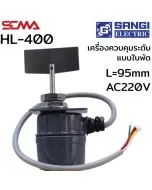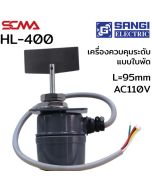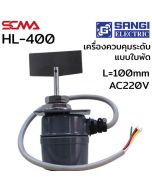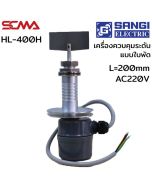
Is inaccurate water level measurement in your holding tanks or storage containers affecting your production process? Choosing a submersible level sensor, which meets industry standards, is the solution that engineers are looking for. SCMA offers genuine solutions for industrial measurement tools. This article will take you through everything from how they work, types, to techniques for selecting equipment to enhance the efficiency of your water pumping system sustainably.
What is a submersible level sensor?
A submersible level sensor, which falls under the category of level sensors, is designed to be submerged in liquids for depth measurement. This device uses a hydrostatic pressure system to convert varying pressure levels into electrical signals sent to the control panel, allowing engineers to accurately calculate water volume in storage tanks, treatment ponds, or natural water sources. Interested readers can study additional information on how water level sensors work for a deeper understanding.
How Submersible Water Level Sensors Work
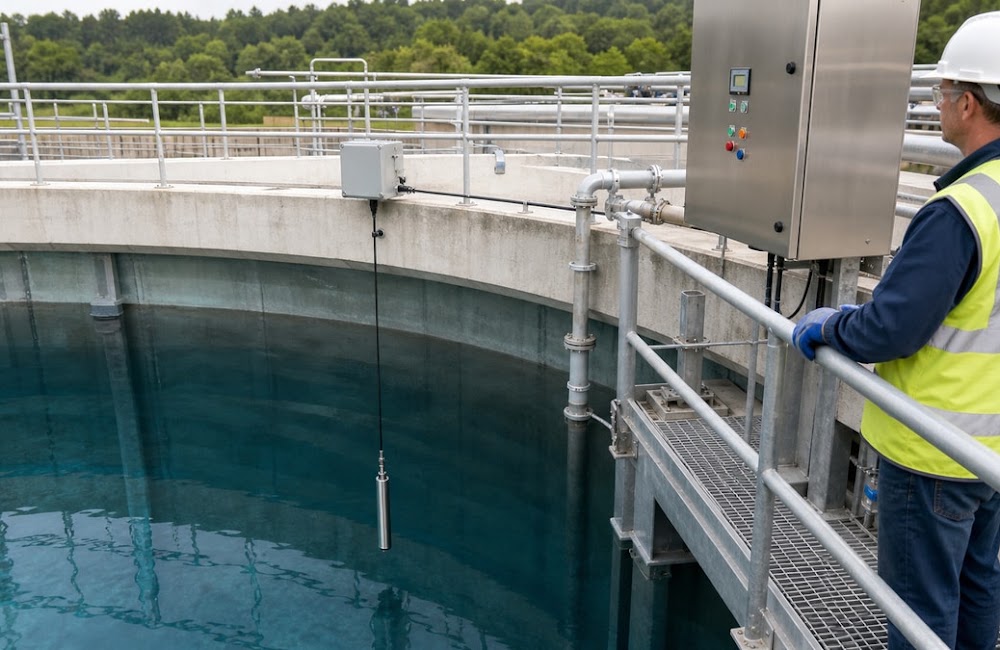
Based on the experience of the SCMA engineering team, the submersible water level sensor operates by measuring hydrostatic pressure as its core principle. When the sensor is lowered to the bottom of a tank or well, the weight of the water creates pressure that varies directly with depth. The device then converts this pressure into standard signals such as 4-20 mA analog signals for further processing in control systems.
How Many Types of Submersible Water Level Sensors Are There?
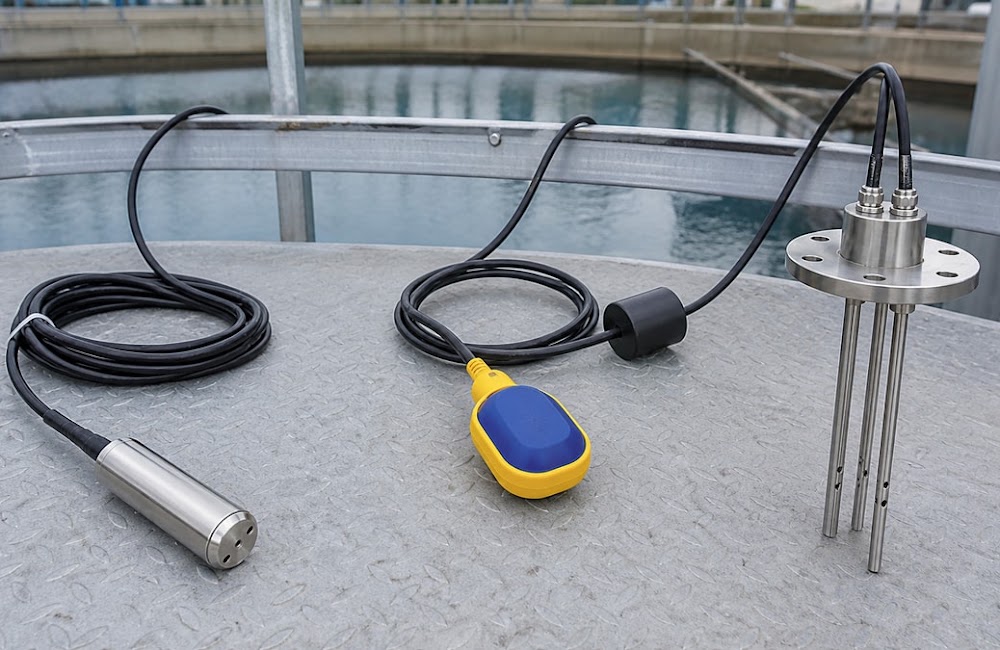
The classification of submersible water level sensors depends on the detection technology used for different industrial applications. We can divide this group into 3 main types for proper selection as follows:
1. Hydrostatic Submersible Pressure Sensor Type
This type of equipment is highly accurate for continuous water level measurement by lowering a probe to the bottom of a container to calculate fluid pressure. Its highlights include corrosion resistance, making it ideal for use in deep wells, chemical storage tanks, or natural water sources.
2. Cable Float Level Switch Type
The float switch is a submersible water level sensor used to detect point-level (Point Level) measurements and commonly used to control automatic water pumps. Its operation relies on an internal magnetic switch that interrupts the circuit when the float tilts according to water levels. This device is cost-effective, easy to maintain, and suitable for water storage tanks as well as wastewater treatment ponds.
3. Conductive/Electrode Level Switch Type
This point-type sensor uses a metal probe dipped into the water to detect water levels based on the electrical conductivity of liquids. Its advantages include high temperature tolerance and no moving parts that are prone to damage, making it suitable for potable water systems but not compatible with distilled water or oil.
Maintenance of Immersion Level Sensors
Proper maintenance of immersion level sensors helps extend their lifespan and maintain the accuracy standards of control systems. The SCMA team recommends practical steps for maintaining industrial equipment that can be easily followed:
1. Cleaning (Cleaning)
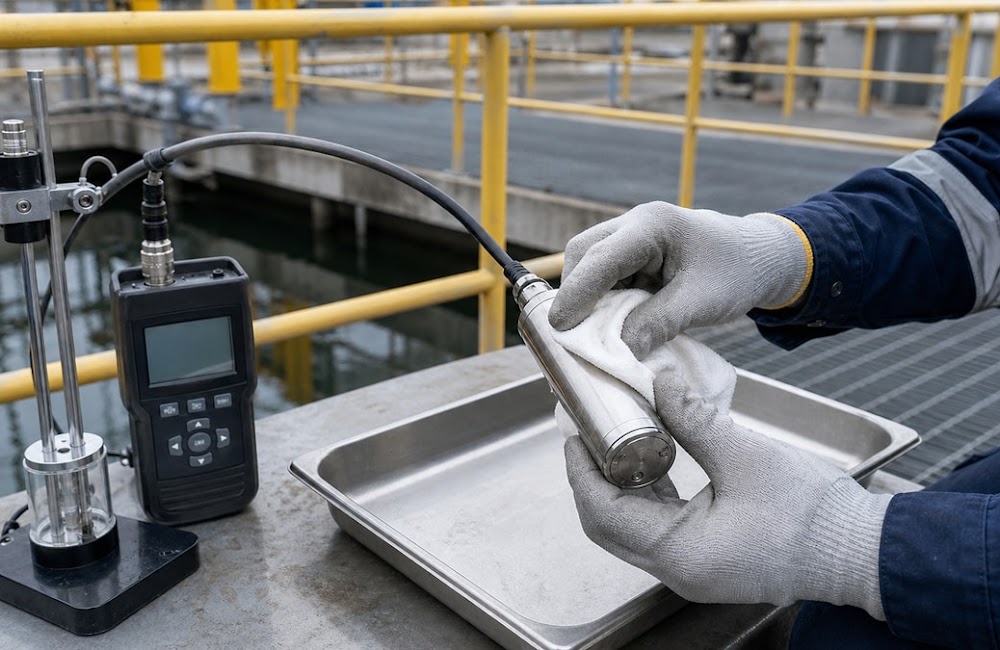
Operators should regularly clean any mud or algae buildup on the diaphragm using a soft cloth or gentle brush with mild soap solution. Avoid using hard materials to scrub, which could damage pressure-sensitive components.
2. Vent Tube Inspection
The wiring of immersion level sensors includes a small vent tube for atmospheric pressure compensation. Engineers must ensure that the end of this tube in the control cabinet is not clogged, bent, or has moisture buildup, as these factors can cause measurement inaccuracies.
3. Calibration (Calibration)
All measuring devices require regular calibration against standard levels to prevent drift due to aging. Users can set this through software according to each sensor model's manual to maintain the highest accuracy.
4. Inspection of Wiring and Rubber Seals
Checking for cracks or breaks in wiring submerged in water, as well as rubber seals at connection points, is essential. If water seeps into internal electronic circuits, it can cause immediate short-circuits. Regular visual inspections help reduce the risk of sudden machine downtime.
5. Selection and Use of Protective Equipment
In installations where there are strong currents or floating debris in the water source, installing a steel frame or impact-resistant pipe to cover the sensor is an excellent physical protection method. This approach significantly extends the lifespan of immersion level sensors in harsh environments.
Usage of Immersion Level Sensors
Immersion level sensors play a crucial role in monitoring liquid levels to control automatic systems in manufacturing industries. The application of such equipment spans various industries to enhance system stability as follows:
1. Control of Water Pumping and Control Panels
The installation of sensors in water tanks enables the control panel to automatically turn on or off pumps according to pre-programmed levels. This system effectively solves problems such as overflowing tanks while preventing damage from dry running (Run Dry) when the water level is low.
2. Water Supply Systems and Wastewater Treatment
Water supply plants, as well as industrial factories, use immersion level sensors to monitor liquid levels in treatment tanks. Real-time depth data allows system managers to manage flooding or plan wastewater treatment operations accurately.
3. Irrigation and Natural Water Source Management
In environmental work including agriculture, sensors are installed in reservoirs, irrigation canals, or rivers to record changes in water levels. The obtained data is highly beneficial for analyzing water situations to allocate water appropriately for farming.
4. Petrochemical and Chemical Industries
Besides general liquid level measurement, special material sensors such as PVDF can withstand high corrosion resistance, making them suitable for measuring chemical or oil levels in large storage tanks (Storage Tank) within petrochemical plants safely.
Advantages of Immersion Level Sensors
Immersion level sensors stand out for their ease of installation; simply submerging the probe into liquid allows it to read values and convert them into electrical signals sent directly to SCADA systems. The equipment is designed with standard IP68 stainless steel materials, resistant to harsh environments, providing high accuracy, continuous measurement capabilities, and support for use in both clean water up to industrial wastewater.
How to Choose the Right Submersible Water Level Sensor
Selecting a submersible water level sensor that fits your application helps prevent operational errors and extends system lifespan. To make an informed decision, users should consider important technical data as follows:
- Measuring Range: Assess the maximum depth of water in tanks or wells, such as 5 meters or 10 meters, along with sufficient cable length to reach the control panel.
- Output Signal: Check your existing control system requirements for signal types, such as analog 4-20 mA for long-distance wiring, or RS-485 Modbus signals.
- Material Compatibility: For measuring tap water, choose stainless steel SS304 or SS316. If used with chemicals, opt for highly corrosion-resistant materials.
- Accuracy: Consider the acceptable percentage of system deviation, such as ± 0.25% FS or ± 0.5% FS based on production process precision.
- IP Rating: For sensors that must be submerged continuously, the dust and water protection standard must be IP68 only.
Additional Factors to Consider Before Purchase
In addition to basic equipment specifications, other environmental factors also impact investment value. Considering all aspects will help you achieve the most perfect industrial technology solution.
- Distributor Reliability: Choose a knowledgeable distributor with an engineering team for proper system design consultation.
- Meter Calibration Service: Sellers should offer calibration services to maintain long-term accuracy of equipment.
- Warranty and After-Sales Support: Quick on-site problem resolution reduces production downtime (Production Downtime).
- Integrated System Design: Purchasing from a company that can provide Project & Solutions ensures seamless integration with existing systems.
Summary
The application of dip level sensors in factories enhances the systematic management stability of liquid operations, from selecting appropriate equipment to proper maintenance. All these factors contribute to long-term cost-effectiveness. If your organization is looking for measurement tool experts, SCMA is ready to partner and consult on designing precise solutions tailored to your industry.
If you want to purchase dip level sensors, you can buy them from SCMA today!
Selecting the correct measuring technology directly impacts reducing machine downtime and increasing business profits. SCMA designs comprehensive measurement tool and automation system solutions with expert engineers, offering high-quality technologies carefully selected along with easily accessible after-sales services. Contact us at the SCMA website for consultation on dip level sensors to elevate your production efficiency.
Frequently Asked Questions
Can dip level sensors withstand chemicals?
They can if the correct housing material is chosen, such as PVDF or Teflon, which are designed specifically to prevent corrosion from harsh chemicals.
Can the wiring of a dip sensor be spliced?
We strongly advise against it. The internal vent tube within the cable could cause pressure compensation system damage if cut.
How often should level sensors be calibrated?
According to industry standards, calibration should occur at least once a year to maintain accuracy and check equipment integrity.
What are the advantages of using 4-20 mA signals for water level measurement?
The analog 4-20 mA signal is highly resistant to electrical interference, allowing cables to be run from the tank to a control panel over long distances without signal loss.
Does SCMA offer on-site installation services for equipment?
The SCMA engineering team provides Project & Solutions services covering consultation, system design, and installation for testing systems at actual sites.