
Are you facing issues with electrical short circuits or incorrect readings from your meters? This article delves into what CT Ratio is, how it works, to help you choose the right equipment safely and effectively. The team of engineers from SCMA's comprehensive industrial solutions provider offers consultation services. Reading this article will help you understand how to prevent electrical system issues and purchase Current Transformer at a good value, reducing unexpected machine downtime.
What is CT Ratio?
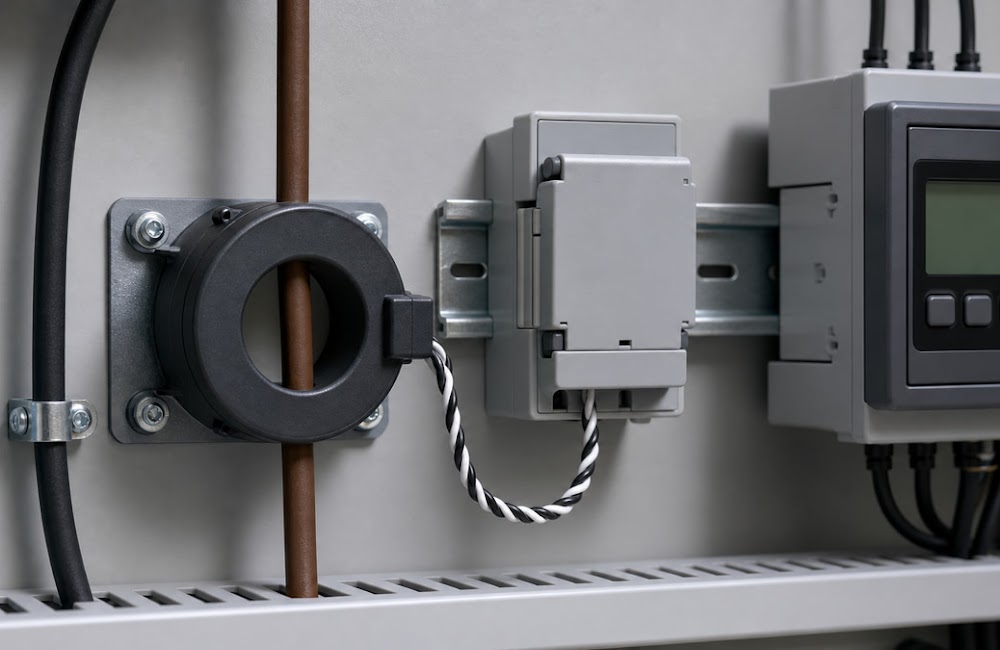
From the experience of SCMA's engineering team, we find that many people wonder what CT Ratio is. The answer is the current transformation ratio of a Current Transformer (CT), which serves to reduce high currents in the main system (Primary) to lower levels. This conversion helps ensure safety and compatibility with meters or protective devices (Secondary) without causing damage.
How CT Ratio Works
The principle of how CT Ratio works starts with the main current flowing through the device to create a magnetic field around the iron core. This magnetic field induces the secondary winding to convert high currents into low secondary currents, typically at normal CT ratio values of 5A or 1A. This process allows Protection Relays to accurately read these current levels.
How Many Types of CT Ratio Are There?
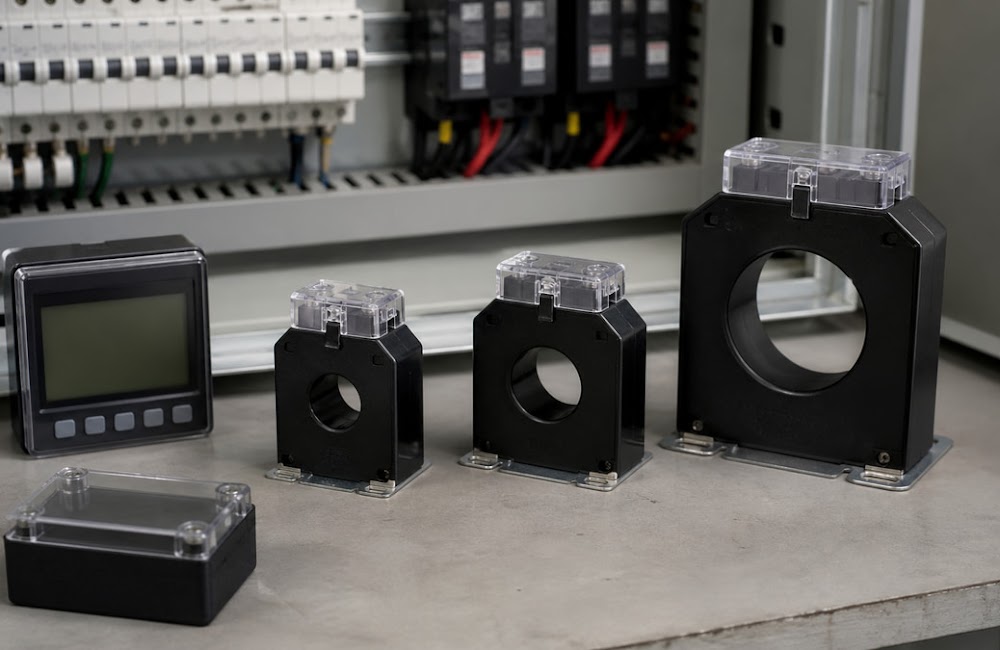
Selecting the right equipment to fit the job is crucial. CT Ratio can be divided into two main types based on their structural characteristics as follows:
Solid Core Type
The solid core type has a continuous circular shape that cannot be separated, requiring installation by threading the main power cable through the center hole. This design offers high accuracy and is suitable for new electrical system installations from the outset.
Split Core Type
The split core type is designed to allow opening and closing of the lock to encircle the wire without removing it, greatly reducing production downtime. It is ideal for ongoing operational sites where systems are already in use.
Maintenance of CT Ratio
Proper maintenance extends service life and maintains the accuracy of CT Ratio, ensuring safe operation. The team recommends the following inspection steps:
Predictive Maintenance Inspection
Operators should clean dust on the external housing with a dry cloth to prevent flashover, inspect for physical cracks, and tighten terminal wire connections securely to prevent heat buildup.
Ratio and Polarity Test
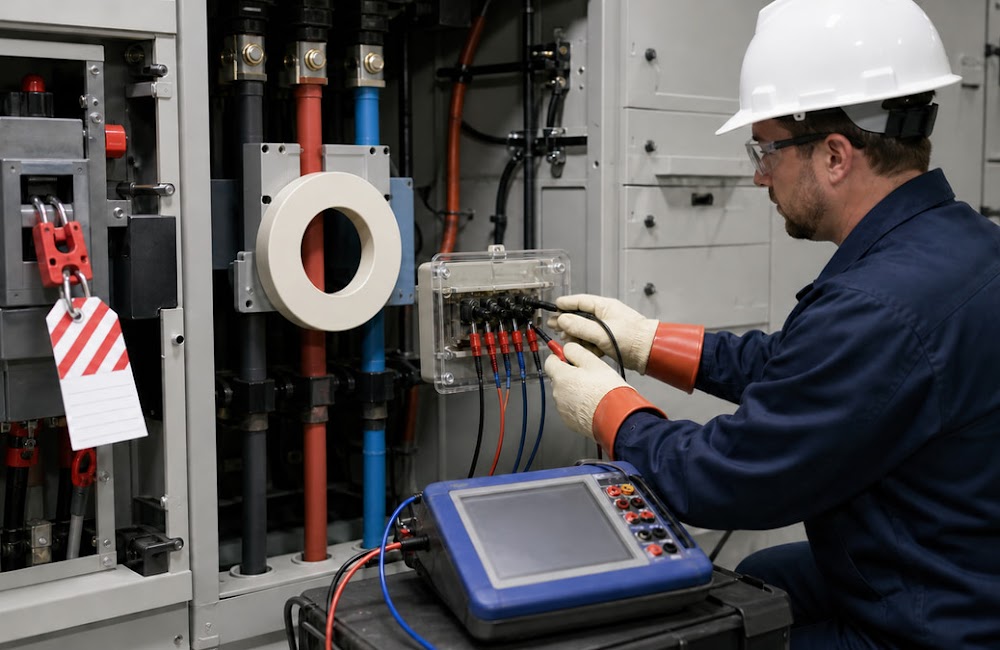
Operators must perform Ratio Error Tests to confirm that current conversion matches specified values. Checking P1, P2, S1, and S2 polarity must always be correct to prevent relay protection system errors.
Electrical Testing
Using a Megger to measure insulation resistance helps prevent electrical leakage into the structure. The most critical rule is never to leave the secondary circuit open (Open-Circuit) while current flows through the main line, as it can cause dangerous high voltage.
Usage of CT Ratio
The application of CT Ratio in industrial plants aims at safety and measurement efficiency, with the following details on its usage.
To Convert Electrical Current to a Safe Level
The primary function is to reduce high voltage current to a lower level before feeding it into electrical measuring devices. This process helps isolate operators from direct exposure to high-voltage danger.
To Increase Accuracy in Displaying Results
The meter system uses the CT Ratio as a multiplier (Multiplier) for processing. Correct settings ensure that displayed energy values match actual conditions within the system.
System Protection (Protection)
The equipment sends appropriate current signals to protective relays. In case of surge currents, the relay immediately commands circuit interruption to prevent damage to machinery.
Advantages of CT Ratio
The advantages of using CT Ratio include enhancing the highest level of safety by separating measuring instruments from direct high-voltage exposure. The equipment offers high flexibility as it allows standard 5A meters to accurately measure extremely high main currents. Working with protection systems significantly safeguards electrical systems from damage.
How to Choose a CT Ratio
Selecting equipment that provides good value requires considering the maximum load current rating, always with some allowance. The engineering team recommends initial considerations as follows:
- Calculate the Current Rating: Select a CT size that has a rating higher than the estimated maximum load current by 1.2 to 1.5 times.
- Consider Motor Power: If you know the motor power (kW), calculate the current using the formula kW x 1.7.
- Select Type of Construction: Decide between solid core for new installations or split core for limited space applications.
- Check Accuracy Class: Choose Class 0.5 for general energy measurement, or select Class 5P for protection system work.
- Evaluate Burden (VA): Select a power rating sufficient for the total length of wiring and number of devices connected in series.
- You can learn more details from the article What is Current Transformer.
Common CT Ratio Values Used in Industry
The engineering team found that users often have questions about standard CT ratio specifications available on the market, which are divided according to the size of main circuit breakers as follows:
- Small to Medium Current Ratings Group: Sizes 50/5A, 100/5A, and 200/5A are suitable for sub-circuit control panels.
- Larger Current Ratings Group: Sizes 400/5A, 800/5A up to 4000/5A are suitable for main switchboard (MDB).
- Secondary Current: The international standard is set at 5A or 1A to maintain safety standards. Technical information can be referenced at Current Transformer Basics.
Summary
Understanding what CT Ratio is and correctly applying standard CT Ratios is crucial for ensuring the safety of electrical systems in factories. Choosing standardized equipment helps prevent damage from short circuits effectively. Company SCMA is ready to be your partner, providing professional consultation and delivering solutions for your business.
If you want to purchase CT Ratio products, SCMA is available today!
Investing in standardized electrical equipment guarantees factory safety. If you are looking for high-precision equipment, you can browse the Current Transformers category and explore all products from leading global brands at All Products. We have a team of expert engineers ready to assist with our services, from solution design to after-sales service.
Frequently Asked Questions
What is CT Ratio?
An equipment that transforms high current ratios into lower ones so that meters or protective devices can read them safely.
What is the standard secondary CT Ratio value?
The international standard for the output (secondary) side is set at 5A or 1A to limit the current to a maximum safe level.
What happens if you forget to set the ratio in the power meter?
The meter will display the secondary current directly, resulting in energy readings that are several times lower than actual values.
Why should you not leave the secondary circuit open?
Opening the circuit while primary side current is flowing creates massive induced voltage, which poses a severe danger to workers' lives.
Should you choose Class 0.5 or Class 5P?
Class 0.5 is suitable for general energy measurement tasks, whereas Class 5P is designed specifically for accuracy in protection systems.




