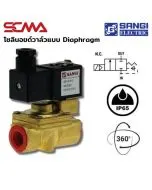

Solenoids areelectromagnetic devices that convert electrical energy into mechanical energy, causing linear movement or rotation using the principles of electromagnetic force. They play a crucial role in modern industrial automation and control systems. This article will introduce you to Solenoid Valves, their main functions, how many types there are, and their important applications in industry.
What is a Solenoid?

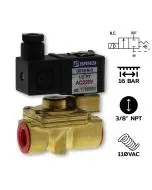
Solenoid Valve is an electromechanical device used to control the flow of liquids or gases through a piping system. It works by using a solenoid coil, also known as a solenoid, which when electric current flows through it creates a magnetic field that attracts and moves a metal plunger, opening or closing the valve mechanism. This allows for precise and quick control over fluid flow, easily controlled via electrical or automatic systems.
How Solenoid Valves Work

The basic principle of operation for a Solenoid Valve relies on electromagnetic principles. The valve works in conjunction with an electrical system to open and close the fluid flow path. When electric current flows through the solenoid coil wrapped around a metal core, it generates a strong magnetic field that lifts or moves the plunger, allowing liquids or gases to pass through. Once the current is cut off, the magnetic field disappears, causing a spring to push the plunger back and close the flow path, thus enabling efficient and quick control over fluid flow.
How many types of solenoid valves are there?
Solenoid Valve can be categorized into different types based on various criteria. The following is a general method for classifying thesolenoid valve
By Valve Function (Function)
They can be classified based on function or initial state, which is divided into two types:
- Normally Closed (NC): These valves are in the closed position when there is no electrical current supplied to the solenoid. They open up when the current is activated, allowing fluid flow.
- Normally Open (NO): These valves are in the open position when there is no electrical current supplied to the solenoid. They close when the current is activated, stopping fluid flow.
By Number of Ports (Port)
Solenoid Valve can be classified based on the number of ports available for controlling fluid flow. The most common types are:
- Two-way: These valves have two ports, typically an inlet and an outlet, allowing for the control of opening/closing fluid flow.
- Three-way: These valves have three ports, typically one inlet and two outlets (or vice versa), allowing for fluid diversion or mixing.
- Four-way: These valves have four ports, usually with two inlets and two outlets. They are often used where the direction of fluid flow needs to be switched between two separate circuits.
By Voltage (Volt)
Electric solenoid valves can be categorized based on the electrical voltage required for operation. Voltage requirement is a crucial factor to consider when selecting a solenoid valve for specific applications. Common voltage options for solenoid valves include:
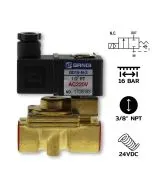
- Low voltage: Solenoid valves that operate at low voltages, typically ranging from 3V to 24V. These valves are often used in applications requiring low power or battery-operated systems.
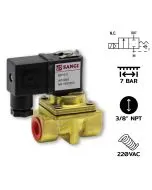
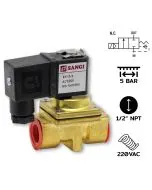
- Standard voltage: Solenoid valves designed to operate at standard voltages commonly found in industrial and commercial settings, such as 24V, 110V or 220V. These valves are widely used and suitable for a variety of applications.
- High voltage: Solenoid valves that require higher voltages, generally above 220V. These valves are typically used in specific industrial applications requiring high power or when systems operate at high voltages.
The voltage requirement of solenoid valves depends on various factors including design, coil specifications, and intended use. It is essential to ensure that the supplied voltage matches the specified voltage to guarantee proper operation and prevent damage.
Key Benefits of Solenoids

Solenoid valves are highly beneficial in various industries due to their effectiveness with liquids and gases. They are suitable for controlling on/off, flow distribution, or mixing in different systems such as heating systems, irrigation systems, household appliances like washing machines and dishwashers, air conditioning systems, or even specialized applications in the pharmaceutical industry, dentistry, and industrial cleaning. Their fast and accurate response makes these devices a crucial part of modern automation systems.
Interested in Solenoid Valves? Contact SCMA for Purchase Today!
SCMA is a trusted supplierof high-quality solenoid valves that have been relied upon by the industry for years. We offer a wide range of solenoid valve models from leading global brands, including 2-Way, 3-Way, 4-Way, and 5-Way options, with various voltage choices to meet all your needs.
Our services don't stop at just selling products. We also have a team of engineers ready to provide consultation, help select the right solenoid valve for your system, and offer fast and efficient after-sales service.
Contact SCMA today to receive special offers and superior services!
Summary
Solenoids are electromechanical devices that play a crucial role in automatic and control systems in industrial applications. With their simple yet highly efficient operating principle, solenoids are widely applied across various industries such as automotive, food and beverage, petrochemicals, or even in irrigation and water management systems.
Solenoid valves come in different types to suit specific applications, including Normally Closed, Normally Open, 2-Way, 3-Way, or 4-Way configurations. Each type has its own advantages and distinct usage scenarios.
SCMA is ready to provide comprehensive solenoid valve services, from consulting on selecting the right products to installation and after-sales service. With our team's expertise and experience, we are committed to being a reliable business partner. Contact us today to enhance your industrial system efficiency!
Frequently Asked Questions
What is the function of a solenoid?
What does a solenoid valve do? It converts electrical energy into mechanical energy by creating an electromagnetic field to move a metal plunger. In the case of a solenoid valve, it primarily controls the flow of liquids or gases by opening or closing the passage according to received electrical signals, which allows for automatic and precise system control.
How does a solenoid valve work?
A solenoid valve operates based on electromagnetic principles. When an electric current flows through the coil, it generates a magnetic field that pulls the plunger to move, which opens or closes the valve depending on its design. Once the current is cut off, a spring pushes the plunger back to its original position, returning the valve to its initial state. This process can occur quickly and accurately, making it suitable for automatic control.
What causes solenoids to fail?
Solenoids may be damaged due to several reasons such as:
- Overworking or using it with unsuitable voltage.
- Wear and tear of internal parts such as the plunger or spring.
- Clogging from dirt or sediment in the fluid passing through the valve.
- Corrosion from chemicals or moisture.
- High temperatures causing coil damage.
- Incorrect installation or severe impact.
To prevent solenoid damage, choose the appropriate solenoid for your application, maintain it regularly, and install it according to the manufacturer's instructions.
What is the function of a gear solenoid?
A gear solenoid (Solenoid Gear) is a system that uses solenoids to control the operation of gears in vehicles or machinery. Its primary role is to automatically or semi-automatically control gear shifting by receiving electrical signals, which causes the solenoid to act and pull or push the gear mechanism into the desired position.
In modern cars, gear solenoids are often used in automatic transmissions or DCT (Dual Clutch Transmission) systems to ensure quick and precise gear changes, enhancing driving efficiency and fuel economy.