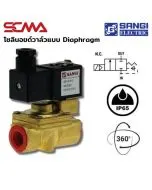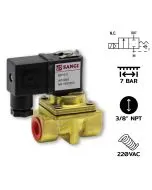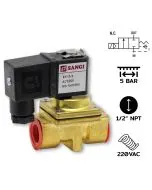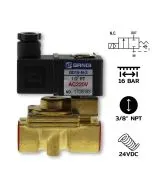

Solenoid coils are crucial components in automatic systems and the control of liquids or gases in industrial applications. They enable solenoid valves to function efficiently. In this article, we will explore the working principles of solenoid valves, their types, and the benefits of solenoid coils and solenoid valves in industrial work.
What is a Solenoid Coil?

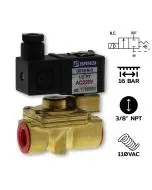
A solenoid is an electrical coil wound around ferromagnetic material such as iron, functioning as an electromagnet when electric current flows through it. A solenoid valve consists of two main parts: the solenoid coil and the valve body. When electricity passes through the coil, a magnetic field pulls the plunger to move, causing the valve to open or close according to design specifications. The valve may be normally open (NO) or normally closed (NC), reverting to its initial state when there is no current flow. A shading ring in the structure helps reduce vibration in AC solenoid coils.
What does a solenoid coil do?

Solenoid Valve is what? Solenoid valve coil does what? An electromagnetic device that consists of a coil wound around a cylindrical or plunger-shaped magnetic core made from materials such as iron or steel. When an electric current flows through the coil, it generates a magnetic field that can attract or repel the central core to move. The strength of the magnetic field and the force acting on the central core varies with the amount of electric current flowing through the coil, allowing the solenoid to control movement accurately and be applied in various automatic control devices.
What are the benefits of using a solenoid valve?
Solenoid valves have numerous benefits and work well with both liquids and gases, making them suitable for efficient on-off control, distribution, or mixing in various systems. This equipment is applied in many systems such as heating systems, irrigation systems, dishwashers, washing machines, cooling systems, and air conditioning units. Additionally, it is commonly used in specialized applications like the pharmaceutical industry, dentistry, industrial cleaning, and water tank control systems.
Key External Components of a Solenoid Valve

Air solenoids have several important external components, each with a specific function that enables the valve to operate efficiently and connect appropriately with other systems. These components are crucial for installation, operation, and maintenance of the solenoid valve.
The key components of a solenoid valve include:
- Air fitting port (Port) This is a threaded hole designed to accommodate air fittings.
- Mounting holes These are holes designed for mounting the solenoid valve onto machinery structures.
- Valve portion This is the part of the valve where air flows through.
- Product label (Label) Used to check product specifications with the supplier.
- Solenoid portion This part receives commands from the control unit and induces an electric current in the magnetic coil circuit to change the direction of compressed air flow.
- Status LED Used to indicate the operational status of the solenoid valve. The light will turn on when electrical current flows through the solenoid.
Popular Solenoid Valve Types in Industry
Solenoid valves come in various types, categorized by their characteristics and specific applications. Understanding the differences between these types can help efficiently select the appropriate valve for a given task.
Based on Initial State
The initial state of the valve is crucial to system safety and operation:
- Normally Open (NO) Solenoid Valve: The valve opens when there is no electrical current, and closes when there is an electrical current.
- Normally Closed (NC) Solenoid Valve: The valve closes when there is no electrical current, and opens when there is an electrical current.
Based on Usage
Specialized usage requires specific features of the valves:
- Industrial Valves: High durability, designed for continuous operation, used in manufacturing processes, automotive industry, food industry, petrochemicals.
- Automatic System Valves: Fast response, easy to connect with control systems, used in irrigation systems, fire suppression, air conditioning.
- MEDICAL Valves: High precision, safe materials, used in medical equipment such as syringe pumps, dialysis machines.
Based on Operating Principle
The operation mode of a valve affects its performance and usability under different pressure conditions:
- Direct Acting Mode: The electric coil directly controls the opening and closing of the valve, suitable for low to medium-pressure systems with quick response.
- Indirect Acting Mode: The electric coil controls a small "pilot" valve which then controls the main valve, suitable for high-pressure systems and large valves.
By Number of Ways
Selecting solenoid valves based on the number of ways depends on the complexity of the system and the design of the operating circuit:
- 2-Way Solenoid Valve: Consists of an inlet and outlet, used to control simple flow such as opening or closing water or gas.
- 3-Way Solenoid Valve: Has three inlets and outlets, used to change the direction of flow or mix flows from two sources.
- 4-Way Solenoid Valve: Suitable for complex systems such as controlling a pneumatic cylinder with two directions.
By Material Used
The material of the valve must be suitable for the fluid being used and the environment:
- Metal Solenoid Valve: Durable in harsh environments, high temperatures or high pressure.
- Bronze Solenoid Valve: Economical and suitable for general work especially water solenoid valve systems.
- Plastic Solenoid Valve: Lightweight, easy to install, economical, suitable for jobs that do not require high durability.
Interested in Solenoid Valves? Buy from SCMA Today!
SCMA is a high-quality solenoid valve supplier recognized in the industrial sector. We offer products that cover all types of applications, whether it's general use, special material requirements, or specific feature needs.
At SCMA, we have an expert team ready to advise you on selecting the right solenoid valve for your needs. Additionally, we provide comprehensive after-sales services including installation, maintenance, and repair to ensure that your system operates at peak efficiency.
Contact us today to receive recommendations and quotes tailored to your requirements!
Summary
The solenoid coil is a crucial component that enables the solenoid valve to function by converting electrical energy into mechanical force through the creation of an electromagnetic field. The solenoid valve controls the opening and closing of valves and regulates the flow of liquids or gases in systems.
Solenoid valves come in various types based on their application, operating principle, number of ports, and materials used. Choosing the right solenoid valve for your work can enhance system performance and extend its lifespan.
SCMA is a supplier of high-quality and internationally recognized solenoid valves, offering comprehensive consultation and after-sales services. Contact us today for more information and quotes tailored to your business needs!
Frequently Asked Questions
What is the function of a solenoid coil?
A solenoid coil functions to create an electromagnetic field when electric current flows through it, generating magnetic force that can attract or repel the iron core inside. This converts electrical energy into mechanical energy. In a Solenoid Valve, the coil controls the movement of the mechanism that opens and closes the valve, allowing for the control of fluid or gas flow.
What is the function of a solenoid?
A solenoid valve functions as an electromagnetic device consisting of a coil wound around an iron core, converting electrical energy into linear movement of the core. In a solenoid valve, this movement controls the opening and closing of fluid or gas flow. Additionally, solenoids are used in other devices such as relays, electric door locks, and various automatic control equipment.
How many types of Solenoid Valves are there?
There are several types of solenoid valves that can be categorized as follows:
- By initial state: Normally Closed (NC) and Normally Open (NO)
- By operating principle: Direct Acting, Pilot Operated, and Semi-Direct Acting
- By number of ports: 2-Way, 3-Way, 4-Way, 5-Way
- By material used: Brass, Stainless Steel, Plastic, PTFE Lined
- By application: General Purpose, Chemical Resistant, High Temperature, Explosion Proof
The choice of solenoid valve type depends on the usage characteristics, fluid or gas type, pressure, and working environment.
What types of power sources do solenoid valves use?
Solenoid valves can be used with various power sources depending on the design and application. Generally, these include:
- Alternating Current (AC): Typically 24V, 110V, or 220V, used in general industrial applications providing strong and stable magnetic force.
- Direct Current (DC): Typically 12V or 24V, used in systems requiring high safety or portable devices.
- Low Power Versions: Designed for energy savings suitable for battery-powered or solar-powered systems.
Choosing the appropriate power source helps ensure efficient operation and extended lifespan of solenoid valves.