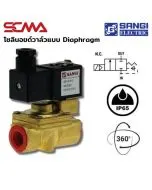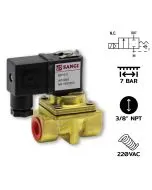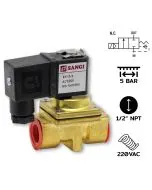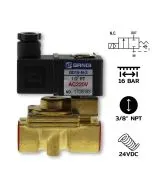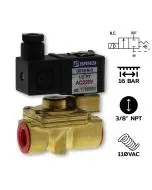

"Water Solenoid Valve" is one of the important flow control devices in industrial plants. Water solenoid valves are used to control the flow of water or liquids by utilizing the principle of an electric coil and electrical energy, causing automatic valve opening and closing, thus enabling precise and rapid control over water flow. SCMA therefore offers high-quality water solenoid valves to meet customer needs in the industry.
What is a Water Solenoid Valve?

A water solenoid valve (Water Solenoid Valve) is a flow control device for water or liquids that uses the principle of an electromagnetic field to open and close valves. A solenoid valve consists of an electric coil wound around an iron core; when electrical current flows through the coil, it generates an electromagnetic field that pulls on the plunger or iron core, causing the valve to open or close the flow path of water without requiring human labor.
How Does a Water Solenoid Valve Work?
A water solenoid valve operates based on the principle of an electromagnetic field. When electrical current is supplied to the coil, it generates an electromagnetic field around the iron core in the center of the coil. This magnetic field pulls the plunger or core into motion; whether the plunger opens or closes the flow path depends on the state of electricity applied. If there's no power, the spring will pull the plunger back, returning the valve to its normal position (open or closed depending on the type of valve). This mechanism allows water solenoid valves to automatically control the opening and closing of water flow simply by controlling the electrical current.
How a Water Solenoid Valve Works

The operation of a water solenoid valve relies on the interaction between an electromagnet coil and direct or alternating current. When electricity is supplied to the coil, a magnetic field forms around the central iron core. This magnetic field attracts the plunger or iron rod to move up or down, thereby opening or closing the water passage depending on the design. The magnetic force must be strong enough to overcome spring pressure and water pressure to ensure complete opening or closing. When power is cut off, the plunger returns to its original position due to spring pressure or water pressure, resetting the valve.
What are the Benefits of a Water Solenoid Valve?
Water solenoid valves offer several benefits and advantages:
- Automatically control water flow accurately without manual labor
- Quickly open and close valves in response to control signals
- Resistant to high pressure, temperature, and industrial environments
- Easy to install, compact in size, and easy to maintain
- A variety of types available for different needs
- Can be applied to various industrial control systems and machinery
With these advantages, water solenoid valves are popular in factories and automatic systems. They help reduce costs, increase efficiency, and ensure safety in production processes.
Special Features of Water Solenoid Valves

Water solenoid valves have special features that provide advantages in industrial use, as follows:
- They can operate on both AC and DC power and support multiple voltage levels.
- Available in both Normally Closed (NC) and Normally Open (NO) configurations to suit different applications.
- Durable against high fluid pressure up to 20-30 bar, with a wide temperature range from -10 to 100 degrees Celsius.
- Made of durable materials resistant to corrosion such as brass, stainless steel, and engineering plastics.
- Low noise, low power consumption, and do not overheat, making them suitable for frequent valve operations.
- Supplied with various accessories such as connectors, control kits to suit specific needs.
Water solenoid valves are therefore a good choice for systems requiring durability, safety, high efficiency, and versatility in application.
What factors should be considered when selecting a water solenoid valve?
When choosing a water solenoid valve, several factors must be taken into account to ensure suitability for the job characteristics and environment, including:
- Water flow rate - Select a size that matches the flow rate to avoid an unnecessarily large valve.
- Maximum water pressure and pressure drop - The valve must withstand maximum pressure and have an appropriate pressure drop.
- Water temperature - Choose materials for the valve and seals that can handle the operating temperature range.
- Type and material of pipe - Must be compatible with the size and type of fittings, pipes, as well as media such as water, steam, or liquid.
- Chemical properties of water - If there are contaminants, choose materials that resist corrosion.
- Power source - Consider the voltage used and the maximum current drawn by the valve.
- Installation position - Choose an installation type that suits the job characteristics, such as horizontal, vertical, or side-mounted.
Considering these factors will help us select a suitable solenoid valve for maximum efficiency in terms of safety, durability, and cost-effectiveness.
Interested in Water Solenoid Valves? Buy from SCMA Today!
If you are looking for "Water Solenoid Valves" for your industrial work, SCMA Company Limited is here to provide high-quality solenoid valves at competitive prices. We offer a variety of models including 2-way and 3-way types, normally closed or normally open configurations, as well as other accessories. Our team of experienced engineers is ready to consult on selection, design, and installation according to your needs to ensure that your system operates efficiently and reliably. For more information, contact SCMA today and be assured ofprofessional product quality and service levels from us.
Summary
Water Solenoid Valves are crucial components for controlling water flow in modern industrial applications that require precision, speed, and automation. These valves operate on the principle of electromagnetic fields to open or close according to control signals, featuring outstanding durability, quick response times, and a variety of application types. SCMA specializes in providing water solenoid valve services tailored to customer needs, offering consultation from selection through design and installation processes to ensure maximum system efficiency and investment value.
Frequently Asked Questions
What is a solenoid water valve?
A solenoid water valve uses the principle of electromagnetic fields to open and close, controlling the flow of water or liquid in the pipeline system.
How many amps does a 24V solenoid valve draw?
A typical 24V solenoid valve draws about 0.5 - 1 amp, depending on the model and size. It's best to check the specifications for accuracy.
How does a solenoid valve control opening and closing?
The operation ofsolenoid valves works by when current is applied to the coil, an electromagnetic field pulls the plunger to open or close the water passage. When power is cut off, a spring returns the plunger, bringing the valve back to its normal state.
How does a solenoid valve work?
Solenoid valves operate by using electrical energy through a coil to create an electromagnetic field, which controls the movement of the plunger or piston to open or close the flow path according to control signals sent in.