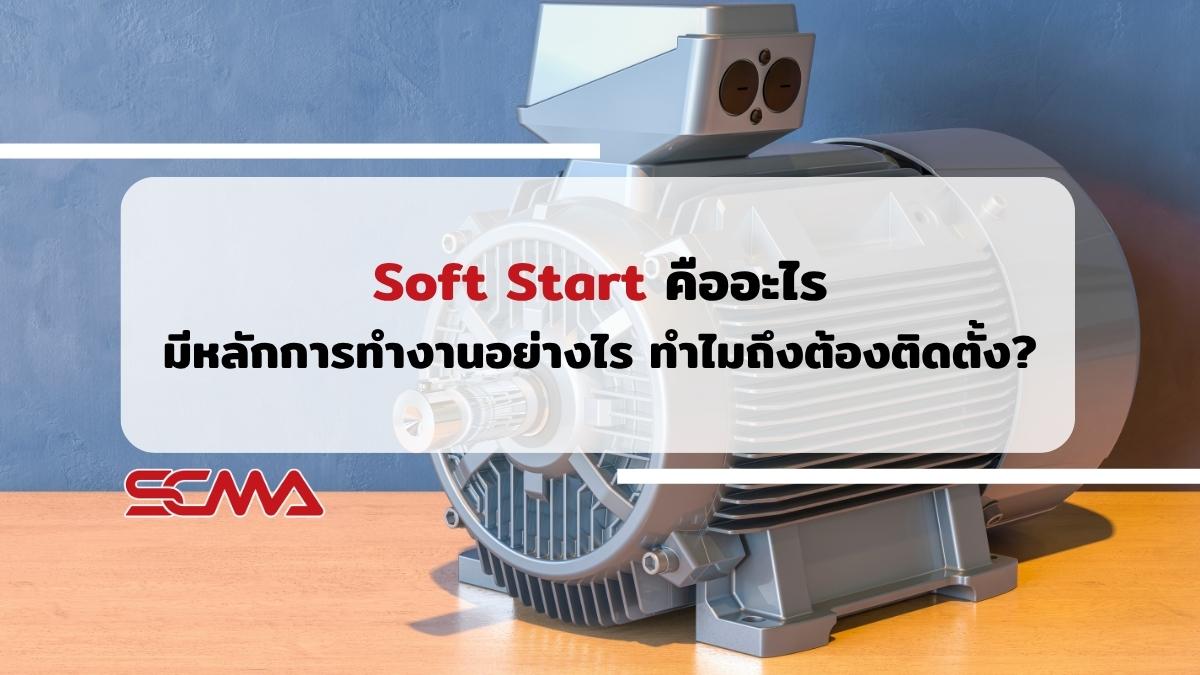
Soft Start is a highly popular device in electric motor control systems as it helps reduce the electrical surge during startup, which benefits both the motor and mechanical load.SCMA offers procurement and consultation services for Soft Start devices suitable for all types of industrial applications. With expertise and direct experience, this content will explain the working principle, benefits, advantages, and considerations when choosing a Soft Start device, as well as compare it with Inverter Soft Starter to provide a comprehensive understanding before making your decision.
What is a Soft Start?

A Soft Start is a type of motor control device that reduces the electrical surge during startup by gradually increasing voltage. Unlike Direct-On-Line starting, which supplies full power immediately, Soft Start helps reduce equipment wear and extends motor lifespan while minimizing impact on plant electrical systems. It can precisely control critical parameters such as Initial Voltage, Ramp Time, and Current Limit, making it ideal for high-starting load applications or where smooth startup is required.
How Does a Soft Start Work?
The working principle of a Soft Start involves controlling the input voltage to the motor through electronic devices such as SCRs (Silicon Controlled Rectifiers), which gradually allow current flow over time, resulting in a smooth increase in voltage during Ramp-up. Initial Voltage and Ramp Time can be set according to requirements. Once the preset value is reached, the Soft Start commands the Bypass Relay circuit to connect for full power supply. This system reduces torque surge, limits Inrush Current, and stabilizes load control during startup, providing an ideal solution for protecting motors and machinery with high starting loads.
What are the benefits of installing a Soft Starter on a Motor?

Installing a Soft Starter helps the electrical system and internal mechanisms of machinery operate smoothly, reducing mechanical stress and preserving related equipment, which affects the overall lifespan and performance of the motor system, especially in production lines or systems with frequent start-stop cycles.
The main benefits of installing a Soft Starter include:
- Reducing the inrush current during motor startup by more than 50%
- Decreasing initial torque, preventing damage to gear sets, shafts, or belts
- Maintaining electrical system stability and reducing voltage drop issues (Voltage Dip)
- Preventing malfunction of other electrical control devices in the system
- Enhancing long-term safety and reliability of the electrical system and machinery
Benefits of Soft Start
A Soft Starter improves the overall performance of motors and load systems by effectively controlling motor behavior during startup, reducing wear on components, and extending equipment lifespan. By maintaining smooth voltage control, motors can start safely under all load conditions. Additionally, it is ideal for use with high inertial loads such as fans, water pumps, and conveyor belts, which require torque control at startup. Using a Soft Starter also reduces maintenance frequency and repair costs.
Benefits of Soft Start

In addition to providing a smooth initial voltage control, Soft Start offers significant advantages in terms of safety and long-term cost-effectiveness, especially in systems with electrical limitations or those requiring reduced impact on other equipment within the system. It also provides flexibility in use and easy installation in limited spaces.
The benefits of Soft Start include:
- Accurate control of initial voltage and current
- Prevents voltage drop in the system during motor startup
- Reduces maintenance burden on equipment and machinery
- Can adjust various parameters to suit different load types
- Operates both independently and within an automatic control system with Soft Start circuits
The Difference Between Inverter VS. Soft Start
Both Inverter and Soft Start are devices used to control motors, but they have distinct purposes and operating principles. An Inverter can continuously control the speed of a motor, while a Soft Start focuses solely on controlling the startup process. When choosing which one to use, it should be based on the characteristics of the load and the system's objectives.
Inverter
Inverter or Variable Frequency Drive (VFD) is a device that can precisely control the speed and torque of a motor throughout its operation by adjusting the frequency and voltage to match the load requirements. It is ideal for applications requiring variable speeds, such as conveyor systems, fans, or water pumps. Using an Inverter helps save energy but comes with higher installation and maintenance costs compared to Soft Start.
Soft Start
A Soft Start is designed to control the startup phase of a motor by gradually increasing voltage, reducing mechanical stress and inrush current during startup. It is suitable for loads that do not require speed changes during operation, such as water pumps, compressors, or systems with frequent start-stop cycles. Soft Start has a simple structure, easy installation, low cost, and helps reduce equipment wear without significantly complicating the control system.
How to Choose a Soft Start?
When choosing a Soft Start, it is important to consider several factors to ensure suitability for the motor and load characteristics. Especially in industries that require system stability and safety, selecting equipment with features that meet your needs can enhance efficiency and extend the lifespan of both motors and machinery. SCMA recommends thoroughly reviewing details before making a purchase.
Factors to consider include:
- Motor power (kW or HP) and operating voltage
- Type of load, such as inertial loads or constant torque loads
- Soft Start circuit features that allow detailed setting of Ramp Time and Initial Voltage
- Compatibility with automatic control systems or PLCs
- Overload and fault protection capabilities
- Brand reliability and product warranty
If you are interested in Soft Start, SCMA is now available for purchase!
If you are looking for a reliable Soft Start with professional consultation from industrial electrical system experts, SCMA offers high-quality Soft Start equipment of various models to meet the needs of all types of factories and industries. Our team of engineers is ready to provide technical advice on selecting, installing, and using equipment correctly.
Whether you need a Soft Start for small or large motors, automatic control systems, or complex Soft Start circuits, SCMA can meet all your needs. With long-standing service standards and industry experience, you can be confident in the quality and comprehensive after-sales service.
Summary
Soft Start is a crucial solution for safely and efficiently controlling motor startup. It has the ability to reduce mechanical stress, minimize inrush current, and help prolong the lifespan of various equipment within the system. Additionally, it helps mitigate electrical issues that may arise with other systems in the factory or building.
SCMA provides procurement and consulting services for Soft Start solutions across all levels of use, along with comprehensive training and installation services. This ensures that motor control in your system will be stable, safe, and sustainable. If you are looking for equipment to enhance the value and efficiency of your motor systems, Soft Start is an option not to be overlooked.
Frequently Asked Questions
What is a Soft Start?
A soft start (Soft Start) is a device that helps control the startup of electric motors gradually by reducing the initial current and torque, thereby minimizing load and electrical system strain. It is ideal for systems requiring smooth startup such as water pumps, fans, or conveyor belts.
How many types of Motor Start Methods are there?
There are various motor starting methods depending on the application and system requirements.
Common methods include:
- Direct-On-Line (DOL): Starts with full voltage, causing high inrush current.
- Star-Delta: Reduces initial voltage by switching from star to delta configuration.
- Soft Start: Gradually increases voltage to reduce inrush current and torque.
- Inverter Soft Starter (VFD): Controls frequency and voltage for continuous speed adjustment.
What is the difference between VFD and Soft Start?
Both VFD and Soft Start are used to control motors, but they differ in terms of functionality and application purposes.
Key differences:
- VFD (Inverter Soft Starter): Provides continuous speed control, versatile use but higher cost.
- Soft Start: Focuses on startup control, reduces initial current and torque, easy to install, affordable.
What are the benefits of Soft Start?
A soft start enhances system safety and efficiency, particularly by reducing inrush current and torque during startup.
Benefits of Soft Start:
- Reduces inrush current and torque.
- Extends motor and mechanical equipment lifespan.
- Prevents voltage sag in the electrical system.
- Easy to install and use, suitable for stable systems.