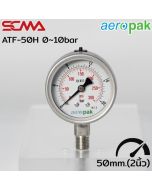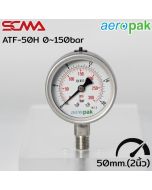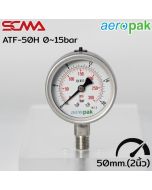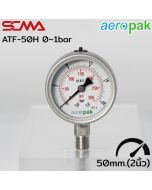

A pressure gauge is a crucial device for measuring the pressure of fluids in industrial processes that require accuracy and safety. This article will help you understand what a Pressure Gauge is, how many types there are, which type suits specific tasks, selection criteria, units of measurement, components, and proper maintenance. SCMA services will provide consultation, design, and recommendations for selecting and using pressure gauges according to modern factory standards.SCMA Services offers comprehensive advice on the selection, design, and use of Pressure Gauges in line with modern factory standards.
What is a Pressure Gauge?

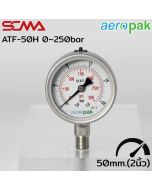
A pressure gauge is a measuring instrument that displays the pressure of gases and liquids to control quality, safety, and efficiency in production machinery. It is suitable for manufacturing processes, steam heating systems, hydraulic-pneumatic systems, and factory utilities. Pressure gauges are used in food and beverage, chemical, wastewater, petrochemical, and automotive industries. They are fundamental components of measurement and control systems (Gauges) that operators can read quickly and accurately.
How a Pressure Gauge Works
Generally, pressure gauges use fluid mechanics principles combined with signal conversion mechanisms such as Bourdon tubes, diaphragms, capsules to transfer pressure into bending or pressing plates and tubes, then converting it into needle movement or digital signals. Power transmission gears and pinions stabilize the readings, reducing the impact of vibrations and temperature changes. This principle makes Pressure Gauges reliable tools for both offline and online control tasks.
What are the types of pressure gauges?
Types of Pressure Gauge range from analog needle-read models to digital ones that support signal connections and automatic data logging. The choice depends on accuracy requirements, environmental conditions, temperature, vibration, corrosion resistance, etc. Selecting the correct pressure gauge helps reduce downtime and extends equipment life.
1. Analog Pressure Gauge
Analog pressure gauges are suitable for general use, providing immediate readings without requiring power supply, and are durable in various environments. They are ideal for production lines that require quick trend monitoring and user familiarity. Pressure gauges are the most common devices found in factories.
- Mechanism: Bourdon tube, diaphragm or capsule, chosen based on fluid type and measurement range
- Materials and Case: Stainless steel, brass, iron with dust and water protection levels (IP) to extend lifespan. Oil-filled pressure gauges reduce needle vibration.
- Accuracy: From Class 1.6, 1.0 to 0.5, selected based on measurement point importance and quality requirements. Pressure gauges need calibration for accuracy.
- Applications: Steam, oil, air, mild chemicals, hydraulic-pneumatic systems, and high-pressure gauges for high-pressure work.
- Maintenance: Check for leaks, connection points, dial scratches, and recalibrate at regular intervals to ensure accuracy.
2. Digital Pressure Gauge
Digital pressure gauges (Digital Pressure Gauge) (Digital Pressure Gauge) measure fluid and gas pressures such as water, air, oil, and hydraulic oil by converting pressure into electrical signals and displaying the results on an LED or LCD screen. They require battery or external power to operate continuously. Digital gauges offer higher precision than analog ones, reducing reading errors due to no angle dependency.

Units Used for Reading Pressure Gauges
Common units used for reading pressure gauges include bar, kg/cm², MPa, psi, and mmHg; it is important to maintain consistency in the system's unit usage to avoid confusion. Choosing between "type of value" Gauge (g) or Absolute (abs) affects control and reporting according to standards.
Main Units and Conversions:
- bar ≈ 14.5 psi, easy to understand for automotive/hydraulic work
- kg/cm² ≈ 0.980665 bar, found in Thai engineering documents
- MPa used for advanced engineering and international documentation
Type of Value Displayed:
- Gauge Pressure (g) measures relative to atmosphere—suitable for general operation
- Absolute Pressure (abs) suitable for vacuum work/processes requiring absolute zero reference points
Important Recommendations: Choose a scale range higher than the operating value by ~1.5–2 times, use consistent units throughout the system, prepare unit conversion tables for operational teams
What are the basic components of a pressure gauge?
Each component directly affects the accuracy and lifespan of pressure gauges.
Choosing appropriate materials, structure, and installation position can help reduce vibration, condensation, and corrosion.
The following points should be clearly understood before purchasing or replacing:
- Faceplate: Clear scale markings, complete units reduce misreading chances. Anti-reflective models help in bright conditions.
- Housing: Protects the mechanism. Choose materials compatible with chemicals, external temperatures, and IP ratings according to installation area.
- Pointer: Balanced weight, no vibration. For high-vibration work, oil-filled models are recommended for damping.
- Connector Size: 1/4″ or 1/2″ BSP/NPT threads meet pipe standards, reducing leaks and modifications.
- Connector Position: Bottom (lower) or Back (rear). Choose according to viewing direction and installation space.
- Measurement Range: Set based on operating pressure and surge. Select a scale that reads mid-range for accuracy.
- Units of Measurement: bar, kg/cm², psi, MPa to match control systems and quality documentation.
- Lubricant: Glycerin/silicone in the housing reduces vibration, prevents moisture. Suitable for high-vibration or fluctuating temperature work.
Why Should Oil (glycerin/silicone) Be Added to the Gauge?
Adding oil in the housing helps reduce vibration, mitigate pulse effects of flow, making the needle steady and readings clear. It extends gear life, prevents condensation inside, and protects against rust and fogging, especially for outdoor or high-vibration environments. Choose an oil type suitable for operating temperatures to ensure long-term stable performance of the Pressure Gauge.
Selecting a Pressure Gauge That Fits Your Needs
Selecting a pressure gauge that fits your needs can significantly reduce total cost of ownership (TCO) and extend system life. The guidelines used by the field engineering team for specifying pressure gauges are as follows:
- Type of Fluid: Clean, with particles, choose wetted materials that suit your needs to reduce wear and clogging.
- Operating Pressure Range: Choose a scale higher than the working value to accommodate surge signals and extend spring life.
- Temperature-Vibration: Use an oil-filled, damper model; consider IP ratings and protection from pump or valve vibration.
- Accuracy Class (Accuracy Class): Specify according to process KPIs, ISO/GMP requirements; critical measurement points select lower classes for higher accuracy.
- Interface and Connectivity: Analog Pressure Gauge and Digital Pressure Gauge with 4–20 mA/IO-Link signals for data collection.
- Standards/Certification: Specify certification, calibration cycle, record results for traceability and external assessment.
If you are looking for "high-quality pressure gauges," think of SCMA!
If you are looking for "high-quality pressure gauges", think of SCMA which provides full-service including specification selection, design and installation, on-site testing, calibration, and after-sales service. We offer both standard models and custom-built ones, as well as digital versions that can be system-connected. If you are unsure about the types of Pressure Gauges suitable for your needs, our team is ready to provide in-depth consultation based on real site data. You can be assured that you will get pressure gauges that meet specifications and offer great value.

Summary
A pressure gauge or a pressure meter is an essential tool for measuring the pressure of fluids in industrial processes that require accuracy and safety. Following the checklist above to select specifications will help reduce reading errors and extend service life. With on-site teams selecting "specification and budget-friendly" options, SCMA's after-sales services are fully equipped to support you. Contact us today to start evaluating critical measurement points, improve system reliability, and elevate your production.
Frequently Asked Questions
What is a Pressure Gauge?
A pressure gauge, also known as a pressure meter, measures and displays gauge or absolute pressure. It is used to control processes and ensure safety in factories. These gauges are found in air systems, steam, pumps, and hydraulic systems. Choosing the correct unit and scale ensures compliance with standards.
How does a Pressure Gauge Work?
The mechanism of a pressure gauge primarily relies on flexible components such as Bourdon tubes, diaphragms, or capsules. These components deform under pressure and transmit this deformation through gears to the needle's rotation. The core principle of a pressure gauge provides stable readings by reducing vibrations and pulsations with glycerin, silicone oil, or dampers.
How many types of Pressure Gauges are there?
There are analog (Analog) and digital (Digital) types. Choose based on accuracy, vibration resistance, environment, and data connectivity if you need to log data or set alarms; the digital model is more suitable. For quick trend analysis at work, the needle type answers better.
Both types have models specifically designed for corrosive fluids, high temperatures, and heavy-duty applications.
What does a Pressure Gauge consist of?
A pressure gauge consists of the dial, case, needle, connectors, size, position, measuring range, units, and damping oil.
Selecting appropriate materials and IP ratings for the environment helps extend lifespan and maintain accuracy. Don't forget to set calibration intervals to ensure data reliability in quality systems.