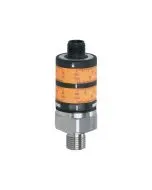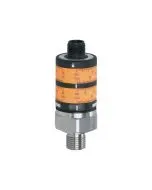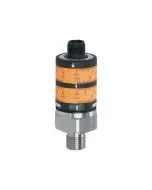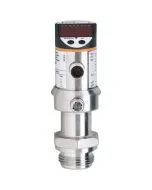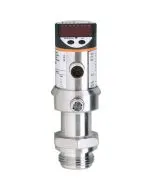

A pressure sensor, or Pressure Sensor, is a crucial device that accurately measures the pressure of gases or liquids and converts this data into electrical signals to control various systems safely and efficiently. This article will help you understand everything from how it works, types, technology, to selecting the right pressure sensor for your needs. If you are interested in our services, you can find more details at SCMA Services, the leader in automation systems and sensors for industrial applications that you can trust.
What is a Pressure Sensor?

A pressure sensor, also known as a pressure sensor, is an electronic device used to measure the pressure of gases or liquids and convert this measurement into electrical signals for processing. The measured pressure is related to force and area (P=F/A), with commonly used units being Pascal, Bar, and PSI. Therefore, a pressure sensor is an essential tool for measuring pressure in automated systems within industrial plants.
How Pressure Sensors Work
The operation of a Pressure Sensor relies on a diaphragm that bends when pressure acts upon it. This bending is then converted into an electrical signal through various methods such as strain gauge or capacitive changes. This process allows the pressure sensor to continuously and accurately detect pressure, making it suitable for use in automatic control systems and various types of engineering applications.
What are the types of pressure sensors?
Pressure Sensors can be categorized into several types, each designed for different applications in industries. The main groups include Pressure Gauge, Pressure Switch, and Pressure Transmitter, which have specific features and functions.
Pressure Gauge (pressure gauge)
A pressure gauge is a tool for measuring gauge pressure, absolute pressure, and vacuum. The pressure gauge is easy to use, convenient to install, and cost-effective, suitable for general pressure checks in factories. However, it has the limitation of only being able to read values without sending electrical signals for control.
Pressure Switch (pressure switch)
A pressure switch or Pressure Switch is a pressure detection sensor used to automatically interrupt an electrical circuit when the pressure reaches a set value. It is suitable for controlling water pumps, hydraulic systems, and air systems in various industries that require high safety and reliability.
Pressure Transmitter (pressure transmitter)
A pressure transmitter is an instrument that converts pressure values into standard signals (Analog/Digital) to be transmitted to control systems. It is a widely used sensor in industrial applications, especially in high-precision production processes such as chemical, petrochemical, and energy industries.
General Pressure Measurement Technology
Currently, there are various pressure measurement technologies that help make Pressure Sensors accurate and versatile in their applications as follows:
- Capacitive → Uses the principle of changing electrical capacitance when pressure acts on a diaphragm.
- Inductive → Detects the movement of a magnetic core from pressure.
- Optical → Uses changes in light or fiber optic path to measure pressure.
- Piezoelectric / Piezoresistive → Uses materials that generate electricity when pressed, or measures changes in resistance.
- Strain Gauge → Converts pressure into precise changes in electrical resistance values.
These technologies enable Pressure Detectors to operate in a variety of environments, from general work to high-precision applications.
Read Article>>>What is a Pressure Sensor? What does it do?

Applications of Pressure Sensors
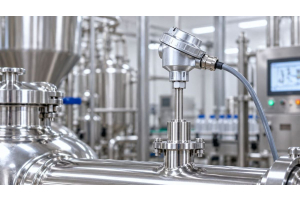
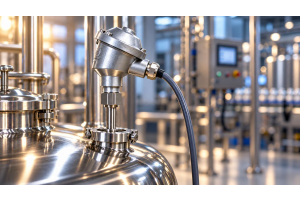
Pressure sensors are used to control pressure in industrial systems such as water pumps, steam boilers, hydraulics, and air conditioning units. These sensors help automate processes and reduce risks associated with overpressure. They have wide applications in industries, for example:
- Water Pump Systems → Use pressure sensors to maintain appropriate pressure levels and prevent damage.
- Hydraulic Cylinders → Help control hydraulic pressure for precise operation.
- Steam and Boiler Systems → Measure steam pressure to prevent explosions and increase safety.
- Vacuum Mixer → Used for mixing creams, food, or medicine by creating a vacuum to reduce air bubbles.
- Chiller and Cooling Systems → Control refrigerant pressure within specified limits.
- Pneumatic Control Systems → Used in industrial applications requiring compressed air control.
How to Select and Use Pressure Sensors
Selecting the appropriate pressure sensor requires considering the measurement range, accuracy, output type, and operating environment, as well as response speed and installation size that matches the machinery, to ensure efficiency and long-term use
1. Select the Measurement Range
Choose a pressure sensor with a measurement range that matches the required operating pressure for safety and accuracy. Incorrect selection may cause inaccurate measurements or reduce system efficiency.
2. Select Accuracy
For high-precision applications, such as pharmaceuticals, chemicals, or energy industries, choose a pressure sensor with high resolution to minimize measurement errors.
3. Environmental Suitability
Choose a pressure sensor that can withstand temperature, humidity, vibration, or chemical exposure to match the actual industrial environment of the factory.
4. Choose the Output Type
Check if the Pressure Detector Sensor supports the desired output type, such as Analog, Current or Digital, to ensure efficient connection with control systems
5. Choose Response Time
For applications with rapid pressure changes, select Pressure Detectors that respond quickly to prevent damage and ensure accurate process control
6. Choose Size and Installation
Select Pressure Sensors that fit the size and installation method suitable for your space and machinery to facilitate easy maintenance and efficient use
What are the features of a pressure sensor?
Pressure Sensors have important features such as high accuracy, resistance to various temperatures and environments, and fast signal transmission. These sensors support multiple measurement types including gauge pressure, absolute pressure, and vacuum, making them suitable for use in a variety of industries, including:
-
High accuracy → Accurately measures pressure even under complex conditions
-
Tolerant to various temperatures → Operates in both extremely hot and cold environments
-
Fast signal transmission → Suitable for systems requiring real-time response
-
Multiform measurement support → Such as gauge pressure, absolute pressure, and vacuum
If you are looking for "high-quality pressure sensors," think of SCMA!
High-quality pressure sensors are key to increasing the efficiency and safety of production processes, whether it's general work or high-precision tasks. SCMA Company offers comprehensive services including the provision of suitable Pressure Sensors, automatic system design, and extensive after-sales service. If you need reliable industrial sensors, SCMA is your answer.
Summary
Pressure Sensors are crucial devices for controlling and monitoring systems in modern industries, from water pumps, hydraulic steam to cooling systems. Choosing the right one is important. As experts in pressure measurement tools and automation systems, SCMA is ready to provide consultation and offer solutions tailored to your needs to help enhance your business competitiveness. Contact us now for the best advice.
Frequently Asked Questions
What is a Pressure Sensor?
A Pressure Sensor, or Pressure Sensor, is a device that measures the pressure of gases or liquids and converts it into an electrical signal to control industrial systems and machinery accurately.
How does a Pressure Sensor work?
A Pressure Sensor works by using a diaphragm that bends when pressure is applied, then converting this into an electrical signal such as resistance or capacitance to be sent to the control system.
How are Pressure Sensors used?
They can be used for measuring water pressure in pumps, controlling hydraulic pressure, checking steam pressure, and in cooling systems and machinery that require continuous pressure control.
Why are Pressure Sensors important to industries?
As a Pressure Detector Sensor, they enhance safety, reduce risks, and improve production efficiency. Therefore, they are essential in all types of industrial plants.