Silencer or sirenser is a device that reduces the noise from exhaust air (Exhaust). Excessive noise beyond standard levels can damage employee health and reduce productivity on production lines. Finding out what a silencer is and choosing to use a high-quality sound-reducing silencer will help solve this problem. SCMA offers high-quality sound reduction equipment solutions through our online system, our engineering team provides free size screw thread checks to prevent purchasing the wrong model and delivers quickly to your factory.
What is a silencer? Why should it be installed in pneumatic systems?
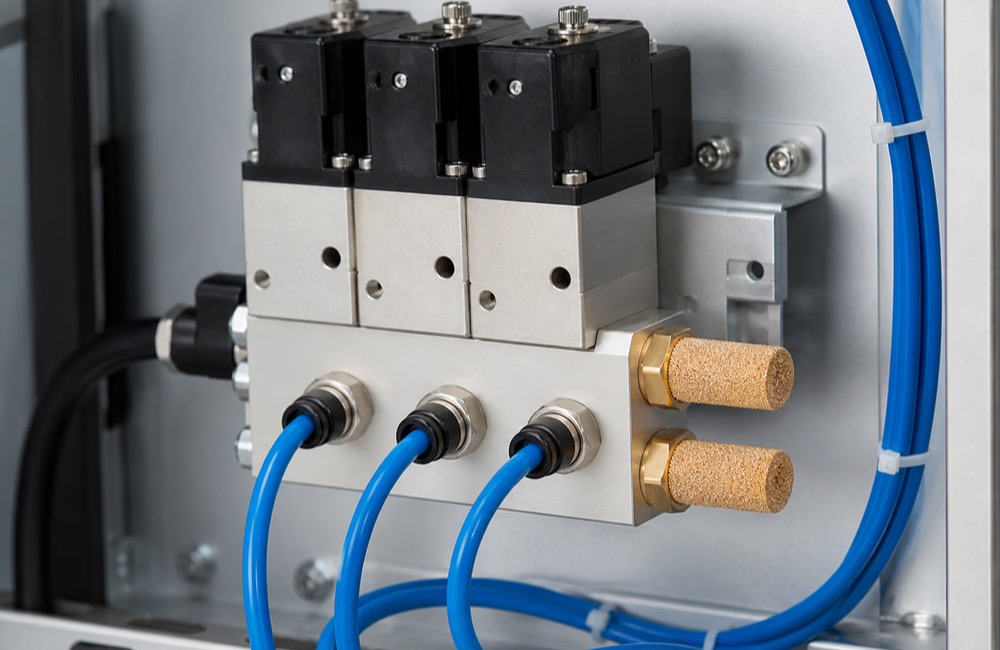
New maintenance technicians may wonder what a silencer is. This piece of equipment reduces the noise from exhaust air coming out of solenoid valves or cylinders. The hidden function of this type of air valve sound reducer is very important. This equipment also acts as a good filter, preventing dust particles from the external environment from reversing and damaging rubber seals. Leaving exhaust ports open can cause rapid damage to the internal mechanisms of solenoid valves. Installing pneumatic silencers directly extends the lifespan of machinery.
The engineering principles of sound-reducing silencer operation
The internal structure of a silencer is designed with a dense porous (Porous structure) arrangement. High-pressure air from cylinders is forced to pass through small gaps. This mechanism helps disperse the direction of airflow and abruptly reduce the speed of the air stream. This delay in speed helps cut down on noise before the air is released into the atmosphere. A standard sound-reducing silencer will be designed with porous structures that balance to prevent excessive back pressure buildup in the system.
What does silencer mean and how many types are commonly used in factories?
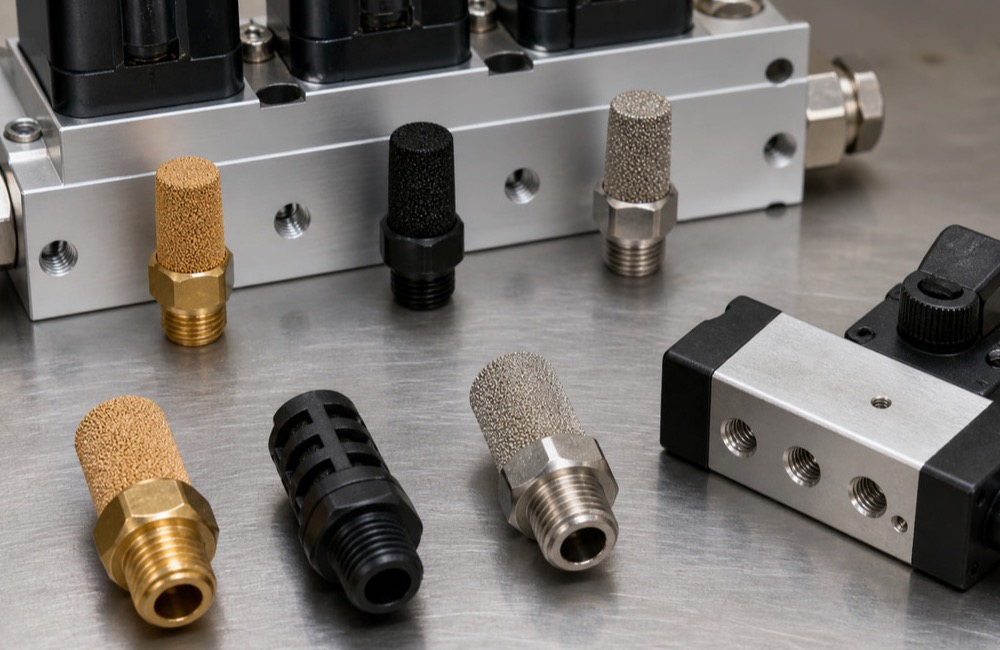
The engineering term silencer means a sound absorber or exhaust muffler. Engineers can classify types of Silencers based on the manufacturing material to choose the most suitable one for specific applications.
Bronze Sintered Alloy Material Group (Sintered Brass)
The sound absorber pipe end made from sintered bronze is the type that field technicians are most familiar with. This material is formed at high temperatures to create small porous structures, providing a strong and resilient structure capable of withstanding machine vibrations confidently using wrenches.
Synthetic Plastic Material Group (Plastic)
The air valve sound reducer made from plastic stands out for its lightweight nature and cost-effectiveness. The internal filter is made from synthetic material, making this type suitable for general work areas that do not receive mechanical impacts, helping to save on maintenance costs for large pneumatic systems.
Special Grade Material Group (Stainless Steel)
The sound absorber made of stainless steel is designed for applications requiring the highest durability. This grade material offers excellent resistance against chemical corrosion, acids, or salt fumes. Choosing the right material reduces the risk of rust particles falling into production lines and causing contamination.
How Does the Material of a Silencer Affect Its Lifespan?
Selecting the wrong type of silencer material can cause equipment to break or clog prematurely. Field technicians must consider the environment before installing a Silencer.
Bronze Resists Heat and Impact
In high-temperature environments or where there is a risk of being struck by tools, it's advisable to use a bronze silencer pipe end. This material does not deform when exposed to accumulated heat; its threads are strong, reducing the likelihood of thread stripping in ports.
Plastic Emphasizes Cost-effectiveness and Lightweight Design
A plastic pneumatic silencer valve offers cost-effective solutions. If machinery is located in a dry area, plastic material can last for several years. The lightweight design helps prevent manifold valve structural cracking from excessive weight.
Stainless Steel Resists Chemicals for Food Grade Applications
In food factories where machines are cleaned with chemicals and cleaning agents, stainless steel resists corrosion excellently. Using a stainless steel pneumatic silencer enhances cleanliness and prevents contaminants from entering the product.
Correct Installation Position of Exhaust Silencer in Air Circuit
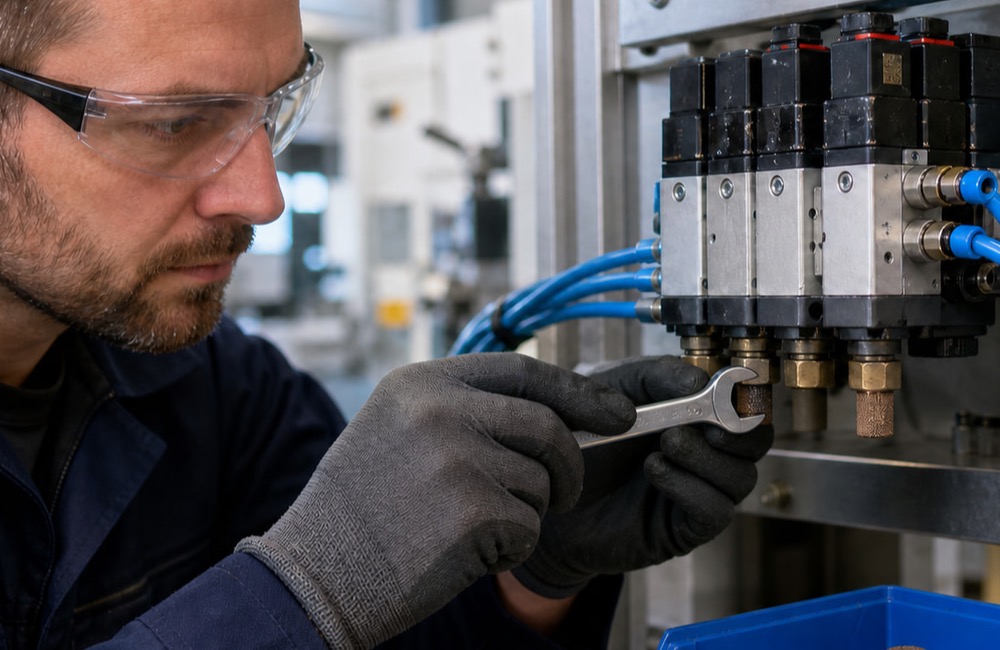
Maintenance staff must know the correct installation position of exhaust silencers for safety. Incorrect assembly of pneumatic valve sound reducers into the circuit can cause machinery malfunction.
- The technician must screw directly into the exhaust port (Exhaust Port) of the directional control valve (Directional Control Valve).
- Check the symbols on the valve clearly, the exhaust port is always marked with letters R, R1, R2 or numbers 3, 5.
- Do not install sound reduction equipment into the main air supply port (Supply Port) under any circumstances.
- The assembly must be tightened by hand only; avoid using a wrench to over-tighten.
- Overtightening can cause brass threads to strip inside, causing an Air Leak problem.
Pneumatic Valve Silencer Blockage and Emergency Fixes
The classic issue that slows down machine rhythm is the pneumatic valve silencer blockage. Leaving it unattended can cause severe damage to the pneumatic silencer circuit.
- Note abnormal slow movement of the cylinder and out-of-sync piston strokes with sensors.
- The main cause is clogging from lubricating oil mixed with dust in the porous sound absorber.
- Exhaust air cannot escape quickly enough, creating residual pressure (Back Pressure) inside the cylinder chamber.
- This back pressure resists the operation of the pneumatic cylinder, causing machinery to malfunction and damage workpieces.
- The emergency fix is to remove the blocked unit immediately and replace it with a new one; do not leave the port open.
Safety Standards (OSHA) and the Installation of Pneumatic Silencers
The safety agency referencing OSHA standards clearly states that machine noise levels must not exceed 85 decibels (dB). Continuous exposure to air impact noise can lead to permanent hearing damage. Installing pneumatic silencers at every exhaust point is the most direct solution. Silencers help control sound within standard limits, protecting production line workers. Investing in high-quality Silencers helps create a safe working environment for organizations.
Summary
Selecting the correct Silencer solves excessive noise issues and protects air valves from dust. If your factory has problems with clogged Silencers or deteriorated Noise Reducing Silencers, SCMA's engineering team is always ready to assist you, offering free consultations for comparisons and quick spare part deliveries straight to the factory.
If You Want to Purchase, You Can Buy from SCMA Today!
Order Noise Collectors with SCMA more conveniently than ever. Customers only need to take a photo of the solenoid valve or measure the size of the threads on the existing Silencer End Pipe. You can send it directly to our website here. The SCMA engineering team will help convert thread specifications (PT, NPT, G) and select the appropriate size of Silencer for free. We deliver products quickly so they fit perfectly into your machinery without on-site modifications.
Frequently Asked Questions (FAQ) About Silencer Usage
Q1: How much decibel can a silencer reduce?
The standard silencer noise reduction equipment can typically lower exhaust airflow noise by about 20-30 dB, depending on the size of the perforations and air pressure in the system. Installation helps to noticeably quiet down the machine's sound, keeping it within a safe range.
Q2: Which is better, plastic or brass silencer?
This depends on the working environment; plastic suits general areas that do not receive mechanical impacts. Silencers made of brass are more durable and can withstand higher temperatures from machinery, making them a preferred choice in most factories.
Q3: Can clogged silencer exhaust ends be cleaned and reused?
We don't recommend it. The perforations inside the silencer exhaust end are very small at micron level; blowing air or cleaning oil residues won’t remove all blockages. Forcing its use will slow down piston movement, so buying a new one is more cost-effective.
Q4: How can I determine the size of threads on an old pneumatic silencer that has faded?
Use vernier calipers to measure the outer diameter of the pneumatic silencer's thread, then take a photo and send it to SCMA's engineering team for online evaluation. We will convert the measurements into standard sizes (such as 1/8", 1/4") free of charge.
Q5: When purchasing equipment from SCMA online without an engineer on-site, will it fit properly?
Absolutely, it fits perfectly. SCMA has a real engineering team to handle specification comparisons for silencers. We check the thread size accurately and pull technical data for clear comparison so you can install it right away onto existing threads without on-site adjustments.