Facing issues with machinery downtime due to air cylinder leaks or insufficient pressure? SCMA, we are experts in automation solutions, ready to support the industry with high-quality products. This article will help you understand the differences between each type of air cylinder, provide a checklist for proper usage, to reduce the risk of Downtime and maximize production efficiency.
What Are Pneumatic Cylinders?
A pneumatic cylinder or pneumatic actuator is a mechanical device that converts compressed air energy into mechanical energy, enabling the piston rod to move in a straight line or rotate to push, lift, clamp, or move objects within an automated system. This component is crucial in machinery structure as it constantly bears loads and moves. For more information on basic pneumatic systems, this will provide a clearer overview.
Types of Pneumatic Cylinders Popular in Industries
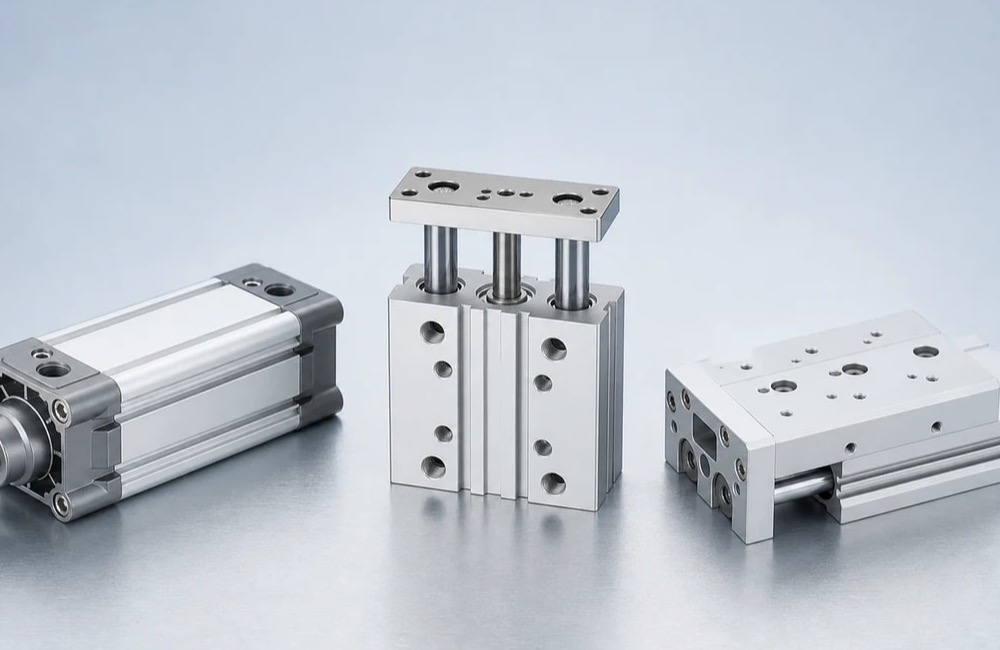
Pneumatic cylinders come in various shapes to meet different installation spaces and job requirements. Choosing the right type can reduce wear and tear and extend service life.
Standard Cylinder
This is the most commonly seen type, available in both single-acting (Single Acting) and double-acting (Double Acting) models. The housing is made of aluminum or stainless steel depending on the working environment. It is suitable for general movement tasks that do not require complex directional control.
Guided Cylinder (Linear Guided Cylinder)
The Guided Cylinder is designed to better withstand lateral forces (Side Load) compared to regular cylinders. The guiding shaft helps ensure stable and precise movement, making it ideal for lifting or pushing heavy loads that require accurate stopping positions.
Pneumatic Slide Cylinder (Linear Motion Cylinder)
For limited installation spaces but requiring micron-level accuracy, the Pneumatic Slide Cylinder is the best solution. The structure integrates a linear guide system with the cylinder body, making it compact and capable of handling high torque loads. It is widely used in electronics industries and for assembling small parts.
Working Principle of Pneumatic Cylinders
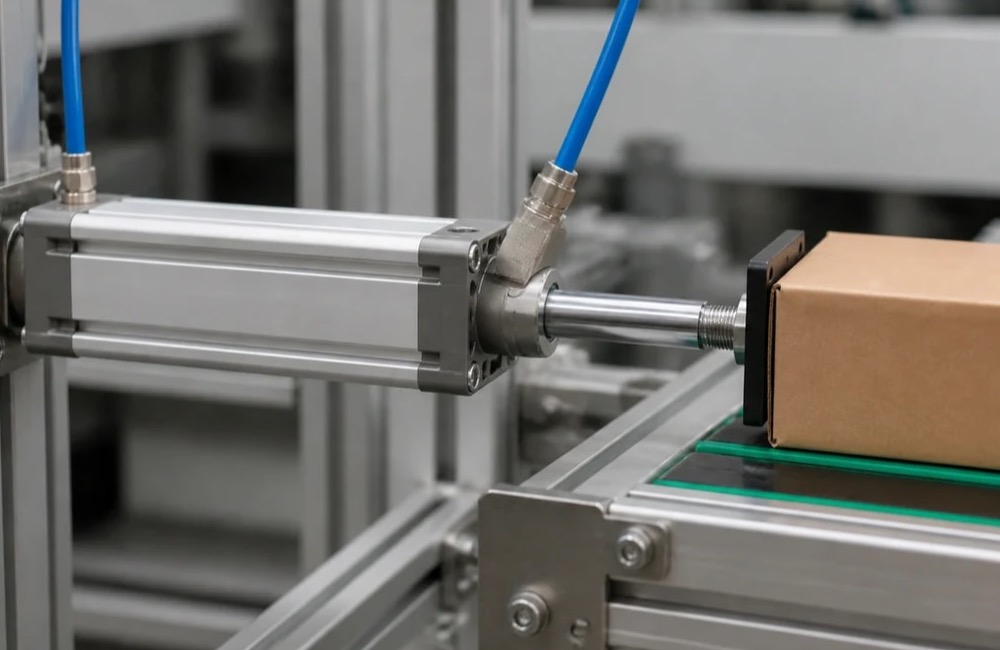
The mechanism starts with compressed air flowing into the cylinder port. The air pressure pushes the piston (Piston) to move along the designated direction. Speed and pressure depend on the adjustment of Flow Control and Solenoid Valve settings. When air enters one side, the rod extends, and when it switches sides, the rod retracts. Smooth movement is crucial for machines to operate according to the set Cycle Time.
Checklist for Purchasing Pneumatic Cylinders at a Good Value
Selecting the wrong size of pneumatic cylinders can negatively impact both machinery and electricity costs in factories. You should check these topics before making your decision to purchase.
- Required Force: Calculate from load weight plus safety factor to ensure that the pneumatic cylinder has sufficient power for operation.
- Stroke Length: Check the actual distance required for the piston rod movement, including installation clearance and position sensor detection.
- Movement Speed: Choose a pneumatic cylinder with an Air Cushion system if high speed is needed to reduce internal impact forces.
- Environmental Conditions: If used in areas with high heat or chemicals, special seals and tank materials must be selected for durability.
How to Maintain Pneumatic Cylinders for Long-term Use
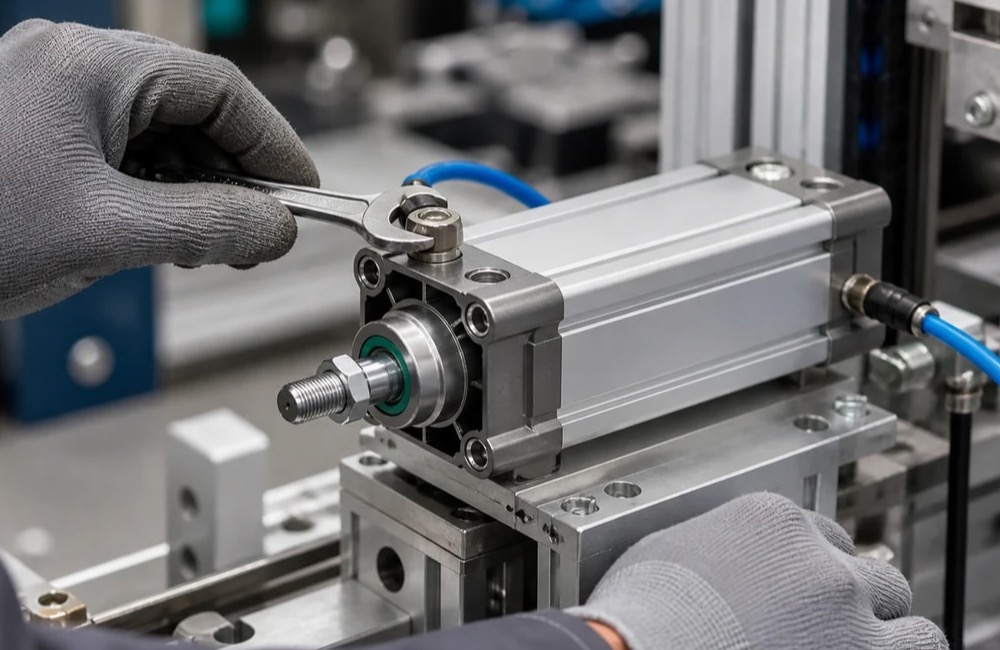
Preventive maintenance helps save long-term costs and reduces sudden machine breakdowns.
- Air Filter System Check: The air entering the cylinder must be clean, dry, and free of moisture to prevent rust and internal corrosion.
- Leak Detection: Regularly listen for air leaks at joints and piston head seals. If abnormalities are found, replace repair kits immediately.
- Adequate Lubrication: Use non-lube pneumatic cylinder models or ensure the lubricator is functioning properly.
- Installation Alignment Check: The piston rod must not be bent or off-center as this will cause seals to wear out faster and generate excessive heat.
If you want to buy Pneumatic Cylinders, SCMA is available for purchase today!
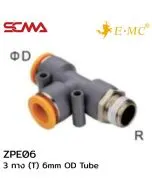
Selecting high-quality pneumatic equipment is a worthwhile investment for production line stability. SCMA offers products from the globally trusted brand E.MC Pneumatic, known for durability and precision. We are ready to provide convenient and quick online ordering services so that you can receive products that meet your specifications and requirements in industrial factories.
Summary
Pneumatic Cylinders are primary drive components that require proper selection and maintenance. Choosing the appropriate Guided Cylinder or Pneumatic Slide Cylinder for specific applications will enhance production efficiency and reduce machine wear. If you are looking for pneumatic equipment and industrial solution services, you can browse and purchase products directly through the SCMA website.
Frequently Asked Questions
How do Single Acting and Double Acting air cylinders differ?
Single Acting uses compressed air in one direction and a spring to return, while Double Acting uses compressed air for both extension and retraction strokes.
Why does an air cylinder make noise at the end of its stroke?
The noise is caused by the piston hitting the end cap. Solutions include adjusting the Air Cushion system or installing external shock absorbers (Shock Absorber).
What is the average lifespan of a pneumatic cylinder?
This varies based on air quality and operating frequency; typically, they can last over 5-10 million cycles with proper maintenance.
Can I replace the seals in an air cylinder myself?
You can do so using the correct seal kit. However, you must clean the inside of the cylinder and lubricate it with specific pneumatic grease.
What are the ways to purchase products from SCMA?
You can order directly through our online system on our website. We offer ready-to-ship products and comprehensive technical information for your convenience.