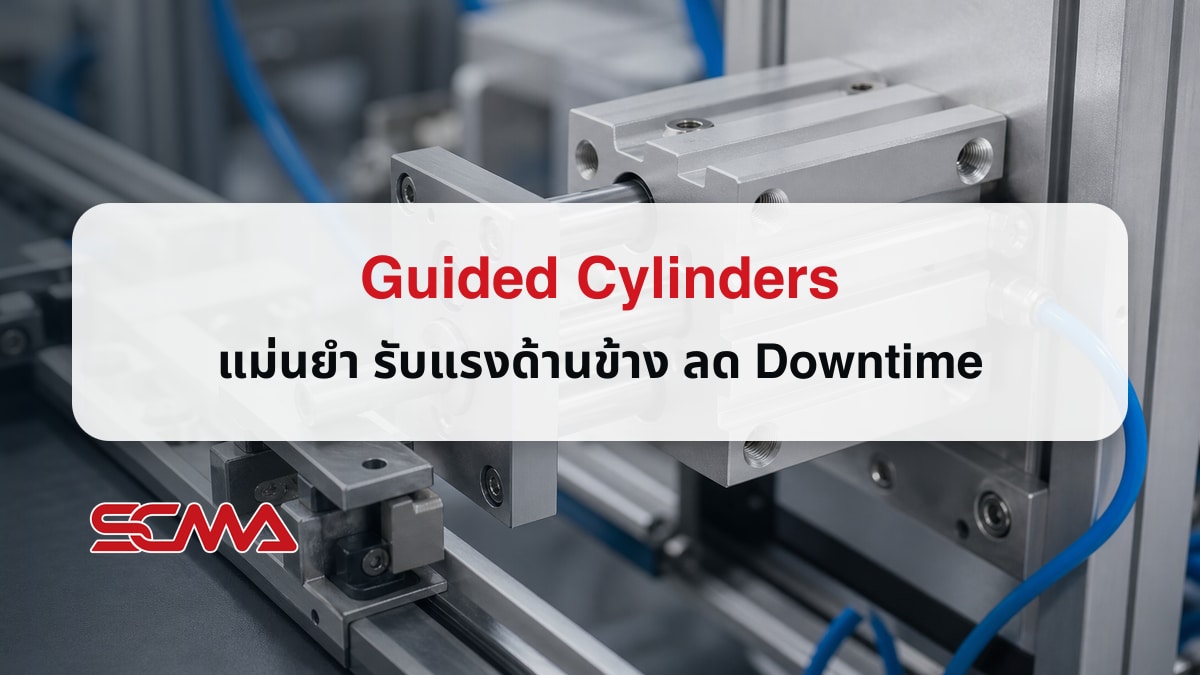
Is your production line facing issues with misaligned pistons or rotating plungers causing damage to work? SCMA is ready to support you with high-quality pneumatic equipment solutions through a comprehensive and fast online system. You will receive technical knowledge on how to properly use the equipment to ensure that machines operate reliably and cost-effectively from reading this article.
What are Guided Cylinders?
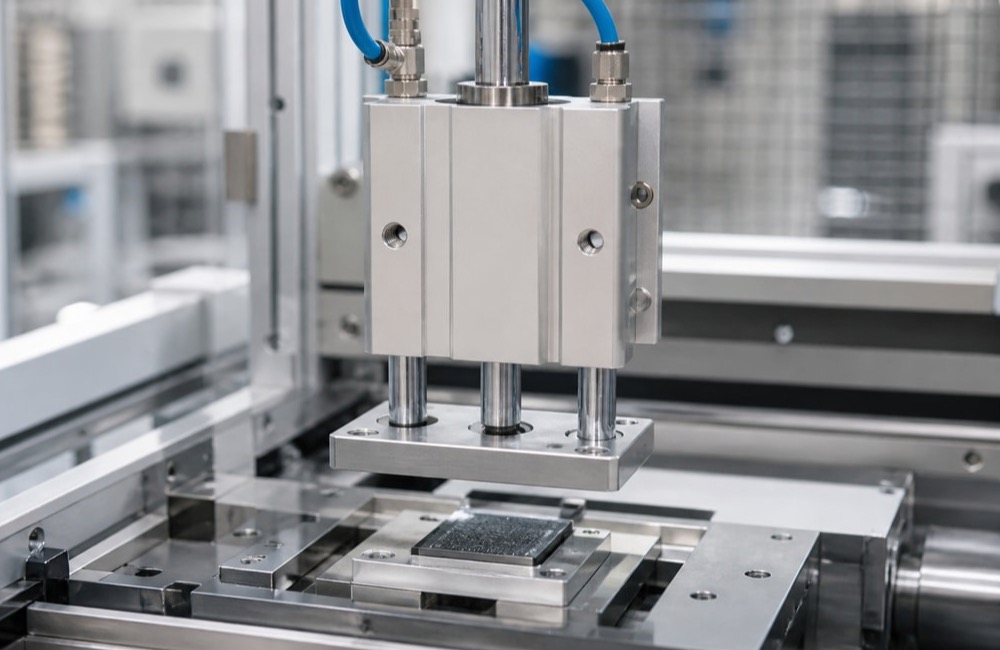
Guided Cylinders, or pneumatic cylinders with guide rods, are special types of pneumatic actuators designed to have a guide rod (Guide Rod) installed parallel to the main piston rod. This structure increases strength, prevents piston rotation, and better withstands radial forces compared to standard models, resulting in highly stable and accurate linear motion.
Key Features of Guided Cylinders
This equipment was developed to support high-precision work and offer greater durability than standard cylinders, featuring the following notable attributes:
High Precision and Anti-Rotation
The bearing shaft helps lock the movement in place, reducing flange vibration during operation. The piston rod will not rotate around itself, ensuring that pick-and-place operations do not deviate.
Durable Side Load Resistance
The design of Guided Cylinders is engineered to handle radial loads exceptionally well, suitable for work requiring side weight or impact when stopping parts. This helps reduce the likelihood of piston rod bending.
Space-saving with Compact Cylinder Design
Currently, there are designs that integrate guide sets into the cylinder body to make them compact or compact cylinders, easy to install in limited spaces. The unit is lightweight but retains full strength efficiency.
Durable Construction for Long-lasting Use
Most materials are made from high-quality aluminum alloy and hardened chromium-plated steel shaft, with ball bearings reducing friction, allowing machinery to operate continuously without frequent maintenance.
Easy Installation Supporting Diverse Applications
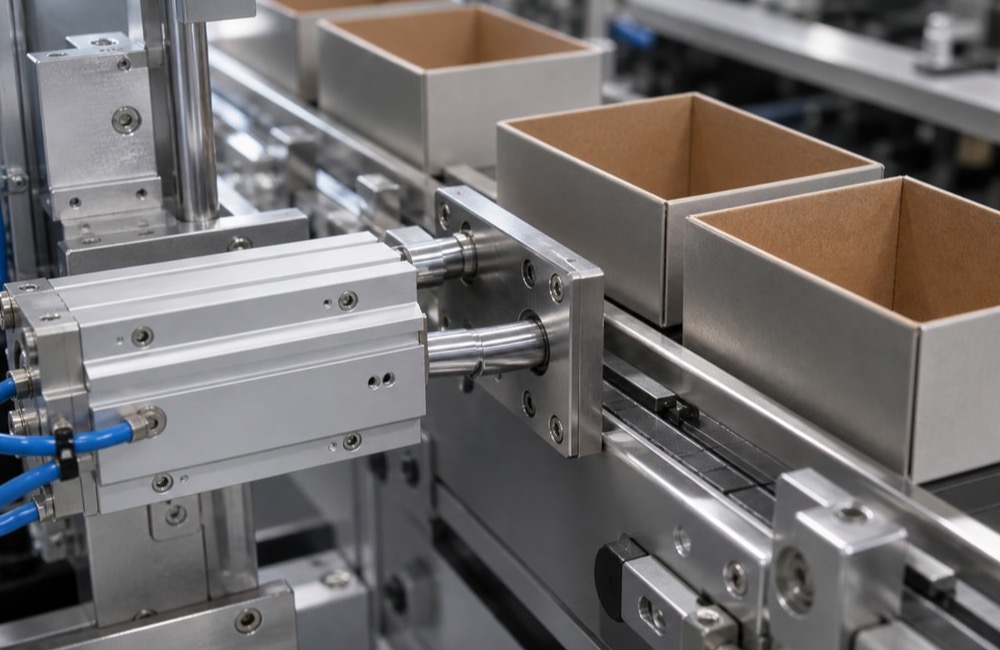
The housing has multiple mounting screw holes and supports the installation of air cylinder sensors for quick detection of piston position, suitable for conveyor systems or assembly work.
Operation of Guided Cylinders
The principle of operation uses air pressure to drive the piston in a straight line like standard cylinders. The added Guide Unit keeps the flange moving only in one direction firmly, preventing torque that may damage internal air seals within the unit. This structure ensures efficient and safe performance according to Pneumatic Guide Systems standards.
Types of Popular Guided Cylinders
Selecting the right type of cylinder that matches the nature of work can maximize production efficiency. They are mainly categorized as follows:
Bushing Type (Slide Bearing)
Focused on cost-effectiveness and excellent impact resistance, with low-friction materials used for guiding. Suitable for pushing or stopping parts without extremely high speeds.
Linear Ball Bushing Type
Uses ball bearings to provide smoother and more precise movement than usual, suitable for work requiring very high accuracy and consistent speed.
Twin Rod Cylinder Type
Uses two piston rods working simultaneously to increase thrust and prevent internal rotation. This helps distribute the force evenly across the load-bearing flange.
Mini Guided Cylinder Type
Designed for small machinery or compact cylinders that require high precision in limited space, as seen with E.MC pneumatic cylinders.
Cautions When Selecting Guided Cylinders
Incorrect specification selection may lead to premature cylinder damage or production line disruption. You should consider these important factors before deciding:
- Check the stroke length and bore size to match the actual workload.
- Calculate lateral loads (side load) occurring to select the correct bearing type according to movement characteristics.
- Select rod guide lengths in relation to torque to prevent piston sticking during operation.
- Air system cleanliness is crucial; air filters should be installed before entering Guided Cylinders every time.
Maintenance Guidelines to Reduce Downtime
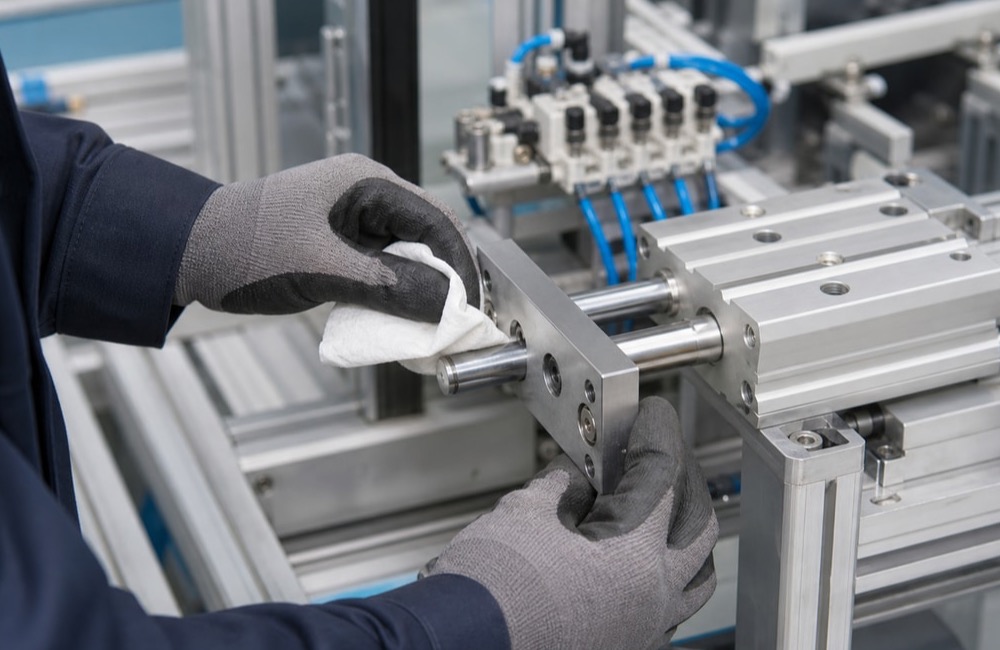
To ensure continuous operation of machinery and reduce production downtime, preventive maintenance is the best solution for engineers:
- Check lubrication of guide rails and apply grease as per specified intervals
- Inspect air leaks at joints and cylinder seals to prevent pressure loss
- Clean dust or dirt from shafts to prevent seal damage
- Install Cylinder Sensor to monitor operational status online at all times
If you want to purchase Guided Cylinders, SCMA is ready for your order today!
SCMA is ready to be your technical partner through the most convenient and fastest online channel. We have experts available to advise on selecting Guided Cylinders and compact cylinder that fit within your budget and factory requirements. You can order global brand products and receive accurate technical information through our online system immediately to keep your production line running smoothly without interruption.
Summary
Guided Cylinders are crucial components that enhance accuracy and durability of machinery in modern industries. Choosing the right model helps reduce downtime issues and increase profits for your business. Contact SCMA today for pneumatic solutions and comprehensive measurement tools through reliable online services from true experts.
Frequently Asked Questions
How do Guided Cylinders differ from regular pneumatic cylinders?
The guided cylinder has a guide rail to support lateral forces and prevent the piston rod from rotating, resulting in straighter and more precise movement compared to standard pneumatic cylinders.
Can compact cylinders be used instead of guided cylinders?
They can be substituted when space is extremely limited and the work does not involve excessive torque or side loads on the piston rod.
Why should sensors be installed on pneumatic cylinders?
To send signals indicating the position of the piston's movement to the control system, helping machinery operate in harmony correctly and safely.
Should I choose a Slide Bearing or Ball Bushing?
If speed and accuracy are prioritized, opt for Ball Bushing; however, if heavy impacts and cost-effectiveness are more important, Slide Bearing is the better choice.
Does SCMA offer consultation services when purchasing products?
SCMA has a team of Product Specialists available online to provide technical advice to ensure you select the right product for your actual usage needs.