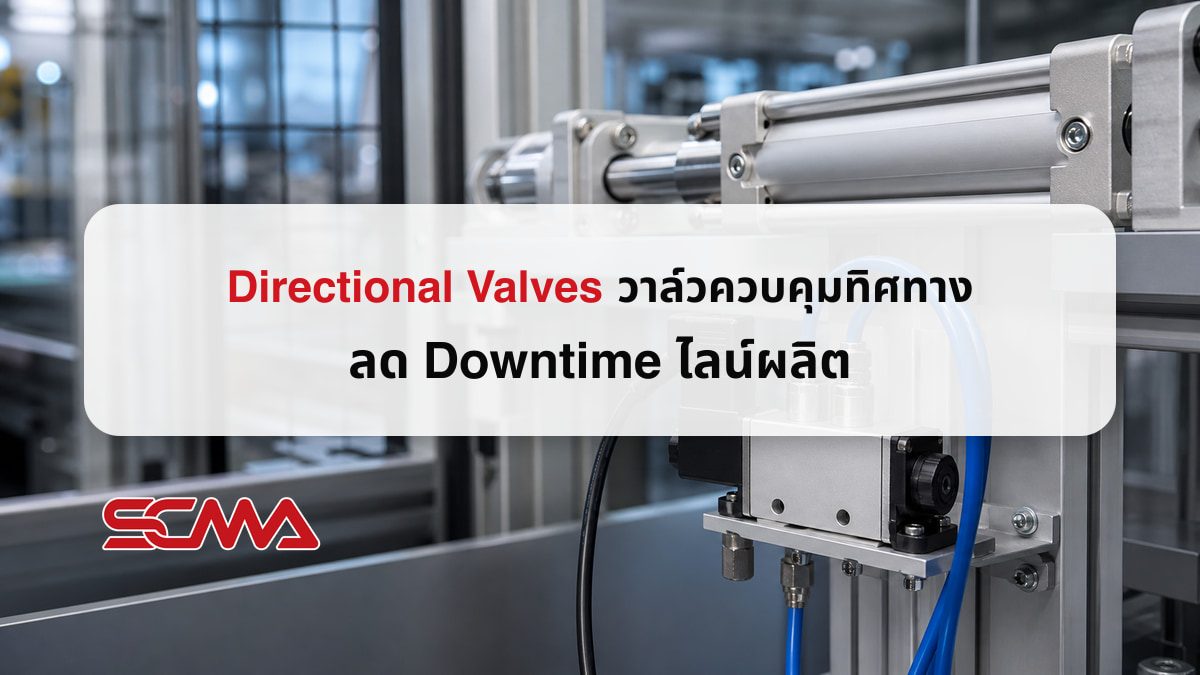
Is your pneumatic system facing issues such as air leaks or misaligned cylinder operations causing frequent production line disruptions? SCMA, as experts in measuring instruments and automation systems, would like to introduce the Directional Control Valve and high-quality Directional Valves, which will help your machinery operate smoothly and accurately. In this article, you will learn how to select the appropriate Directional Valves according to engineering principles to reduce downtime risks and maximize production efficiency.
What are Directional Valves?
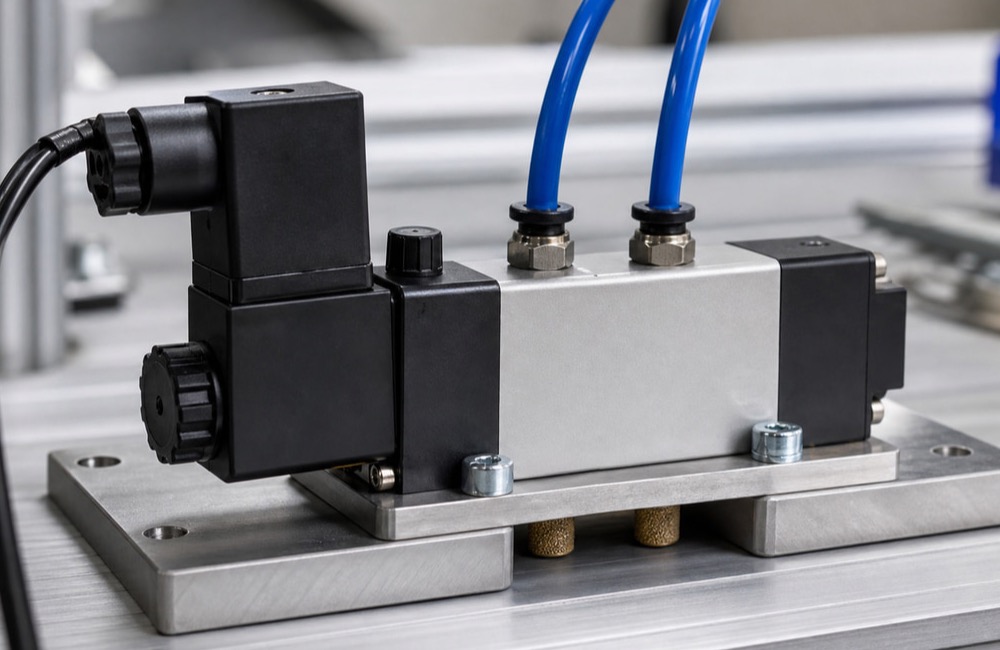
Directional Valves, or directional control valves, are devices that determine the flow path of fluids in an industrial system by shifting a spool to open or close various ports. This equipment commands actuators such as cylinders or motors to work accurately and safely in the desired direction.
Highlights of Directional Valves
Directional control valves have properties that enable automation systems to operate smoothly and respond quickly to the demands of modern production lines.
Precision in Direction Control
The Directional Control Valve provides high precision in setting the timing for cylinder extension and retraction, reducing errors in high-precision assembly processes that require continuity.
Durability under High Pressure
Selecting industrial-grade Directional Valves helps systems withstand accumulated pressure over time, reducing maintenance burdens and extending the lifespan of other connected equipment in the circuit.
Rapid Response Time
The solenoid system in new valve models allows for direction switching within milliseconds, suitable for high-speed machinery aiming to maximize hourly output according to targets.
Usage of Directional Valves
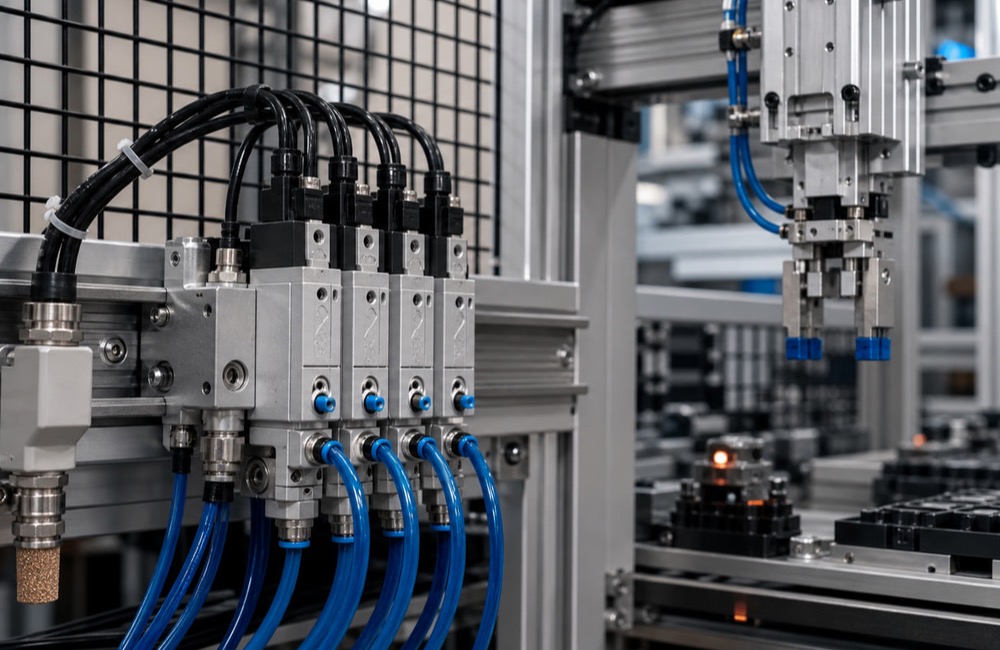
The selection and use of these valves cover everything from small machinery to heavy industrial hydraulic systems in automotive and electronics factories.
Automated Production Lines
Directional Control Valve is used to control robotic arms and conveyor belts, ensuring synchronized movement throughout the production line. This helps prevent bottlenecks during product manufacturing processes.
Heavy Machinery and Lifting Systems
The Directional Valve directs hydraulic oil flow for lifting heavy materials or controlling the movement of machinery in warehouses to ensure safe operation.
Types of Directional Valves
Directional control valves are categorized based on the number of ports and operating positions, allowing engineers to select the appropriate valve that matches the designed function within pneumatic and hydraulic circuits.
2/2 Way and 3/2 Way Valves
Suitable for general air opening/closing tasks or controlling single-acting cylinders. Available in both normally closed (NC) and normally open (NO) models, depending on the system safety design.
5/2 Way and 5/3 Way Valves
This type of Directional Control Valve is primarily used to control double-acting cylinders. It allows for varied timing adjustments and supports mid-position holding functions.
Components of Directional Valves
The Directional Control Valve (directional valve) consists of components that work together to ensure proper air or oil flow according to the circuit design.
- Body/Housing: The housing of the valve made from durable materials resistant to pressure and factory environments.
- Spool: The internal sliding core that is the main component for changing air or oil direction according to commanded positions.
- Ports: Connection ports for installing pipes into pneumatic or hydraulic systems.
- Actuator/Solenoid: An actuating device that commands valve spool movement, such as an electric coil or lever.
- Spring: A component that pushes the valve spool back to its initial position when there is no command signal.
How to Select Directional Valves for the Job
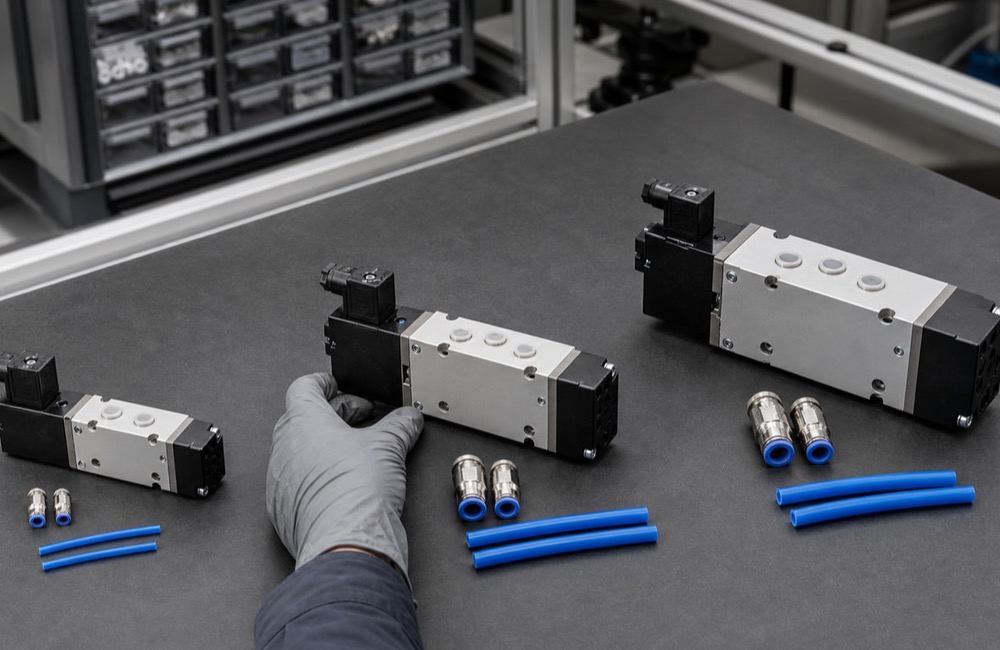
Selecting valves that do not meet specifications is the main cause of machinery operating below optimal efficiency or long-term damage to the system
- Flow Rate: Check if the valve can handle the volume of air or oil required by the cylinder to operate at the specified speed
- Operating Pressure: Choose a Directional Control Valve that can withstand the maximum system pressure without leaking
- Type of Actuation: Consider whether to use electrical (Solenoid), pneumatic (Pilot), or manual actuation to suit your existing control system
- Port Size: Choose a size that matches the existing pipes in the production line for ease of installation and reduced pressure loss
If you want to buy Directional Valves, SCMA is ready to serve you today!
SCMA is your technical consultant ready to deliver Directional Valves from world-class brands such as E.MC Pneumatic for your factory. We focus on fast service through online channels and swift delivery from branches in the EEC and Lamphun area. Our team of engineers is ready to advise you on selecting Directional Control Valve specifications to help reduce downtime and increase profits sustainably. Order easily through our website at SCMA
Summary
Selecting high-quality, specification-matching Directional Valves is crucial for maintaining production line continuity. SCMA is ready to be your partner in providing Directional Control Valve and comprehensive pneumatic solutions for your business. Contact us online today for the most accurate and rapid solution.
Frequently Asked Questions
What is a Directional Control Valve?
It is an equipment used to control the direction of fluid flow to command cylinders or motors to work in desired positions.
How do 5/2 and 5/3 valves differ from each other?
The 5/2 valve has two positions for switching directions, while the 5/3 valve adds a central position to hold the cylinder stationary or release air.
What causes the valve spool to stick frequently?
Mainly due to dirt in the pneumatic system that enters and obstructs the Spool or internal rubber seals deteriorate from heavy use without an air filter set.
How should I choose the appropriate port size for a valve?
You need to consider the Flow Rate or Cv value of the valve in relation to the size of the cylinder and the actual operating speed required.
If I order valves from SCMA, will there be immediate stock available?
We have inventory ready for quick dispatch from warehouses in EEC Chonburi and Lamphun to ensure prompt delivery to customers, reducing waiting time for spare parts.