Have you ever wondered why your factory consistently faces issues with inaccurate liquid flow measurements? Choosing the right Magnetic Inductive Flow Sensor or inductive magnetic flow meter is a crucial solution SCMA Company is ready to provide industrial measurement solutions to solve this problem. This article will take you through the working principles and purchasing techniques to enhance the efficiency of your production line.
What is a Magnetic Inductive Flow Sensor?
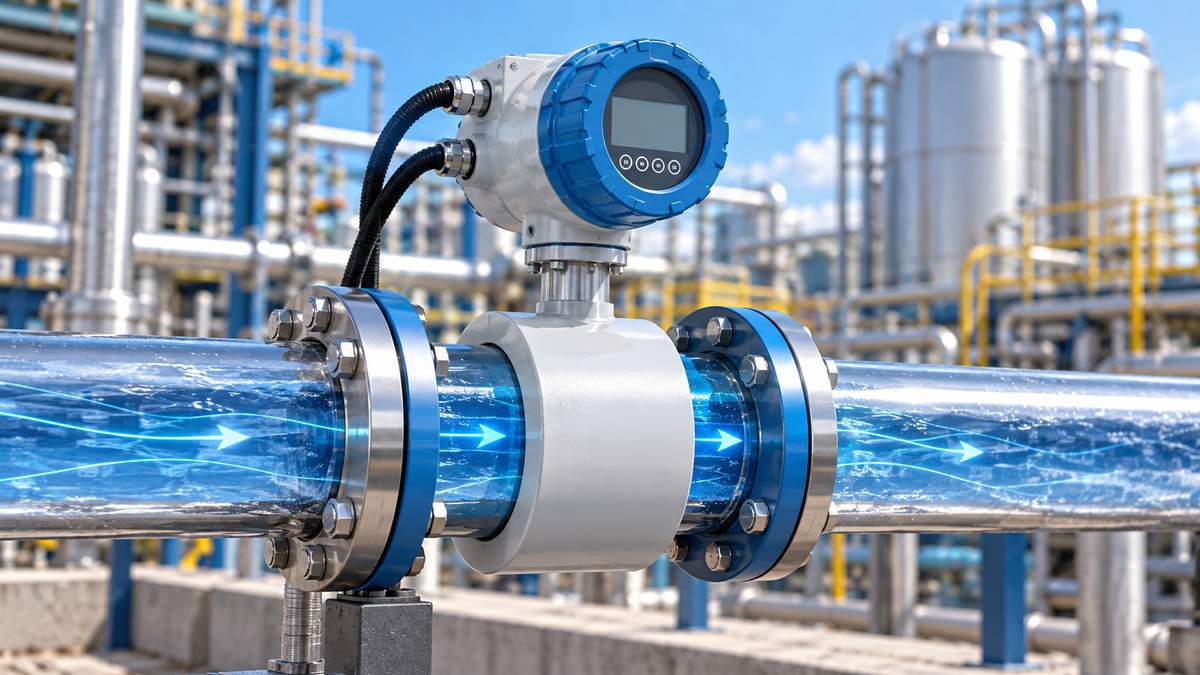
Magnetic Inductive Flow Sensor, also known as an inductive magnetic flow meter, is an important device in automated systems. This type of sensor measures the flow rate of liquid inside a pipe using electromagnetic principles. This device is designed to meet the needs of high-precision tasks in the manufacturing industry.

Working Principle of Magnetic Inductive Flow Sensor
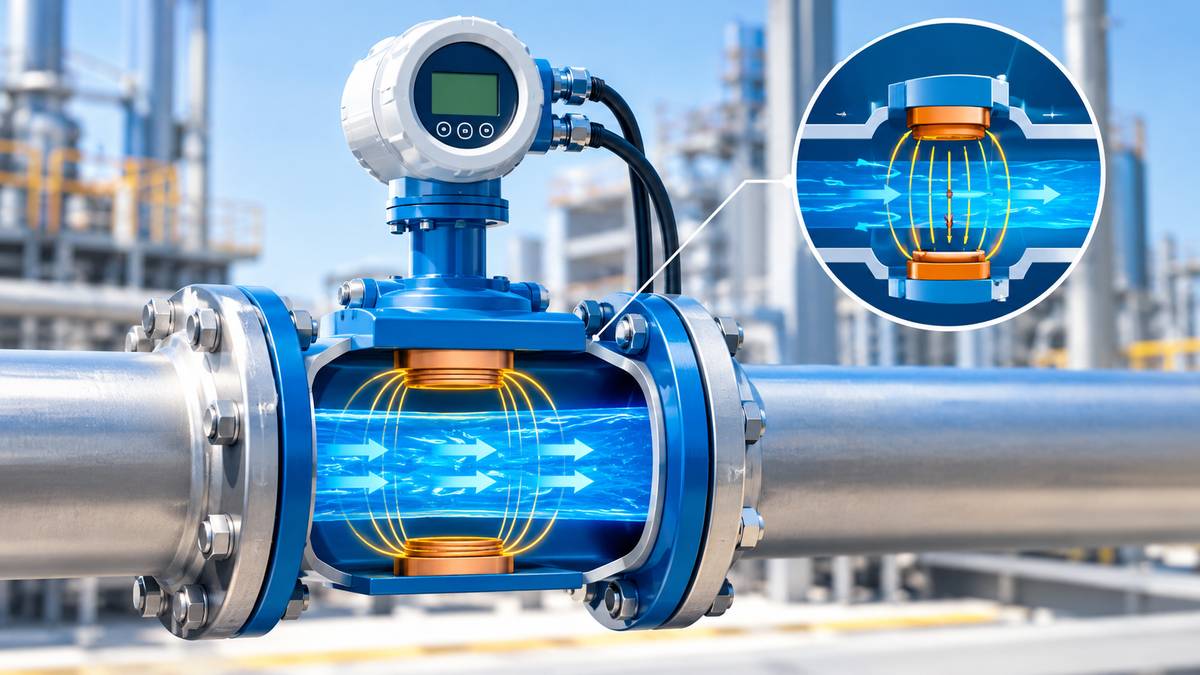
This sensor operates based on Faraday's Law of Electromagnetic Induction. When an electrically conductive liquid flows through the magnetic field inside the pipe, it generates an induced voltage. The induced voltage is directly proportional to the velocity of the liquid flow, allowing for precise calculation of the volumetric flow rate.
How Many Types of Magnetic Inductive Flow Sensors Are There?
Currently, Electromagnetic Flow Meters are categorized according to installation types to accommodate different on-site environmental conditions. Choosing the correct model will help make maintenance easier in the long run.
Compact Type
This type of flow meter integrates the sensor and signal converter into a single unit completely. This model is suitable for installation points located in open areas where the display can be easily accessed. The centralized design helps save on-site space while also reducing the wiring process to be faster.
Remote Type
This type of flow sensor clearly separates the measuring head from the display. This design meets the needs of hard-to-reach installation areas such as high places, underground, or areas with severe vibrations. Users can connect signal wiring between the measuring head and the remote control display for safer operations.
Maintenance of Magnetic Inductive Flow Sensor
Based on the experience of SCMA's engineering team, maintaining this type of equipment is very easy because there are no moving parts. Regularly checking according to these checklists will help extend the product's lifespan.
Cleaning the Inner Surface
Users should regularly inspect the inner walls of the Magnetic Inductive Flow Sensor to look for scale deposits or dirt. If there are signs of buildup on the electrodes, use a non-corrosive cleaning agent to remove them. This step helps prevent inaccuracies in the liquid flow rate readings.
Physical Condition Inspection
The maintenance team must check the external condition of the flange, threads, and the body of the flow sensor to ensure there are no cracks or damage. Checking the signal cables for signs of tearing or damage caused by animals is also important. The integrity of the external equipment helps prevent short circuits in the system.
Checking Electrical Connections
The inspection of the electrical connections of the Electromagnetic Flow Meter must be done thoroughly by tightening all nuts securely. Technicians must check the rubber seals and covers to prevent moisture or water from entering the control box. A complete electrical connection ensures maximum signal transmission stability.
Calibration
All measuring devices must undergo standard calibration checks with reference instruments at scheduled intervals. Sending the magnetic inductive flow meter for annual calibration helps confirm the accuracy of its operation. SCMA offers maintenance and calibration advisory services to ensure customer confidence.
Application of Magnetic Inductive Flow Sensor
This type of industrial measuring instrument is highly popular because it has no obstructing parts in the liquid flow path. Its application therefore covers many sectors that require accuracy.
The Magnetic Inductive Flow Sensor performs excellently with conductive liquids such as clean water, chemicals, up to wastewater. The structure without pressure drop helps reduce the problem of clogging in the piping system. Its durability in harsh environments makes this device a key component in production control.
Food and Beverage Industry
This sensor is used to measure the flow rate of food ingredients, milk, and carbonated water in the production line. Devices designed for hygiene can withstand the cleaning-in-place (CIP) process very well. Accurate measurement helps maintain the product's taste standard consistently.
Chemical Industry
Chemical plants use Electromagnetic Flow Meter to control the amount of highly corrosive solutions. The durable acid and alkali-resistant lining material in the pipe greatly extends the device's service life. Strict monitoring of flow quantity helps prevent accidents and maintain the correct proportion of chemical mixtures.
Wastewater Treatment System
Measuring the amount of clean water and wastewater within industrial or community facilities relies on this type of flow sensor. The device can read values accurately even if the wastewater contains a lot of sediment or contaminants. The data obtained helps system operators assess the wastewater treatment efficiency in accordance with legal standards.
General Manufacturing Industry
The magnetic inductive flow meter plays an important role in monitoring the cooling water system of large machines. Controlling the water flow helps maintain the operating temperature of the equipment at a safe level. These automated systems help reduce the risk of production line stoppages caused by heat accumulation problems.
Advantages of Magnetic Inductive Flow Sensor
Choosing high-quality measuring devices will have a positive impact on business profits in the long run. The outstanding features of this type of sensor clearly reduce maintenance workload.
The main advantage of the Magnetic Inductive Flow Sensor is its design with no moving parts inside the pipe. This technology completely solves the problems of wear and clogging caused by sediment. Users will enjoy highly accurate measurements along with easy maintenance throughout the product's lifespan.
No Moving Parts
The internal structure of the Electromagnetic Flow Meter is a hollow pipe with no impeller or turbine. This design completely eliminates mechanical wear problems. Factories can reduce the cost of replacing parts and also reduce the downtime of machines for maintenance.
No Pressure Drop
This type of flow sensor allows liquid to pass through freely without creating resistance. The pump in the system does not need to work hard to overcome the pressure drop that occurs. This type of operation helps factories save a large amount of electricity every year.
High Accuracy
This type of industrial measuring instrument can detect changes in flow rate with great detail. Electromagnetic technology allows for accurate readings even if the fluid contains impurities. The reliability of the data has a positive effect on product quality control in the final production process.
Chemical Resistance
Manufacturers design the inner pipe walls to be coated with special materials to resist chemical reactions. The magnetic induction flow meter can therefore be safely used with acids, alkalis, or concentrated solutions. These materials help prevent corrosion and extend the product's lifespan, making the investment worthwhile.
Bi-directional Measurement
The smart sensor can accommodate both forward and reverse flow within the same pipe. The device processes the direction of flow along with the volume with equal accuracy. This function meets the needs of piping systems that have water circulation flowing back and forth during the process.
Not Affected by Viscosity
The electromagnetic induction technology mainly relies on the insulation of the liquid to operate. Therefore, the temperature, density, or viscosity of the fluid does not affect the reading accuracy. This feature makes the Magnetic Inductive Flow Sensor applicable from plain water to viscous solutions.
How to Choose a Magnetic Inductive Flow Sensor
When deciding to purchase a flow sensor, you must consider the surrounding factors of the system comprehensively. Evaluating the specifications to match the actual application will help you get the most cost-effective equipment.
Check the properties of the liquid: Make sure that the liquid has electrical conductivity according to the standard supported by the Electromagnetic Flow Meter body.
Durability against temperature and pressure: Choose structural materials that can withstand the pressure in the pipe and the temperature of the chemicals well.
Hygiene standards: If used in the food group, choose a model designed for easy cleaning to prevent the accumulation of bacteria.
Thread and flange size: Choose the magnetic inductive flow meter size to match the original pipe to avoid cutting and reconnecting the pipe.
Flow rate range (Flow Rate Range): Check the minimum and maximum measurement values to cover the flow rate speed in the actual system.
Display and connectivity: Choose a model with a clear display and support for output signals to connect to the industrial control system.
Features of SCMA's Measurement Instrument Solution Service
If you are looking for a partner specialized in industrial products to improve your production line, SCMA Company is ready to be your consultant.
Specialized expertise: Our engineering team has high experience in designing and installing all types of flow rate measuring devices.
World-class quality products: We select only leading brands that are recognized for their accuracy and durability for industrial work.
Comprehensive after-sales service: We take care from calibration to maintenance work to maintain the performance of the flow sensor system.
Easy and quick access: Our branch offices are located near major industrial areas, making us ready to respond to your needs immediately.
Summary
Applying a Magnetic Inductive Flow Sensor is a valuable investment to enhance work accuracy. This device helps reduce losses during production stoppages and improves production quality to meet standards. If you need in-depth advice, SCMA is happy to provide system design services for the best results for your business.
Interested in purchasing or consulting via LINE Official: @SCMA
If you want to buy Magnetic Inductive Flow Sensor, you can purchase it from SCMA today!
Selecting an accurate flow measuring instrument is a crucial factor that helps save costs and sustainably reduce problems in the industrial factory. SCMA, as an expert in measurement solution services, is ready to provide advice and supply the most suitable Electromagnetic Flow Meter for you. Our engineering team is ready to take care of everything from on-site evaluation to comprehensive after-sales service.
Frequently Asked Questions
Can Magnetic Inductive Flow Sensor be used to measure distilled water?
No, it cannot be used to measure because distilled water does not have electrical conductivity properties. This type of sensor can only be used with liquids that have electrical conductivity within the specified criteria.
Is it necessary to provide straight pipe length for installation?
It is necessary to provide straight pipe length both in front and behind the sensor as specified in the manual, to ensure the liquid flow is uniform before entering the measurement point.
Why does the device not cause pressure drop?
Because the internal structure of the pipe does not have any blades or parts obstructing the water path, the fluid can move freely through.
What is the average lifespan of the sensor?
If properly maintained and used according to the specifications, the device can operate efficiently for many years due to no wear and tear.
Can the device send data signals to a central control system?
Yes, the device supports various output signal formats such as 4-20mA or IO-Link to connect with an automated system.