Having trouble with the brightness levels in the workplace not meeting the standards set by law? Using an accurate Lux Meter is the solution that helps prevent errors in the production process and ensures employee safety. SCMA , as an expert in industrial measuring instruments, would like to take you through a detailed introduction to the Lux Light Meter (light meter). This article will help you understand the working principles, maintenance methods, as well as effective guidelines for selecting equipment that meets real-world usage needs.
What is a Lux Meter?
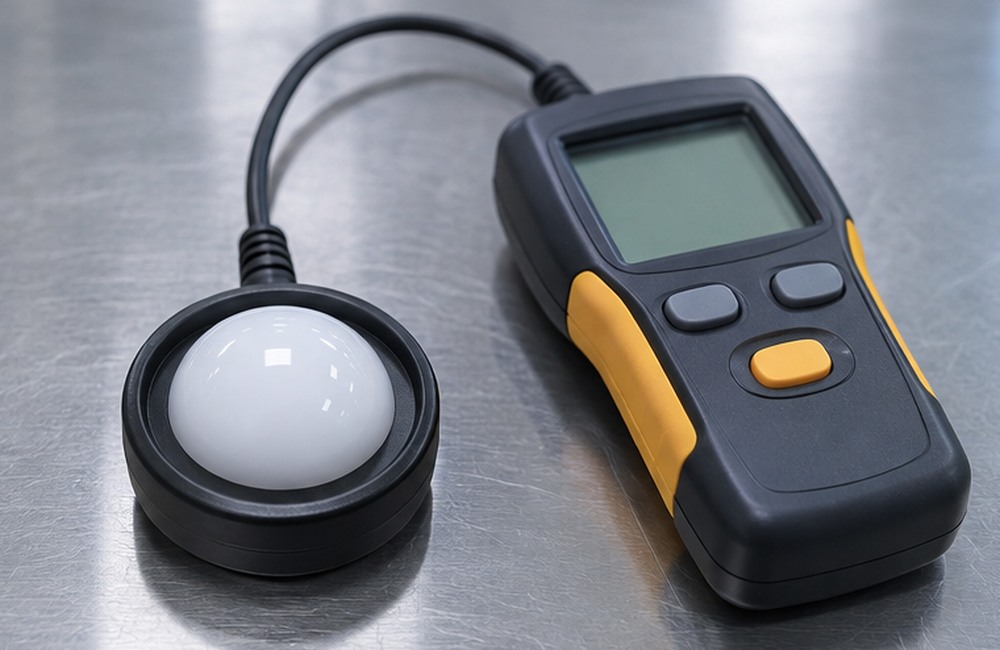
A Lux Meter is a specialized device designed to measure light intensity in terms of illuminance on a light-receiving surface, measured in lux. 1 lx is equal to 1 lumen per square meter.

How a Lux Meter Works
Understanding the working principle of a lux meter will help users apply it effectively in factories. This device works by using a light sensor that converts energy into an electric current for processing.
Light Reception
Light falls through the diffuser at the front of the sensor head. The design of the sensor head helps the response to light coming from different angles to be close to the cosine law.
Energy Conversion
When light reaches the sensor, energy from the photons of the light will stimulate the semiconductor. This process causes the generation of electric charge within the circuit of the light intensity meter. The amount of electric charge generated varies directly with the level of illumination that is incident.
Calculation
The signal conversion circuit converts the received light into a luminance value. The result depends on calibration, spectral response, and the angle at which the light falls.
Display
The final step is to display the processed data on a digital screen. Users can quickly and easily read the brightness level numbers. Some light meters have data recording functions to allow the obtained values to be used for accurate summary reports of inspection results.
What Do Different Light Meters Measure?
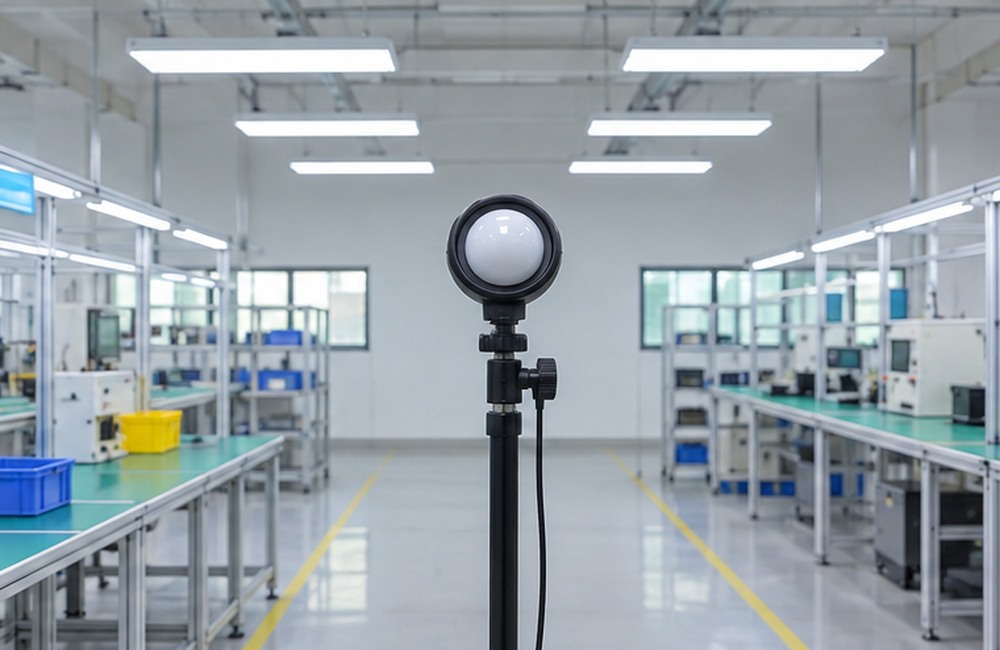
Light Intensity Meter for evaluating lighting in factories should measure incident light in lux, while color temperature meters and reflectance light meters measure different quantities according to their purposes
Color Temperature Meter
This type of instrument focuses on measuring the color temperature of light, displaying the result in units of Kelvin (K). The data obtained can indicate whether the light in the area is warm or cool in tone. Using this type of lux meter is suitable for tasks requiring color quality control, such as image printing
Incident Light Meter
Lux meters for occupational health measure the illumination falling on the work plane. Select the appropriate sensor and measurement range according to the method and light source
Reflect Light Meter
Light Meter for reflectance is used to evaluate light emitted from a surface in the measured direction, such as measuring luminance in cd/m². This type of light meter is not used as a substitute for incident light meters for measuring incident light.
Lux Meter Maintenance
Proper maintenance of the light meter according to engineering principles will help the instrument maintain maximum accuracy. Users should follow maintenance guidelines to extend the device's lifespan.
Cleaning the Sensor
Operators should gently wipe the white plastic light-receiving dome with a clean soft cloth regularly. Cleaning helps prevent dust and dirt from blocking the sensor's surface. A clean sensor allows the light intensity meter to read values accurately without error.
Avoid Moisture and High Temperatures
Storing the device should be done in an area with normal temperature and moderate humidity. Users should not leave the lux meter in hot or damp areas. Harsh environmental conditions can cause the internal electronic circuits to deteriorate faster than expected.
Remove the Battery When Not in Use for Long Periods
If it is expected that the light meter will not be used for a long period, the battery should always be removed from the battery compartment. This helps prevent battery degradation and chemical leakage. Chemicals from the battery can corrode the circuit board, causing permanent damage to the device.
Check Zero Value
Before measuring, adjust the device to read zero or follow the method specified in the manufacturer's manual according to the criteria for light measurement set by the Department of Labour Welfare and Protection.
Calibration
Amended Announcement of the Department of Labour Welfare and Protection stipulates that calibration must be performed annually with a standard calibration unit. For instruments used by workplaces for internal measurement and analysis, calibration should be performed every two years.
Usage of Lux Meter in Industry
Using a lux meter in an industrial factory mainly aims to control the working environment. The data obtained confirm that the working area has a light level in accordance with the standards set by law.
Operating Principles and Preparation Before Measurement
Check the device and zero it according to the manual. Place the sensor head in the plane and position as specified by the measurement method, being careful of the shadow of the measurer or objects blocking the sensor.
Measurement Guidelines in Industrial Factories
Area measurement and spot measurement use different positioning methods. Conduct measurements under normal working conditions and choose the method according to Announcement of the Standards for Measurement by the Department of Labour Welfare and Protection.
Light Level Control and Result Recording
Compare the results with the standard table separated by area type or work type. Record the position, plane, light condition, and measured values for later inspection or comparison. See Announcement of Lighting Standards by the Department of Labour Welfare and Protection.
Advantages of Lux Meter
The outstanding advantage of the lux meter is its ability to provide accurate and quick brightness data. This device is designed to respond to light in accordance with the characteristics of human vision.
Check Safety According to Laws
The results from the lux meter are used to assess legal criteria when selecting the equipment, measurement methods, and inspectors that meet the requirements, as well as comparing them with tables used in actual work.
Easy to Use and Portable
The modern light meter is designed to be compact and lightweight. Engineers can easily carry it to measure at various points. The digital display allows immediate reading of values, and it comes with a Max Hold function that easily finds the brightest spot or the shaded corner.
Improve Energy Efficiency
Data from the light meter plays a significant role in the design and placement of indoor lighting. System administrators can reduce the number of lights in areas that are unnecessarily bright. Proper lighting system management helps organizations significantly reduce electricity costs.
Applicable to Various Industries
The Lux Light Meter is a highly flexible tool that covers a wide range of applications. In addition to industrial factories, it can also be used to measure light for plant cultivation in agricultural greenhouses. This device is widely used in general office building inspections as well.
How to Choose a Lux Meter
When deciding to purchase a Lux Meter, you should consider the measurement range, sensor accuracy, and the type of work it will be used for. SCMA engineers recommend the following principles for selecting a light meter to ensure you get the most cost-effective equipment.
Select a measurement range that covers the expected illumination levels and check the resolution within the actual range of use.
Check the response to the spectrum and incident angle in conjunction with the deviation specified by the manufacturer. Work according to the amended announcement using a meter according to CIE 1931 or ISO/CIE 10527 or equivalent, as specified in the announcement.
Type of Display: It is recommended to use a digital light meter because it provides clearer readings than an analog meter. It has additional functions to record maximum and minimum values and automatically calculate the average.
Additional Features: Consider other additional features, such as an in-built data logger, computer connectivity for data download, and support for measuring light from various types of LED lamps.
Calibration Service: You should purchase a Lux Light Meter from a company that provides a Calibration Certificate to use as a reference for factory safety standard inspections.
Precautions for Using a Lux Meter
Along with maintenance, avoiding risky behaviors during the use of the light meter is just as important. The following precautions will help your lux meter read light intensity values more stably.
Avoid Obstruction: When using the Lux Meter, the operator must be careful not to let their own shadow fall on the light sensor, as this will cause the light intensity reading to deviate from the actual value.
Measure under normal working conditions. If it is necessary to separate the effect of the light source, define a comparative measurement method and record the lighting conditions each time.
Response Time: After opening the sensor cover of the light intensity meter, wait for a while until the numbers on the screen stabilize before recording the value.
Do Not Touch the Sensor Surface: Do not touch the light-receiving area of the Lux Light Meter directly. Oily residue from fingers will reduce the light-receiving efficiency.
Summary
Lux Meter or light meter is an essential device for checking light intensity standards to ensure safety in factories. Choosing a high-quality lux meter and regularly calibrating the instrument will help ensure the highest accuracy of the data obtained. If you are looking for a standardized light intensity meter with technical consultation service, SCMA is ready to be your partner in delivering measurement solutions that meet your industry needs.
Interested in purchasing or consulting via LINE Official: @SCMA
If you want to buy a Lux Meter, you can purchase it from SCMA today!
Receiving accurate information about light meters helps engineers make decisions to choose the right tools to truly reduce production line disruptions. The SCMA team is ready to provide services from consultation, recommending Lux Light Meter products, system installation, to full-service calibration of measuring instruments. We are experts in light intensity measurement devices ready to support your factory to achieve international safety standards.
Frequently Asked Questions
Can a Lux Meter measure light from LED bulbs?
It can measure LED light when the device and measurement method are suitable for that light source. The response of the sensor's spectrum and flickering light may affect the reading.
How do Lux and Foot-candle units differ?
Both are units of light intensity. 1 Foot-candle is approximately equal to 10.76 Lux. Users can set the light meter to display the desired unit.
How often is it necessary to calibrate the light meter?
According to the Department of Labor Welfare and Protection's announcement, it should be calibrated annually with a standard calibration unit. For in-house measuring and analyzing equipment used by businesses, calibration is required every two years.
If the Lux Meter screen display is unstable, what could be the cause?
This issue is caused by a weak battery or flickering ambient light. Users should replace the battery and recheck the light meter's settings.
Does SCMA offer after-sales service for light meters?
We have a team of engineers ready to provide technical consultation, maintenance services, and calibration services for all types of measuring instruments to support long-term usage.