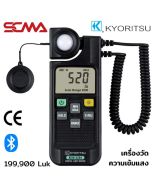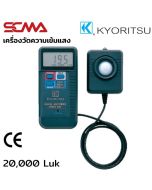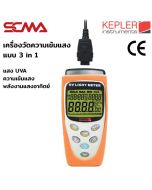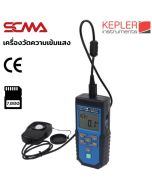

Light meters, also known as Lux meters, are important tools used to measure the intensity of light in various areas to ensure appropriate lighting levels for work, living, or specific activities. This article will introduce you to light intensity measurement devices in detail, from their working principles, types, usage methods, to benefits and maintenance.

What is a Light Meter?
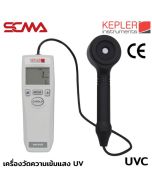
A light meter, or luxmeter, is a tool used to measure the intensity of light in various environments, displaying results in units such as lux (Lux) or footcandles (Foot candle). This device is designed to be compact, lightweight, portable, and highly accurate, making it easy to use quickly in many locations, including industrial plants, office buildings, hospitals, laboratories, and other places that require light levels to meet safety and work suitability standards.
How a Light Meter Works
The operation of the light meter has a simple yet highly accurate process. Most Lux meters consist of a light sensor and a display screen as the main components. When light falls on the sensor, which is typically made from silicon photodiodes (Silicon Photodiode), the sensor converts light energy into an electric current where the amount of current generated is directly proportional to the intensity of the incident light. Then, internal circuits process this electrical signal, calculate it as a light intensity value in units of lux or foot-candles, and display the result on the screen for users to read easily and quickly.
How many types of light meters are there?
How many types of temperature meters are there? Light Meters or light measurement devices can be categorized into two main types based on their display characteristics. Each type has its own advantages and suitability for different applications. Both types of light meters can measure an average of five points (points) within the range (Range) they are used in, and can undergo calibration at a standard laboratory (Calibration Laboratory) up to 25,000 Lux.
- Analog Light Meter — This is the original type that displays measurement results with a needle on a dial gauge. Its advantage lies in its clear response to light changes through the movement of the needle, making it easy to observe continuous changes. Additionally, it can be used without relying heavily on batteries compared to digital models, although there may be limitations regarding accuracy and reading values which might vary based on the reader's perspective.
- Digital Light Meter — This is a highly popular type nowadays as it displays digital numbers on an LED or LCD screen, making readings clear and accurate. It offers various functions such as data logging, finding maximum/minimum values, calculating averages, and connecting to computers. Moreover, it has higher accuracy and easier reading capabilities, although it comes at a higher price and relies on batteries for operation.
How to Use a Light Meter
Using a light meter lux meters correctly is important to achieve accurate and reliable measurement results. Light meters are designed for easy use, suitable for both professionals and beginners. The basic steps for using a light meter generally include the following:
- Turn On — Press the Power button to turn on the light meter and wait for the display to become operational.
- Prepare Sensor — Open the sensor (Sensor) cover so that light can directly hit the sensor.
- Position the Sensor — Aim the sensor towards the area where you want to measure, ensuring it is perpendicular to the light source for maximum accuracy.
- Select Measurement Range — Adjust and select an appropriate measurement range (Range) that matches the intensity of the light in the area being measured.
- Change Units of Measurement — Press the unit change button between Lux or FC (foot-candles) as required for your application.
- Record Measurement Value — Press the Hold button to record the measured value, or press the Max/Min button to record the highest or lowest value during measurement.
- Turn Off and Store — After use, press the Off button or allow it to turn off automatically. Don't forget to close the sensor cover to prevent damage.
The Benefits of Using Light Meter Tools
The benefits of lux meters are crucial in various industries and applications, especially in workplaces that require safety regarding lighting. This tool helps to check if the light in work areas is appropriate and sufficient to protect workers' eyesight. Additionally, it is used to measure and adjust street lights, office lights, factory lights, security systems, as well as railway lighting to meet standards. In the entertainment industry, lux meters play a significant role in photography and video production to achieve desired quality and effects.
Guidelines for Storage and Precautions When Using Measuring Tools
Proper maintenance of light measuring tools is crucial to extend their lifespan and keep the equipment in optimal working condition. Light intensity meters are delicate instruments that require special care to ensure efficient use and justify the investment. Users should follow these storage guidelines and precautions:
- Store in original box or case — After each use, store the measuring tool in the box or case provided by the supplier to protect it from dust, moisture, and impact.
- Control storage environment — Store the light meter in a location with appropriate temperature, neither too hot nor too humid, to prevent damage to internal electronic circuits and sensors.
- Study manual before use — Carefully read the user manual before starting to use the tool to ensure proper and accurate operation.
- Clean after use — After using, clean the tool with a soft and dry cloth, especially around the light sensor to keep it free from dust and dirt.
- Store separately from other tools — Do not store measuring tools mixed with other tools that may cause damage due to impact or abrasion.
- Place on soft surface — While in use or resting, place the tool on a soft material such as cloth or rubber to reduce impact risks.
- Calibrate according to schedule — The measuring tools should be calibrated at intervals recommended by the manufacturer to maintain measurement accuracy. Generally, calibration should occur at least once a year.

Interested in Light Meters? You can now purchase from SCMA!
SCMA offers high-quality light meters that meet international standards, covering all usage needs across various industries. With experience in the field of measurement tools and quality inspection equipment, we have a wide range of models that are certified for accuracy and reliability. Our team of experts is ready to provide consultation and recommend suitable tools tailored to your business's specific requirements, along with comprehensive after-sales services including calibration, maintenance, and training. Contact us today to receive special offers and nationwide delivery services!
Summary
A light meter or luxmeter is a tool used to measure the intensity of light in various environments with high accuracy and reliability. This device works by using sensors that convert light energy into electrical signals that can be measured and displayed. There are many types, ranging from impact-type light meters, reflective ones, industrial models, to those for agriculture and portable versions.
Using a light meter correctly and maintaining it properly ensures accurate measurements and extends the lifespan of the tool. Light meters have numerous benefits in various fields such as occupational health and safety, photography and film production, agriculture, design and construction, as well as education and research.
SCMA is a leader in distributing high-quality light meters that meet all needs, with a team of experts ready to provide consultation and comprehensive after-sales services. If you are looking for an efficient and reliable light intensity meter, SCMA is here to serve and meet your business requirements.Contact us today for more information and special offers!
Frequently Asked Questions
How many types of light measurement tools are there? What are they?
There are several types of light intensity meters, including incident light meters that measure the light falling directly on an object, reflected light meters that measure the light reflecting off an object, industrial light meters designed for use in factories and workplaces, grow light meters specifically designed to measure light for plant cultivation, portable light meters that are small and easy to carry, and multifunctional light meters that can measure other values besides light.
What is a Lux meter?
A lux light meter is an electronic device designed to measure the intensity of light falling on a surface in units of lux (lx). This device consists of a light sensor that converts light energy into electrical signals, which are then processed and displayed on a screen. Light meters are important for setting appropriate lighting standards in various locations such as offices, factories, schools, hospitals, or photography work. Appropriate levels of light affect human health, safety, and productivity.
How many types of light measurement units are there? What are they?
Commonly used light measurement units are as follows:
- Lux: This is a metric unit for measuring the intensity of illumination, quantifying the amount of light falling on an area of one square meter. It is commonly used in Europe and Asia.
- Foot-candle: This is a unit for measuring the intensity of illumination in the imperial system, quantifying the amount of light falling on an area of one square foot. It is commonly used in the United States (1 foot-candle = 10.76 lux).
- Candela: This is a unit for measuring the intensity of a light source in a specified direction and is a base unit in the SI system.
- Lumen: This is a unit for measuring the total amount of light emitted by a source in all directions.
- Microeinsteins per square meter (μE/m²): This is used to measure light for plant growth, particularly for measuring the PAR value (Photosynthetically Active Radiation).
What is a lighting measurement system?
Light measurement systems are methods or technologies used to measure and evaluate the properties of light, which include several components:
- Light Sensor (Photosensor): A device that converts light energy into an electrical signal, such as a photodiode or photo transistor
- Signal Processing System: Circuitry or software that processes the electrical signals from the sensor and converts them into meaningful values
- Display System: The part of the system that displays measurement values in a user-understandable format, such as an LCD screen or needle gauge
- Calibration System: A system used to adjust the measuring device for accuracy according to standards
- Data Logging System: In modern light measurement devices, there is often a data logging system to store measurement values for later analysis