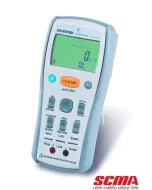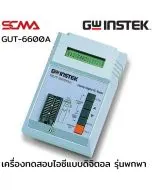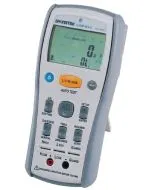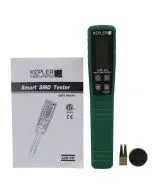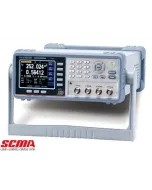

LCR Meters areelectronic measuring toolsthat are crucial for testing and analyzing the properties of passive electrical components, especially inductors (L), capacitors (C), and resistors (R). Understanding this tool will help you choose the appropriate one based on technical requirements and diverse applications.
What is an LCR Meter?

An LCR Meter, or LCR Meter, is a device specifically designed to measure R (resistance), C (capacitance), and L (inductance) with high accuracy and precision. This makes it more accurate than general multimeters in measuring these values, making it popular for electronics work and laboratory experiments requiring high accuracy, such as testing the quality of electronic components, researching and developing circuits, or calibrating equipment that requires precise electrical measurements.
How LCR Meters Work
LCR meters work based on detailed impedance analysis by detecting the relationship between voltage drop, current flow, and phase difference in the test circuit. In each measurement, the device processes the interaction of these three factors to create a comprehensive overview of all impedance parameters, allowing engineers and scientists to accurately understand the electrical behavior of electronic components.
Benefits of LCR Meters

LCR Meters are a crucial tool for testing and analyzing passive electronic components, primarily used to check the important electrical properties of these parts. They help engineers and technicians verify whether devices meet their design specifications and accurately diagnose issues.
- Resistance Measurement - Used to check the resistance value of resistors, indicating their ability to limit electrical current flow. This helps in designing circuits that require precise control over current or voltage.
- Capacitance Measurement - Measures the ability of capacitors to store electrical charge, which is crucial in signal filtering circuits, timing circuits, and AC parallel circuits.
- Inductance Measurement - Measures the property of inductors to create a magnetic field when current flows through them. This is important in frequency filtering circuits, chokes, and wireless power transfer systems.
- Advanced Parameter Measurement - Special resistance measurement tools can measure additional parameters such as quality factor (Q), loss factor (D), ESR of capacitors, and impedance at various frequencies. This aids in analyzing the true performance of components.
- Calibration and Quality Control - Used during production to ensure that electronic parts meet specified requirements, reducing error rates and increasing product reliability.
Types of LCR Meters
LCR meters come in various types based on display format, technology, and accuracy. The choice of which type to use depends on the nature of the work, accuracy requirements, and budget constraints. Each type has specific features that suit different applications.
- Analog LCR Meters - Analog meters with a needle display, featuring simple operation suitable for general work requiring not extremely high accuracy. They are cost-effective and durable in various environments.
- Digital LCR Meters - Digital meters with a digital display, offering convenience for reading values and multiple functions such as data logging, test frequency settings, and computer connectivity. They are popular in industrial applications and education.
- Precision LCR Meters - High-precision meters for laboratories, research and development work, or tasks requiring high accuracy. They have the ability to measure at various frequencies and advanced parameters such as impedance, ESR, and Q-factor in detail.
What are the Features of LCR Meters?

An efficient LCR meter must have key features that meet the testing and measurement requirements. Selecting an appropriate LCR meter depends on various factors such as desired frequency range, adjustable test voltage, balance between accuracy and speed, and measurable parameters, all of which affect its real-world performance.
Test Frequency
Electronic equipment testing should be conducted at the same frequency as the actual operating environment. High-end LCR meters typically have a wide range of adjustable frequencies, from 10 Hz to 2 MHz. A meter that can flexibly program test frequencies is highly beneficial for research and development, allowing engineers to characterize devices across various frequency ranges and accurately locate resonant points.
Test Voltage
The alternating current voltage used in testing can be adjusted according to the suitability of the device being tested. The internal system of the meter has a series-connected source resistance (Rs) with the output, making the actual voltage applied to the device dependent on the relationship between Rs and the impedance of the test device. High-quality meters have control and compensation systems to ensure that the voltage delivered to the device is highly accurate.
Accuracy/Speed
Good LCR meters usually offer at least three measurement speed options (slow, medium, fast) for users to choose between maximum accuracy or test speed based on their needs. Averaging or median measurements increase accuracy but at the cost of increased time. True accuracy also depends on several factors such as frequency, voltage, and impedance of the test device.
Parameter Measurement
In addition to basic values L, C, and R, leading LCR meters measure numerous other important parameters such as conductance (G), susceptance (B), phase angle (θ), equivalent series resistance (ESR), quality factor (Q), and loss factor (D). This enables comprehensive and in-depth analysis of the properties of devices, sensors, and electrical materials.
Interested in LCR Meters? You can now purchase from SCMA!
If you are looking for high-quality LCR Meters that meet your needs, SCMA is the best solution! We offer a wide range of electrical capacitance meters from leading global brands, ranging from basic models for general use to high-precision models for laboratories and research work.
Our team of experts is ready to provide consultation to help you choose the best LCR Meter that suits your needs and budget. Additionally, we offer comprehensive after-sales services including installation, training on usage, and maintenance to ensure that your equipment operates at maximum efficiency throughout its lifespan.
Summary
LCR Meters are crucial measuring tools in electronics and various industries. With the ability to measure and analyze the electrical properties of passive components, they can accurately assess the quality and performance of devices.
Choosing the right LCR Meter should consider factors such as test frequency, test voltage, accuracy, and parameters to be measured to achieve results that meet your requirements and usage.
SCMA is ready to provide high-quality LCR Meters tailored to your needs, along with comprehensive consultation services, training, and after-sales support. You can be assured of receiving top-notch equipment and service from SCMA.
Contact us today to receive consultation and special offers for LCR Meters from our expert team!
Frequently Asked Questions
What are LCR Meters?
LCR Meters are electronic measuring instruments designed to measure and analyze the electrical properties of passive components, particularly inductors (L), capacitors (C), and resistors (R). Additionally, they can also measure other values such as quality factor (Q), loss tangent (D), and impedance (Z).
How do LCR Meters work?
LCR Meters operate by applying an alternating current signal with a specified frequency and voltage to the component being measured. They then measure the component's response in terms of magnitude and phase, and calculate various parameters using series and parallel equivalent circuit principles. The measurement relies on bridge measurement techniques or vector ratio methods depending on the model and technology used.
What are LCR Meters used for?
LCR Meters are primarily used to measure and analyze the electrical properties of passive components for quality control, research and development, manufacturing, maintenance, education, and electronic device failure analysis. They help engineers and technicians verify if a component meets specifications and aid in diagnosing issues with electronic circuits.
How do you use LCR Meters?
Using an LCR Meter involves the following basic steps:
- Turn on the meter and wait for it to initialize.
- Select the measurement mode (L, C, R or other parameters).
- Choose an appropriate test frequency and voltage.
- Select the equivalent circuit (series or parallel).
- Perform a zero calibration if necessary.
- Connect the component to be measured to the meter's test leads.
- Read and analyze the values displayed on the screen.
Usage details may vary by model and manufacturer, so it is important to study the specific model's user manual for proper and safe operation.